Introduction
This manual provides detailed service, repair, and maintenance information for the Honda NPS50 Ruckus scooter. It is designed to assist owners and technicians in performing various procedures to ensure the proper functioning and longevity of the vehicle. The instructions cover models from 2003 through 2024.
The content includes step-by-step procedures, specifications, and diagrams to guide you through each task.
Product Overview
This section provides a visual reference to the service manual itself.
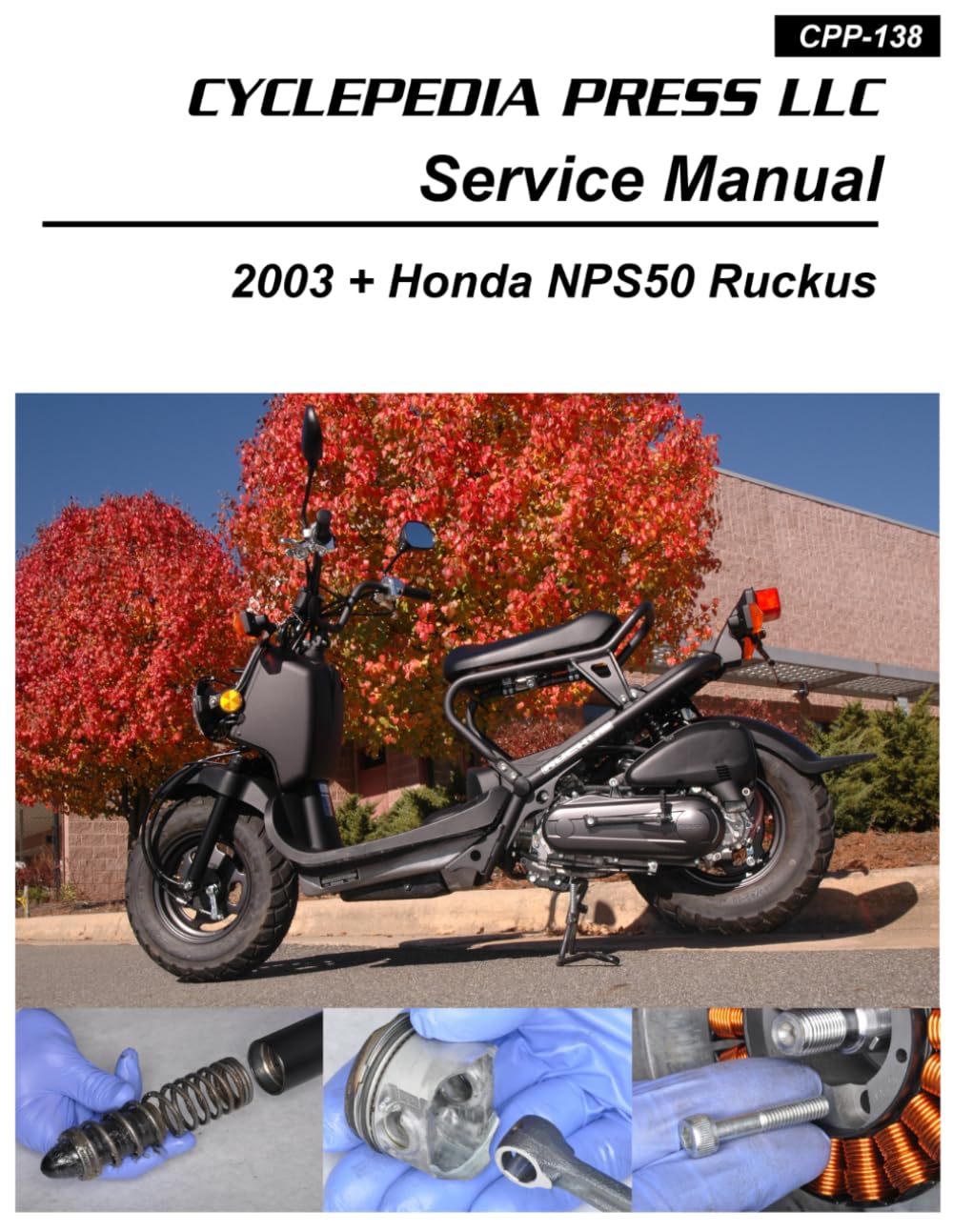
Image: Front cover of the Cyclepedia Printed Scooter Service Manual for Honda NPS50 Ruckus. This manual contains 265 pages of detailed instructions.

Image: Back cover of the Cyclepedia Printed Scooter Service Manual, displaying the ISBN and barcode.
Preparing for Service
Before commencing any service or repair work on your Honda NPS50 Ruckus, ensure you have the necessary tools, a clean and well-lit workspace, and appropriate safety gear. Always disconnect the battery before working on electrical components. Refer to the specific sections for detailed tool requirements for each task.
- Safety First: Wear appropriate personal protective equipment (PPE) such as gloves and eye protection.
- Tools: Gather all required hand tools, specialized tools, and measuring equipment.
- Cleanliness: Maintain a clean environment to prevent contamination of parts.
- Reference: Keep this service manual readily accessible for step-by-step guidance.
Operating Instructions
This manual is a comprehensive guide for the service, repair, and maintenance of your Honda NPS50 Ruckus scooter. It does not cover daily operating instructions or riding procedures. For information on how to operate your scooter, please refer to the owner's manual provided with your vehicle.
Periodic Maintenance
Regular maintenance is crucial for the performance and safety of your Honda NPS50 Ruckus. This section outlines the necessary checks and adjustments.
- Periodic Maintenance Chart: Follow the recommended service intervals.
- Throttle Free Play: Adjust for proper throttle response.
- Engine Idle Speed: Verify and adjust to specifications.
- Engine Oil: Check level and replace as scheduled.
- Valve Adjustment: Ensure correct valve clearance.
- Air Filter Servicing: Clean or replace the air filter.
- Brake Inspection: Check brake fluid, pads, and system integrity.
- Spark Plug: Inspect and replace if necessary.
- Compression Test: Evaluate engine health.
- Coolant Check: Monitor coolant level and condition.
Brakes
Proper brake function is critical for safety. This section details the inspection and service procedures for the braking system.
- Front Brake: Procedures for inspection, adjustment, and component replacement.
- Rear Brake: Procedures for inspection, adjustment, and component replacement.
Cooling System
Maintain the cooling system to prevent engine overheating and ensure optimal performance.
- Water Pump: Inspection and service.
- Coolant: Checking levels, flushing, and refilling.
- Radiator: Inspection for damage and cleaning procedures.
- Thermostat: Testing and replacement.
Electrical System
This section covers the electrical components and their maintenance, including wiring diagrams for troubleshooting.
- Electrical Specifications: Key electrical values and tolerances.
- Ignition System: Troubleshooting and component service.
- Charging System: Battery, stator, and regulator/rectifier checks.
- Starting System: Starter motor and relay service.
- Switches: Inspection and testing of various switches.
- Lights: Bulb replacement and wiring checks.
- Wiring Diagram: Detailed diagrams for electrical troubleshooting.
Engine
Detailed procedures for engine inspection, removal, disassembly, and reassembly.
- Engine Specifications: Critical measurements and tolerances.
- Kick Starter: Service and repair.
- Alternator Removal: Steps for safe removal.
- Camshaft: Inspection and replacement.
- Cylinder Head: Disassembly, inspection, and reassembly.
- Valves: Inspection, adjustment, and seating.
- Cylinder and Piston: Inspection for wear and replacement.
- Oil Pump: Inspection and service.
- Engine Removal: Step-by-step guide for safe engine removal.
- Engine Installation: Procedures for correct engine installation.
- Crankcase: Disassembly and inspection.
External Components
Instructions for removal and installation of various external body parts and accessories.
- Body Covers: Removal and installation.
- Seat: Removal and installation.
- Handlebar: Removal, inspection, and installation.
- Front Fender: Removal and installation.
- Rear Fender: Removal and installation.
- Exhaust System: Removal, inspection, and installation.
Final Drive
Service procedures for the scooter's final drive components, including the transmission system.
- Drive Pulley: Removal, inspection, and installation.
- Drive Belt: Inspection and replacement.
- Driven Pulley: Removal, inspection, and installation.
- Clutch: Inspection and service.
- Final Reduction: Disassembly and inspection.
- Final Reduction Assembly: Reassembly procedures.
Fuel System
Maintenance and repair of the fuel delivery system, from the tank to the carburetor.
- Airbox: Removal and cleaning.
- Carburetor Removal: Steps for safe removal.
- Carburetor Disassembly: Detailed guide for taking apart the carburetor.
- Carburetor Assembly: Reassembly procedures.
- Carburetor Installation: Steps for correct installation.
- Carburetor Specifications: Jetting and adjustment values.
- Fuel Tank: Removal, inspection, and cleaning.
- Fuel Pump: Testing and replacement.
Steering
Procedures for inspecting and servicing the steering components to ensure smooth and safe handling.
- Steering Removal: Steps for disassembling the steering column.
- Installation: Procedures for reassembling the steering components.
- Bearing Replacement: Guide for replacing steering head bearings.
Suspension
Maintenance and repair of the front and rear suspension systems for optimal ride comfort and control.
- Shock Absorber: Inspection and replacement.
- Fork: Disassembly, inspection, and reassembly of front forks.
Wheels
Procedures for wheel removal, inspection, and bearing replacement.
- Wheel and Axle Inspection: Checks for damage and wear.
- Front Wheel: Removal and installation.
- Rear Wheel: Removal and installation.
- Bearing Replacement: Guide for replacing wheel bearings.
Troubleshooting
This service manual provides detailed diagnostic and repair procedures within each system-specific section (e.g., Electrical System, Engine, Fuel System). By following the step-by-step guides and referring to the specifications and wiring diagrams, users can effectively troubleshoot common issues encountered with the Honda NPS50 Ruckus scooter.
- Systematic Diagnosis: Follow the troubleshooting steps provided in relevant sections for specific component failures.
- Electrical Faults: Utilize the wiring diagrams to trace and resolve electrical issues.
- Engine Performance: Refer to engine specifications and procedures for diagnosing performance problems.
Quick Reference
Essential information for quick access during service and repair.
- NPS50 Ruckus Specifications: Key technical data.
- VIN and Engine Number Location: How to find identification numbers.
- Torque Specifications: Recommended torque values for fasteners.
- General Torque Specifications: Standard torque values for common fasteners.
Specifications
This section provides a summary of the Honda NPS50 Ruckus scooter's key specifications, as detailed in the manual.
- Applicable Models: Honda NPS50 Ruckus (2003-2024)
- Manual Type: Printed Service Manual
- Content: Service, repair, and maintenance information
- Pages: 265 pages
- Illustrations: Detailed black and white photographs, color wiring diagrams
- Author: Cyclepedia Press LLC
- ISBN-13: 979-8303813250
- Dimensions: 8.5 x 0.6 x 11 inches
- Weight: 1.68 pounds
Warranty and Support
Information regarding warranty and support for the Honda NPS50 Ruckus scooter is typically provided by the vehicle manufacturer or authorized dealerships. This service manual focuses on repair procedures and does not contain specific warranty details for the scooter itself. For information regarding the manual's publication or content, please refer to Cyclepedia Press LLC.


