
1. Introduction
This manual provides essential information for the proper installation, operation, and maintenance of your zozoye Stator, designed as a replacement for Polaris 500 series vehicles. Adhering to these instructions will help ensure the longevity and optimal performance of the component. Please read this manual thoroughly before proceeding with any installation or maintenance.
2. Safety Information
Always prioritize safety when working on your vehicle's electrical system. Failure to follow safety precautions can result in serious injury or damage to the vehicle.
- Disconnect the vehicle's battery before beginning any electrical work to prevent accidental short circuits or electrical shock.
- Wear appropriate personal protective equipment, including safety glasses and gloves.
- Ensure the work area is well-ventilated and free from flammable materials.
- If you are unsure about any step, consult a qualified mechanic or refer to your vehicle's specific service manual.
- Keep all tools and parts organized to prevent misplacement.
3. Compatibility
The zozoye Stator (OEM Part Number 3086984) is compatible with the following Polaris 500 series models and years. Please verify your vehicle's model and year before installation.

Image Description: A green Polaris ATV is shown in a grassy field. Overlayed on the image is a list of compatible Polaris models and their respective years, indicating the broad range of vehicles this stator is designed for.
| Model | Years | Notes |
|---|---|---|
| Ranger 500 6x6 | 2000-2001 | |
| Magnum 500 4x4 | 2000, 2001, 2003 | 2000 (S#00-01961 & after), 2002 (through S# 02-02357) |
| Scrambler 500 4x4 | 2000, 2001 | 2000 (S#00-04730 & after), 2002 (through S# 02-05387) |
| Sportsman 500 | 2000, 2001, 2002 | 2000 (S#00-29083 & after), 2002 (through S# 02-22573) |
| Sportsman 500 RSE | 2000, 2001 | 2000 (S#00-29083 & after) |
| Sportsman 500 6x6 | 2000, 2002 | 2000 (S#00-1899 & after), 2002 (through S# 02-00893) |
| Sportsman 500 Duse | 2001 | |
| Sportsman 500 HO | 2001, 2002 | 2002 (through S# 02-22573) |
| Worker 500 | 2001 | |
| ATV PRO 500 4X4 PPS | 2002 | (through S# 02-02357) |
| LUH 6X6 PPS | 2002 | (through S# 02-00893) |
4. Package Contents
Upon opening the package, please verify that all components are present and undamaged.

Image Description: The zozoye Stator is displayed in the foreground, featuring its copper coils and wiring harness. In the background, a Polaris ATV is visible, and the word 'PACKAGE' is prominently displayed, indicating the product as received.
- 1x zozoye Stator (OEM Part Number 3086984)
5. Product Overview and Dimensions
The zozoye Stator is a precision-engineered electrical component designed to generate power for your vehicle's charging system. It features multiple copper-wound coils around a central core, connected to a wiring harness with appropriate connectors for direct fitment.
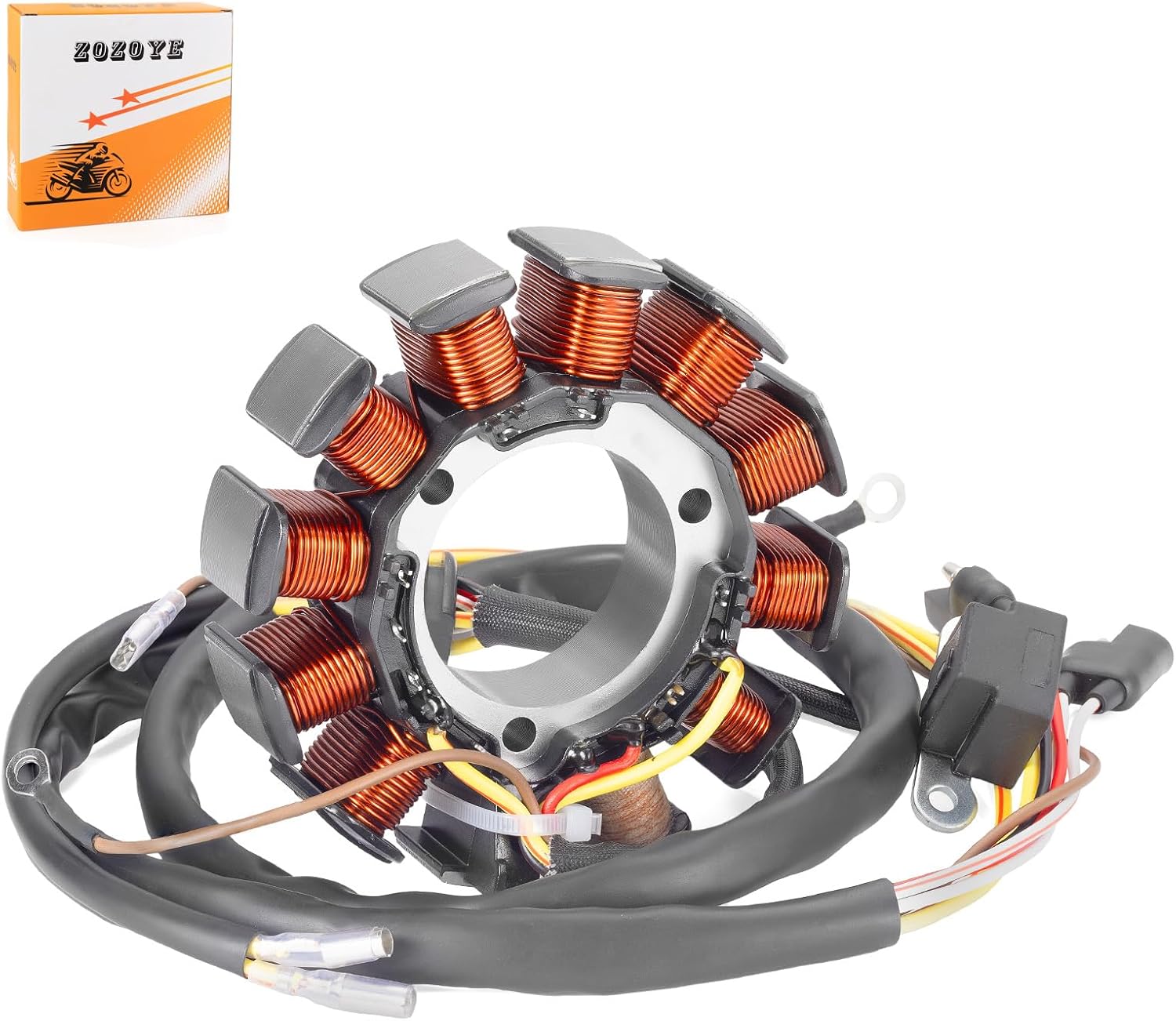
Image Description: A clear, high-angle view of the zozoye Stator, showcasing its copper windings, metal core, and attached wiring harness with various connectors. The product's retail box is visible in the upper left corner.

Image Description: A composite image showing close-up details of the stator. Individual sections highlight the wiring connectors, the quality of the copper coil windings, the rubber grommets, and the overall construction, emphasizing the component's design.
Product Dimensions
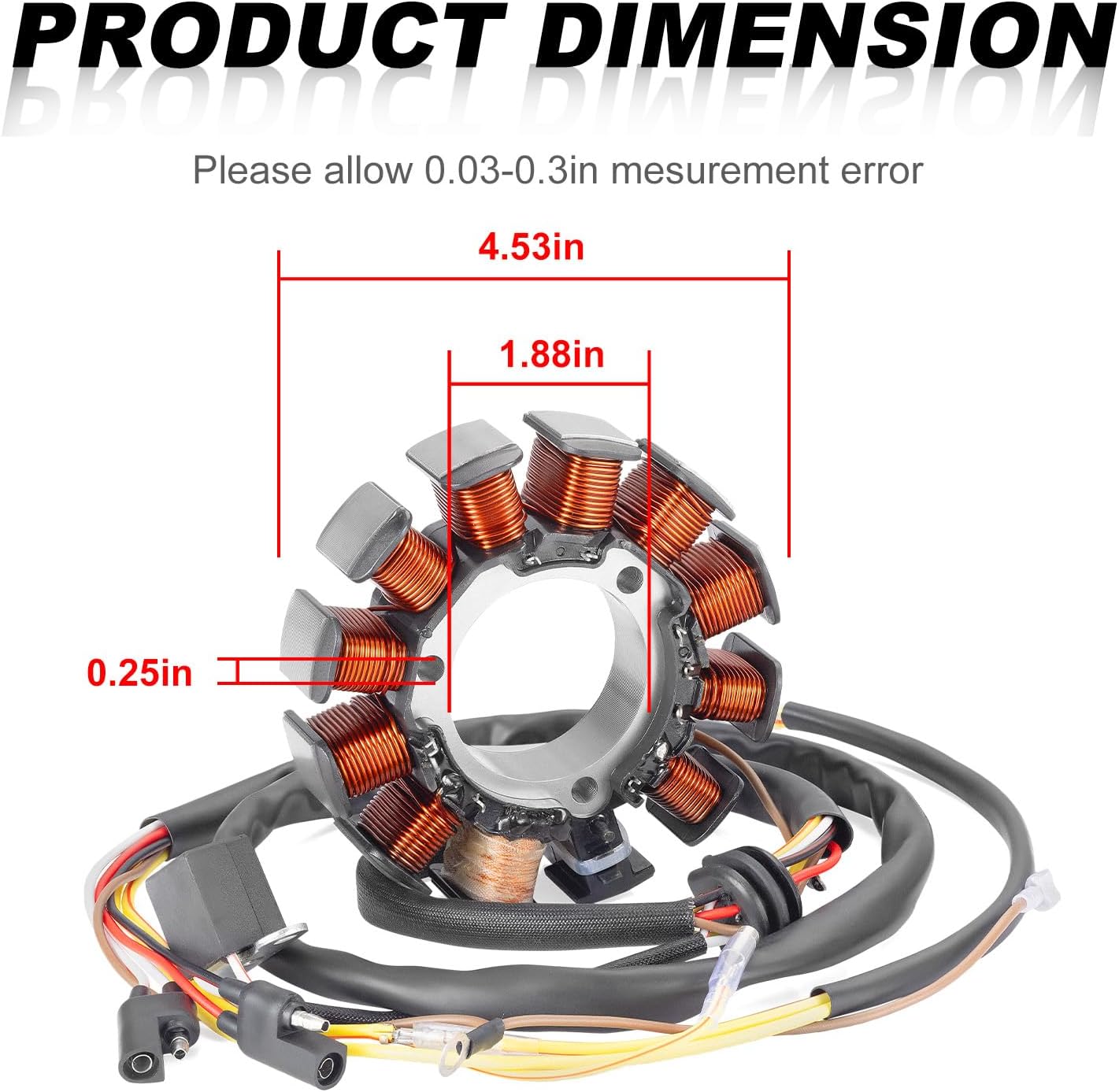
Image Description: A technical diagram illustrating the key dimensions of the stator. Measurements such as the outer diameter (4.53 inches), inner diameter (1.88 inches), and coil height (0.25 inches) are clearly labeled to assist with fitment verification.
- Outer Diameter: Approximately 4.53 inches
- Inner Diameter: Approximately 1.88 inches
- Coil Height: Approximately 0.25 inches
- Package Dimensions: 7.09 x 7.09 x 1.97 inches
- Item Weight: 0.403 ounces
Note: Please allow for a 0.03-0.3 inch measurement error. Always compare these dimensions with your original part and vehicle specifications to ensure proper fitment.
6. Installation
The following steps provide a general guide for stator replacement. Specific procedures may vary depending on your Polaris model. Always refer to your vehicle's official service manual for detailed instructions.
Tools Required (Typical)
- Socket set and wrenches
- Screwdrivers
- Torque wrench
- Flywheel puller (if required)
- Gasket scraper
- Clean rags
- New engine oil (for refill)
- New gasket (if not included with stator)
Preparation
- Park the vehicle on a level surface and engage the parking brake.
- Allow the engine to cool completely.
- Disconnect the negative (-) terminal of the battery to prevent electrical hazards.
- Locate the stator cover, typically on the left side of the engine.
- Place a drain pan beneath the engine to catch any oil that may spill when removing the cover.
Installation Steps
- Drain Engine Oil: If necessary, drain the engine oil to prevent excessive spillage when removing the stator cover.
- Remove Stator Cover: Carefully remove the bolts securing the stator cover. Note the location of any specific bolts (e.g., longer bolts). Gently pry the cover off, being mindful of the gasket.
- Disconnect Old Stator: Disconnect the wiring harness of the old stator from the vehicle's electrical system. This usually involves tracing the wires from the stator cover to a connector block.
- Remove Old Stator: Unbolt the old stator from the inside of the cover. If the flywheel needs to be removed to access the stator, use a flywheel puller as per your vehicle's service manual.
- Clean Mounting Surface: Thoroughly clean the mating surfaces on both the engine case and the stator cover, removing all traces of the old gasket material. Ensure surfaces are dry and free of debris.
- Install New Stator: Mount the new zozoye Stator into the stator cover, ensuring it is correctly oriented. Secure it with the original bolts, tightening them to the manufacturer's specified torque.
- Install New Gasket: Place a new gasket onto the stator cover or engine case. Ensure it is properly seated and aligned.
- Reinstall Stator Cover: Carefully reinstall the stator cover onto the engine case. Ensure the wiring harness passes through the designated grommet without pinching. Tighten the cover bolts in a crisscross pattern to the manufacturer's specified torque.
- Connect Wiring: Connect the new stator's wiring harness to the vehicle's electrical system, ensuring all connections are secure and correctly matched.
- Refill Engine Oil: If oil was drained, refill the engine with the correct type and amount of engine oil as specified in your vehicle's manual.
- Reconnect Battery: Reconnect the negative (-) terminal of the battery.
- Test System: Start the engine and check for proper charging system operation using a voltmeter. Verify that the battery voltage is within the normal operating range (typically 13.5-14.5 volts) at various RPMs. Check for any oil leaks around the stator cover.
7. Operating Principles
A stator is a key component of your vehicle's charging system. It works in conjunction with the flywheel (which contains magnets) to generate alternating current (AC) electricity as the engine runs. This AC current is then sent to the voltage regulator/rectifier, which converts it into direct current (DC) to charge the battery and power the vehicle's electrical accessories. A properly functioning stator is crucial for maintaining battery charge and ensuring reliable electrical system performance.
8. Maintenance
While stators are generally low-maintenance components, periodic checks can help identify potential issues early.
- Visual Inspection: During routine engine maintenance, visually inspect the stator wiring harness for any signs of fraying, cracking, or heat damage. Ensure connectors are clean and securely seated.
- Charging System Check: Periodically test your vehicle's charging system voltage with a multimeter. A healthy system should show consistent voltage output within the specified range (e.g., 13.5-14.5V) when the engine is running.
- Oil Level and Quality: Ensure your engine oil is at the correct level and changed according to the manufacturer's recommendations. Low or degraded oil can lead to overheating, which can damage the stator.
- Cleanliness: Keep the engine area clean to prevent dirt and debris from accumulating around electrical components.
9. Troubleshooting
If you experience issues with your vehicle's charging system, the stator may be a contributing factor. Here are some common symptoms and troubleshooting steps.
| Symptom | Possible Cause | Troubleshooting Step |
|---|---|---|
| Battery not charging / Low voltage | Faulty stator, faulty regulator/rectifier, loose connections, dead battery | Check stator output with a multimeter (AC voltage). Inspect wiring for damage. Test regulator/rectifier. Test battery health. |
| Overcharging / High voltage | Faulty regulator/rectifier (less commonly stator) | Test regulator/rectifier. While a stator typically doesn't cause overcharging, a shorted winding could potentially affect output. |
| Engine misfires or runs poorly | Severe stator failure affecting ignition system power | Check stator output. Verify other ignition components (spark plugs, coils). |
| Blown fuses / Electrical component failure | Short circuit in stator wiring or other electrical components | Inspect stator wiring for shorts. Check other electrical circuits. |
Note: For accurate diagnosis, it is recommended to perform specific resistance and AC voltage tests on the stator as outlined in your vehicle's service manual.
10. Specifications
Key technical specifications for the zozoye Stator (Model 3086984).
| Specification | Value |
|---|---|
| Manufacturer | zozoye |
| Brand | zozoye |
| Model Number | 3086984 |
| Item Weight | 0.403 ounces |
| Package Dimensions | 7.09 x 7.09 x 1.97 inches |
| Exterior Finish | Chrome (referring to metal components) |
| Manufacturer Part Number | 3086984 |
11. Warranty and Support
For warranty information or technical support regarding your zozoye Stator, please refer to the purchase documentation or contact the seller directly. Ensure you have your purchase details and the product model number (3086984) available when contacting support.