1. Introduction
This manual provides essential information for the installation, operation, and maintenance of your ZOTAC GAMING GeForce RTX 4070 Ti SUPER SOLID OC 16GB graphics card. Please read this manual thoroughly before installation to ensure proper functionality and to prevent damage.

Image 1.1: ZOTAC GAMING GeForce RTX 4070 Ti SUPER SOLID OC 16GB Graphics Card and its retail packaging.
2. Package Contents
Verify that all items are present in the package:
- ZOTAC GAMING GeForce RTX 4070 Ti SUPER SOLID OC 16GB Graphics Card
- GPU Support Stand
- User Guide (this document)
- Power Adapter Cable (if applicable, check your specific model)
3. System Requirements
- PCI Express-compliant motherboard with one dual-width x16 graphics slot
- Minimum 750W power supply with three available 8-pin PCIe power connectors (or equivalent 12VHPWR connector)
- Minimum 16GB system memory
- Microsoft Windows 10/11 64-bit or Linux 64-bit operating system
- Internet connection for driver installation
4. Installation Guide
4.1. Preparation
- Turn off your computer and disconnect the power cable.
- Open your computer case.
- Ground yourself to discharge any static electricity.
4.2. Installing the Graphics Card
- Locate an available PCI Express x16 slot on your motherboard.
- Remove the necessary expansion slot covers from your computer case.
- Carefully insert the graphics card into the PCIe x16 slot until it is fully seated. Ensure the retention clip locks into place.
- Secure the graphics card to the case with screws.
- Connect the required power cables from your power supply to the graphics card. This model typically requires three 8-pin PCIe power connectors or a single 12VHPWR connector. Ensure all connections are secure.
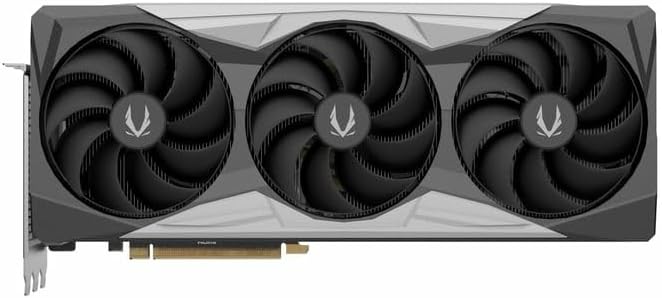
Image 4.1: Front view of the graphics card, showing the triple fan design.
4.3. Installing the GPU Support Stand
The included GPU support stand helps prevent sag and provides additional stability for the graphics card. Follow the instructions provided with the stand for proper installation within your PC case.
4.4. Closing the Case and Connecting Peripherals
- Close your computer case.
- Connect your monitor(s) to the display outputs on the graphics card (DisplayPort or HDMI).
- Reconnect the power cable and other peripherals to your computer.

Image 4.2: Rear view of the graphics card, showing three DisplayPort outputs and one HDMI output.
5. Operating Instructions
5.1. Driver Installation
- Power on your computer.
- Once the operating system loads, download the latest graphics drivers from the official NVIDIA website (www.nvidia.com/drivers) or the ZOTAC website (www.zotac.com/support).
- Follow the on-screen instructions to complete the driver installation. A system restart may be required.
5.2. Software Utilities
ZOTAC provides utilities such as FireStorm for monitoring and adjusting graphics card settings, including fan speed control (Active Fan Control, FREEZE Fan Stop) and performance profiles. These can be downloaded from the ZOTAC website.
6. Maintenance
- Dust Removal: Periodically clean dust from the graphics card fans and heatsink using compressed air. Ensure the computer is powered off and unplugged before cleaning.
- Driver Updates: Keep your graphics drivers updated to ensure optimal performance and compatibility.
- Temperature Monitoring: Use monitoring software to keep track of the graphics card's temperature during operation. Excessive temperatures can indicate poor airflow or dust buildup.

Image 6.1: Angled view of the graphics card, highlighting its robust cooling solution.
7. Troubleshooting
- No Display Output:
- Ensure the monitor cable is securely connected to the graphics card and the monitor.
- Verify that the graphics card is fully seated in the PCIe slot.
- Check that all power cables are properly connected to the graphics card.
- Test with a different monitor or cable if possible.
- System Instability or Crashes:
- Ensure graphics drivers are correctly installed and up to date.
- Check for adequate power supply capacity.
- Monitor temperatures to prevent overheating.
- Verify system memory (RAM) stability.
- Fan Noise or Malfunction:
- Clean dust from the fans and heatsink.
- Ensure no cables are obstructing fan rotation.
- Use ZOTAC FireStorm utility to check fan speed settings.
8. Specifications
| Feature | Detail |
|---|---|
| Model Number | ZT-D40730R-10P |
| Graphics Processor | NVIDIA GeForce RTX 4070 Ti SUPER |
| Video Memory | 16GB GDDR6X |
| Memory Interface | 256-bit |
| Memory Clock | 21000 MHz (Effective) |
| Engine Clock | Boost: 2640 MHz |
| Display Outputs | 3 x DisplayPort 1.4a, 1 x HDMI 2.1a |
| HDCP Support | Yes |
| Max Digital Resolution | Up to 4K (7680x4320 @60Hz) |
| PCI Express | PCI Express 4.0 x16 |
| Recommended Power Supply | 750W |
| Power Connectors | 1 x 12VHPWR (or 3 x 8-pin PCIe via adapter) |
| Dimensions (LxWxH) | 16.73 x 11.54 x 3.94 inches (approx.) |
| Weight | 2.2 pounds (approx.) |
| Cooling System | IceStorm 2.0 Advanced Cooling, Triple 100mm Fans, FREEZE Fan Stop, Active Fan Control |
| Features | NVIDIA DLSS 3.5, Ray Tracing, Metal Backplate, GPU Support Stand |
9. Warranty and Support
For detailed warranty information, please refer to the warranty card included with your product or visit the official ZOTAC website's support section. ZOTAC provides technical support and resources for their products.
- ZOTAC Support Website: www.zotac.com/support
- Product Registration: Register your product on the ZOTAC website to activate your warranty and receive product updates.


