
1. Introduction to Pressure Canning
The Huanyu 22L Pressure Canner is designed for safe and efficient home food preservation and pressure cooking. Pressure canning is a method of food preservation that uses pressure to seal cans or jars. The pressure forces air out of the container, which prevents bacteria from entering and spoiling the food. This method is essential for preserving low-acid foods safely.

This image illustrates the concept of pressure canning, showing a variety of preserved foods like fruits and vegetables in jars, alongside the Huanyu pressure canner with jars being processed.
With a generous 22-liter capacity, this canner is suitable for processing large batches, accommodating approximately 18 pint-sized jars (500 ml each) or 7 quart-sized jars (1 liter each).

This image highlights the 22-liter capacity of the Huanyu pressure canner, demonstrating it can hold 18 pint-sized jars (approx. 500 ml each) or 7 quart-sized jars (approx. 1 liter each).
2. Important Safety Information
Please read all instructions and warnings carefully before using your pressure canner. Failure to follow these instructions may result in serious injury or property damage.
- Read the Manual: Always read the entire instruction manual before initial use.
- Inspect Before Use: Before each use, inspect the canner, lid, gasket, pressure gauge, and all valves for any signs of damage, wear, or blockages. Ensure the gasket is properly seated.
- Proper Sealing: Ensure the lid is securely locked in place before applying heat. Never attempt to open the canner while it is under pressure.
- Pressure Release: Always allow the canner to cool down naturally and pressure to drop completely before attempting to open the lid. Never force the lid open.
- Ventilation: Use the pressure canner in a well-ventilated area.
- Heat Source: Use on a stable, level heat source appropriate for the canner's size and material.
- Filling Limits: Do not overfill the canner. Follow recommended liquid levels for canning and cooking.
- Children and Pets: Keep children and pets away from the pressure canner during operation and while it is cooling.
- Maintenance: Regularly clean and maintain all components as instructed to ensure safe operation.
3. Product Overview and Components
Familiarize yourself with the key parts of your Huanyu Pressure Canner for safe and effective operation.

A close-up view of the Huanyu pressure canner's lid, pointing out key components such as the anti-scald handle, secure locking lid, pressure relief valve, pressure gauge, and the 15 PSI pressure weight.
- Anti-scald Handle: Designed for safe handling, reducing the risk of burns.
- Secure Locking Lid: Ensures a tight seal during operation, preventing steam escape and maintaining pressure.
- Pressure Relief Valve: An essential safety feature that automatically releases excess pressure if it exceeds safe limits.
- Pressure Gauge: Provides a visual indication of the internal pressure, allowing you to monitor and maintain the correct pressure for canning or cooking.
- 15PSI Pressure Weight: Used to regulate and maintain the desired pressure level (15 PSI) during canning.
4. Initial Setup and Preparation
- Unpack: Carefully remove all components from the packaging. Retain packaging for future storage or transport if needed.
- Initial Cleaning: Wash the canner pot, lid, gasket, and all accessories (steaming plate, pressure weight, glass tong) with warm, soapy water. Rinse thoroughly and dry completely.
- Gasket Placement: Ensure the rubber gasket is properly seated within the lid's groove. A correctly placed gasket is crucial for a proper seal.
- Pressure Gauge Check: Verify that the pressure gauge is securely attached and free from any obstructions.
- Pressure Relief Valve Check: Ensure the pressure relief valve is clear and moves freely.
5. Operating Instructions
5.1. Pressure Canning Process
- Prepare Jars and Food: Prepare your food and jars according to a tested canning recipe. Fill jars, leaving appropriate headspace, and secure lids and bands.
- Add Water: Place the steaming plate at the bottom of the canner. Add 2-3 inches of hot water to the canner. Do not add too much water, as the canner uses steam, not boiling water, to process.
- Load Jars: Carefully place the filled jars onto the steaming plate using the glass tong, ensuring they do not touch each other or the sides of the canner.
- Secure Lid: Place the lid on the canner, aligning the arrows or indicators. Rotate the lid to securely lock it into place using the anti-scald handles.
- Vent Steam: Place the canner on a high heat source. Allow steam to escape steadily from the vent pipe for 10 minutes to ensure all air is exhausted from the canner. This is crucial for accurate pressure readings.
- Apply Pressure Weight: After venting for 10 minutes, place the 15 PSI pressure weight onto the vent pipe. The pressure will begin to build.
- Monitor Pressure: Watch the pressure gauge. Once the desired pressure (typically 15 PSI for most low-acid foods) is reached, adjust the heat to maintain a steady pressure. Begin timing according to your recipe.
- Cool Down: Once the processing time is complete, turn off the heat. Allow the canner to cool naturally until the pressure gauge reads zero and no steam is escaping from the vent pipe. Do not rush the cooling process or attempt to open the lid prematurely.
- Open Canner: Once completely depressurized, carefully remove the pressure weight. Unlock and remove the lid, tilting it away from your face to avoid residual steam.
- Remove Jars: Using the glass tong, carefully remove the hot jars and place them on a towel-lined surface, leaving space between them to cool for 12-24 hours. Do not tighten bands or check seals until jars are completely cool.
5.2. Pressure Cooking Functionality
The Huanyu Pressure Canner also functions as a pressure cooker, allowing for faster cooking of various foods. Follow standard pressure cooking recipes, ensuring appropriate liquid levels and cooking times. The 15 PSI pressure weight can be used for cooking at high pressure.
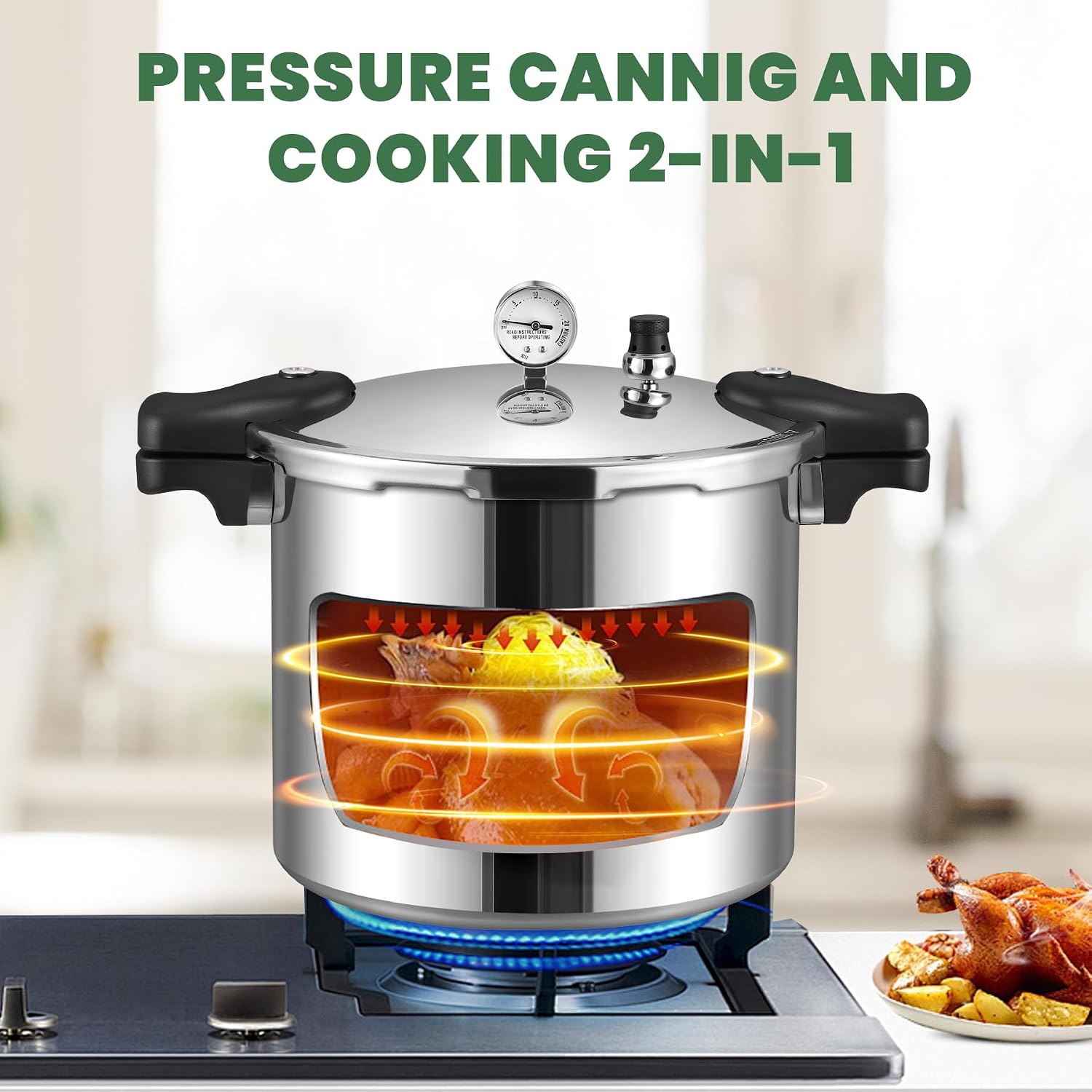
This image illustrates the dual functionality of the Huanyu pressure canner, suitable for both pressure canning and general pressure cooking, with an internal graphic depicting efficient heat distribution for cooking.
5.3. Foods Suitable for Pressure Canning
Pressure canning is the only safe home canning method for meats and low-acid foods. Low-acid foods have a pH factor of 4.6 or above. Examples of low-acid foods include:

This image categorizes foods appropriate for pressure canning, specifically low-acid foods such as various fruits, meats, beans, and most vegetables, emphasizing that pressure canning is the safe method for these items.
- Meats: Beef, pork, poultry, fish.
- Vegetables: Green beans, corn, carrots, potatoes, peas, beets, pumpkin, squash.
- Beans: Dried beans and peas (rehydrated).
- Some Fruits: Certain fruits can be pressure canned, but many are high-acid and suitable for water bath canning. Always consult a tested recipe.
Always refer to current, tested canning recipes and guidelines from reputable sources (e.g., USDA) for specific processing times and procedures for different foods.
6. Care and Maintenance
- Cleaning After Each Use: After each use, allow the canner to cool completely. Wash the canner pot, lid, and all accessories with warm, soapy water. Use a non-abrasive sponge or cloth.
- Gasket Care: Remove the rubber gasket from the lid for thorough cleaning. Inspect it for cracks, tears, or hardening. Replace the gasket if it shows signs of wear, as a damaged gasket can prevent a proper seal. Ensure it is dry before reinserting.
- Vent Pipe and Valves: Ensure the vent pipe and pressure relief valve are clear of any food particles or debris. Use a small brush or pipe cleaner if necessary.
- Drying: Dry all parts completely before storing to prevent water spots or corrosion.
- Storage: Store the canner in a clean, dry place. It is recommended to store the lid inverted on the pot to allow air circulation and prevent the gasket from compressing permanently.
7. Troubleshooting Common Issues
- Pressure Not Building:
- Ensure the lid is securely locked.
- Check if the gasket is properly seated and not damaged.
- Verify that the vent pipe is not blocked and the pressure weight is correctly placed after venting. - Steam Leaking from Lid:
- The lid may not be properly sealed. Ensure it is locked correctly.
- The gasket might be dirty, damaged, or improperly seated. Clean or replace if necessary.
- The canner rim or lid might have food debris preventing a seal. - Pressure Gauge Not Moving:
- Ensure the canner has vented for the required time before placing the pressure weight.
- Check for blockages in the vent pipe or gauge opening.
- The gauge itself might be faulty (rare). - Lid Stuck After Cooling:
- Ensure the pressure has completely dropped to zero. Do not force the lid.
- If it's still stuck, try running cool water over the lid (avoiding the gauge) to help release the vacuum.
8. Product Specifications
| Feature | Specification |
|---|---|
| Brand | Huanyu |
| Model Number | WL-051-MLY |
| Capacity | 22 Liters |
| Product Dimensions (D x W x H) | 12.6"D x 12.6"W x 8.27"H |
| Color | Silver |
| Control Method | Hand Control |
| Closure Type | Outer Lid |
| Number of Items | 1 |
9. Packing List
Upon opening your Huanyu 22L Pressure Canner package, you should find the following items:

This image displays the complete packing list for the Huanyu 22L Pressure Canner, including the canner itself, a 15 PSI pressure weight, a steaming plate, a glass tong, and the user manual.
- 1 x Huanyu 22L Pressure Canner Pot
- 1 x Pressure Canner Lid with Gauge and Valves
- 1 x 15 PSI Pressure Weight
- 1 x Steaming Plate
- 1 x Glass Tong
- 1 x User Manual (this document)
10. Warranty and Customer Support
For warranty information, technical assistance, or any questions regarding your Huanyu 22L Pressure Canner, please contact Huanyu customer support. Refer to the contact information provided with your purchase or visit the official Huanyu website for assistance.