
Introduction
This manual provides detailed instructions for the proper installation, operation, and maintenance of your APS Class 3 Rear Towing Hitch Receiver. Please read this manual thoroughly before installation and use to ensure safe and efficient operation. Retain this manual for future reference.
Important Safety Information
- Always adhere to your vehicle manufacturer's recommended towing capacity and guidelines.
- Ensure all fasteners are tightened to the specified torque values. Refer to the installation section for details.
- Regularly inspect the hitch receiver for any signs of wear, damage, or corrosion before each use.
- Do not exceed the maximum towing capacity of 6000 lbs weight carrying or 8000 lbs weight distribution, and a maximum tongue weight of 900 lbs.
- Wear appropriate personal protective equipment (PPE) during installation.
- If you are unsure about any part of the installation process, seek assistance from a qualified professional.
- This product is rigorously tested to exceed V5 standards and comply with SAE J684 safety regulations.
Package Contents
Verify that all components are present before beginning installation:
- 1 x APS Rear Towing Hitch Receiver
- All necessary Mounting Hardware (bolts, washers, nuts)
- 1 x Trailer Hitch Rubber Cover
- 1 x DIY Instruction Sheet (this manual)
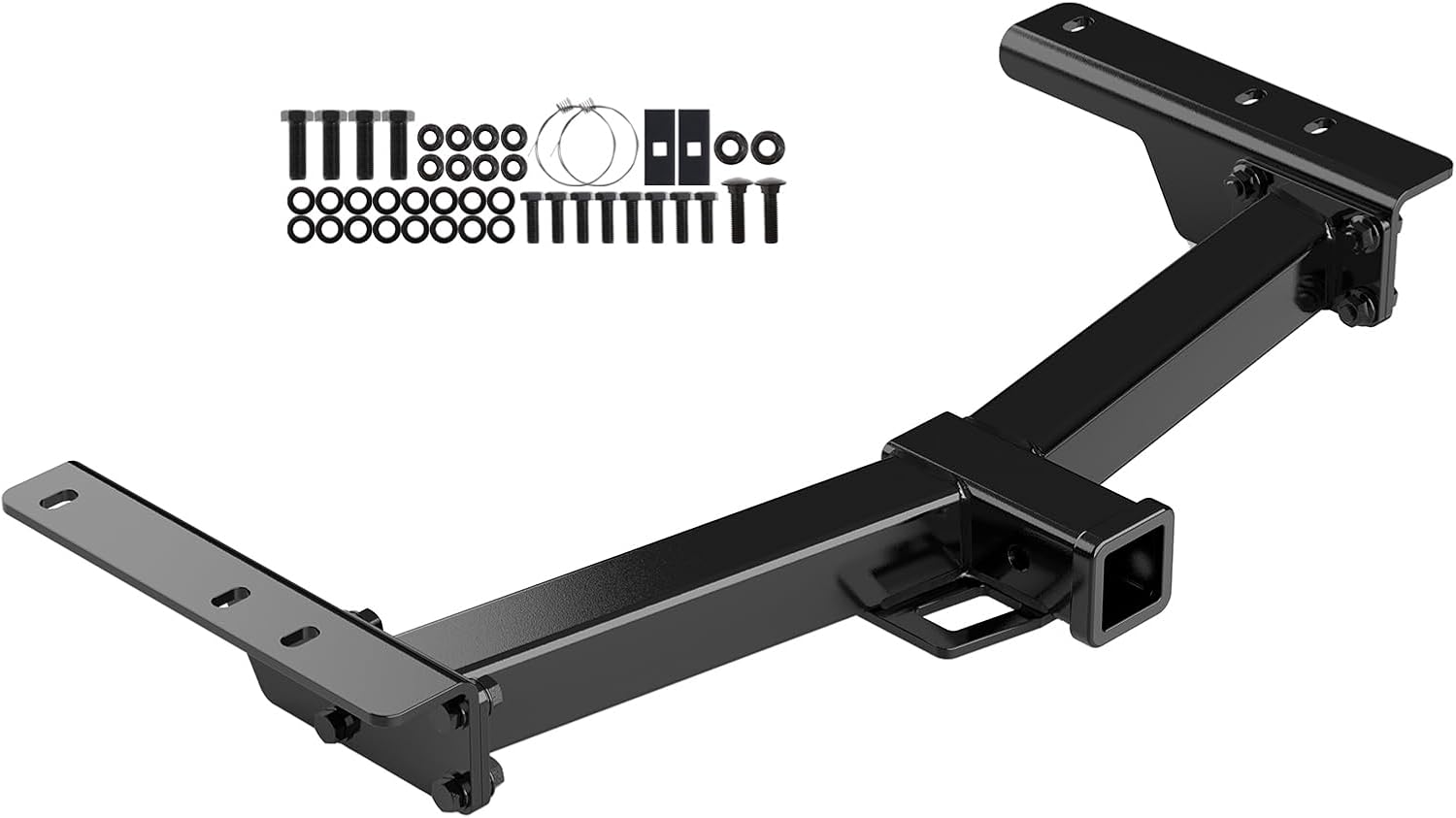
The image above displays the APS Rear Towing Hitch Receiver along with the complete set of mounting hardware required for installation, ensuring you have all necessary components for a secure fit.
Setup and Installation
The APS Rear Towing Hitch Receiver is designed for a vehicle-specific fit on Ford Transit-150, Transit-250, and Transit-350 models from 2015-2026. It features an easy bolt-on design, typically requiring no drilling.
Required Tools (Not Included):
- Socket wrench set
- Torque wrench
- Safety glasses and gloves
- Important: An M12 x 1.75mm tap may be required to clean or re-thread existing frame holes on some Ford Transit models for proper bolt engagement.
Installation Steps:
- Prepare Vehicle: Park the vehicle on a level surface and engage the parking brake. For safety, consider using jack stands.
- Locate Mounting Points: Identify the factory mounting holes on the vehicle's frame at the rear. These are typically pre-drilled.
- Inspect and Prepare Holes: On some Ford Transit models, the existing frame holes may be tight or have paint/debris. It is highly recommended to use an M12 x 1.75mm tap to clean and pre-thread these holes before attempting to insert bolts. This prevents cross-threading or stripping bolts.
- Position Hitch: Carefully lift the hitch receiver into position, aligning the mounting holes on the hitch with the frame holes. It may be helpful to have a second person assist.
- Install Hardware: Insert the provided bolts and washers through the hitch and into the vehicle frame. Hand-tighten all fasteners initially.
- Tighten Fasteners: Once all bolts are in place and hand-tightened, use a torque wrench to tighten them to the manufacturer's specified torque values. Refer to the included hardware sheet for specific torque requirements. Ensure even tightening across all bolts.
- Final Inspection: Double-check all connections to ensure they are secure. Confirm the hitch is properly aligned and stable.

The image above shows the APS Class III Receiver Hitch securely installed on a Ford Transit van, demonstrating the precise fit and the quality of the robotically welded construction.
Operating Instructions
Your APS Class 3 Rear Towing Hitch Receiver is designed for versatile towing applications. It features a 2-inch receiver opening, compatible with a wide range of towing accessories.
Towing Capacities:
- Weight Carrying Capacity: Up to 6000 lbs
- Tongue Weight Capacity (Weight Carrying): Up to 900 lbs
- Weight Distribution Capacity: Up to 8000 lbs
- Tongue Weight Capacity (Weight Distribution): Up to 900 lbs
Note: Always refer to your vehicle's owner's manual for its specific towing capacity and ensure it is not exceeded. The hitch capacity should not exceed the vehicle's capacity.
Compatible Towing Accessories:
- Trailer Hitch Ball Mounts
- Weight Distribution Systems
- Cargo Carriers
- Bike Carriers
- Various types of trailers (e.g., utility, boat, camp, kayak trailers)

This image demonstrates the versatility of the APS hitch, showcasing its compatibility with different towing accessories and trailer types, including weight distribution systems, ball mounts, cargo carriers, bike carriers, and various trailers like kayak, boat, camp, and utility trailers.
Maintenance
Proper maintenance will extend the life and ensure the safe operation of your APS Rear Towing Hitch Receiver.
- Regular Inspection: Periodically inspect the hitch receiver, mounting hardware, and surrounding vehicle frame for any signs of rust, cracks, bends, or loose fasteners. Inspect more frequently in harsh weather conditions or after heavy use.
- Corrosion Protection: The hitch features a triple-layer rust-resistant coating (pre-treated steel, special E-coating inside and out, and a durable black powder-coated finish). If any part of this coating is damaged, clean the area and apply a rust-inhibiting paint to prevent corrosion.
- Cleaning: Clean the hitch receiver regularly to remove dirt, salt, and road grime. Use mild soap and water, then rinse thoroughly and dry.
- Hitch Cover: Utilize the provided hitch rubber cover to protect the receiver opening from dirt, debris, and moisture when not in use.

This diagram illustrates the advanced multi-layer rust-resistant coating applied to the APS towing hitch receiver, consisting of pre-treatment steel, special E-coating inside and out, and a durable black powder-coated finish for enhanced durability and protection against harsh conditions.
Troubleshooting
| Problem | Possible Cause | Solution |
|---|---|---|
| Bolts do not thread easily into vehicle frame. | Existing frame holes are tight, have paint, or debris. | Use an M12 x 1.75mm tap to clean and re-thread the existing holes before attempting to insert bolts. Do not force bolts. |
| Hitch appears too small or does not align with vehicle frame. | Incorrect product for vehicle model/year, or misalignment during installation. | Double-check the product's compatibility with your specific Ford Transit-150, Transit-250, or Transit-350 model and year (2015-2026). Ensure the hitch is positioned correctly. |
| Hitch makes unusual noises during towing. | Loose fasteners or improper attachment of towing accessories. | Inspect all mounting bolts for proper torque. Ensure towing accessories (ball mount, hitch pin) are securely fastened and rated for the load. |
| Signs of rust or corrosion appearing on the hitch. | Damage to the protective coating. | Clean the affected area thoroughly and apply a rust-inhibiting paint to prevent further corrosion. Regular cleaning and use of the hitch cover can help. |
Specifications
| Feature | Detail |
|---|---|
| Brand | APS |
| Model Number | HT-X30193 |
| ASIN | B0D9QXR4C9 |
| Vehicle Service Type | Van (Ford Transit-150, Transit-250, Transit-350 2015-2026) |
| Material | Carbon Steel |
| Finish Type | Powder Coated (Triple-layer rust-resistant coating) |
| Item Weight | 32 Pounds |
| Receiver Size | 2-inch x 2-inch |
| Maximum Towing Capacity (Weight Carrying) | 6000 lbs |
| Maximum Tongue Weight (Weight Carrying) | 900 lbs |
| Maximum Towing Capacity (Weight Distribution) | 8000 lbs |
| Maximum Tongue Weight (Weight Distribution) | 900 lbs |
| Installation Type | Bolt-on, No Drilling Required (for most applications) |
| Safety Compliance | Exceeds V5 standards, complies with SAE J684 |
Warranty and Support
This APS Rear Towing Hitch Receiver comes with a 1-Year Warranty Against Manufacturer Defects.
For warranty claims, technical assistance, or any questions regarding your product, please contact APS customer support through the retailer where the product was purchased or visit the official APS website for contact information.
Please have your model number (HT-X30193) and purchase information ready when contacting support.