
1. Product Overview
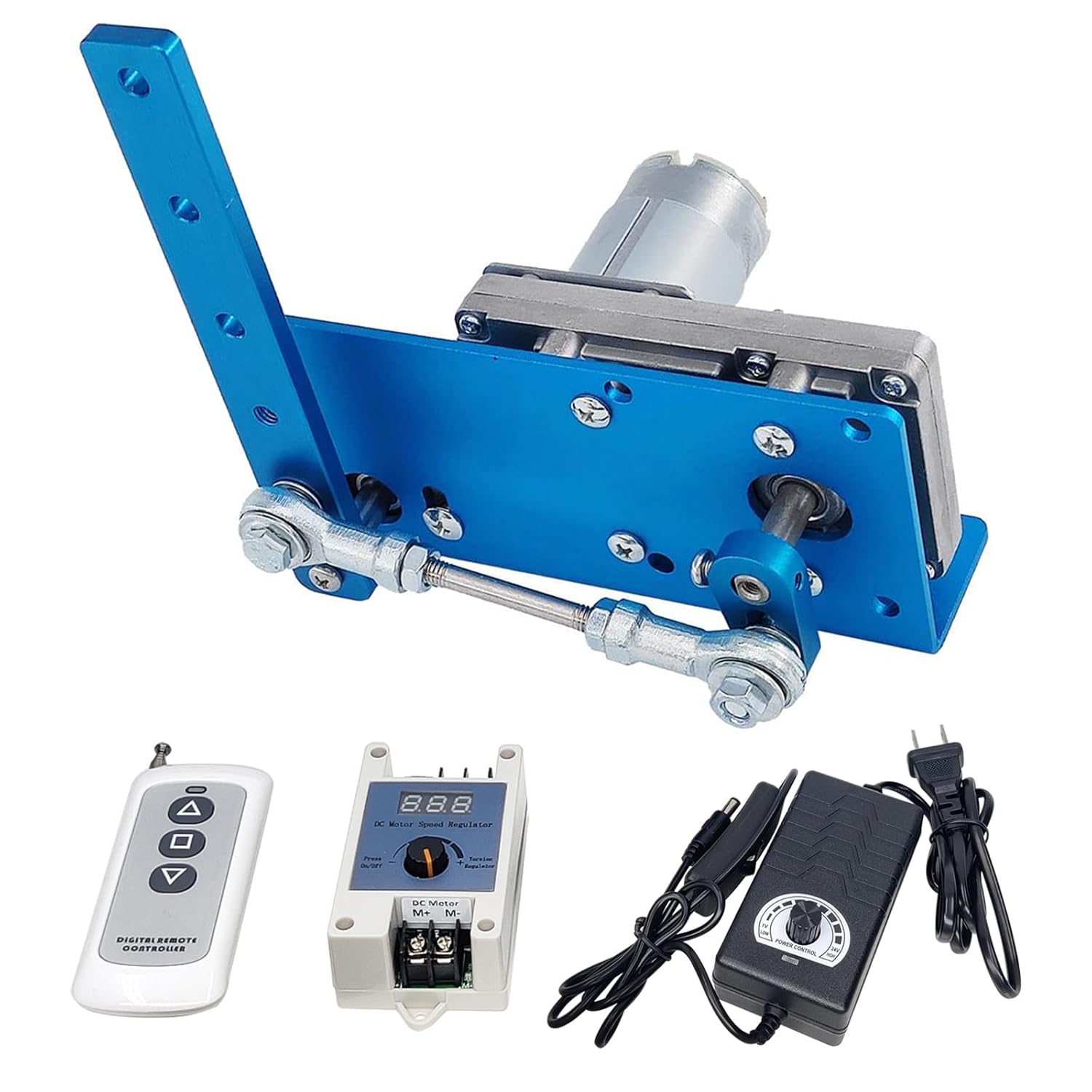
The JQDML Reciprocating Swing Motor is designed for continuous reciprocating motion, making it suitable for various DIY projects, educational experiments, and specialized applications. This motor features a robust copper wire construction, double ball bearings, and CNC machining for precision and durability. It includes an adjustable speed regulator and a remote control for versatile operation.
Package Contents
- 1 x Reciprocating Swing Motor
- 1 x Remote Control
- 1 x Speed Control Regulator

2. Technical Specifications
| Feature | Specification |
|---|---|
| Brand | JQDML |
| Item Model Number | 24V90RPM-YK |
| Speed | 90 RPM |
| Voltage | 24 Volts |
| Horsepower | 15 Watts |
| Product Dimensions (L x W x H) | 5.12 x 5.12 x 6.3 inches (130 x 130 x 160 mm) |
| Weight | 2.69 Pounds (1.22 kg) |
| Swing Angle | 20-120 Degrees (Adjustable) |
Dimensional Drawings


3. Setup and Installation
Before installation, ensure all components are present and undamaged. This motor is designed for DIY applications, and proper electrical connections are crucial for safe and effective operation.
Connecting the Components
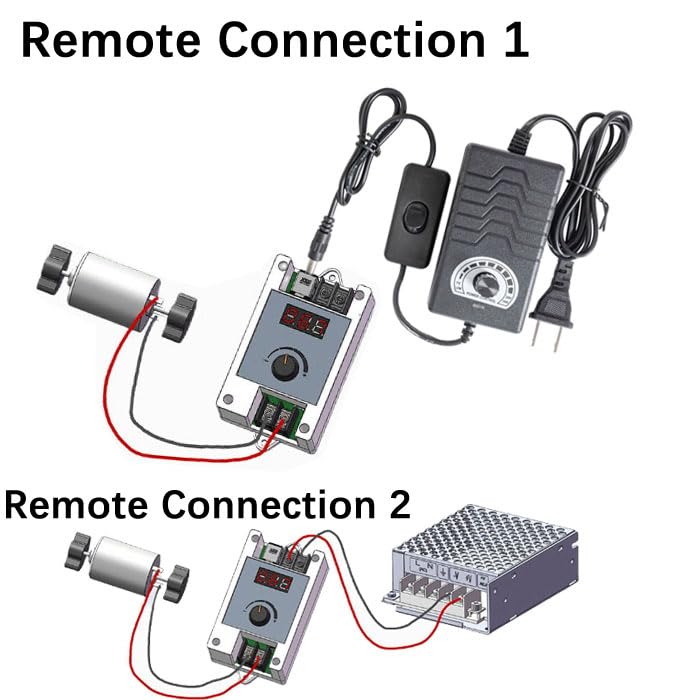
- Motor to Speed Regulator: Connect the motor's positive and negative wires to the 'DC Motor M+' and 'M-' terminals on the speed regulator, respectively.
- Power Supply to Speed Regulator: Connect the power adapter to the 'DC IN' port on the speed regulator. Ensure the power adapter is suitable for 24V DC input.
- Remote Control: The remote control operates wirelessly with the speed regulator. No direct wiring is required for the remote control itself.
Mounting the Motor
Securely mount the motor to a stable surface using appropriate fasteners through the designated mounting holes. Ensure the mounting surface can withstand the forces generated by the reciprocating motion. The motor's base has pre-drilled holes for easy installation.
Important: Confirm the required speed and torque for your application before operating the motor. Incorrect selection can lead to motor damage or malfunction.
4. Operation Guide
Using the Speed Regulator
The speed regulator allows you to adjust the motor's RPM. Turn the knob on the regulator to increase or decrease the motor's speed. The digital display will show the current speed setting.
- Power ON/OFF: Use the 'Press ON/OFF' button to power the motor on or off.
- Speed Adjustment: Rotate the 'Tension Regulator' knob to fine-tune the motor's speed.
Using the Remote Control
The remote control provides convenient wireless operation of the motor. It typically allows for basic functions such as starting, stopping, and potentially adjusting speed or direction, depending on the specific model's capabilities.
- Power Button: Activates or deactivates the motor.
- Direction/Speed Buttons: Use the directional arrows or designated buttons to adjust the motor's operation as needed.
Note: The speed of the swing rod is variable. If your application requires a perfectly uniform speed or highly precise swing angle accuracy, please consider this characteristic before use, as this product is a non-standard, hand-assembled item.
5. Maintenance
Regular maintenance ensures the longevity and optimal performance of your reciprocating swing motor.
- Cleaning: Keep the motor and its components free from dust and debris. Use a soft, dry cloth for cleaning. Avoid using liquids or harsh chemicals.
- Lubrication: Periodically check the moving parts, especially the ball bearings and connecting rod joints, for smooth operation. Apply a small amount of appropriate lubricant if necessary, following general motor maintenance guidelines.
- Inspection: Regularly inspect all wiring connections for tightness and signs of wear or damage. Ensure the mounting is secure.
- Storage: When not in use for extended periods, store the motor in a dry, clean environment away from extreme temperatures.
6. Troubleshooting
This section addresses common issues you might encounter with your reciprocating swing motor.
Motor Not Running
- Power Check: Ensure the power adapter is correctly plugged into a working outlet and securely connected to the speed regulator.
- Connections: Verify all motor and power supply connections to the speed regulator are correct and secure.
- Speed Regulator: Check if the speed regulator is turned on and the speed knob is not set to zero.
- Remote Control: If using the remote, ensure its batteries are functional and it's within range.
Unusual Noise or Squeaking
- Lubrication: Moving parts may require lubrication. Apply a small amount of appropriate lubricant to the joints and bearings.
- Mounting: Ensure the motor is securely mounted and not vibrating against the mounting surface. Loose mounting can cause noise.
- Obstructions: Check for any obstructions in the motor's path or moving parts.
Inconsistent Speed or Angle
- Load: Excessive load on the motor can affect its performance. Ensure the load is within the motor's specifications.
- Power Supply: An unstable power supply can lead to inconsistent operation.
- Product Characteristic: As noted, the speed of the swing rod is variable, and the product is hand-assembled, which may result in slight variations in speed uniformity or angle accuracy.
7. Warranty and Support
For warranty information or technical support, please refer to the seller's policies or contact the manufacturer directly through their official channels. Keep your purchase receipt as proof of purchase.


