
Renogy N-Type 16BB 100W Solar Panel
Renogy 100W N-Type Solar Panel Instruction Manual
Model: N-Type 16BB 100W Solar Panel
1. Introduction
This manual provides essential information for the safe and efficient use of your Renogy 100W N-Type Solar Panel. Designed for high efficiency and durability, this solar panel is suitable for various off-grid applications including RVs, marine vessels, boats, trailers, campers, rooftops, farms, and other remote power systems.
Key Features
- Unmatched Cell Efficiency: Features Grade A+ cells, delivering an impressive conversion efficiency of 25%. This provides 20W more power output compared to conventional PERC panels of the same design.
- 16BB for Higher Conversion Efficiency and Longer Lifespan: Utilizes advanced 16BB cell technology, enhancing photoelectric conversion efficiency while mitigating hot spots and hidden cracks, ensuring a longer service life and superior module performance.
- Enhanced Performance in High Temperatures: Features a low temperature coefficient, minimizing power loss in high-temperature conditions for superior product performance. This allows for increased power generation, particularly beneficial in summer months or extremely hot areas.
- Built to Last: Equipped with IP65 protection, designed to endure snow, rain, and heat for decades. With low-iron tempered glass and corrosion-resistant aluminum frames, it ensures exceptional performance in all weather conditions.
- Long-Term Reliability: Exhibits low degradation (≤1% in the first year, ≤0.4% annually). It’s backed by a 10-year material and workmanship commitment, plus a 25-year performance guarantee at 80% output.
2. Setup and Installation
This section provides guidance on setting up your Renogy 100W N-Type Solar Panel. Proper installation ensures optimal performance and longevity.
Components
- Renogy 100W N-Type Solar Panel
- Integrated Plug-and-Play Solar Connectors (MC4 compatible)
- Pre-drilled mounting holes (mounting hardware not included)
Installation Steps
- Step 1: Unboxing and Inspection: Carefully unbox the solar panel. Inspect for any physical damage.
- Step 2: Mounting: The panel features 20 pre-drilled mounting holes for secure installation. Use appropriate mounting brackets (not included) for your specific application (e.g., RV, marine, rooftop). Ensure the panel is securely fastened to withstand environmental conditions.
- Step 3: Electrical Connections: Connect the plug-and-play solar connectors to your charge controller. Ensure all connections are secure and properly sealed to prevent moisture ingress.
- Step 4: System Integration: Connect the charge controller to your battery bank and inverter as per your system design.

Video Guide: Renogy N-Type 16BB 100W Solar Panel Overview
3. Operating Principles
The Renogy 100W N-Type Solar Panel converts sunlight into electrical energy. Understanding its operating principles helps maximize energy harvest.
N-Type Technology
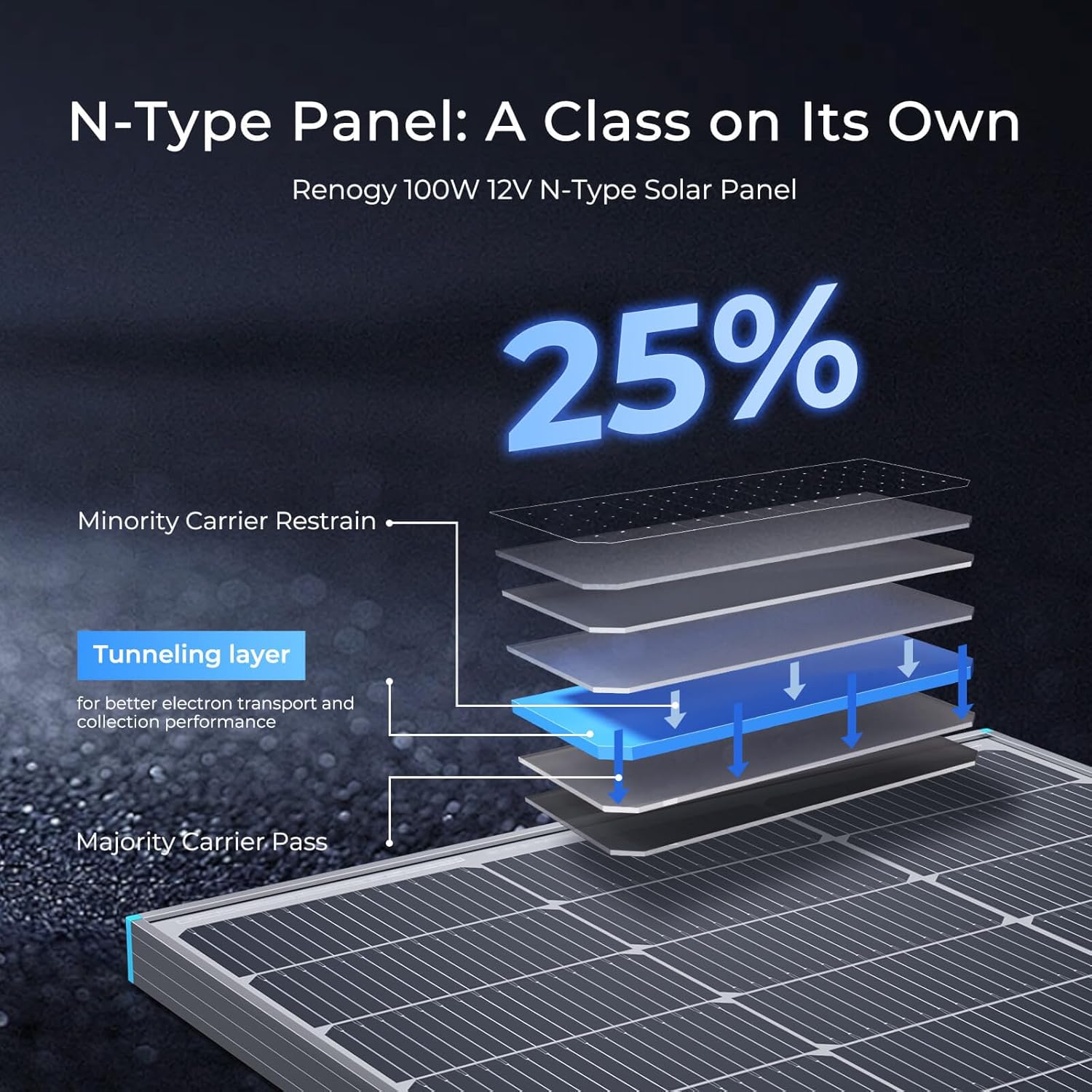
N-Type solar cells utilize a tunneling layer to minimize energy loss and electronic recombination, leading to higher efficiency and consistent performance over time. This technology allows for better electron transport and collection, resulting in a 25% cell efficiency.
Performance in Various Conditions
These panels are designed for enhanced performance, especially in high-temperature environments, due to a low temperature coefficient. They also exhibit slower degradation compared to P-Type panels, ensuring sustained power output over their lifespan. The 16BB cell technology further contributes to consistent, higher output performance.

4. Maintenance
Regular maintenance ensures the longevity and optimal performance of your solar panel.
Cleaning
Periodically clean the surface of the solar panel to remove dust, dirt, leaves, and other debris that may obstruct sunlight. Use a soft cloth and mild, non-abrasive cleaning solution with water. Avoid harsh chemicals or abrasive materials that could scratch the glass.
Connection Checks
Regularly inspect all electrical connections, including MC4 connectors and wiring, for any signs of corrosion, damage, or looseness. Ensure they are securely fastened and properly sealed to prevent moisture ingress.
Long-Term Storage
If storing the solar panel for extended periods (e.g., over 3 months), it is recommended to disconnect it from the battery system. Maintain the battery at approximately 80% charge during storage and consider a trickle charge if storing for 3-9 months. The panels themselves are designed to withstand various weather conditions.
5. Troubleshooting
If your solar panel system is not performing as expected, consider the following common issues:
- No Power Output: Check all connections for looseness or corrosion. Ensure the panel surface is clean and free from shading. Verify the charge controller is functioning correctly.
- Low Power Output: Clean the panel surface. Check for partial shading from trees, buildings, or debris. Ensure the panel is oriented correctly towards the sun. Verify battery health and charge controller settings.
- Battery Not Charging: Confirm all wiring is correct and secure. Check the charge controller for error codes or indicators. Inspect the battery terminals for corrosion.
For persistent issues, consult the Renogy support resources or contact customer service.
6. Technical Specifications
| Feature | Detail |
|---|---|
| Brand | Renogy |
| Material | Monocrystalline Silicon |
| Product Dimensions | 34.1"L x 22.8"W x 1.2"H |
| Item Weight | 13 Pounds |
| Efficiency | 25% High Efficiency |
| Included Components | Solar Panel |
| AC Adapter Current | 5.31 Amps |
| Maximum Voltage | 22.79 Volts |
| Maximum Power | 100 Watts |
| Special Feature | High-efficiency 16BB cell technology, low temperature coefficient, and durable construction |
| UPC | 840315228535 |
| Item model number | N-Type 16BB 100W Solar Panel |
7. Warranty and Support
Warranty Information
The Renogy 100W N-Type Solar Panel is backed by a 10-year material and workmanship commitment, and a 25-year performance guarantee at 80% output. This ensures long-term reliability and peace of mind.

Customer Support
For technical assistance, product inquiries, or warranty claims, please visit the official Renogy website or contact their customer support team.
- Visit the Renogy Store
- Professional Technical Guidance
- 24 Hours Prompt Response
- Local Warehouses in the US
Related documentsN-Type 16BB 100W Solar Panel

Ask a question about this manual
Ask about setup, troubleshooting, compatibility, parts, safety, or missing instructions. Manuals+ will review the question and use this page’s manual context to help answer it.