1. Important Safety Information
Read all instructions carefully before using the appliance. Keep this manual for future reference. Failure to follow these instructions may result in electric shock, fire, or damage to property.
- Ensure the dishwasher is properly grounded.
- Do not operate the dishwasher if it is damaged.
- Keep children away from the dishwasher, especially during operation.
- Use only detergents and rinse aids specifically designed for automatic dishwashers.
- Do not touch the heating element during or immediately after use.
- Always disconnect the appliance from the power supply before cleaning or maintenance.
2. Setup and Installation
2.1 Unpacking
Carefully remove all packaging materials. Inspect the dishwasher for any shipping damage. The package includes the dishwasher unit and a power cord.
2.2 Placement
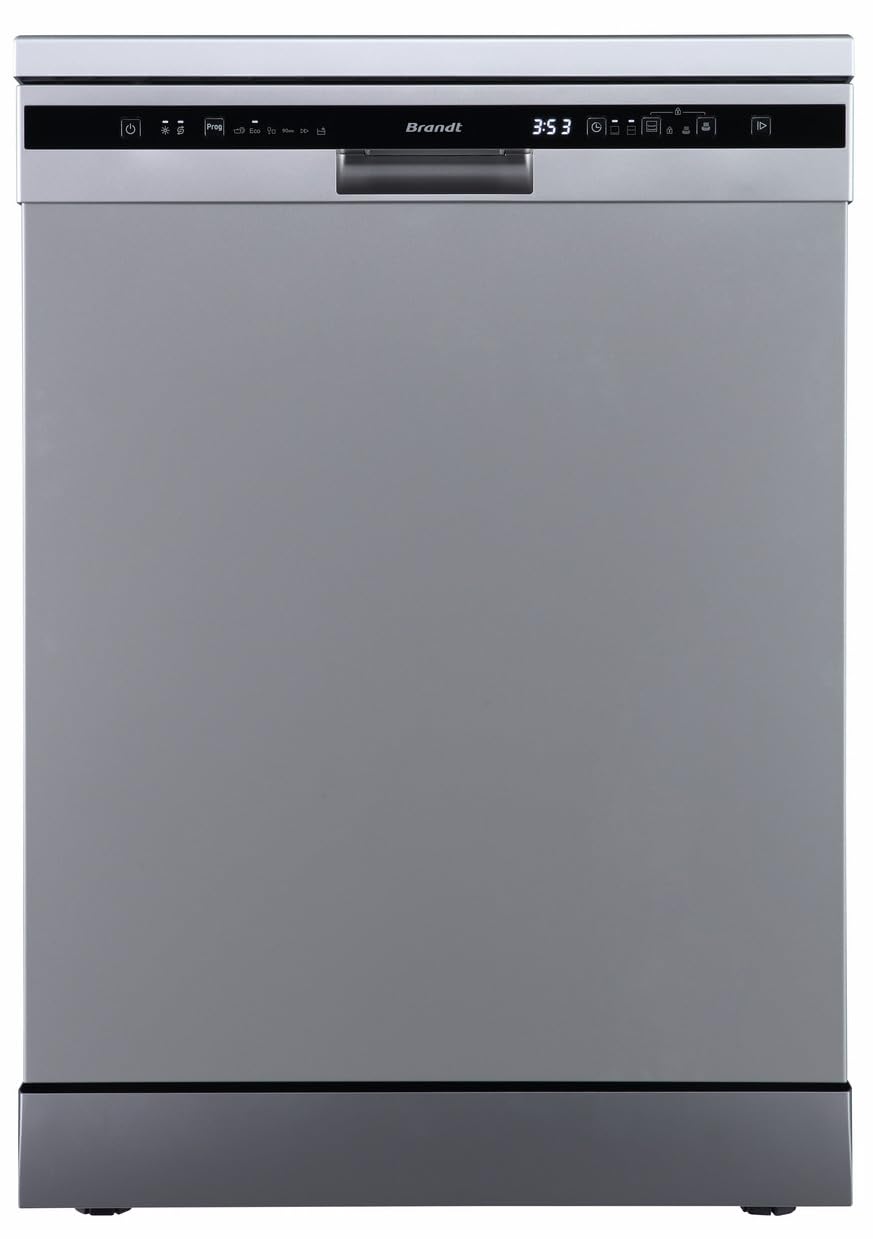
The Brandt DWF147DS is a freestanding dishwasher. Place it on a level, stable surface. Ensure there is adequate space for opening the door and for water and electrical connections. Product dimensions are 61D x 59.8W x 84.5H Centimeters.
2.3 Water Connection
Connect the water inlet hose to a cold water supply. Ensure all connections are tight to prevent leaks.
2.4 Drain Connection
Connect the drain hose to a suitable drain pipe or sink trap. Ensure the hose is not kinked or obstructed.
2.5 Electrical Connection
Plug the power cord into a grounded electrical outlet. Ensure the voltage and frequency match the specifications of the dishwasher.
3. Operating Instructions
3.1 Control Panel Overview
The dishwasher features an LED display and push-button controls for easy operation.
3.2 Loading the Dishwasher
This dishwasher has a capacity of 14 place settings and includes 3 baskets. Load dishes carefully, ensuring that water can reach all surfaces. Avoid overcrowding.
- Place larger items in the lower basket.
- Place glasses, cups, and smaller items in the upper basket.
- Arrange cutlery in the cutlery basket, handles down for forks and spoons, handles up for knives.
3.3 Adding Detergent and Rinse Aid
Fill the detergent dispenser with the appropriate amount of dishwasher detergent. Add rinse aid to the rinse aid dispenser as needed to ensure streak-free drying.
3.4 Program Selection
The Brandt DWF147DS offers 6 wash programs. Select the desired program based on the soil level and type of dishes. Refer to the program chart (not provided in this manual, typically on the appliance or quick start guide) for details on each program.
3.5 Cycle Options
Utilize the delayed start option to postpone the start of a wash cycle by a set number of hours.
3.6 Starting a Cycle
Close the dishwasher door firmly. Press the Start button to begin the selected wash program.
3.7 Interrupting or Cancelling a Cycle
To interrupt a cycle, open the door carefully. To cancel, press and hold the Start/Cancel button for a few seconds. The dishwasher will drain and reset.
4. Maintenance and Care
4.1 Cleaning Filters
Regularly clean the filter system located at the bottom of the dishwasher tub. Remove food particles and rinse under running water.
4.2 Cleaning Spray Arms
Check the spray arm nozzles for blockages. Remove the spray arms and clean any clogged holes with a thin wire or toothpick.
4.3 Exterior and Interior Cleaning
Wipe the exterior of the dishwasher with a soft, damp cloth. For the interior, run a dishwasher cleaning cycle periodically using a specialized dishwasher cleaner.
4.4 Salt Reservoir (if applicable)
If your water is hard, the dishwasher may have a salt reservoir. Check the salt indicator and refill with dishwasher salt as needed to prevent limescale buildup.
5. Troubleshooting
Before contacting customer service, refer to the following common issues and solutions:
| Problem | Possible Cause | Solution |
|---|---|---|
| Dishwasher does not start | Power cord not plugged in; door not closed properly; fuse blown. | Check power connection; ensure door is latched; check household fuse/breaker. |
| Dishes are not clean | Improper loading; insufficient detergent; clogged spray arms; dirty filters. | Reload dishes correctly; add more detergent; clean spray arms; clean filters. |
| Water not draining | Clogged drain hose; clogged filter. | Check and clear drain hose; clean filter. |
| Excessive noise | Dishes interfering with spray arms; foreign object in pump. | Rearrange dishes; inspect pump area for obstructions. |
6. Specifications
Detailed technical specifications for the Brandt DWF147DS Dishwasher:
- Model Name: DWF147DS
- Brand: Brandt
- Form Factor: Freestanding
- Colour: Silver
- Finish Type: Glossy
- Product Dimensions: 61D x 59.8W x 84.5H Centimeters
- Item Weight: 49 Kilograms
- Place Settings: 14
- Number of Programs: 6
- Cycle Options: Delay Start
- Controls Type: Push Button
- Display Type: LED
- Noise Level: 47 dB
- Annual Energy Consumption: 85 Kilowatt Hours per 100 cycles
- Water Consumption: 12.5 litres per cycle
- Dishwasher Basket Material: Stainless Steel
- Dishwasher Rack Material: Stainless Steel
- Included Components: Power Cord
- Repairability Index: 8.5
6.1 Energy Information
The Brandt DWF147DS dishwasher is rated with an energy efficiency class D. Below is the energy label providing key performance indicators:
This image displays the energy label for the Brandt DWF147DS dishwasher, indicating its energy efficiency class D, annual energy consumption of 85 kWh per 100 cycles, water consumption of 10.0 liters per cycle, noise level of 47 dB, and a standard program duration of 3:53. For more details, visit the official EPREL database: https://eprel.ec.europa.eu/qr/1452244
7. Warranty and Support
For warranty information and customer support, please refer to the warranty card included with your purchase or contact Brandt customer service directly. Keep your purchase receipt as proof of purchase.


