
1. Product Overview
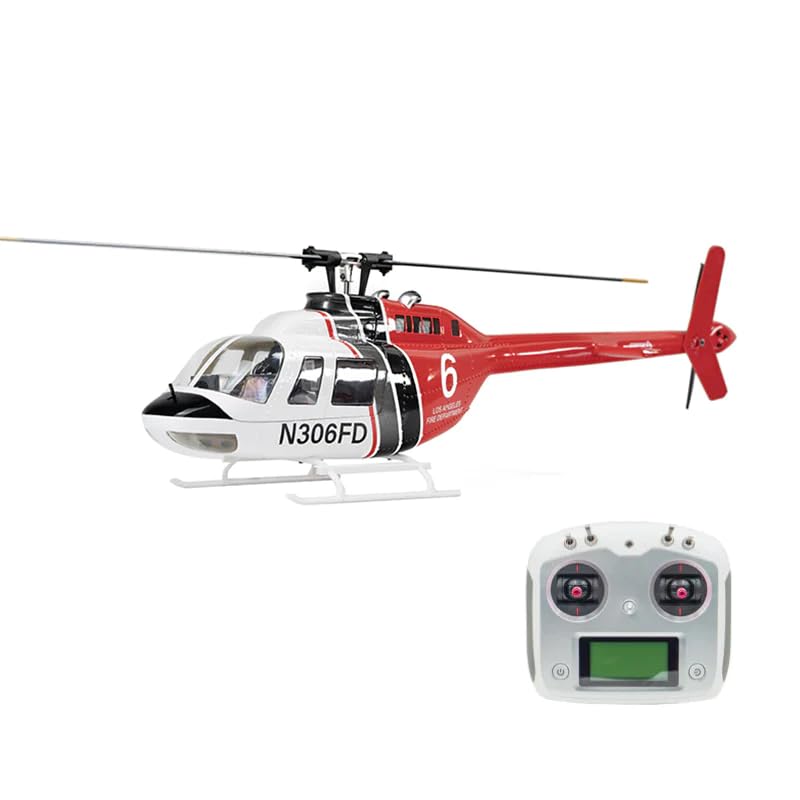
The Helidirect FlyWing BELL-206 V3 is a ready-to-fly (RTF) scale RC helicopter, designed for enthusiasts seeking a realistic flight experience. This model comes equipped with a 10-channel remote control transmitter, a 60A Electronic Speed Controller (ESC), and a powerful brushless motor. It features advanced flight modes including GPS mode, 3D manual mode, and safety functions like lost control return and low voltage return.
2. Safety Precautions
Before operating your RC helicopter, please read and understand all safety guidelines. Failure to follow these instructions may result in injury or damage to the product.
- Flight Environment: Operate the helicopter in open, clear areas away from people, animals, buildings, and power lines. Avoid flying in strong winds or adverse weather conditions.
- Battery Safety: Use only the specified battery and charger. Do not overcharge or discharge the battery. Store batteries in a cool, dry place away from flammable materials.
- Rotor Blades: Keep hands, face, and loose clothing away from rotating blades. Blades can cause serious injury.
- Pre-Flight Check: Always perform a thorough pre-flight check before each use to ensure all components are secure and functioning correctly.
- Adult Supervision: This product is recommended for users aged 14 and above. Adult supervision is advised for younger operators.
3. Package Contents
Verify that all items are present in your package:
- Bell 206 V3 RC Helicopter (1)
- Transmitter (1)
- Charger (1)
- Battery (1) - 4S-3000mAh
4. Setup
4.1 Battery Charging
Before first use, fully charge the provided 4S-3000mAh battery using the included charger. Refer to the charger's specific instructions for proper charging procedures. Always monitor the battery during charging.
4.2 Transmitter Preparation
Insert the required batteries (not included) into the 10-channel RC transmitter. Ensure correct polarity. Power on the transmitter.
4.3 Binding Procedure
To establish communication between the helicopter and the transmitter:
- Ensure both the helicopter and transmitter are powered off.
- Turn on the transmitter.
- Connect the battery to the helicopter. The helicopter's indicator light will begin to flash.
- Press and hold the binding button on the transmitter (refer to your transmitter manual for exact location) while powering it on.
- Release the binding button once the helicopter's indicator light becomes solid, indicating a successful bind.
4.4 Throttle Mode Adjustment
The transmitter may support different throttle modes (e.g., Mode 1, Mode 2). Adjust the throttle mode according to your preference and experience level. Consult the transmitter manual for detailed instructions on how to switch throttle modes.
5. Operating Instructions
5.1 Basic Controls
Familiarize yourself with the transmitter controls:
- Throttle: Controls the main rotor speed and altitude.
- Yaw: Controls the helicopter's rotation around its vertical axis (left/right turn).
- Pitch: Controls the helicopter's forward/backward movement.
- Roll: Controls the helicopter's sideways movement (left/right).
5.2 Flight Modes
The BELL-206 V3 offers several flight modes:
- GPS Mode: Provides stable flight with GPS positioning, ideal for beginners. The helicopter will attempt to hold its position.
- 3D Manual Mode: Offers full manual control for advanced maneuvers and aerobatics.
- Lose Control Return: If signal is lost, the helicopter will automatically return to its last known GPS home point.
- Low Voltage Return: The helicopter will initiate an automatic return and landing when the battery voltage is critically low.
- Semi-automatic Assisted Flight: Provides assistance for certain flight maneuvers, simplifying complex actions.
5.3 Take-off and Landing
Always ensure a clear take-off and landing zone. For assisted take-off, gently increase the throttle. For landing, slowly decrease the throttle while maintaining control over the helicopter's position.

6. Maintenance
Regular maintenance ensures optimal performance and longevity of your helicopter.
- Cleaning: After each flight, gently clean the helicopter body and rotors to remove dust, dirt, or debris. Use a soft, dry cloth.
- Rotor Blades: Inspect rotor blades for any cracks, chips, or damage. Replace damaged blades immediately. Ensure all screws securing the blades are tight.
- Motor and ESC: Keep the motor and ESC free from obstructions and ensure proper ventilation to prevent overheating.
- Battery Care: Do not store batteries fully charged or fully discharged for extended periods. Charge to storage voltage (typically 3.8V per cell for LiPo) if storing for more than a few days.
- Loose Components: Periodically check all screws and connections to ensure they are secure.
7. Troubleshooting
If you encounter issues, refer to the following common problems and solutions:
| Problem | Possible Cause | Solution |
|---|---|---|
| Helicopter does not respond to transmitter. | Not bound, low transmitter battery, helicopter battery low. | Perform binding procedure, replace transmitter batteries, charge helicopter battery. |
| Helicopter drifts during hover. | Trim settings incorrect, minor damage to rotors, uneven weight distribution. | Adjust trim on transmitter, inspect and replace damaged rotors, ensure battery is centered. |
| Short flight time. | Battery not fully charged, aging battery, aggressive flying. | Ensure full charge, consider replacing old batteries, practice smoother flight. |
| Loss of control during flight. | Out of range, signal interference, critical battery level. | Fly within range, avoid areas with strong interference, check battery level. |
If the problem persists, contact Helidirect customer support for further assistance.
8. Specifications
| Feature | Detail |
|---|---|
| Brand | FLY WING |
| Product | Bell 206 V3 RC Helicopter |
| Battery | 4S-3000mAh (approx. 20 minutes flight time) |
| Length (without blades) | 720mm |
| Width | 150mm |
| Height | 235mm |
| Weight (exclude battery) | 869g |
| Main Rotor Diameter | 810mm |
| Main Rotor Length (one) | 370mm |
| Tail Rotor Diameter | 125mm |
| Motor | 3508 Brushless Motor |
| ESC | 60A |
| Flight Modes | GPS mode, 3D manual mode, Lose control return, Low voltage return, Semi-automatic assisted flight |
| Satellite Positioning Module | GPS/GLONASS/Galilleo |
| Hovering Accuracy (Level) | ±1.5m (with GPS) |
| Hovering Accuracy (Vertical) | ±0.5m (with GPS) |
| Motor Main Gear | 13T |
| Main Drive Gear | 81T |
| Tail Drive Motor | Brushless Motor |
| Transmitter | 10CH |
| Servo | Digital Servo |
| Material Type | Carbon Fiber, Metal |
| Color | Red |
| Assembly Required | No |
9. Warranty and Support
For warranty information, please refer to the documentation provided with your purchase or contact the retailer. For technical support, spare parts, or further assistance, please reach out to Helidirect customer service. Contact details can typically be found on the manufacturer's official website or your purchase invoice.
