
Fockety Focketybuqhas8oyt-13
Fockety 4L 304 Stainless Steel Steam Pressure Cooker Instruction Manual
Model: Focketybuqhas8oyt-13
Important Safety Instructions
Read all instructions carefully before using your pressure cooker.

Image Description: A warning label with a large exclamation mark icon. The text is in multiple languages, with the English text stating: "Warning: Store the product separately from children's toys and other items to avoid accidental ingestion or choking."
- Never force open: Do not attempt to open the pressure cooker until all internal pressure has been completely released.
- Check valves: Before each use, ensure the relief valve vent hole and safety valve are clear and unobstructed. Blockages can lead to dangerous pressure buildup.
- Do not overfill: Never fill the pressure cooker more than two-thirds full. For foods that expand (e.g., rice, beans), do not fill more than half full.
- Heat sources: Use only on compatible heat sources: induction cooker, gas stove, electric stove, or ceramic stove.
- Handle with care: Always use the handles when moving the hot pressure cooker.
- Children and pets: Keep the pressure cooker out of reach of children and pets, especially when in use.
- Maintenance: Regularly inspect all parts for wear or damage. Replace worn parts immediately.
Product Overview
The Fockety 4L Steam Pressure Cooker is crafted from premium 304 stainless steel, offering durability, high-temperature resistance, and protection against rust and wear. Designed for efficient and safe cooking, it operates at 80KPA pressure to significantly reduce cooking times while preserving nutrients.
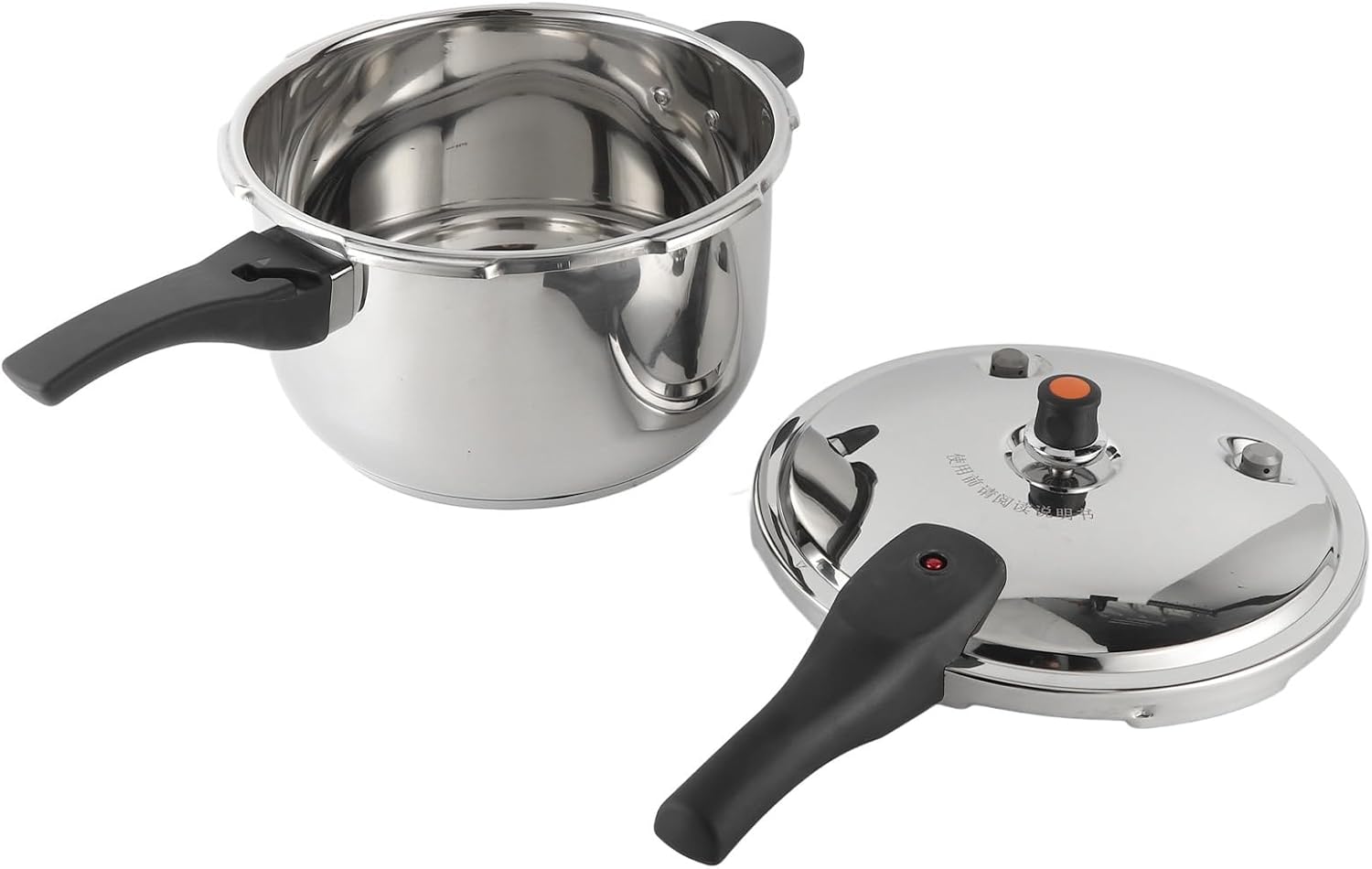
Image Description: The Fockety 4L stainless steel pressure cooker shown disassembled. The main pot is on the left, featuring a sturdy handle. The lid is on the right, displaying its pressure valve, safety valve, and a second handle.
Key Features:
- Efficient Fast Cooking: Utilizes high pressure (80KPA) to raise the boiling point, speeding up cooking and retaining more nutrients through internal high-pressure circulation.
- 304 Stainless Steel Material: Ensures resistance to high temperatures, rust, and wear for long-lasting performance.
- Multifunctional Design: Capable of cooking rice, stewing soup, steaming, making porridge, boiling noodles, and more.
- Safety Pressure Limit: Automatically releases pressure when a certain level is reached, preventing the lid from being opened prematurely. Includes a pressure release window as a final safety measure.
- Intelligent Pressure Limiting: A dedicated device controls internal pressure for safety, complemented by an alarm valve that sounds if pressure continues to rise.
- Secure Handle: Ergonomically designed with a self-locking valve for a slip-resistant, leakproof, and heat-insulated grip, ensuring safe and easy use.
- Anti-Clogging Cover: A safety cover filters out food particles, preventing blockages in the vent and ensuring smooth pressure release.
Setup
Unpacking and Initial Inspection:
- Carefully remove all components from the packaging.
- Verify that all parts are present: pressure cooker pot, lid, main valve, and any included accessories (e.g., sealing ring, small cup, cleaning pin).
- Inspect the cooker for any signs of damage from shipping. Do not use if damaged.
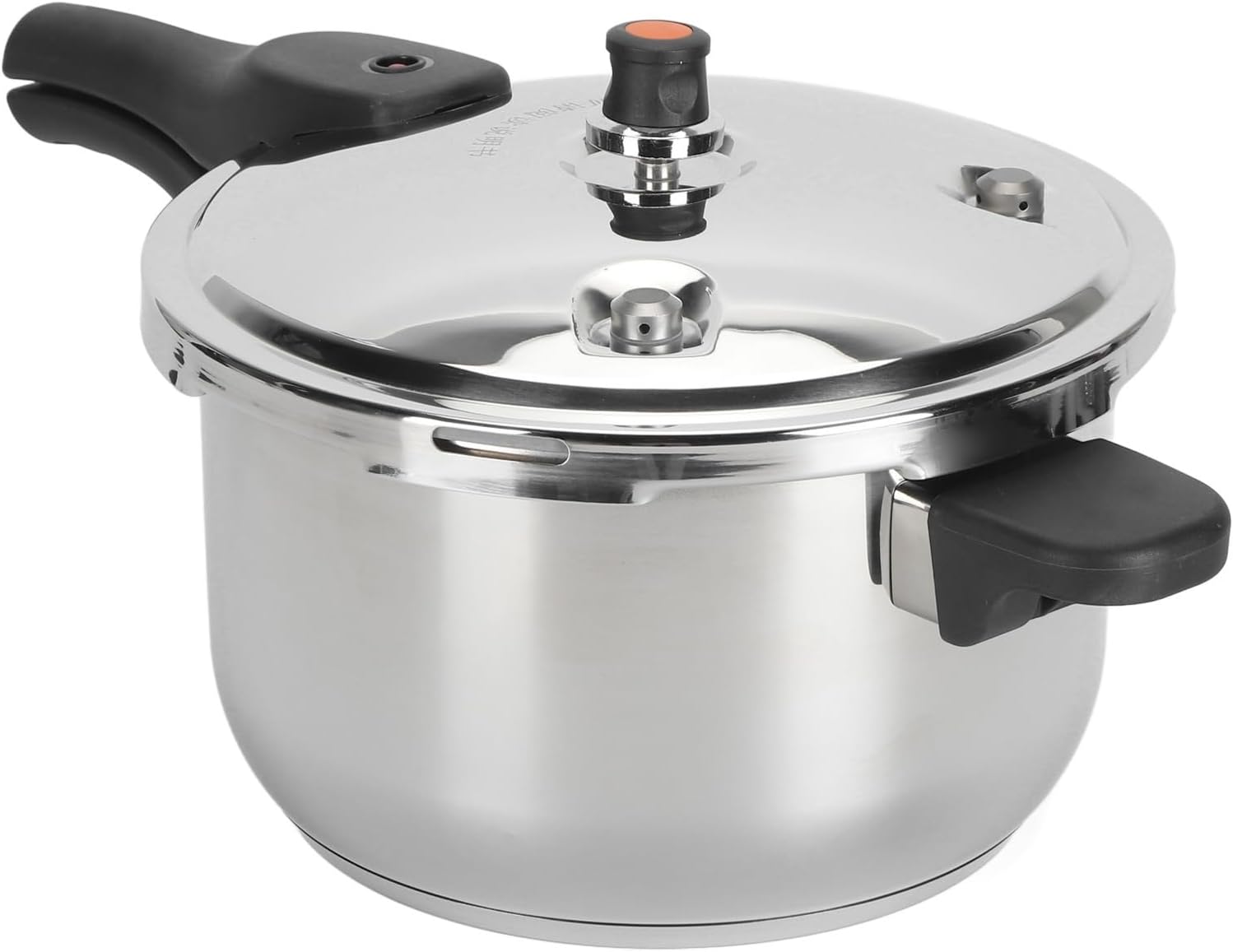
Image Description: The Fockety pressure cooker with its lid securely in place. Beside it are two small accessories: a white plastic cup and a metal cleaning pin, likely for the valves.
First Use Cleaning:
- Wash the pot, lid, and all removable parts thoroughly with warm, soapy water.
- Rinse all components completely to remove any soap residue.
- Dry all parts thoroughly before assembly.
Assembly:
- Ensure the sealing ring is correctly seated inside the lid.
- Place the main valve and safety valve components securely into their designated positions on the lid.
- Before each use, check that the relief valve vent hole is clear of any obstructions.
Operating Instructions
Preparing for Cooking:
- Add food and the required amount of liquid to the pressure cooker pot. Remember not to overfill (maximum 2/3 full, or 1/2 for expanding foods).
- Place the lid onto the pot, aligning the lid's arrow with the pot's handle.
- Rotate the lid clockwise until it locks securely into place. The self-locking valve will engage.
Cooking Process:
- Place the pressure cooker on a suitable heat source (induction, gas, electric, or ceramic stove).
- Set the heat to high. Steam will begin to escape from the main valve as pressure builds.
- Once the desired pressure is reached (indicated by the main valve rising and steady steam release), reduce the heat to maintain a consistent pressure without excessive steam loss.
- Cook for the recommended time according to your recipe.

Image Description: A cutaway diagram of the pressure cooker showing a chicken being cooked inside. Arrows illustrate the internal high-pressure circulation, indicating even heat distribution for thorough cooking.
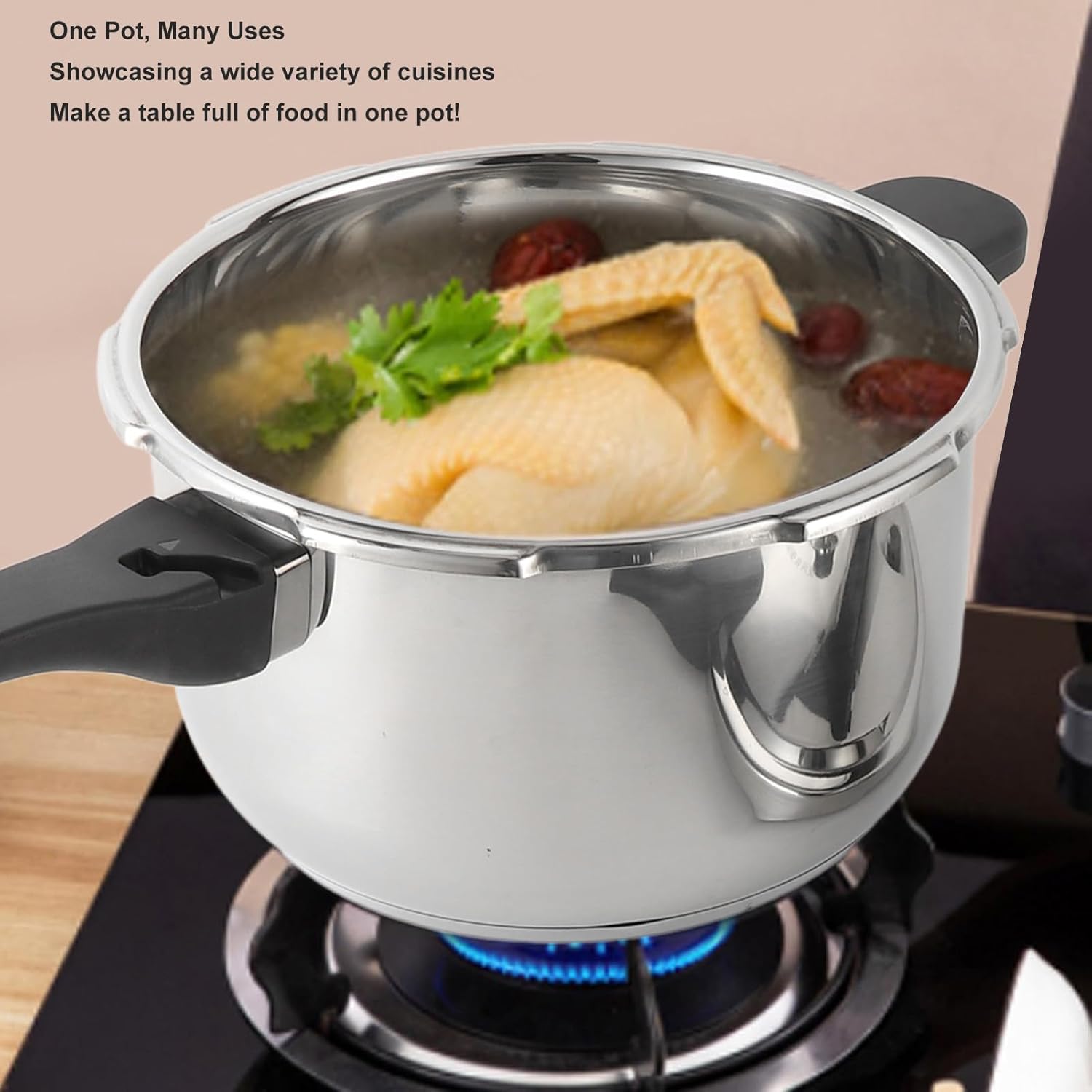
Image Description: The Fockety pressure cooker is shown in use on a gas stove burner, with food visible inside the pot, demonstrating its cooking capability.
Releasing Pressure:
There are two primary methods for releasing pressure:
- Natural Release: Remove the pressure cooker from the heat source and allow it to cool down naturally. The pressure will gradually decrease on its own. This method is ideal for foods that benefit from continued cooking, such as stews and roasts.
- Quick Release: For foods that require immediate stopping of the cooking process, carefully move the pressure cooker to the sink and run cold water over the lid (avoiding the valves) until the pressure drops. Alternatively, if your model has a quick-release valve, carefully activate it to release steam. Exercise extreme caution to avoid steam burns.
Opening the Cooker:
Only open the pressure cooker when the pressure indicator has dropped completely and no steam is escaping. Attempting to open it prematurely can be dangerous.
- Once pressure is fully released, rotate the lid counter-clockwise to unlock it.
- Carefully lift the lid away from you to avoid any residual steam.
Maintenance and Cleaning
After Each Use:
- Allow the pressure cooker to cool completely before cleaning.
- Disassemble the lid, removing the sealing ring, main valve, and safety valve components.
- Wash the pot, lid, and all removable parts with warm, soapy water. Use a soft sponge or cloth to prevent scratching the stainless steel.
- Pay special attention to cleaning the anti-clogging cover and the vent holes of the valves to ensure they are free of food debris. Use the provided cleaning pin if necessary.
- Rinse all parts thoroughly and dry them completely to prevent water spots and rust.
Storage:
- Store the pressure cooker in a dry place.
- It is recommended to store the lid inverted on the pot to allow air circulation and prevent odors.
Troubleshooting
If you encounter issues with your pressure cooker, refer to the following common problems and solutions:
| Problem | Possible Cause | Solution |
|---|---|---|
| Pressure not building | Lid not sealed correctly; insufficient liquid; sealing ring damaged; valve blocked. | Ensure lid is locked; add more liquid; inspect/replace sealing ring; clean valves. |
| Steam leaking from lid edge | Lid not sealed correctly; sealing ring dirty or damaged; food debris on rim. | Relock lid; clean/replace sealing ring; clean pot rim. |
| Lid stuck after cooking | Pressure not fully released. | Allow more time for natural pressure release or use quick release method carefully. Never force open. |
| Alarm valve sounds | Excessive pressure buildup due to main valve blockage or malfunction. | Immediately remove from heat. Allow to cool completely. Inspect and clean all valves thoroughly before next use. |
Specifications
- Model: Focketybuqhas8oyt-13
- Capacity: 4 Liters
- Material: 304 Stainless Steel
- Operating Pressure: 80 KPA
- Compatibility: Universal for Induction Cooker, Gas Stove, Electric Stove, Ceramic Stove
- Item Weight: 5.72 pounds (approximately 2.59 kg)
- Package Dimensions: 16.14 x 9.84 x 8.66 inches (approximately 41 x 25 x 22 cm)
- Manufacturer: Fockety
Warranty and Support
For warranty information or technical support, please refer to the documentation included with your purchase or contact Fockety customer service directly. Keep your purchase receipt as proof of purchase.
Ask a question about this manual
Ask about setup, troubleshooting, compatibility, parts, safety, or missing instructions. Manuals+ will review the question and use this page’s manual context to help answer it.