1. Introduction
The ECO-WORTHY 8KWh 2000W Solar Power Kit System is designed to provide reliable off-grid power for various applications, including homes, sheds, cabins, and RVs. This comprehensive system includes high-efficiency bifacial solar panels, long-lasting lithium batteries with Bluetooth monitoring, an MPPT charge controller, and a pure sine wave inverter. This manual provides essential information for the safe and efficient setup, operation, and maintenance of your solar power system.

Figure 1: Overview of the ECO-WORTHY 8KWh 2000W Solar Power Kit System components.

Figure 2: Illustration of the off-grid solar power system in a home setting, capable of generating up to 7.8kWh per day.
2. Components Included
The ECO-WORTHY 8KWh 2000W Solar Power Kit System includes the following main components:
- 10 pieces of 195W Bifacial Solar Panels
- 2 pieces of 12.8V 280Ah Lithium Batteries with Bluetooth
- 1 piece of 60A MPPT Solar Charge Controller
- 1 piece of 3000W Pure Sine Wave Inverter
- Necessary accessories for installation (e.g., cables, connectors, Z-brackets)

Figure 3: Detailed view of all components included in the DIY complete solar power system kit.
3. Setup and Installation
Proper installation is crucial for the safety and performance of your solar power system. It is recommended that installation be performed by a qualified professional. Always ensure all components are disconnected from power sources before making any connections.
3.1 Wiring Diagram Overview
Refer to the comprehensive wiring diagram below for correct component interconnection. This diagram illustrates the sequence of connections from batteries to solar panels, charge controller, and inverter.

Figure 4: Comprehensive wiring diagram for connecting solar panels, batteries, MPPT controller, and inverter.

Figure 5: Visual guide illustrating the five key steps for system installation, including battery, panel, controller, and inverter connections.
3.2 Battery Connection
Connect the two 12.8V 280Ah lithium batteries in series to achieve a 24V DC battery bank, which is required for the inverter. Ensure positive terminals connect to negative terminals as per the diagram. Secure all connections tightly to prevent arcing and ensure optimal power flow.

Figure 6: The 12.8V 280Ah LiFePO4 battery featuring smart Bluetooth monitoring capabilities.
3.3 Solar Panel Installation and Connection
Install the 10 bifacial solar panels in a location with maximum sun exposure, free from shading. Connect the panels in two groups of five panels each in series, and then connect the two groups in parallel to the MPPT charge controller. Use the provided MC4 connectors and ensure proper polarity.
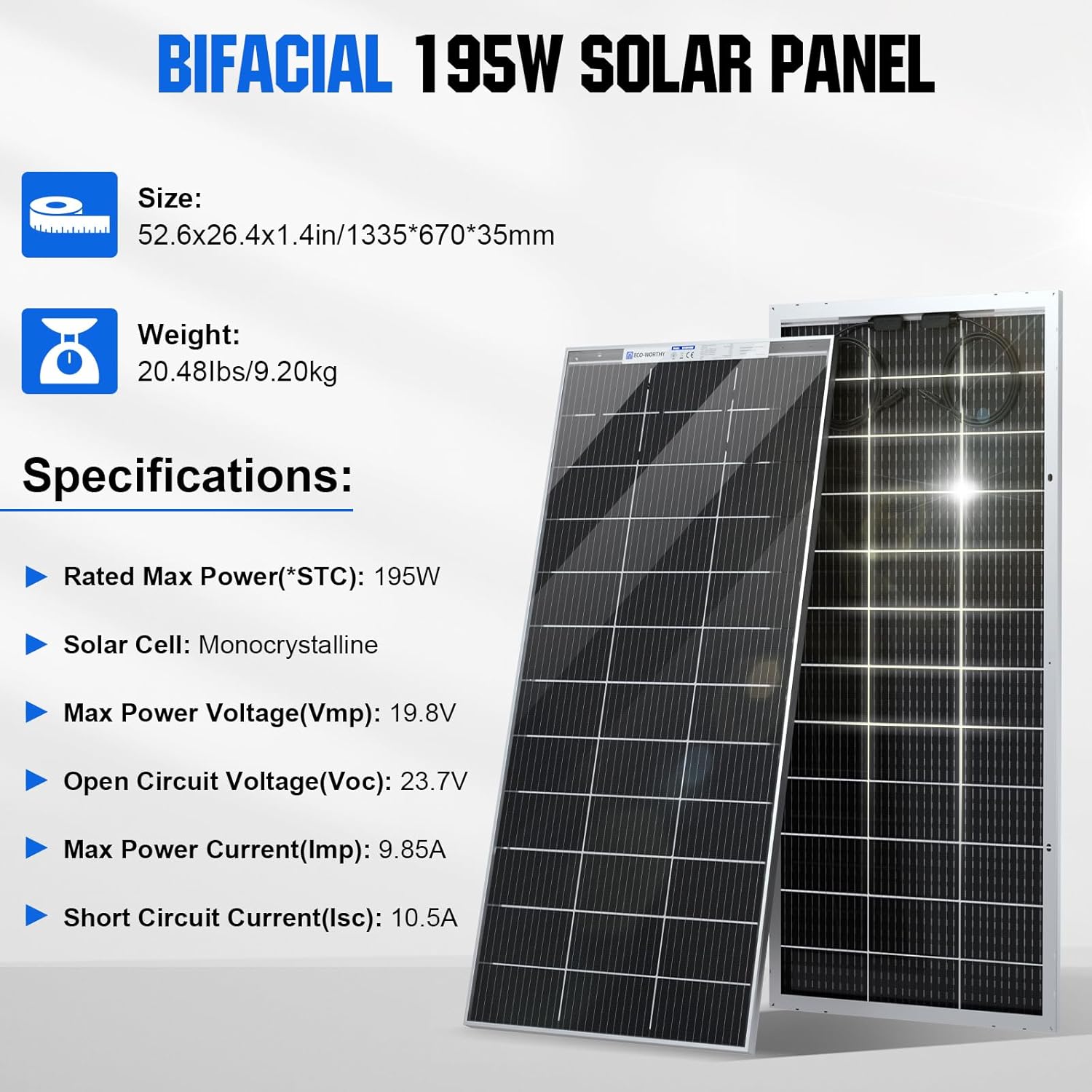
Figure 7: Specifications and physical dimensions of the 195W Bifacial Solar Panel.
3.4 MPPT Charge Controller Connection
Connect the solar panel array to the PV input terminals of the 60A MPPT charge controller. Then, connect the battery bank to the battery terminals of the controller. Ensure the battery connection is made before the solar panel connection. The controller manages the charging process to protect the batteries.
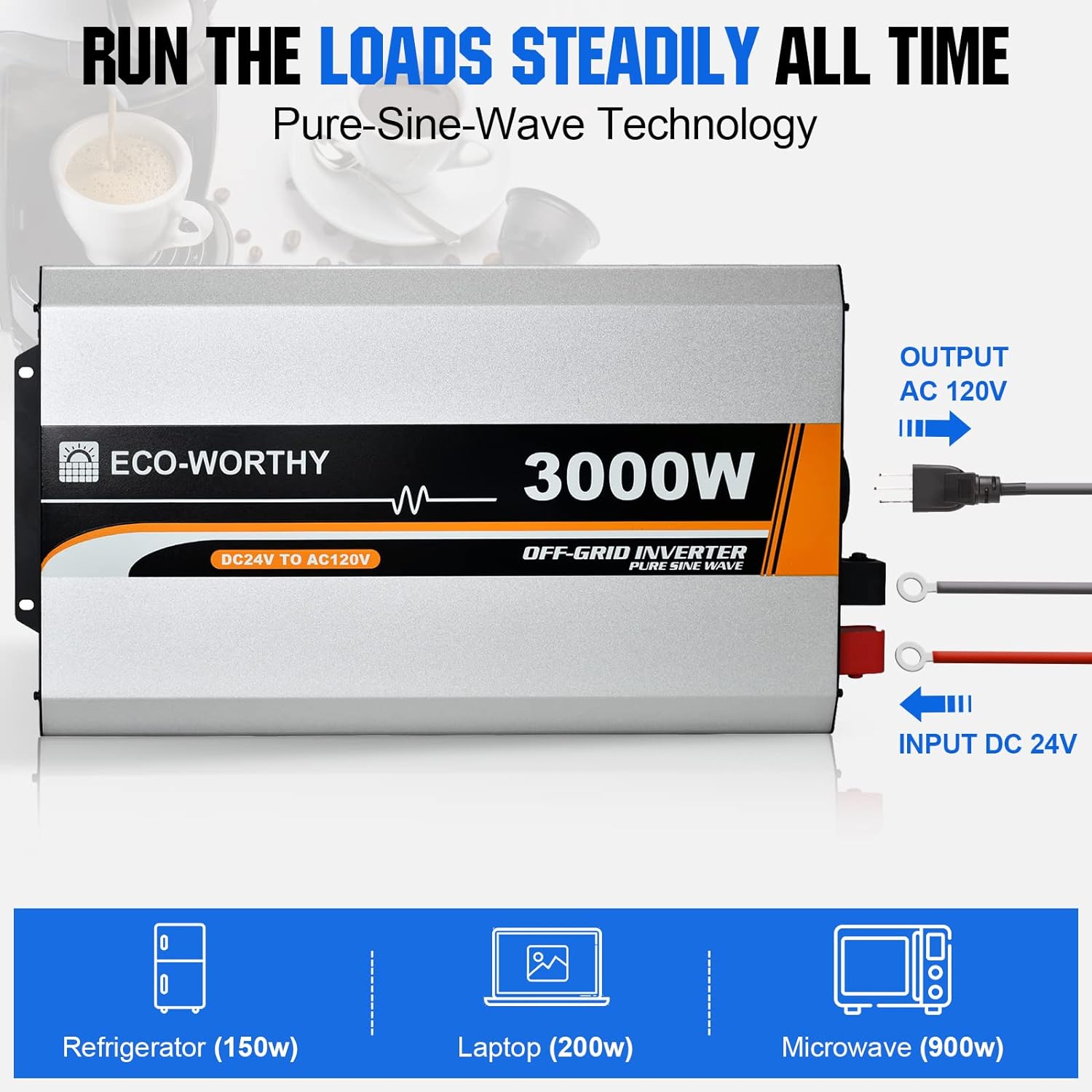
Figure 8: The ECO-WORTHY MPPT 60A Solar Charge Controller, showing its connection to an optional Bluetooth module for wireless monitoring.
3.5 Pure Sine Wave Inverter Connection
Connect the 3000W Pure Sine Wave Inverter to the 24V battery bank. Ensure the inverter's DC input matches the battery bank's voltage. The inverter converts DC power from the batteries into AC power for your household appliances. Connect your AC loads to the inverter's AC output.

Figure 9: The ECO-WORTHY 3000W Pure Sine Wave Inverter, illustrating its DC input and AC output connections for steady power to appliances.
4. Operation
Once installed, the system operates automatically, converting solar energy into usable electricity and storing excess in the batteries. Monitor system performance using the MPPT controller's display or the Bluetooth app.
4.1 Bluetooth Monitoring
The lithium batteries and MPPT controller feature Bluetooth connectivity, allowing you to monitor system parameters and battery status via a mobile application. This provides real-time data and control from a distance of up to 82 feet (25 meters).

Figure 10: A smartphone screen showing real-time data from the solar charge controller via Bluetooth, accessible up to 82 feet away.

Figure 11: Remote monitoring and control of the MPPT controller through a smartphone application, available for both iOS and Android.
4.2 MPPT Controller Functions
The 60A MPPT controller boasts 99% tracking efficiency and 98% conversion efficiency. It features an OLED screen for data display and multiple protections against circuit issues. It also supports 4 load control modes:
- Normal On/Off control
- Optical control
- Dual-period timing control
- Fixed time light control

Figure 12: The four distinct load control modes available on the MPPT solar charge controller for versatile power management.

Figure 13: The clear backlight LCD display of the MPPT controller, providing real-time data, battery system status, and charging information.

Figure 14: Explanation of the LED indicators on the MPPT controller, showing charge status (fast, constant voltage, floating) and fault conditions.
4.3 Inverter Operation
The 3000W Pure Sine Wave Inverter provides stable AC 110V power, preventing overload and overcurrent. It has a 6000W peak power capability to handle high-power appliances during startup. The inverter is compatible with various battery types, including LiFePO4, Sealed Lead-acid, GEL, Flooded, and AGM batteries.

Figure 15: The 3000W Pure Sine Wave Inverter demonstrating compatibility with multiple battery chemistries, requiring a 24V battery bank for operation.
The system is designed to power common household appliances such as air conditioners, TVs, refrigerators, coffee makers, and microwaves. It offers low power waste with 95% efficiency for battery to inverter power transmission and only 1% (0.01kWh) self-consumption per hour in idle condition.

Figure 16: Example of household appliances like TV, microwave, and washer being powered by the ECO-WORTHY solar system.

Figure 17: Example of RV appliances like lights, mobile devices, and refrigerator being powered by the ECO-WORTHY solar system.
5. Maintenance
Regular maintenance ensures the longevity and optimal performance of your ECO-WORTHY solar power system.
5.1 Solar Panel Maintenance
The durable solar panels are designed for extended outdoor use with an aluminum frame and tempered glass. They are IP66 waterproof and can withstand high winds (2400Pa) and snow loads (5400Pa). Periodically clean the surface of the solar panels to remove dust, dirt, and debris that may reduce efficiency. Inspect for any physical damage or loose connections.
5.2 Battery Maintenance
The 12.8V 280Ah lithium batteries feature a built-in BMS (Battery Management System) to prevent damage from overcharge, over-discharge, overload, short circuit, over-current, and high temperature. The updated 60A solar charge controller also provides double protection. These batteries offer over 3000 deep cycles. Monitor battery health via the Bluetooth app. Ensure the batteries are kept within their recommended operating temperature range. The batteries have low-temperature cut-off protection, stopping charging below 19.4°F (-7°C) and discharging below -4°F (-20°C), and resuming charging at 32°F (0°C).
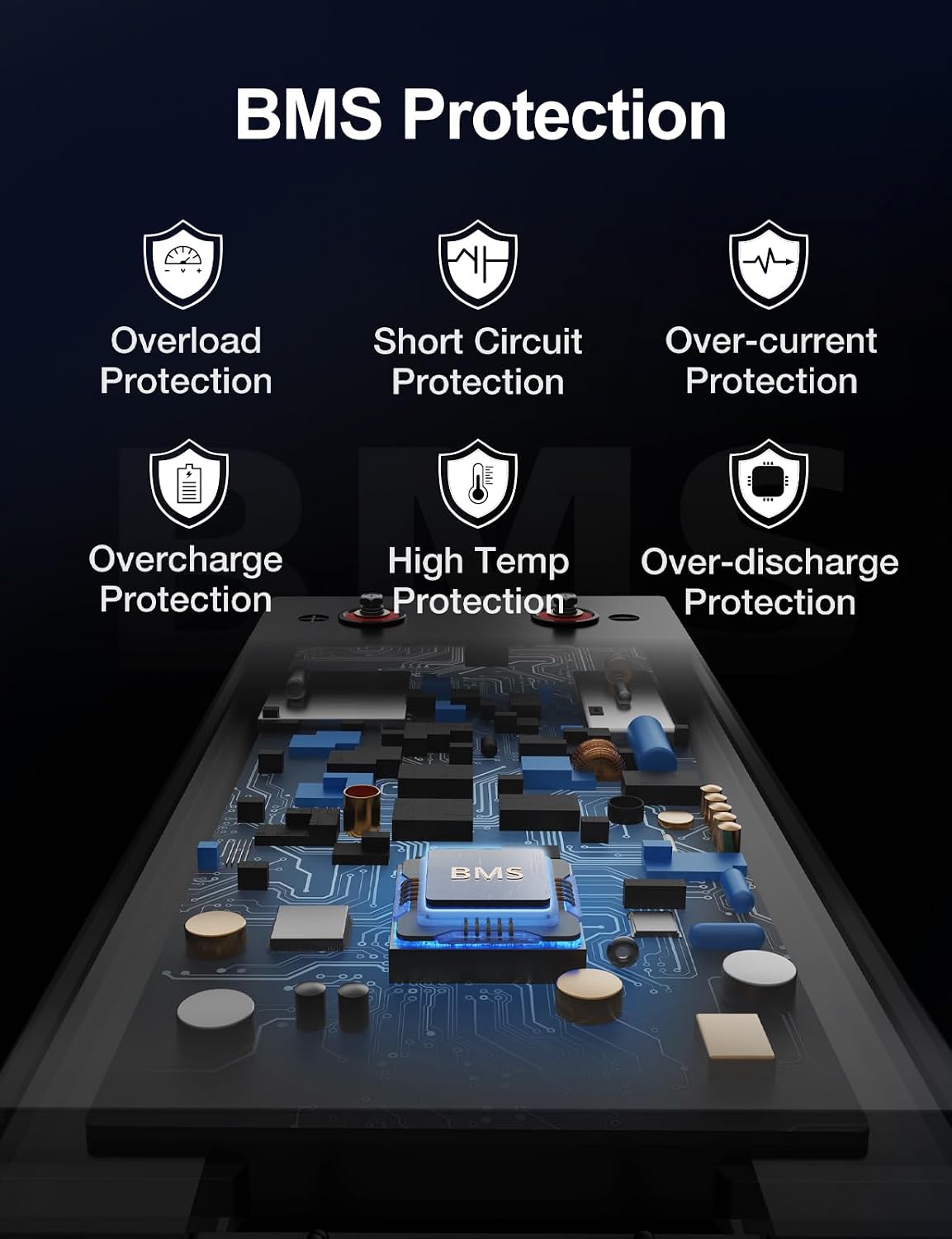
Figure 18: Overview of the BMS (Battery Management System) protections, including overload, short circuit, over-current, overcharge, high temperature, and over-discharge protection.

Figure 19: Details on the low-temperature cut-off protection, indicating temperatures at which discharging stops, charging stops, and charging resumes.
5.3 MPPT Controller Maintenance
The MPPT controller is designed for robust operation. Periodically check all wiring connections to the controller for tightness and corrosion. Ensure the controller's ventilation openings are clear of obstructions to prevent overheating.
6. Troubleshooting
This section provides general guidance for common issues. For complex problems, contact ECO-WORTHY customer support.
| Problem | Possible Cause | Solution |
|---|---|---|
| No power output from inverter | Low battery voltage, inverter overload, loose connections, inverter fault. | Check battery charge, reduce load, inspect all wiring, check inverter error codes. |
| Batteries not charging | Insufficient sunlight, dirty solar panels, faulty charge controller, loose panel connections. | Ensure panels are in direct sunlight, clean panels, check controller display for errors, verify all connections. |
| Bluetooth app not connecting | Out of range, Bluetooth disabled on device, app issue. | Move closer to the battery/controller, enable Bluetooth, restart app/device. |
7. Specifications
Detailed technical specifications for the ECO-WORTHY 8KWh 2000W Solar Power Kit System:
| Component | Specification |
|---|---|
| Overall System Output | Ideal Output: 8KWh per day (under 4 hours full sunshine) |
| Solar Panel (10pcs 195W Bifacial) | Rated Max Power (STC): 195W (each) Solar Cell: Monocrystalline Silicon Product Dimensions: 52.6"L x 26.4"W x 1.4"H (each) Max Power Voltage (Vmp): 19.8V Open Circuit Voltage (Voc): 23.7V Max Power Current (Imp): 9.85A Short Circuit Current (Isc): 10.5A Weight: 20.48lbs/9.20kg (each) Efficiency: High Efficiency Connector Type: MC4 IP Rating: IP66 |
| Lithium Battery (2pcs 12.8V 280Ah) | Capacity: 12.8V 280Ah (7168Wh total for 2 packs) Battery Type: LiFePO4 (Lithium Iron Phosphate) Cycle Life: >3000 deep cycles Features: Built-in BMS, Bluetooth monitoring, Low-temperature cut-off protection (stops charging at 19.4°F/-7°C, discharging at -4°F/-20°C) |
| MPPT Charge Controller (60A) | Max Current: 60 Amps Tracking Efficiency: Up to 99% Conversion Efficiency: 98% Features: OLED screen, Bluetooth module for APP monitoring, Multiple protections, 4 Load Control Modes |
| Pure Sine Wave Inverter (3000W) | Rated Power: 3000W Peak Power: 6000W Input Voltage: DC 24V Output Voltage: AC 110V Wave Type: Pure Sine Wave Efficiency: 95% (battery to inverter transmission) Self-consumption: 1% (0.01kWh) per hour in idle condition |
8. Warranty and Support
For warranty information, technical support, or service inquiries, please refer to the official ECO-WORTHY website or contact their customer service department. Keep your purchase receipt and product model number handy for faster assistance.
You can visit the official ECO-WORTHY store on Amazon for more information: ECO-WORTHY Store


