
MasterChef B0CP88XNTK
MasterChef Paring Knife User Manual
Model: B0CP88XNTK
Introduction
Thank you for choosing the MasterChef Paring Knife. This professional-quality kitchen knife is designed for precision tasks, featuring a high carbon stainless steel blade and triple-riveted handles for optimal balance and durability. This manual provides essential information for the proper use, care, and maintenance of your new knife to ensure its longevity and performance.

Image: The MasterChef Paring Knife, showcasing its sleek design with a black handle and silver blade.
Setup
Upon receiving your MasterChef Paring Knife, please follow these initial steps:
- Unboxing: Carefully remove the knife from its packaging. Be mindful of the sharp blade.
- Initial Cleaning: Before first use, wash the knife thoroughly with warm water and mild dish soap. Rinse completely and dry immediately with a soft cloth. This removes any manufacturing residues.
Operating Instructions
The MasterChef Paring Knife is designed for precise tasks such as peeling, trimming, and mincing small ingredients. Its balanced design ensures comfortable and controlled handling.
- Grip: Hold the handle firmly but comfortably. The triple-riveted design provides a secure grip.
- Cutting Technique: Use a controlled, deliberate motion for peeling fruits and vegetables, or for intricate cuts. The razor-sharp edge requires minimal pressure.
- Cutting Surface: Always use a cutting board made of wood or plastic. Avoid cutting on hard surfaces like glass, ceramic, or metal, as this can dull or damage the blade.

Image: A hand using the MasterChef Paring Knife to peel a potato, demonstrating its precision for delicate tasks.

Image: The MasterChef Paring Knife resting on a wooden cutting board next to peeled potatoes, highlighting its optimal blade-to-handle balance.
Care and Maintenance
Proper care is crucial for maintaining the sharpness and appearance of your MasterChef Paring Knife:
- Cleaning: Hand wash immediately after each use with warm water and mild dish soap. Avoid abrasive cleaners or scrubbers.
- Drying: Always dry the knife thoroughly with a soft cloth immediately after washing. Do not allow it to air dry, as this can lead to water spots or rust, especially on high carbon stainless steel.
- Dishwasher Use: Do not wash this knife in a dishwasher. The harsh detergents and high temperatures can damage the blade and handle.
- Sharpening: Regularly sharpen your knife using a quality knife sharpener or whetstone to maintain its razor-sharp edge. A dull knife is more dangerous than a sharp one.
- Storage: Store the knife in a knife block, magnetic strip, or a blade guard to protect the edge and prevent accidental injury. Do not store it loosely in a drawer where it can come into contact with other utensils.
Troubleshooting
Here are solutions to common issues you might encounter:
- Dull Blade: If the knife feels dull, it needs sharpening. Refer to the 'Sharpening' point in the Maintenance section.
- Rust Spots: Small rust spots can occur if the knife is not dried immediately after washing or if left in a damp environment. These can often be removed with a non-abrasive rust remover designed for stainless steel, or a paste of baking soda and water. Prevent by always drying thoroughly.
- Handle Looseness: The triple-riveted handle is designed for durability. If any looseness is detected, discontinue use and contact customer support.
Specifications
| Feature | Detail |
|---|---|
| Blade Material | High Carbon Stainless Steel |
| Brand | MasterChef |
| Color | Silver/Black |
| Handle Material | Stainless Steel |
| Blade Edge | Plain |
| Knife Type | Paring Knife |
| Blade Length | 3.5 inches (approx.) |
| Overall Length | 8 inches (approx.) |
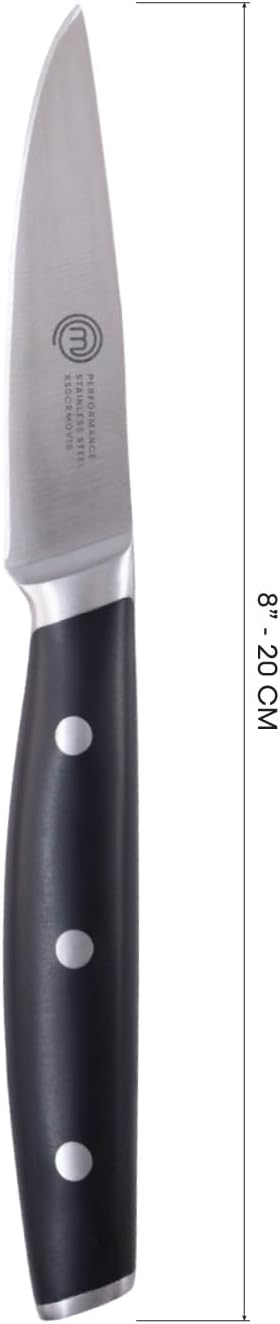
Image: The MasterChef Paring Knife shown with an 8-inch (20 cm) measurement, indicating its overall length.
Warranty Information
MasterChef products are manufactured to high standards. For specific warranty details regarding your paring knife, please refer to the packaging or visit the official MasterChef website. Keep your proof of purchase for any warranty claims.
Customer Support
If you have any questions, concerns, or require assistance with your MasterChef Paring Knife, please contact MasterChef customer support through their official website or the contact information provided on the product packaging. Please have your product model number (B0CP88XNTK) ready when contacting support.
Related documentsB0CP88XNTK


Ask a question about this manual
Ask about setup, troubleshooting, compatibility, parts, safety, or missing instructions. Manuals+ will review the question and use this page’s manual context to help answer it.