
1. Introduction
This manual provides essential information for the safe and effective use of your YATOINTO Upgraded Rope Hoist Pulley System. This system is designed to assist in lifting, lowering, pulling, and tensioning loads in various environments such as garages, warehouses, and building sites. It features an 8:1 lifting power ratio, allowing for easier handling of heavy objects up to 1100 lbs (500 kg) with a breaking capacity of 4400 lbs (2000 kg).
Please read this manual thoroughly before operating the pulley system to ensure proper setup, safe operation, and maintenance.
2. Safety Information
WARNING: Failure to follow these safety instructions may result in serious injury or property damage.
- Maximum Load Capacity: Do not exceed the rated working load capacity of 1100 lbs (500 kg). The breaking capacity is 4400 lbs (2000 kg), but this is not the safe working load.
- Inspect Before Use: Always inspect the pulley system, rope, slings, and shackle for any signs of wear, damage, or corrosion before each use. Do not use if any component is compromised.
- Secure Anchoring: Ensure that the anchor point for the pulley system is structurally sound and capable of supporting the load.
- Proper Attachment: Securely attach the load using the provided lift slings and shackle. Ensure all connections are tight and correctly seated.
- Clear Area: Keep hands, feet, and other body parts clear of moving parts and the load path. Ensure no personnel are beneath a suspended load.
- Controlled Movement: Lift and lower loads slowly and in a controlled manner. Avoid sudden jerks or drops.
- Rope Management: Prevent the rope from tangling or snagging during operation. Ensure the rope is properly seated in the pulley grooves.
- Material Quality: While the product description states "metal bearing" and "alloy steels hook," some components may contain plastic. Always verify the material integrity, especially for critical load-bearing parts. If any component appears to be plastic where metal is expected, do not use the system for heavy loads and contact customer support.
- Lubrication: Ensure bearings are adequately lubricated for smooth operation and to prevent premature wear.
- Storage: Store the pulley system in a dry, clean place away from direct sunlight and harsh chemicals.
3. Package Contents
Your YATOINTO Rope Hoist Pulley System package includes the following components:
- 1 x Rope Hoist Pulley Block (with 4 wheels and metal bearings)
- 1 x Diamond Braid Polypropylene Fibers Rope (65 ft / 19.8 m length, 1/4 inch diameter)
- 2 x Lift Slings (1 inch x 8 ft, 4000 lbs breaking capacity each, with flat eye-to-eye loop ends)
- 1 x 304 Stainless Steel Shackle (3/8 inch / 10mm)
4. Product Features
- High Lifting Power: 8:1 mechanical advantage minimizes effort for lifting heavy objects.
- Durable Construction: Features a rust-proof zinc-plated housing, alloy steel hooks, and metal bearings for enhanced longevity.
- Strong Rope: 65ft diamond braid polypropylene fibers rope is soft, strong, and lightweight.
- Secure Attachments: Includes two 1"x8ft lift slings with 4000lbs breaking capacity and a 3/8" 304 stainless steel shackle for secure load handling.
- Versatile Use: Ideal for various applications including lifting, pulling, and tensioning in household, garage, warehouse, and outdoor settings.

Image: Main components of the YATOINTO Rope Hoist Pulley System, highlighting the four metal wheels with metal bearings, the durable polypropylene rope, the rust-proof housing, and the steel shackle.
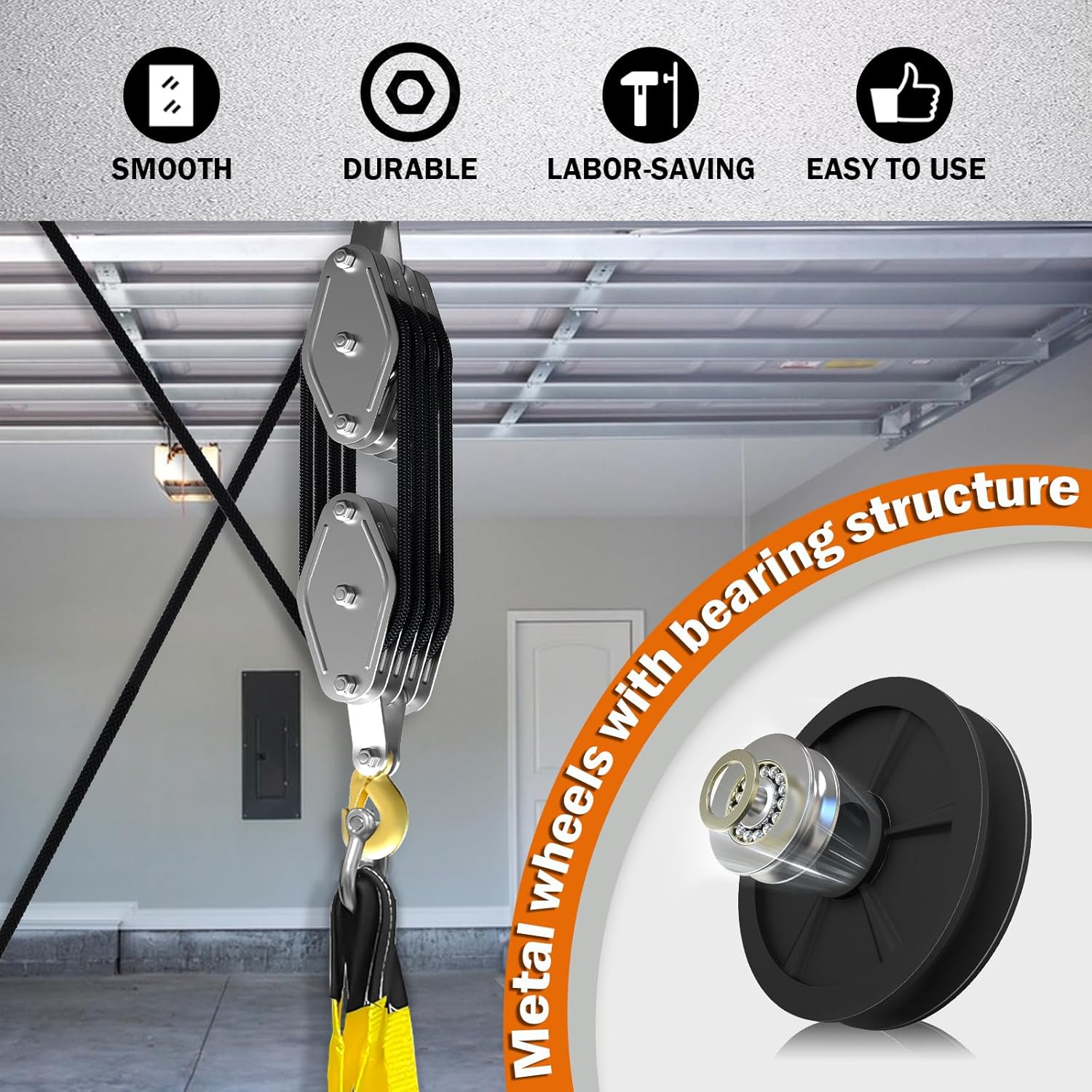
Image: The pulley system in use, illustrating its smooth operation and labor-saving design due to metal wheels with bearing structure.
5. Setup
Follow these steps to set up your YATOINTO Rope Hoist Pulley System:
- Identify Anchor Points: Select a strong, stable overhead anchor point capable of supporting the maximum intended load. This could be a sturdy beam, a ceiling joist, or a dedicated hoist mount.
- Attach Upper Pulley: Securely attach the upper hook of the pulley block to your chosen anchor point. Ensure the hook's safety latch is closed.
- Thread the Rope: The rope should come pre-threaded through the pulley system. Verify that the rope runs smoothly through all four wheels of both the upper and lower pulley blocks. The free end of the rope is used for pulling.
- Prepare Load Attachment: Attach the 304 stainless steel shackle to the lower hook of the pulley block.
- Secure the Load: Use the two provided lift slings to securely wrap around the object you intend to lift. Ensure the slings are balanced and the load is stable. Connect the loop ends of the slings to the shackle.
- Test the Setup: Before lifting the full load, perform a test lift with a lighter weight or by applying tension to the rope to ensure all connections are secure and the system operates correctly.

Image: The included 304 Stainless Steel Shackle and two Lift Slings for secure load attachment.
6. Operating Instructions
Once the system is set up and the load is securely attached, follow these steps for operation:
- Clear the Area: Ensure the lifting path is clear of obstructions and personnel.
- Begin Lifting: Slowly and steadily pull the free end of the rope to lift the load. The 8:1 power ratio will reduce the effort required.
- Maintain Control: Keep a firm grip on the rope at all times. Do not release the rope suddenly, as this can cause the load to drop.
- Secure the Load (if holding): If you need to hold the load at a certain height, you must secure the rope to a cleat or other appropriate anchoring device. Never rely solely on your grip to hold a suspended load for extended periods.
- Lowering the Load: To lower the load, slowly and carefully release tension on the rope, allowing the load to descend in a controlled manner.
- Complete Operation: Once the load is safely on the ground or its destination, unhook the slings and shackle, and then detach the pulley system from its anchor point.
Video: Demonstration of the YATOINTO Block and Tackle System with Shackle and 2 Straps in operation, showcasing its lifting capabilities.
Video: Another view of the block and tackle system with shackle and lifting slings, illustrating its use for various lifting tasks.

Image: Examples of wide applications for the pulley system, including lifting furniture, construction materials, and other items.
7. Maintenance
Regular maintenance ensures the longevity and safe operation of your pulley system:
- Cleaning: Keep the pulley blocks, rope, slings, and shackle clean and free from dirt, debris, and corrosive substances.
- Lubrication: Periodically apply a light lubricant to the metal bearings and moving parts of the pulley wheels to ensure smooth operation and prevent rust. A review suggests that bearings may ship dry, so initial lubrication is recommended.
- Rope Inspection: Regularly check the polypropylene rope for fraying, cuts, knots, or excessive wear. Replace the rope if any damage is found.
- Hardware Inspection: Examine the hooks, shackle, and housing for any signs of bending, cracks, deformation, or rust. Replace any damaged components immediately.
- Sling Inspection: Check lift slings for cuts, tears, excessive wear, or damage to stitching. Replace if damaged.
- Storage: Store the entire system in a dry, cool place, protected from direct sunlight and extreme temperatures.
8. Troubleshooting
Here are some common issues and their solutions:
| Problem | Possible Cause | Solution |
|---|---|---|
| Difficulty lifting or lowering load | Lack of lubrication in bearings; Rope tangled or snagged; Load exceeding capacity; Damaged pulley wheels. | Apply lubricant to bearings. Untangle rope and ensure it's properly seated. Reduce load weight. Inspect and replace damaged components. |
| Rope tangles frequently | Improper rope management; Rope too long for application; Rope material quality. | Ensure rope is fed smoothly and not twisted. Consider replacing with a stiffer rope if tangling persists. |
| System makes unusual noises | Dry bearings; Misaligned components; Damaged parts. | Lubricate bearings. Check for proper alignment. Inspect all parts for damage and replace if necessary. |
| Load is unstable during lift | Improperly secured load; Unbalanced load; Inadequate anchor point. | Re-secure the load, ensuring slings are balanced. Verify the stability and strength of the anchor point. |
9. Specifications
- Max Working Load: 1100 lbs (500 kg)
- Breaking Capacity: 4400 lbs (2000 kg)
- Lifting Power Ratio: 8:1
- Rope Material: High-Density Polypropylene
- Rope Diameter: 1/4 inch
- Rope Length: 65 ft (19.8 m)
- Housing Material: Rust-Proof Zinc-Plated
- Bearing Type: Metal Needle Bearings
- Shackle Size: 3/8 inch (10mm)
- Lift Sling Size: 1 inch x 8 ft
- Included Components: Pulley Block, Rope, 2 Lift Slings, 1 Shackle

Image: Visual representation of the 8:1 lifting power and 4400 lbs breaking capacity.

Image: Detailed diagram showing the dimensions and components of the heavy-duty pulley block.
10. Warranty and Support
For warranty information or product support, please refer to the documentation included with your purchase or contact YATOINTO customer service directly through their official website or the retailer where the product was purchased. Please have your purchase details and model number ready when contacting support.