
Product Overview
This Luqeeg Stainless Steel Pressure Cooker is designed for efficient and safe cooking, featuring a 100KPa high-pressure system for rapid meal preparation. Crafted from durable 304 stainless steel, it ensures longevity and consistent performance. Its versatile design makes it compatible with both gas and induction cooktops.
Key features include:
- Premium Material: Constructed from 304 stainless steel for strength and durability.
- Innovative Design: Three-layer steel pot body with an energy-efficient aluminum layer for quick and even heating.
- Versatile Compatibility: Works seamlessly on both gas and induction cooktops.
- Rapid Cooking Performance: 100KPa pressure reduces cooking time by up to 70%, preserving nutrients and flavors.
- Easy Operation: Convenient toggle button for one-press lid unlocking and opening.
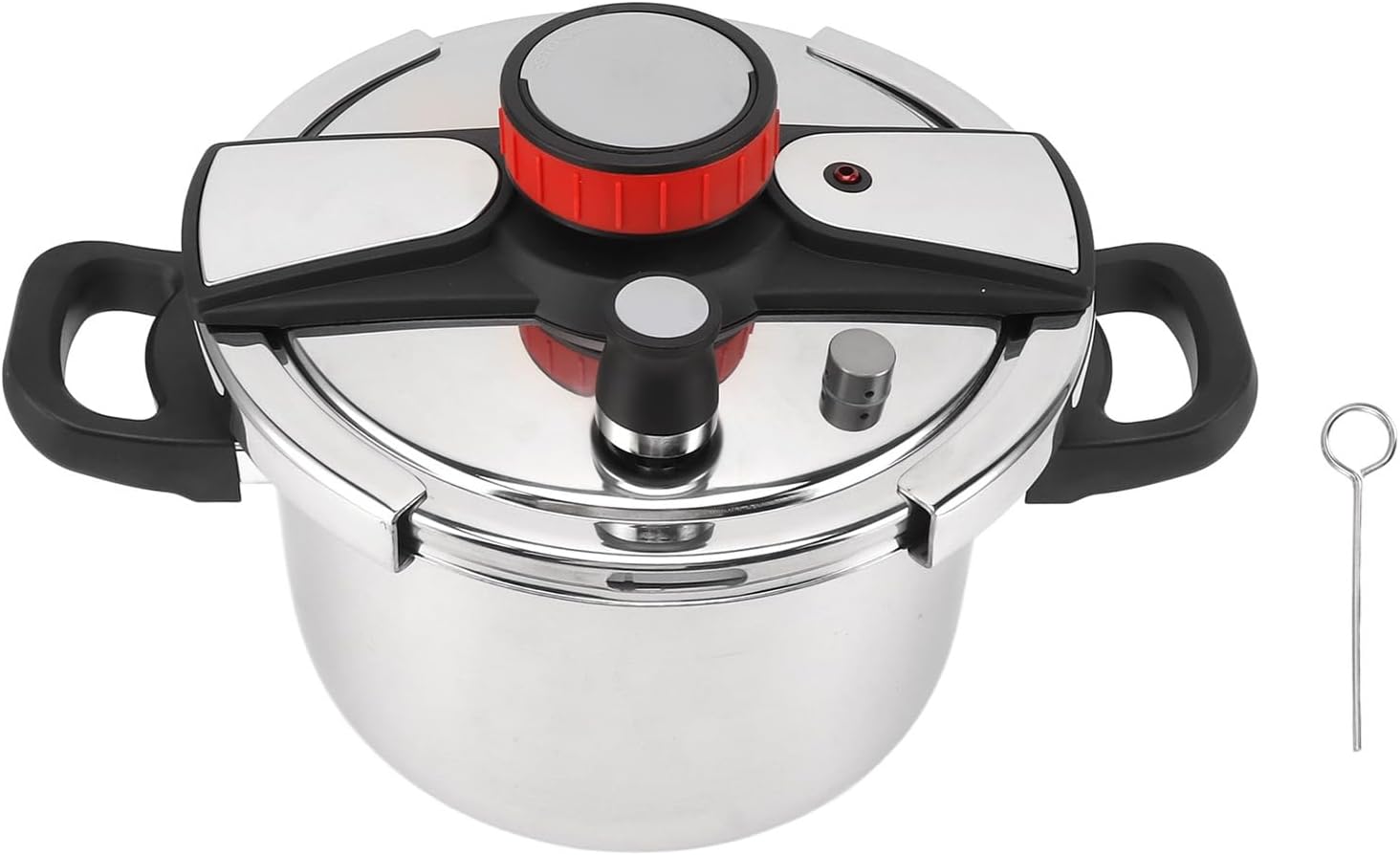
Image: The Luqeeg Stainless Steel Pressure Cooker, showcasing its sleek design and robust construction from a top-down perspective.
Package Contents
Upon opening your package, please ensure all the following components are present:
- 1 x Pot Body
- 1 x Lid
- 1 x Pressure Limiting Valve
- 1 x Accessories (e.g., sealing ring, cleaning pin)
Setup and First Use
- Unpacking: Carefully remove all components from the packaging. Retain packaging for future storage or transport if needed.
- Initial Cleaning: Before first use, wash the pot body, lid, and all accessories with warm, soapy water. Rinse thoroughly and dry completely.
- Inspect Safety Features:
Before each use, it is crucial to carefully check that the vent holes of the pressure limiting valve and safety valve are clear and unobstructed. Ensure they are smooth and free from any food particles or debris to guarantee normal and safe operation.

Image: Detailed views of the pressure cooker's components, including the ergonomic handles, internal measurement markings, the lid's locking mechanism, and the base designed for even heat distribution.
- Lid Assembly: Ensure the sealing ring is properly seated inside the lid. Align the lid with the pot body and engage the locking mechanism.
Operating Instructions
Cooking with your Pressure Cooker
- Add Ingredients: Place your food and the required amount of liquid into the pot. Do not fill the cooker more than two-thirds full for most foods, and no more than half full for foods that expand (like rice, beans, or grains).
- Secure the Lid: Place the lid on the pot body. The convenient toggle button allows for one-handed opening and secure locking. Rotate the lid until it clicks into place, ensuring a tight seal.
- Heat Source: Place the pressure cooker on your gas or induction cooktop. Begin heating on high heat until the pressure limiting valve begins to release steam steadily.
- Reduce Heat: Once steam is steadily escaping, reduce the heat to maintain a gentle, consistent steam release. Start timing your cooking from this point.
- Natural Release: After cooking, remove the cooker from the heat. Allow the pressure to release naturally until the pressure indicator drops completely. Do not attempt to open the lid until all pressure has been released.
- Quick Release (Use with Caution): For some recipes, a quick release method may be used by carefully placing the cooker under cold running water or using the quick release valve if available. Always consult your recipe and exercise extreme caution.
- Opening the Lid: Once pressure is fully released, press the toggle button and rotate the lid to open. Always open the lid away from your face to avoid steam burns.

Image: The pressure cooker in action on a stovetop, demonstrating how its high pressure significantly reduces cooking times for different ingredients like meat, rice, and legumes.

Image: A visual representation of the innovative gear closure design integrated into the lid, ensuring a secure and explosion-proof seal during operation.
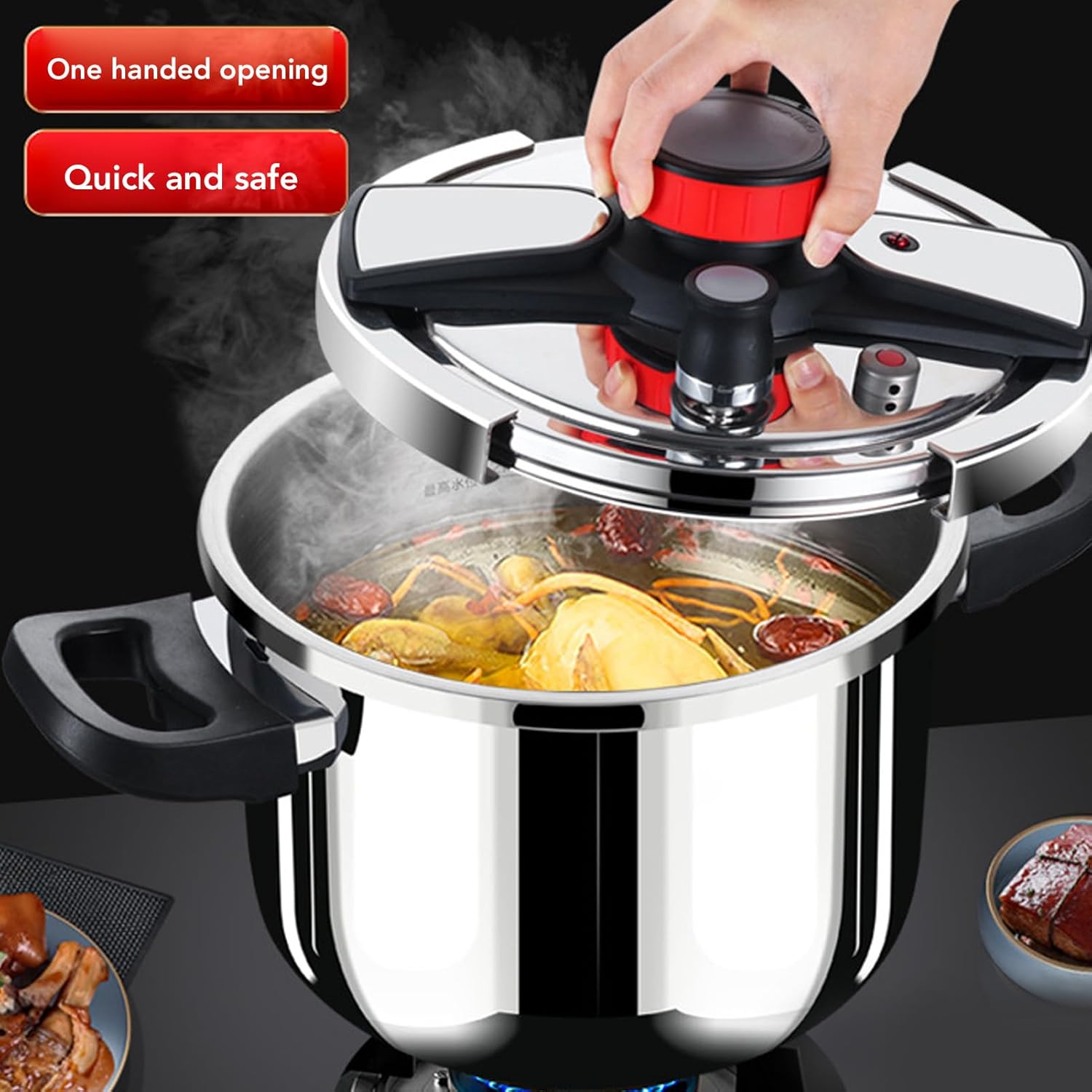
Image: This image highlights the ease of use, showing how the lid can be opened quickly and safely with just one hand, thanks to its intuitive design.
Safety Precautions
- Do Not Overfill: Never fill the pressure cooker beyond the maximum fill line (typically 2/3 full for most foods, 1/2 full for expanding foods).
- Sufficient Water:
Always ensure there is sufficient water or liquid in the pot during cooking. Do not cook with insufficient water and make sure that the pot does not steam dry. Failure to do so will potentially cause the pan to dry out and result in damage to the pressure cooker and hob.
- Check Valves: Regularly inspect the pressure limiting valve and safety valve for blockages before each use.
- Lid Security: Ensure the lid is properly sealed and locked before applying heat.
- Steam Release: Never force open the lid while the cooker is pressurized. Always wait for the pressure indicator to drop completely.
- Handle with Care: Use oven mitts or pot holders when handling a hot pressure cooker.
- Children and Pets: Keep children and pets away from the pressure cooker during operation.
Maintenance and Care
- Cleaning: After each use, allow the cooker to cool completely. Wash the pot body and lid with warm, soapy water. For stubborn food residues, soak the pot before cleaning.
- Sealing Ring: Remove the sealing ring from the lid for thorough cleaning. Ensure it is clean and flexible before reinserting. Replace the sealing ring if it becomes cracked, stiff, or shows signs of wear.
- Valves: Clean the pressure limiting valve and safety valve regularly to prevent blockages. Use a small brush or cleaning pin if necessary to clear the vent holes.
- Storage: Store the pressure cooker with the lid inverted or slightly ajar to allow air circulation and prevent odors.
- Dishwasher Compatibility: This pressure cooker is not dishwasher compatible. Hand washing is recommended to preserve the finish and integrity of the materials.
Troubleshooting
| Problem | Possible Cause | Solution |
|---|---|---|
| Pressure not building | Lid not sealed properly; Sealing ring damaged or misplaced; Vent pipe blocked; Insufficient liquid. | Ensure lid is securely locked; Check and reposition/replace sealing ring; Clear any blockages in vent pipe; Add more liquid. |
| Steam leaking from lid | Sealing ring dirty, damaged, or improperly seated; Lid not closed correctly. | Clean or replace sealing ring; Ensure lid is aligned and locked properly. |
| Food undercooked | Insufficient cooking time; Heat too low. | Increase cooking time; Ensure proper heat is maintained to reach full pressure. |
| Food burned/dry | Too little liquid; Heat too high; Cooked for too long. | Always use recommended liquid amount; Reduce heat once pressure is reached; Adjust cooking time. |
Specifications

Image: A detailed diagram illustrating the dimensions of the 6L pressure cooker, indicating its suitability for 3-6 people.
| Attribute | Detail |
|---|---|
| Item Type | Pressure Cooker |
| Material | 304 Stainless Steel |
| Applicable Cooktop Type | Gas and Induction Cooker Universal |
| Pressure Level | 100KPa |
| Capacity | 6 Liters |
| Model Number | Luqeegzpro4w6f5t-12 |
| Package Dimensions | 13.39 x 11.18 x 10.24 inches |
| Item Weight | 7.61 pounds |
| Manufacturer | Luqeeg |
| Country of Origin | China |
| Dishwasher Compatible | No |
| Batteries Required | No |
Warranty and Support
Specific warranty details for the Luqeeg Stainless Steel Pressure Cooker are not provided in this manual. For information regarding warranty coverage, returns, or technical support, please refer to the product packaging or contact the manufacturer directly through their official website or customer service channels.
Manufacturer: Luqeeg
Model: Luqeegzpro4w6f5t-12
For further assistance, please visit the Luqeeg Store on Amazon.