Introduction
This manual provides essential instructions for the safe and efficient operation, setup, and maintenance of your VEVOR JHLJS02A Portable Double Burner Propane Forge. Please read this manual thoroughly before using the product to ensure proper function and to prevent injury or damage.
Safety Information
WARNING: Failure to follow these safety instructions may result in serious injury, property damage, or death.
- Always operate the forge in a well-ventilated area to prevent carbon monoxide buildup.
- Wear appropriate personal protective equipment (PPE), including heat-resistant gloves, eye protection, and protective clothing.
- Ensure all gas connections are tight and leak-free before ignition. Use a soapy water solution to check for leaks.
- Keep flammable materials away from the forge during operation.
- Never leave the operating forge unattended.
- Allow the forge to cool completely before handling or storing.
- Do not modify the forge or its components. Use only VEVOR approved replacement parts.
- Keep children and pets away from the forge area.
- Familiarize yourself with the location of emergency shut-off valves for propane.

Image: A blacksmith operating the VEVOR Propane Forge, demonstrating safe working distance and use of protective gear. Always prioritize safety when operating the forge.
Package Contents
Verify that all components are present and undamaged upon unpacking.
- 2 x Burners
- 1 x 6.5 ft (2 m) Gas Hose
- 2 x Refractory Fire Bricks
- 1 x Regulating Valve (CGA 510 Type A, 1.3125" ACME QCC1 Standard)
- 1 x Set of Pre-assembled Parts (2 Globe Valves, 2 Copper Outlets)
- 1 x User Manual
Setup Instructions
The VEVOR Propane Forge is designed for quick and easy setup. Most key accessories are pre-installed.
1. Unpacking and Placement
- Carefully remove all components from the packaging.
- Place the forge on a stable, non-combustible surface in a well-ventilated outdoor area.
- Ensure there is ample clear space around the forge.
2. Installing Refractory Fire Bricks
- Insert the refractory fire bricks into the forge chamber as shown in the diagram. These bricks provide additional insulation and a stable base for your work.

Image: Internal view of the forge highlighting the refractory ceramic fiber and fire brick placement. The fire brick provides a durable floor for forging.
3. Connecting the Gas System
- Attach the regulating valve to the propane tank. Ensure it is securely tightened.
- Connect the 6.5 ft (2 m) gas hose to the regulating valve and to the pre-assembled manifold on the forge.
- Ensure all connections are hand-tight, then use a wrench to secure them firmly. Do not overtighten.
- Perform a leak test: Apply a soapy water solution to all gas connections. Open the propane tank valve slowly. If bubbles appear, close the valve immediately and re-tighten the connection. Repeat until no bubbles are observed.
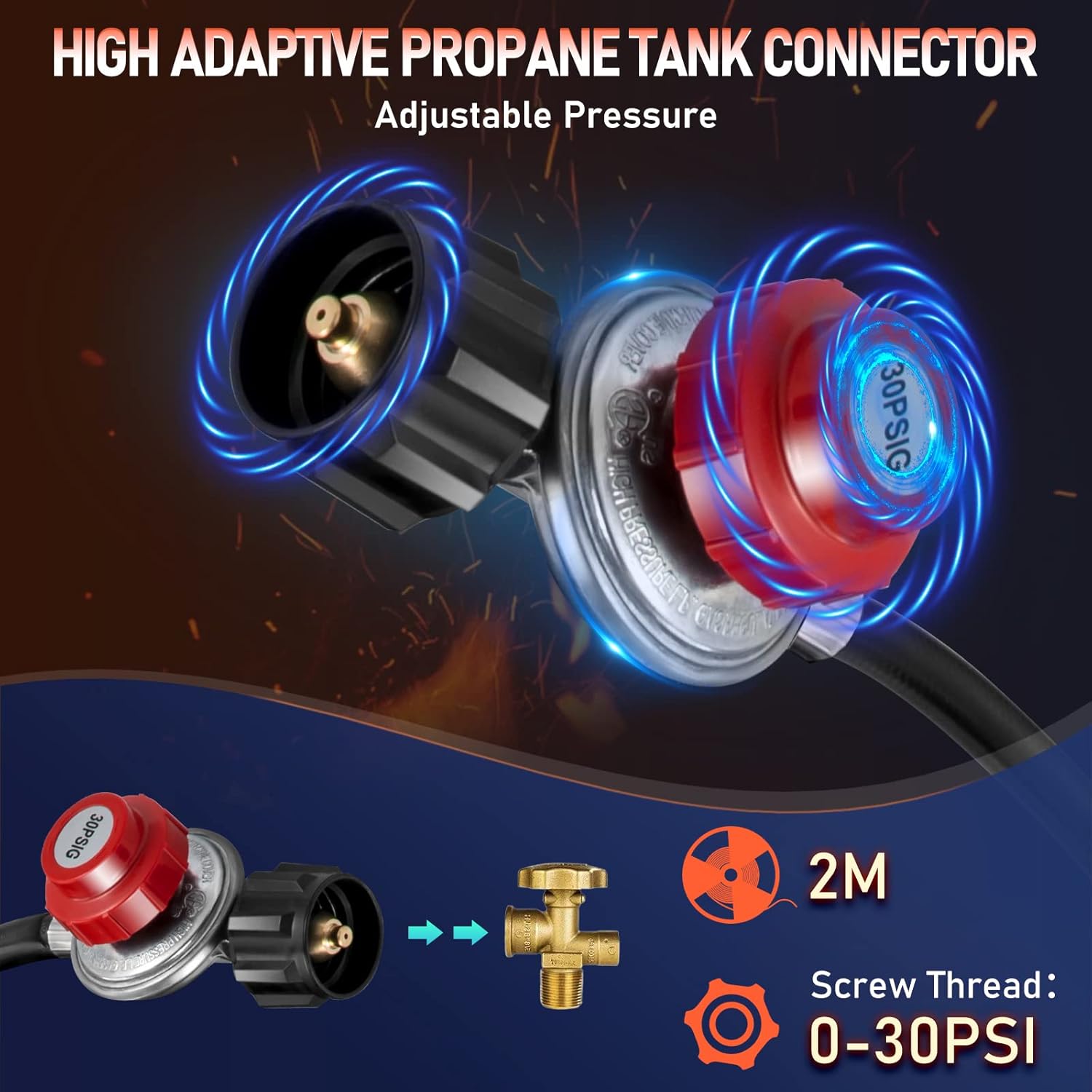
Image: Close-up of the propane regulator and hose connection. This component ensures safe and controlled gas flow to the forge.

Image: The VEVOR Propane Forge connected to a propane tank, illustrating a complete setup ready for operation.
Video: A demonstration of the VEVOR Propane Forge setup and initial connection steps. This video provides a visual guide to assembling the forge and connecting it to a propane source.
Operating Instructions
1. Pre-Operation Checklist
- Ensure all safety precautions are understood and followed.
- Verify all gas connections are secure and leak-free.
- Confirm the forge is in a well-ventilated area, clear of flammable materials.
- Have appropriate PPE on hand and worn.
2. Ignition Procedure
- Slowly open the main valve on the propane tank.
- Slightly open one of the globe valves on the forge manifold.
- Using a long lighter or igniter, carefully ignite the gas at the burner nozzle.
- Once ignited, slowly open the globe valve further to achieve the desired flame.
- Repeat for the second burner if dual-burner operation is desired.
- Adjust the pressure regulator on the propane hose to fine-tune the flame intensity and temperature.
3. Achieving Optimal Temperature
- The forge can reach a maximum heating temperature of 2600℉ (1426℃).
- Allow approximately 3 minutes for preheating to reach forging temperatures.
- For higher temperatures or larger workpieces, both burners can be used. For smaller tasks or to conserve propane, a single burner may suffice.
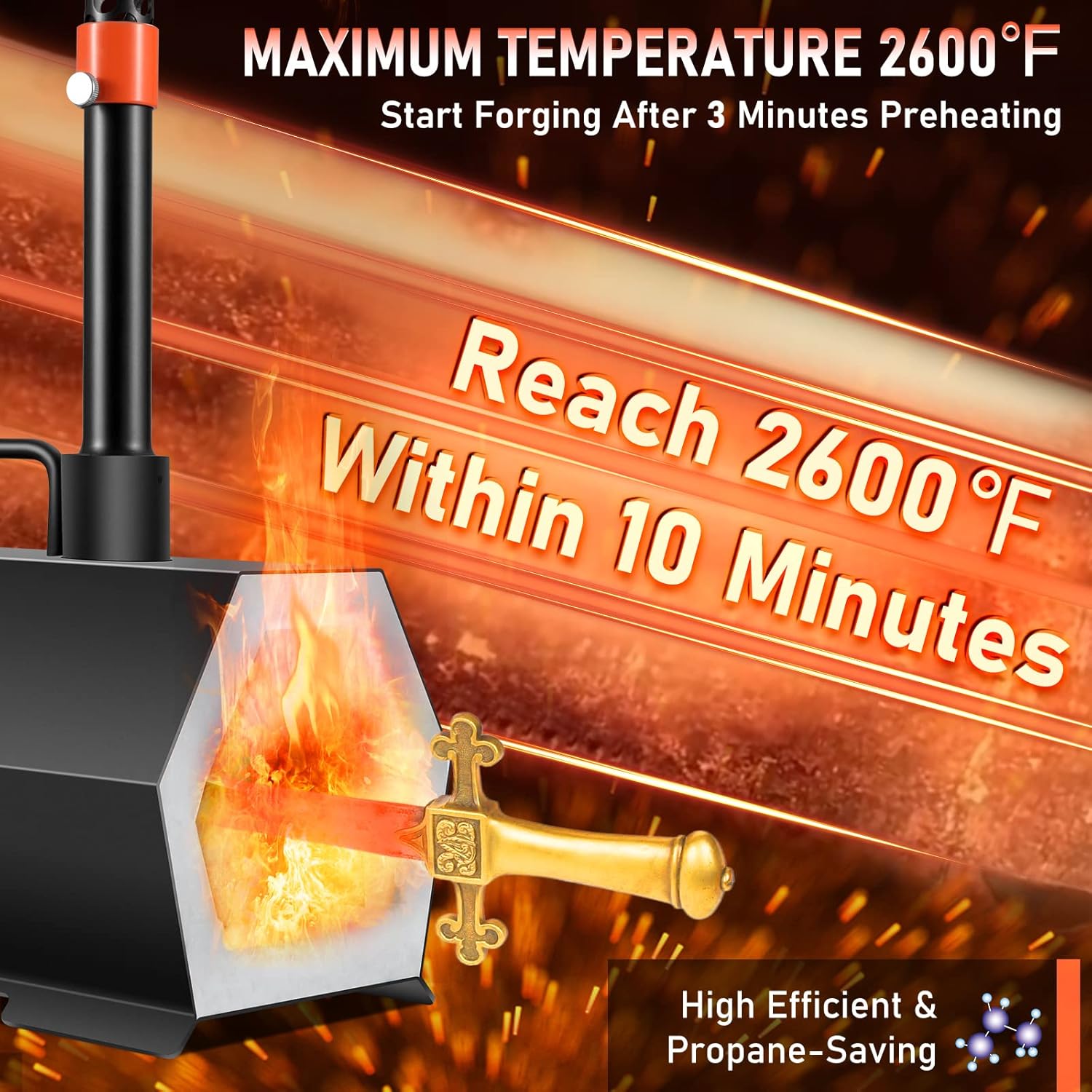
Image: The interior of the VEVOR Propane Forge glowing intensely, indicating it has reached high operating temperatures suitable for forging.
4. Shutting Down the Forge
- First, close the main valve on the propane tank.
- Allow the remaining gas in the hose and burners to burn off completely.
- Once the flames extinguish, close the globe valves on the forge manifold.
- Allow the forge to cool down naturally before moving or storing. Do not attempt to cool it rapidly with water.
Maintenance
Regular maintenance ensures the longevity and safe operation of your VEVOR Propane Forge.
- Inspection: Before each use, inspect the gas hose for cracks, kinks, or damage. Check all connections for tightness. Inspect the refractory lining for significant cracks or deterioration.
- Cleaning: After the forge has completely cooled, remove any debris or scale from the forge chamber. Use a soft brush or vacuum. Do not use abrasive cleaners.
- Refractory Care: The refractory ceramic fiber and fire bricks are consumables. Over time, they may degrade. If significant damage occurs, replacement may be necessary to maintain efficiency and safety.
- Storage: Store the forge in a dry, protected area when not in use. Disconnect the propane tank and store it separately according to local regulations.
Troubleshooting
| Problem | Possible Cause | Solution |
|---|---|---|
| Forge does not ignite. |
|
|
| Weak or inconsistent flame. |
|
|
| Gas leak detected (smell of gas, hissing sound). |
|
|
Specifications
| Feature | Detail |
|---|---|
| Model | JHLJS02A |
| Shape | Hexagon |
| Item Dimensions (L x W x H) | 15.7 x 8.5 x 7.5 inch (400 x 215 x 190 mm) |
| Refractory Ceramic Fiber Thickness | 1.2 (±0.1) inch (30 ±3 mm) |
| Refractory Fire Brick Thickness | 1.2 (±0.1) inch (30 ±2 mm) |
| Net Item Weight | 22.9 lbs (10.4 kg) |
| Max Heating Temperature | 2600℉ (1426℃) |
| Regulating Valve Thread Spec. | 1.3125" ACME QCC1 Standard |
| Regulating Valve Type | CGA 510 Type A |
| Gas Hose Length | 6.5 ft (2 m) |
| Material | Cold Rolled Plate (Forge Body), 45# Steel (Burner) |

Image: Detailed specifications and dimensions of the VEVOR Propane Forge, including burner protrusion and hose length.
Warranty and Support
VEVOR products come with a standard warranty. For specific warranty details, claims, or technical support, please refer to the official VEVOR website or contact their customer service directly.
VEVOR Customer Service: Please visit www.vevor.com for contact information and support resources.