
1. Introduction
This manual provides essential information for the proper installation, operation, and maintenance of your EGGPOD Carburetor, designed as a replacement part for specific Yamaha 8hp 2-stroke outboard engines. This carburetor is compatible with OEM numbers 6G1-14301-01, 6N0-14301-10, and 6G1-14301-00. Please read this manual thoroughly before attempting any installation or adjustments to ensure safe and effective use.
2. Safety Information
Always prioritize safety when working with marine engines and fuel systems. Failure to follow these safety guidelines may result in injury or damage to equipment.
- Ensure the engine is turned off and cooled down before beginning any work.
- Disconnect the battery to prevent accidental starting.
- Work in a well-ventilated area to avoid inhaling fuel fumes.
- Wear appropriate personal protective equipment, including gloves and eye protection.
- Handle fuel with extreme care; it is highly flammable.
- If you are unsure about any step, consult a qualified marine mechanic.
3. Package Contents
Verify that all components are present and undamaged upon opening the package.
- 1 x EGGPOD Carburetor (Model: EGGPOD396)
4. Setup and Installation
4.1 Pre-Installation Checks
- Inspect the new carburetor for any visible damage or manufacturing defects.
- Confirm that the carburetor model matches the requirements for your Yamaha 8hp 2-stroke outboard engine.
- Ensure you have all necessary tools, including wrenches, screwdrivers, and a fuel-resistant sealant if required.
4.2 Installation Steps
Follow these steps carefully for proper carburetor replacement:
- Prepare the Engine: Ensure the engine is off and cool. Disconnect the fuel line from the existing carburetor and drain any remaining fuel into an approved container. Disconnect the battery.
- Remove Old Carburetor: Carefully disconnect any throttle linkages, choke cables, and vacuum lines attached to the old carburetor. Loosen and remove the mounting bolts or nuts securing the carburetor to the engine manifold. Gently remove the old carburetor and its gasket.
- Clean Mounting Surface: Thoroughly clean the engine manifold's mounting surface to remove any old gasket material or debris. A clean surface is crucial for a proper seal.
- Install New Carburetor: Place a new gasket (not included, typically) onto the manifold. Position the new EGGPOD carburetor onto the gasket, aligning it with the mounting studs or bolt holes.
- Secure Carburetor: Install the mounting bolts or nuts and tighten them evenly in a crisscross pattern to the manufacturer's specified torque (refer to your engine's service manual for exact specifications). Do not overtighten.
- Reconnect Components: Reattach all throttle linkages, choke cables, and vacuum lines to their respective positions on the new carburetor. Ensure they move freely and without binding.
- Reconnect Fuel Line: Securely reattach the fuel line to the carburetor's fuel inlet. Use new clamps if the old ones are worn or damaged.
- Final Checks: Double-check all connections for tightness and proper routing. Ensure there are no kinks in the fuel line. Reconnect the battery.
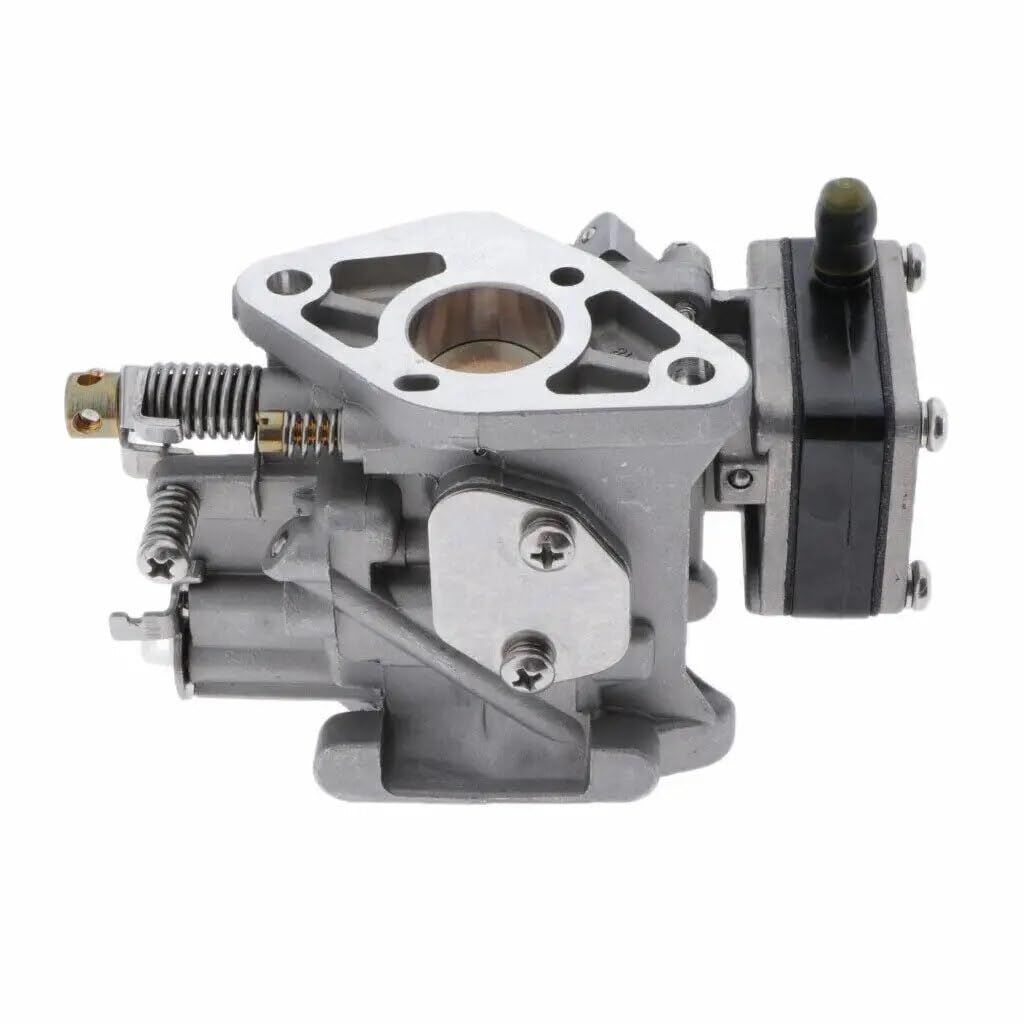
Image: The EGGPOD Carburetor, a replacement part for Yamaha 8hp 2-stroke outboard engines. This image shows the general appearance and key components of the carburetor, including the fuel inlet, throttle linkage points, and mounting flange.
5. Operating Instructions
5.1 Initial Start-up
After installation, perform the following steps for the first engine start:
- Prime the Fuel System: Squeeze the primer bulb on your fuel line until it becomes firm, indicating that fuel has reached the carburetor.
- Choke Application: Depending on engine temperature, apply the choke as recommended by your engine's manufacturer.
- Start Engine: Start the engine according to your outboard's standard starting procedure.
- Check for Leaks: Immediately after starting, visually inspect the carburetor and fuel lines for any signs of fuel leaks. If leaks are detected, shut down the engine immediately and rectify the issue.
5.2 Adjustments
The EGGPOD carburetor is typically pre-set for optimal performance. Minor adjustments may be necessary for specific engine conditions. For precise tuning, it is recommended to consult your engine's service manual or a professional marine mechanic.
- Idle Speed Adjustment: If your engine's idle speed is too high or too low, locate the idle speed screw (if present) on the carburetor. With the engine warmed up, turn the screw incrementally to achieve the recommended idle RPM for your engine model.
- Air/Fuel Mixture Adjustment: This carburetor is designed to provide an appropriate air/fuel mixture. Significant adjustments to the air/fuel mixture screw (if present) should only be performed by experienced individuals with proper diagnostic tools. Incorrect adjustments can lead to poor engine performance or damage.
6. Maintenance
Regular maintenance ensures the longevity and optimal performance of your carburetor and engine.
6.1 Regular Checks
- Fuel Filter: Regularly inspect and replace the inline fuel filter to prevent contaminants from reaching the carburetor.
- Fuel Lines: Check fuel lines for cracks, hardening, or leaks. Replace any damaged lines immediately.
- Air Filter: Ensure the engine's air filter (if applicable) is clean and unobstructed.
6.2 Cleaning
Over time, fuel deposits can accumulate in the carburetor, affecting performance. If cleaning is necessary:
- Use a specialized carburetor cleaner spray. Follow the product instructions carefully.
- Avoid using harsh tools or wire brushes that could damage delicate internal components.
- If disassembling the carburetor for cleaning, pay close attention to the orientation of all parts and use new gaskets upon reassembly.
6.3 Seasonal Storage
Before storing your outboard engine for an extended period, it is recommended to:
- Run the engine until the fuel tank is empty, or use a fuel stabilizer to prevent fuel degradation and gumming in the carburetor.
- Drain the carburetor float bowl if possible, or run the engine dry to ensure no stale fuel remains.
7. Troubleshooting
This section addresses common issues you might encounter. For complex problems, professional assistance is recommended.
| Problem | Possible Cause | Solution |
|---|---|---|
| Engine won't start | No fuel reaching carburetor, clogged fuel filter, incorrect choke setting, fouled spark plug. | Check fuel level, prime fuel bulb, inspect/replace fuel filter, adjust choke, check spark plug. |
| Rough idle or stalling | Idle speed too low, air/fuel mixture incorrect, vacuum leak, dirty carburetor jets. | Adjust idle speed, inspect for vacuum leaks, clean carburetor, consult professional for mixture adjustment. |
| Loss of power at high RPM | Restricted fuel flow, clogged main jet, incorrect propeller, engine overheating. | Check fuel filter and lines, clean main jet, verify propeller size, check cooling system. |
| Fuel leaks | Loose connections, damaged fuel lines, faulty carburetor gasket, stuck float. | Tighten connections, replace damaged lines, replace gasket, inspect float and needle valve. |
8. Specifications
- Brand: EGGPOD
- Model Number: EGGPOD396
- Compatible OEM Numbers: 6G1-14301-01, 6N0-14301-10, 6G1-14301-00
- Engine Compatibility: Yamaha 8hp 2-stroke outboard engines (e.g., 6MLHP 1991, 6MSHR 1993, 6MSHU 1996)
- Item Weight: 7.1 ounces
- Product Dimensions: 8"D x 4"W x 10"H
- Material: Fabric (Note: This specification appears to be a general product detail and may not directly apply to the carburetor's primary construction material, which is typically metal alloys.)
- Finish Type: Painted
9. Warranty and Support
Warranty: As per product information, there is no warranty provided for this item.
Support: For further assistance or technical inquiries regarding the EGGPOD Carburetor, please refer to the retailer where the product was purchased. Always consult your engine's official service manual for detailed specifications and procedures specific to your outboard model.