
Briggs & Stratton 25V332-0006-F1
Contents
Briggs & Stratton Vanguard Series Single Cylinder 4-Cycle Gas Engine User Manual
Model: 25V332-0006-F1
1. Introduction
This manual provides essential information for the safe and efficient operation, maintenance, and troubleshooting of your Briggs & Stratton Vanguard Series Single Cylinder 4-Cycle Gas Engine. Please read this manual thoroughly before operating the engine to ensure proper use and to prevent injury or damage.
The Vanguard Single-Cylinder engines are designed for robust performance, incorporating innovations based on feedback from equipment manufacturers, contractors, and rental store owners. This engine is built for demanding work environments where proven performance is critical.
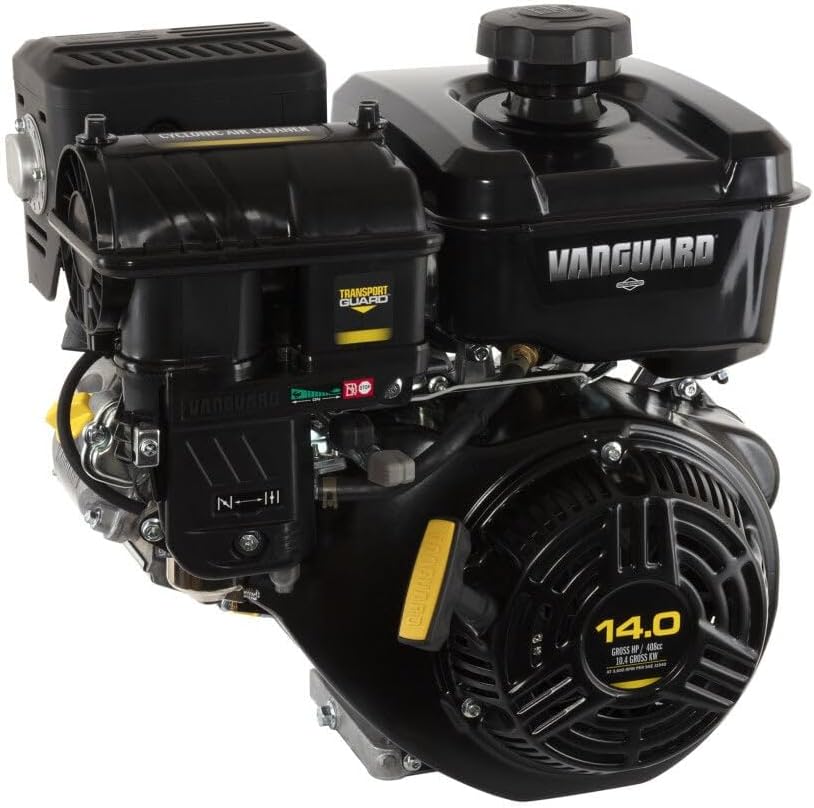
Figure 1.1: Front view of the Briggs & Stratton Vanguard Series Single Cylinder 4-Cycle Gas Engine. This image shows the main components including the air cleaner, fuel tank, and crankshaft housing.
2. Key Features
The Briggs & Stratton Vanguard Series engine is equipped with several advanced features designed for reliability and performance:
- Starts Down to -20 degrees F: Engineered for reliable starting in extremely cold conditions.
- Cyclonic Air Cleaner: Provides superior protection against dust and debris, extending engine life.
- Nano Media Air Cleaner Filter Element with Autoshed Technology: An advanced filtration system that automatically sheds trapped particles, maintaining optimal airflow and filter efficiency.
- TransportGuard System: An integrated fuel shut-off and ignition kill switch that protects the engine from oil/fuel dilution during transport.
3. Setup and Installation
Before starting the engine, ensure it is properly installed and all necessary pre-operation checks are completed.
3.1 Unpacking
Carefully remove the engine from its packaging. Inspect for any signs of shipping damage. Retain all packaging materials until you are certain the engine is in good working order.

Figure 3.1: The Briggs & Stratton Vanguard Series engine as received in its original packaging. The box indicates "Vanguard Commercial Power" and "Trust the Power".
3.2 Mounting the Engine
- Ensure the mounting surface is level, stable, and capable of supporting the engine's weight and vibration.
- Use appropriate bolts and washers to secure the engine to the equipment frame. Refer to your equipment's manual for specific mounting requirements.
- Verify that the crankshaft is properly aligned with the driven component.
3.3 Fuel and Oil
- Oil: Fill the crankcase with the recommended type and amount of engine oil. Refer to the engine's oil fill cap or dipstick for capacity and recommended oil type (e.g., SAE 30, 10W-30). Do not overfill.
- Fuel: Use clean, fresh, unleaded gasoline with an octane rating of 87 or higher. Do not use E85 or gasoline containing more than 10% ethanol (E10). Fill the fuel tank carefully, avoiding spills.
Warning: Always operate the engine in a well-ventilated area. Gasoline is highly flammable and its vapors are explosive. Do not smoke or allow flames or sparks near the engine when fueling.
4. Operating Instructions
Follow these steps for safe and effective engine operation.
4.1 Pre-Start Checks
- Check engine oil level. Add oil if necessary.
- Ensure fuel tank is adequately filled.
- Inspect air cleaner for cleanliness.
- Verify all connections (fuel lines, electrical) are secure.
- Ensure the area around the engine is clear of obstructions.
4.2 Starting the Engine
- Turn the fuel valve to the "ON" position.
- Move the choke lever to the "FULL CHOKE" position (for cold starts).
- Move the throttle lever to the "FAST" position.
- Pull the starter rope firmly and smoothly until the engine starts. Do not let the rope snap back.
- Once the engine starts, gradually move the choke lever to the "OFF" position as the engine warms up.
- Adjust the throttle to the desired operating speed.
4.3 Stopping the Engine
- Move the throttle lever to the "SLOW" or "IDLE" position.
- Turn the engine switch to the "OFF" position.
- Turn the fuel valve to the "OFF" position to prevent fuel leakage during storage or transport (utilizing the TransportGuard System).
5. Maintenance
Regular maintenance is crucial for the longevity and optimal performance of your Briggs & Stratton engine. Refer to the table below for recommended service intervals.

Figure 5.1: Side view of the engine, highlighting the air cleaner assembly. Regular inspection and cleaning of this component are vital for engine health.
5.1 Maintenance Schedule
| Service Item | Interval |
|---|---|
| Check Engine Oil Level | Before each use |
| Clean Air Cleaner | Every 25 hours or annually |
| Change Engine Oil | First 5 hours, then every 50 hours or annually |
| Inspect Spark Plug | Every 100 hours or annually |
| Replace Spark Plug | Every 300 hours or annually |
| Inspect Fuel Filter | Annually |
5.2 Specific Maintenance Procedures
- Oil Change: Drain old oil when the engine is warm. Refill with new, recommended oil.
- Air Cleaner: Remove the air cleaner cover and element. Clean or replace the element as needed. For the Nano Media filter, gently tap to shed debris; do not wash with liquids.
- Spark Plug: Remove the spark plug. Inspect for wear or fouling. Clean or replace if necessary, ensuring proper gap.
6. Troubleshooting
This section provides solutions to common operational issues. For problems not listed here, contact authorized service personnel.
| Problem | Possible Cause | Solution |
|---|---|---|
| Engine will not start | No fuel; Fuel valve off; Choke not set; Old/stale fuel; Fouled spark plug; Low oil level | Add fresh fuel; Turn fuel valve ON; Set choke for cold start; Drain and refill with fresh fuel; Clean/replace spark plug; Add oil to proper level |
| Engine runs rough | Dirty air filter; Stale fuel; Incorrect spark plug gap; Carburetor issues | Clean/replace air filter; Drain and refill with fresh fuel; Adjust/replace spark plug; Consult service manual or professional |
| Loss of power | Dirty air filter; Overload; Low oil; Carbon buildup | Clean/replace air filter; Reduce load; Check oil level; Consult service manual or professional |
7. Specifications
Detailed technical specifications for the Briggs & Stratton Vanguard Series Single Cylinder 4-Cycle Gas Engine, Model 25V332-0006-F1.
| Specification | Value |
|---|---|
| Manufacturer | Briggs & Stratton |
| Part Number | 25V332-0006-F1 |
| Item Weight | 100.8 pounds |
| Package Dimensions | 22.75 x 21.75 x 21 inches |
| Item Model Number | 25V332-0006-F1 |
| Style | Portable |
| Material | Alloy Steel |
| Power Source | Manual |
| Maximum Power | 14 Horsepower |
| Item Package Quantity | 1 |
| Special Features | Cyclonic, Autoshed, TransportGuard System, Starts down to -20 degrees F |
| Included Components | Filters |
| Batteries Required? | No |
| Date First Available | September 13, 2023 |
8. Warranty and Support
Briggs & Stratton engines are built to high standards of quality and reliability. For specific warranty details, please refer to the warranty statement included with your engine or visit the official Briggs & Stratton website.
For technical assistance, parts, or service, please contact Briggs & Stratton customer support or an authorized service dealer. You can find contact information and dealer locators on the official Briggs & Stratton website.
Online Resources:
- Visit the official Briggs & Stratton Store on Amazon for product information and accessories.
- For general customer support inquiries, refer to the Amazon Customer Service page.
Documents and downloads
Ask a question about this manual
Ask about setup, troubleshooting, compatibility, parts, safety, or missing instructions. Manuals+ will review the question and use this page’s manual context to help answer it.