
1. Product Overview
This manual provides essential information for the installation, operation, and maintenance of the POPSTORE 4F27E FN4A-EL Transmission Valve Body. This component is a crucial part of your vehicle's automatic transmission system, responsible for directing hydraulic fluid to control gear changes.
Part Number: 4F27E FN4A-EL 48420K-R
Package Contents: 1 x Refurbished Transmission Valve Body
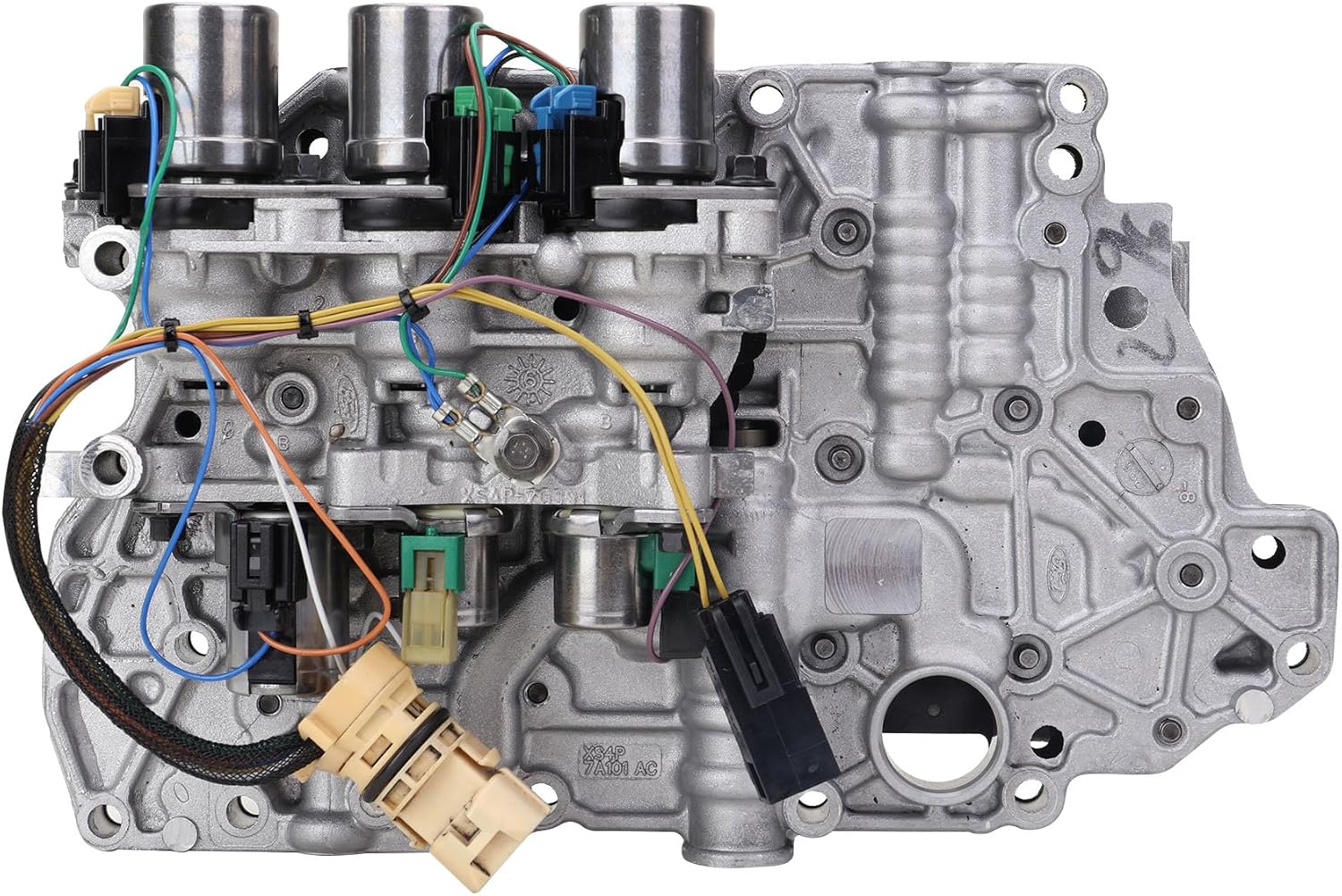
Figure 1: Top view of the 4F27E FN4A-EL Transmission Valve Body. This image shows the main body with multiple electrical connectors and solenoids, indicating its complex internal structure for fluid control.
2. Key Features
- OEM Part Number: Specifically designed to match OEM part number 4F27E FN4A-EL 48420K-R for precise fit and function.
- Broad Compatibility: Compatible with a wide range of Mazda and Ford vehicles equipped with 4F27E/FN4A-EL transmissions from 1999 to 2011.
- Durable Construction: Manufactured from high-quality aluminum, ensuring durability and reliable performance under various operating conditions.
- Quality Tested: Each unit undergoes rigorous testing to ensure optimal functionality and dependability before packaging.
3. Compatibility and Fitment
This transmission valve body is compatible with the following vehicle models. Please verify your vehicle's make, model, and year against this list to ensure proper fitment.
For Ford:
- FESTIVA: 2000-ON (1.3L)
- FIESTA: 2008-2011 (1.3L, 1.4L, 1.5L)
- FOCUS: 2000-2011 (1.6L, 1.8L, 2.0L, 2.3L)
- i-MAX: 2007-2010 (1.8L)
- IXION: 2004-2005 (1.8L)
- LASER: 2000-2005 (1.5L, 1.8L)
- LYNX: 2000-2005 (1.3L, 1.6L)
- TELSTAR: 2000-ON (2.0L)
- TIERRA: 2000-2007 (1.6L)
For Mazda:
- 2: 2007-2011 (1.3L, 1.5L)
- 3: 2004-2011 (1.6L, 2.0L)
- 323: 2000-2007 (1.3L, 1.5L, 1.6L, 1.8L, 2.0L)
- 5: 2005-2011 (2.0L)
- 6: 2002-2008 (2.0L, 2.3L)
- ATENZA/5HB/WAGON: 2002-2005 (2.0L, 2.3L)
- AXELA/WAGON: 2003-2011 (1.5L, 1.6L, 2.0L, 2.3L)
- BIANTE: 2008-2011 (2.0L)
- DEMIO: 2000-2011 (1.3L, 1.5L)
- FAMILIA: 2000-2005 (1.3L, 1.5L, 1.6L, 1.8L, 2.0L)
- MPV (VAN): 2001-2007 (2.3L)
- PREMACY: 2000-2010 (1.8L, 2.0L, 2.3L)
- PROTÉGÉ: 1999-2004 (1.6L, 1.8L, 2.0L)
- TRIBUTE: 2003-2008 (2.3L)
- VERISA: 2004-2009 (1.5L)

Figure 2: Angled view of the transmission valve body. This perspective highlights the various electrical connections and the overall compact design of the unit.
4. Specifications
| Attribute | Value |
|---|---|
| Part Number | 4F27E, FN4A-EL |
| Material | Aluminum |
| Brand | POPSTORE |
| Inlet Connection Type | Threaded |
| Number of Ports | 2 |
| Valve Type | Transmission Valve Body |
| Item Weight | 10.88 pounds |
| Package Dimensions | 13.75 x 10 x 8 inches |
| Item Model Number | 4F27E FN4A-EL |

Figure 3: Detailed view of the transmission valve body from a different angle. This image provides a clearer look at the arrangement of the solenoids and their wiring.
5. Installation and Setup
Installation of a transmission valve body is a complex procedure that requires specialized tools and automotive knowledge. It is highly recommended that this component be installed by a certified professional mechanic to ensure proper function and vehicle safety.
General Installation Steps (for professional reference):
- Safely lift and secure the vehicle.
- Drain the transmission fluid.
- Remove the transmission oil pan and filter.
- Carefully disconnect electrical connectors and mounting bolts from the old valve body.
- Remove the old valve body.
- Install the new POPSTORE 4F27E FN4A-EL Transmission Valve Body, ensuring all connections are secure and bolts are torqued to manufacturer specifications.
- Install a new transmission filter and gasket.
- Reinstall the transmission oil pan.
- Refill the transmission with the correct type and amount of fluid.
- Perform a fluid level check and test drive to ensure proper operation.
Important: Refer to your vehicle's specific service manual for detailed, model-specific installation instructions and torque specifications.

Figure 4: Bottom view of the transmission valve body. This image displays the flat mounting surface and the arrangement of bolt holes, crucial for proper installation within the transmission housing.
6. Operation
The transmission valve body operates internally within the automatic transmission system. Its function is to regulate and direct hydraulic fluid pressure to various clutch packs and bands, enabling the transmission to shift gears smoothly and efficiently. Once installed correctly, the valve body works automatically as part of the transmission's normal operation.
No direct user interaction is required with the valve body itself after installation. Proper operation is indicated by smooth gear changes, absence of slipping, and correct engagement of gears.
7. Maintenance
The transmission valve body itself does not require specific routine maintenance. Its longevity and proper function are directly tied to the overall health and maintenance of your vehicle's automatic transmission.
To ensure the optimal performance and lifespan of your transmission and its valve body, adhere to the following general maintenance practices:
- Regular Transmission Fluid Changes: Follow your vehicle manufacturer's recommended schedule for transmission fluid and filter changes. Using the correct type of fluid is critical.
- Use Quality Fluid: Always use high-quality transmission fluid that meets or exceeds your vehicle's specifications. Contaminated or incorrect fluid can severely damage the valve body and other transmission components.
- Monitor Fluid Levels: Periodically check your transmission fluid level as per your vehicle's manual. Low fluid levels can lead to overheating and component wear.
- Address Issues Promptly: Any signs of transmission trouble, such as delayed shifts, slipping, harsh shifts, or warning lights, should be addressed by a qualified mechanic immediately.

Figure 5: Close-up of a stamped part number on the valve body. This detail confirms the authenticity and specific model of the component.
8. Troubleshooting
If you experience issues with your transmission after installing the valve body, consider the following common problems and potential causes. Due to the complexity of transmission systems, professional diagnosis is always recommended.
| Symptom | Possible Cause | Recommended Action |
|---|---|---|
| Delayed or Harsh Shifts | Low or incorrect transmission fluid level; clogged filter; faulty solenoid; internal transmission issue. | Check fluid level and condition. Ensure correct fluid type. Inspect electrical connections. Consult a professional. |
| Transmission Slipping | Low fluid level; worn clutch packs; faulty valve body or solenoids; internal transmission wear. | Verify fluid level. Professional diagnosis is essential to identify the root cause. |
| No Engagement of Gears | Extremely low fluid; severe internal transmission damage; major electrical fault. | Do not drive the vehicle. Have it towed to a qualified mechanic for immediate inspection. |
| Check Engine Light (Transmission related codes) | Electrical issue with solenoids; sensor malfunction; internal valve body fault. | Scan for diagnostic trouble codes (DTCs). Address specific codes as per service manual. |
Note: This troubleshooting guide is for general reference only. Always consult a qualified automotive technician for accurate diagnosis and repair of transmission issues.

Figure 6: Close-up of a manufacturing mark on the valve body. Such markings are used for quality control and identification during production.
9. Warranty and Support
The POPSTORE 4F27E FN4A-EL Transmission Valve Body is manufactured to high standards and undergoes thorough testing. For specific warranty information, please refer to the documentation provided with your purchase or contact the seller directly.
If you have any questions, encounter issues, or require assistance with this product, please do not hesitate to contact our support team. We are committed to providing the highest standard of after-sales service.
Contact Information:
- For support, please refer to the contact details provided by your retailer or the official POPSTORE website.

Figure 7: Detailed view of electrical connections. This image emphasizes the precision required for connecting the valve body to the vehicle's electrical system.