1. Introduction
This manual provides essential information for the proper installation, operation, and maintenance of your POLINI PISTONE APE D.69.8 SPINOTTO D.18. Designed for specific engine applications, this piston is a critical component for engine performance. Please read this manual thoroughly before attempting any installation or maintenance procedures to ensure safety and optimal product longevity.
2. Product Overview and Components
The POLINI PISTONE APE D.69.8 SPINOTTO D.18 is a high-quality engine piston designed for durability and performance. It features a 69.8mm diameter and is compatible with an 18mm piston pin (spinotto).
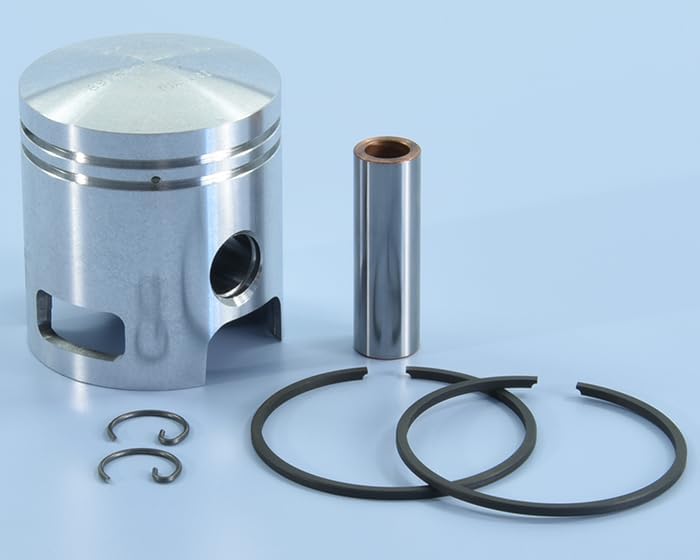
Figure 2.1: Components of the POLINI Piston Kit. This image displays the main piston body, the cylindrical piston pin (spinotto), two piston rings, and two C-shaped circlips used to secure the piston pin within the piston.
Included Components:
- Piston (D.69.8)
- Piston Pin (Spinotto D.18)
- Piston Rings (typically two or three, depending on design)
- Circlips (for piston pin retention)
- KOBEL (as listed in product contents, specific use may vary by application)
3. Setup and Installation
Installation of engine components requires specialized knowledge and tools. It is highly recommended that installation be performed by a qualified mechanic or technician. Improper installation can lead to engine damage or failure.
General Installation Steps (Consult Service Manual for Specific Engine):
- Preparation: Ensure the cylinder bore is clean, free of debris, and within specified tolerances. Inspect the connecting rod for wear or damage.
- Piston Ring Installation: Carefully install the piston rings onto the piston, ensuring correct orientation and gap placement as per engine manufacturer specifications. Avoid over-expanding the rings.
- Piston Pin and Circlip Installation: Lubricate the piston pin and connecting rod small end. Insert the piston pin through the piston and connecting rod. Secure the piston pin with the provided circlips on both sides. Ensure circlips are fully seated in their grooves.
- Lubrication: Apply a thin coat of clean engine oil to the piston skirt, piston rings, and cylinder bore before installation.
- Piston Orientation: Note any directional markings on the piston crown (e.g., an arrow pointing towards the exhaust side) and install accordingly.
- Cylinder Installation: Using a piston ring compressor, carefully guide the piston and rings into the cylinder bore. Ensure the connecting rod aligns with the crankshaft journal.
- Torque Specifications: Tighten all fasteners (e.g., connecting rod bolts, cylinder head bolts) to the engine manufacturer's specified torque values using a calibrated torque wrench.
4. Operating Considerations
Once installed, the piston operates as an integral part of the engine's combustion cycle. Proper engine break-in is crucial for the longevity and performance of new piston rings and the cylinder bore. Refer to your engine's service manual for specific break-in procedures, which typically involve varying engine speeds and loads for a specified period.
Ensure the engine always operates with the correct type and level of engine oil, and that the cooling system is functioning optimally to prevent overheating, which can severely damage pistons and other engine components.
5. Maintenance
While pistons themselves do not require routine maintenance, their performance and lifespan are directly affected by overall engine health. Adhere to the following general maintenance practices:
- Regular Oil Changes: Follow the engine manufacturer's recommendations for oil type and change intervals. Clean oil prevents carbon buildup and reduces wear.
- Air Filter Inspection: A clean air filter prevents abrasive particles from entering the engine and causing cylinder and piston wear.
- Cooling System Check: Ensure the cooling system is functioning correctly to maintain optimal engine temperature and prevent thermal stress on the piston.
- Fuel Quality: Use recommended fuel to prevent pre-ignition or detonation, which can damage piston crowns.
- Periodic Inspections: During other engine servicing, inspect for signs of unusual wear, scoring, or carbon buildup on accessible piston surfaces if possible.
6. Troubleshooting
Piston-related issues often manifest as broader engine problems. If you experience any of the following symptoms, it may indicate a piston or internal engine issue. Professional diagnosis is strongly recommended.
- Excessive Smoke from Exhaust: Blue smoke often indicates oil burning, potentially due to worn piston rings or cylinder walls.
- Loss of Engine Power/Compression: Worn or broken piston rings can lead to a loss of compression, reducing engine power.
- Unusual Engine Noises: Knocking or rattling sounds can indicate issues with the piston pin, connecting rod, or piston slap due to excessive clearance.
- Increased Oil Consumption: A common symptom of worn piston rings or valve seals.
- Overheating: While not a direct piston issue, prolonged overheating can cause piston damage (e.g., seizing, melting).
Caution: Attempting to diagnose or repair internal engine components without proper training and tools can lead to further damage or personal injury. Always consult a qualified professional.
7. Specifications
| Attribute | Value |
|---|---|
| Brand | POLINI |
| Model Number | 204.0328 |
| Item Weight | 2.2 pounds |
| Package Dimensions | 3.94 x 3.94 x 3.94 inches |
| Manufacturer Part Number | 204.0328 |
| ASIN | B0CGVMNJ8B |
| Date First Available | January 3, 2025 |
8. Warranty Information
Specific warranty terms and conditions for the POLINI PISTONE APE D.69.8 SPINOTTO D.18 are provided by the manufacturer, POLINI. Please refer to the documentation included with your purchase or visit the official POLINI website for detailed warranty information. Keep your proof of purchase for any warranty claims.
9. Customer Support
For technical assistance, questions regarding installation, or support with your POLINI PISTONE APE D.69.8 SPINOTTO D.18, please contact the seller from whom you purchased the product or refer to the official POLINI customer support channels. Contact information can typically be found on the manufacturer's website.


