
1. Introduction
This manual provides detailed instructions for the setup, operation, and maintenance of your Nebakne 200-Key Fireproof Wall Mount Key Safe. Please read this manual thoroughly before installation and use to ensure proper functionality and safety.
1.1 Product Overview
The Nebakne 200-Key Fireproof Wall Mount Key Safe is designed for secure key storage in various environments such as homes, offices, and garages. It features robust construction and multiple access methods to ensure the safety and organization of your keys.

This image displays the Nebakne 200-Key Fireproof Wall Mount Key Safe with its door open, showcasing the organized interior with multiple key hooks and color-coded key tags.
1.2 Key Features
- Durable Construction: Made from solid cold-rolled steel, offering anti-pry, anti-rust, and high-temperature resistance. Features 2 solid bolts and a thickened front door.
- Wall Mountable: Designed for secure installation to a wall using the included mounting hardware.
- Key Capacity: Stores up to 200 keys with adjustable hook plates and color-coded key tags for efficient organization.
- Multiple Access Methods: Can be opened using an emergency key, a user/master code (3-8 digits), or an external battery box combined with a code in case of internal battery depletion.
- Security Features: Includes an alarm mode that activates after multiple incorrect code entries and an optional silent mode for discreet operation.
- Convenient Drop Box: A side opening allows for keys to be dropped into the safe without requiring the main door to be opened.
- Internal LED Light: Provides illumination for easy key access in low-light conditions.
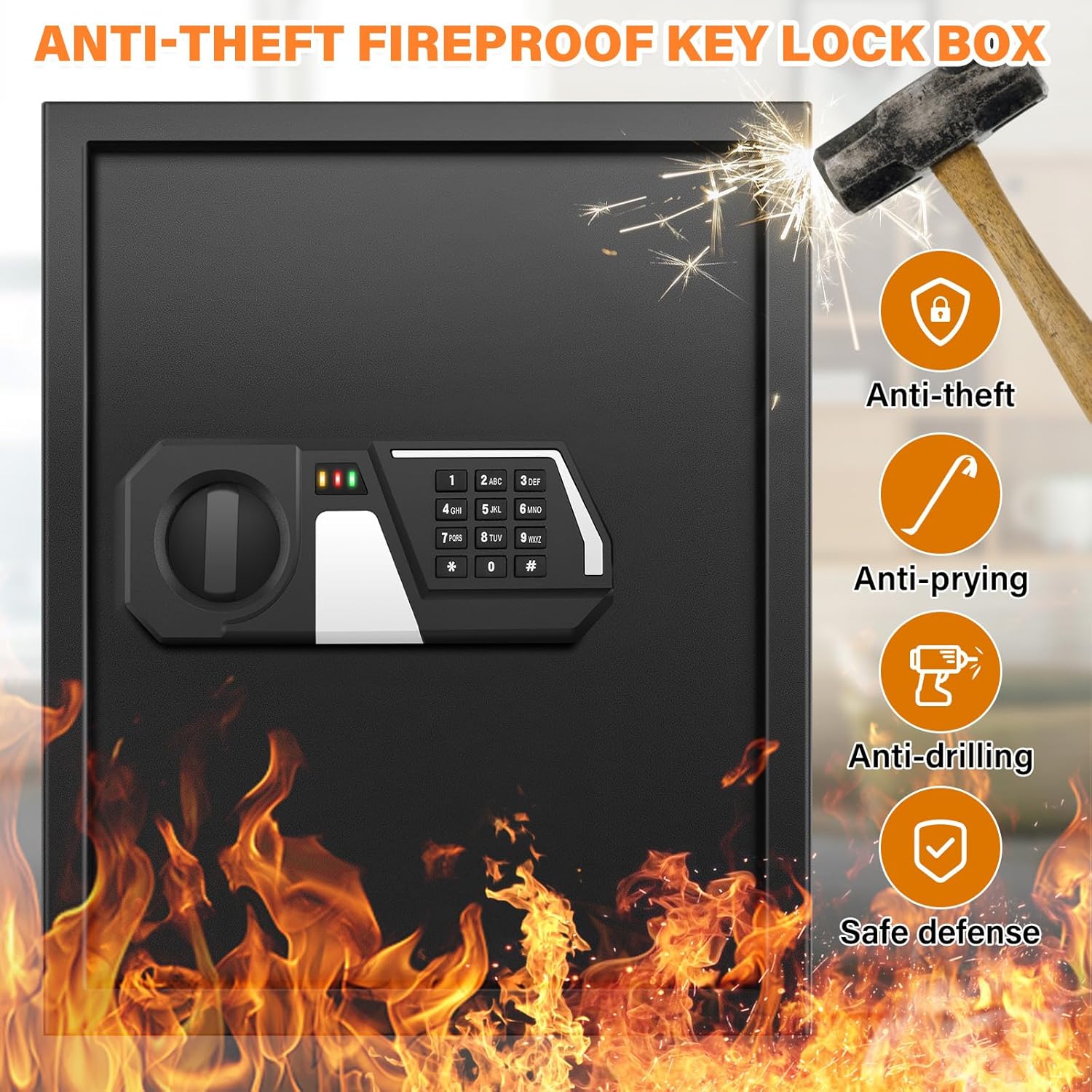
This image illustrates the robust construction of the key safe, highlighting its resistance to theft, prying, and drilling, along with its fireproof design.
2. Setup
2.1 Included Components
Please verify that all the following components are included in your package:
- 1 × Key Lock Box
- 2 × Emergency Keys
- 20 × Hook Plates
- 1 × External Battery Box
- 1 × Mounting Hardware Set (bolts, anchors)
- 1 × User Manual
- 200 × Color-coded Key Tags
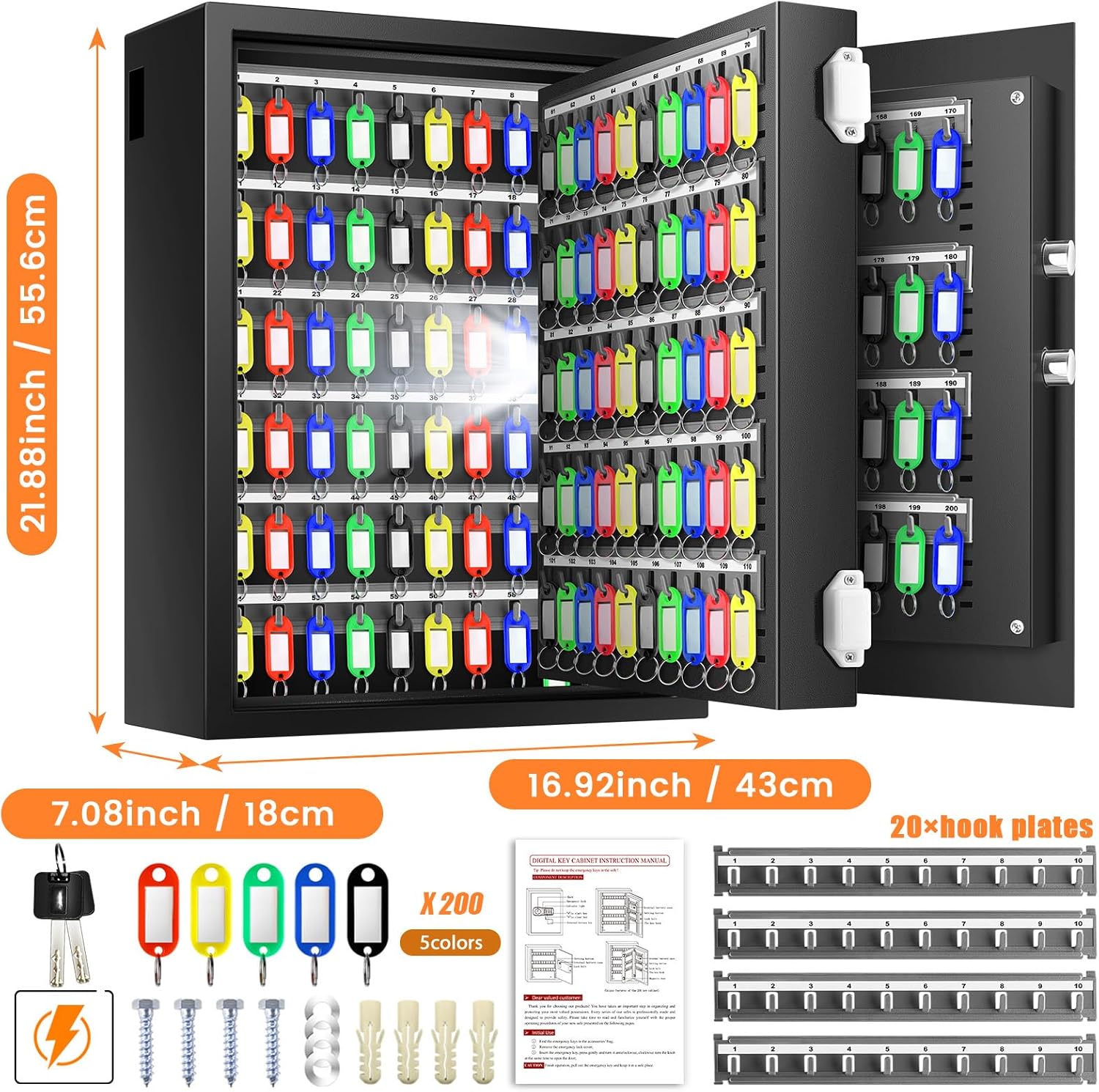
This image provides a visual representation of the key safe's dimensions and lists all the accessories included in the package, such as emergency keys, key tags, hook plates, and mounting hardware.
2.2 Wall Mounting Instructions
The key safe is designed for secure wall mounting. Choose a location with a structurally sound wall capable of supporting the safe's weight (approximately 40.8 lbs) plus the weight of its contents.
- Select a suitable mounting location.
- Using the safe as a template, mark the positions for the mounting holes on the wall.
- Drill pilot holes at the marked positions.
- Insert wall anchors (if necessary for your wall type).
- Align the safe with the holes and secure it to the wall using the provided mounting bolts.
- Ensure the safe is firmly attached and does not wobble.
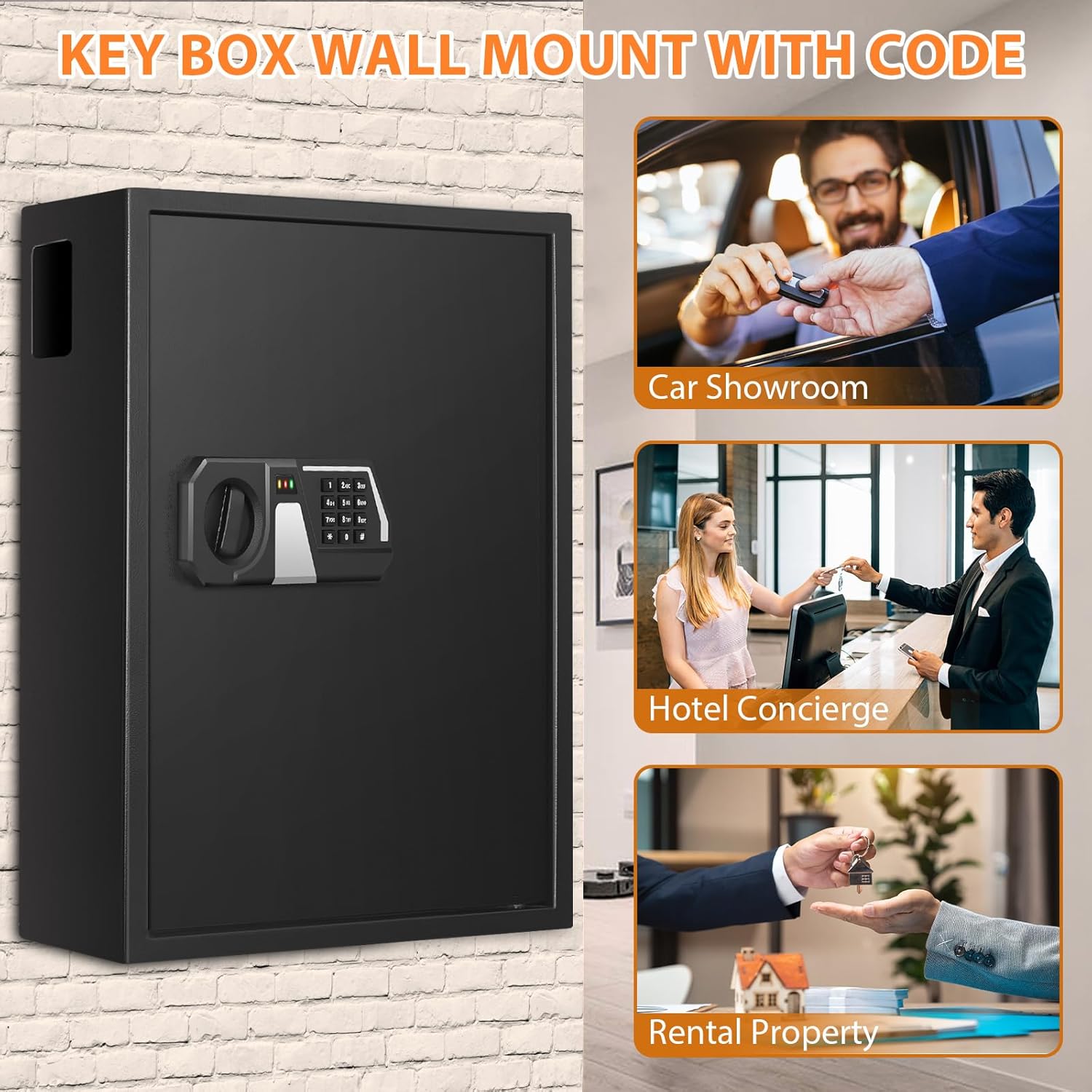
This image demonstrates the key safe securely mounted on a wall, illustrating its intended installation method.
2.3 Battery Installation
The electronic lock requires batteries for operation. The battery compartment is located inside the safe door.
- Open the safe door using the emergency key (initial access).
- Locate the battery compartment cover on the inside of the door.
- Remove the cover and insert the required batteries (typically AA, not included) according to the polarity markings.
- Replace the battery compartment cover.
This video illustrates the process of installing batteries into the internal battery compartment of the key safe, which is essential for the electronic lock's functionality. It also shows the three methods for unlocking the safe.
2.4 Setting User and Master Codes
It is recommended to set both a user code and a master code for enhanced security and access control. Always test your new codes before closing the safe door.
2.4.1 Setting the User Code
- With the safe door open, press the reset button located on the inside of the door (usually a small red button).
- Enter your desired 3-8 digit user code on the keypad.
- Press the "#" key to confirm. The indicator light will confirm successful programming.
- Test the new user code with the door open before closing it.
2.4.2 Setting the Master Code
- With the safe door open, enter "00" on the keypad.
- Press the reset button located on the inside of the door.
- Enter your desired 3-8 digit master code on the keypad.
- Press the "#" key to confirm. The indicator light will confirm successful programming.
- Test the new master code with the door open before closing it.
This video provides a step-by-step guide on how to program your personal user code and the master code for the key safe's electronic lock. It is recommended to test the new codes before closing the safe door.
3. Operating Instructions
3.1 Opening the Key Safe
The Nebakne Key Safe offers three methods for access:
- Using the Emergency Key: Insert the emergency key into the keyhole, turn it, and then turn the knob to open the door.
- Using a User/Master Code: Enter your programmed 3-8 digit user or master code on the keypad, press "#", and then turn the knob to open the door.
- Using the External Battery Box (if internal batteries are dead): If the internal batteries are depleted, connect the external battery box to the port on the keypad. Then, enter your user or master code, press "#", and turn the knob to open the door.
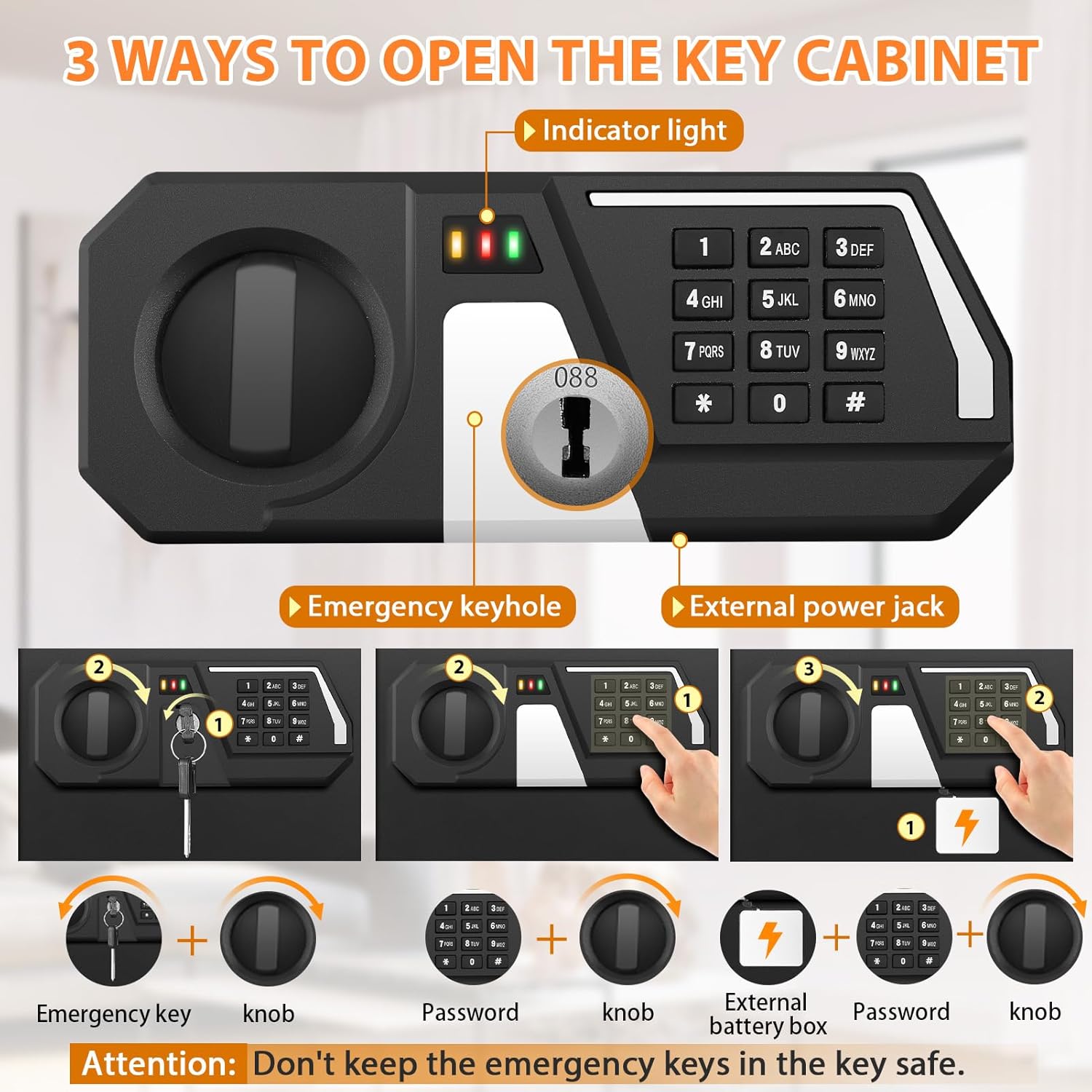
This image illustrates the various ways to open the key safe, including using the emergency key, entering a code, or utilizing the external battery box for emergency access.
This video demonstrates the three primary methods for unlocking the Nebakne Key Safe: using the emergency key, entering a programmed code, and utilizing the external battery box for emergency access.
3.2 Alarm and Silent Mode
The key safe is equipped with an alarm system and a silent mode option.
- Alarm Activation: If an incorrect code is entered 3 times continuously, the keypad will lock for 20 seconds, and a buzzer will sound for 20 seconds. If 6 continuous wrong entries occur, the warning beep will activate for 5 minutes.
- Silent Mode On/Off: To turn off the sound, press "*633". To turn on the sound, press "*66".
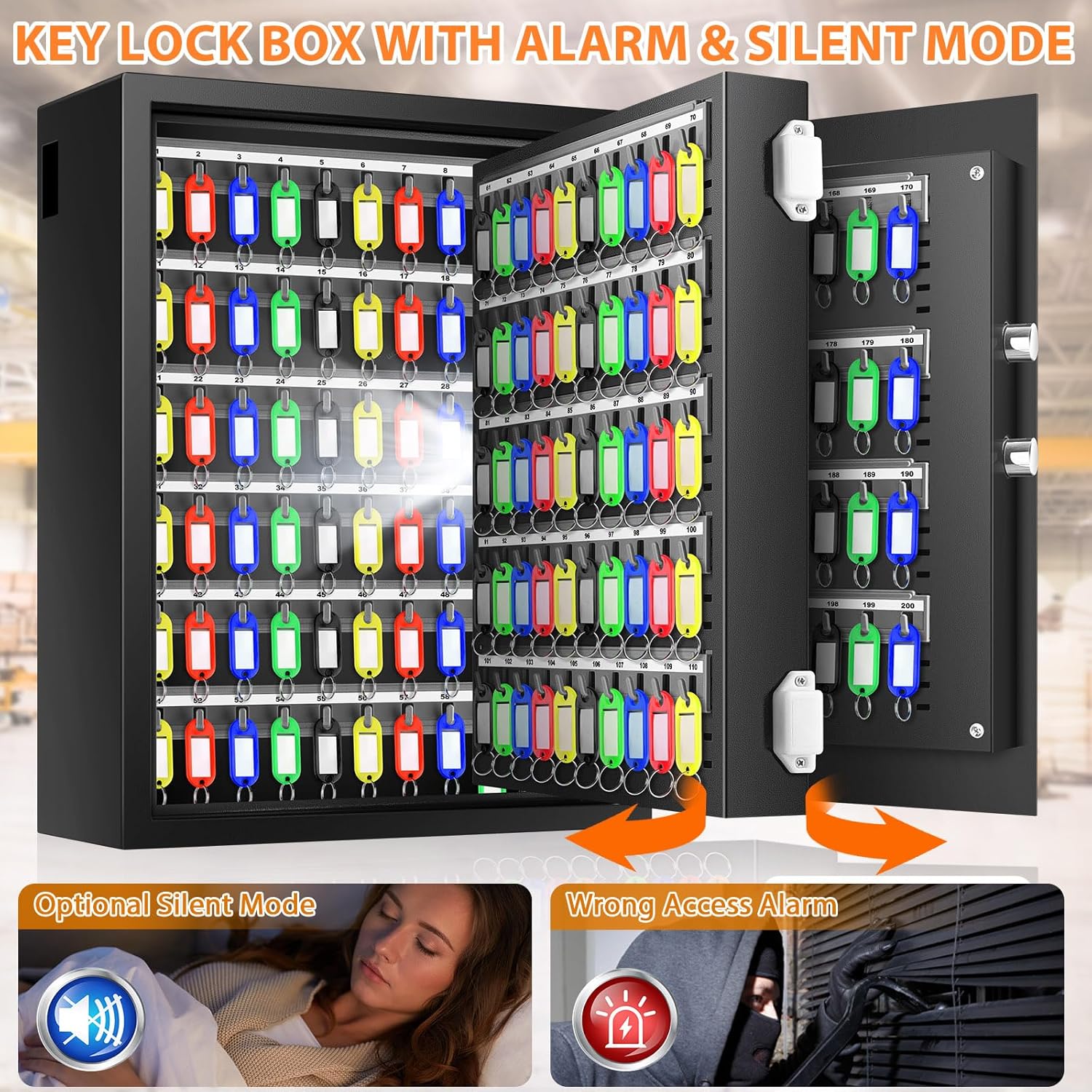
This image highlights the key safe's alarm system, which activates after multiple incorrect code entries, and the option for a silent mode.
This video demonstrates how to enable or disable the sound for the key safe's operations and how the alarm mode functions when incorrect codes are entered.
3.3 Using the Drop Box Feature
The key safe includes a convenient side opening that functions as a drop box. This allows individuals to return keys without needing full access to the safe's interior.
- Locate the small opening on the side of the key safe.
- Insert the key into this opening.
- The key will drop onto the internal hooks, ready for retrieval by an authorized user.
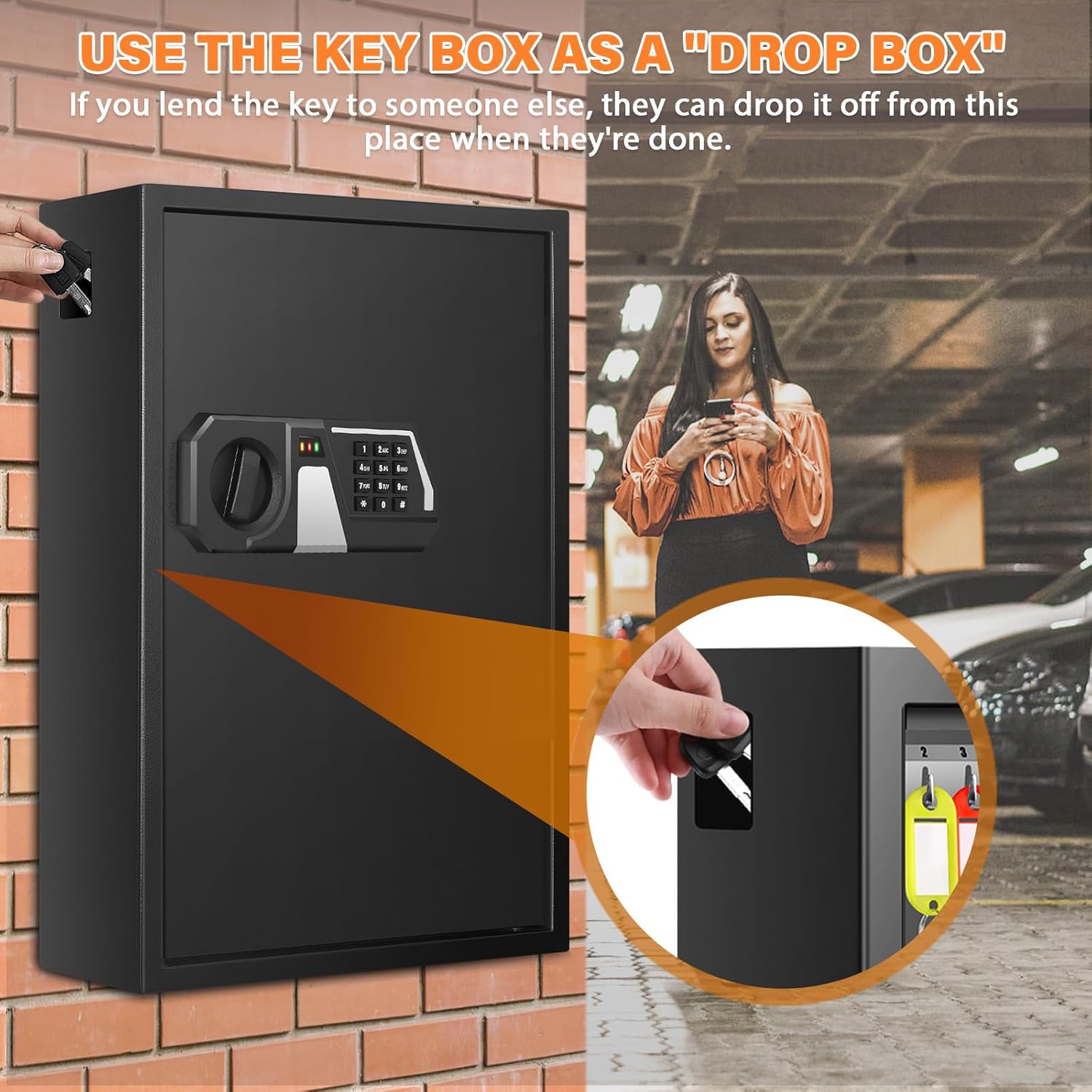
This image demonstrates the side slot, which allows for keys to be dropped into the safe without needing to open the main door, ideal for returns.
3.4 Organizing Keys
The key safe is designed for optimal key organization.
- Adjustable Hook Plates: The key lockbox features adjustable hook plates that can be positioned at different heights to accommodate various key sizes.
- Key Tags: Utilize the provided color-coded key tags to label and categorize your keys. This allows for quick identification and retrieval.
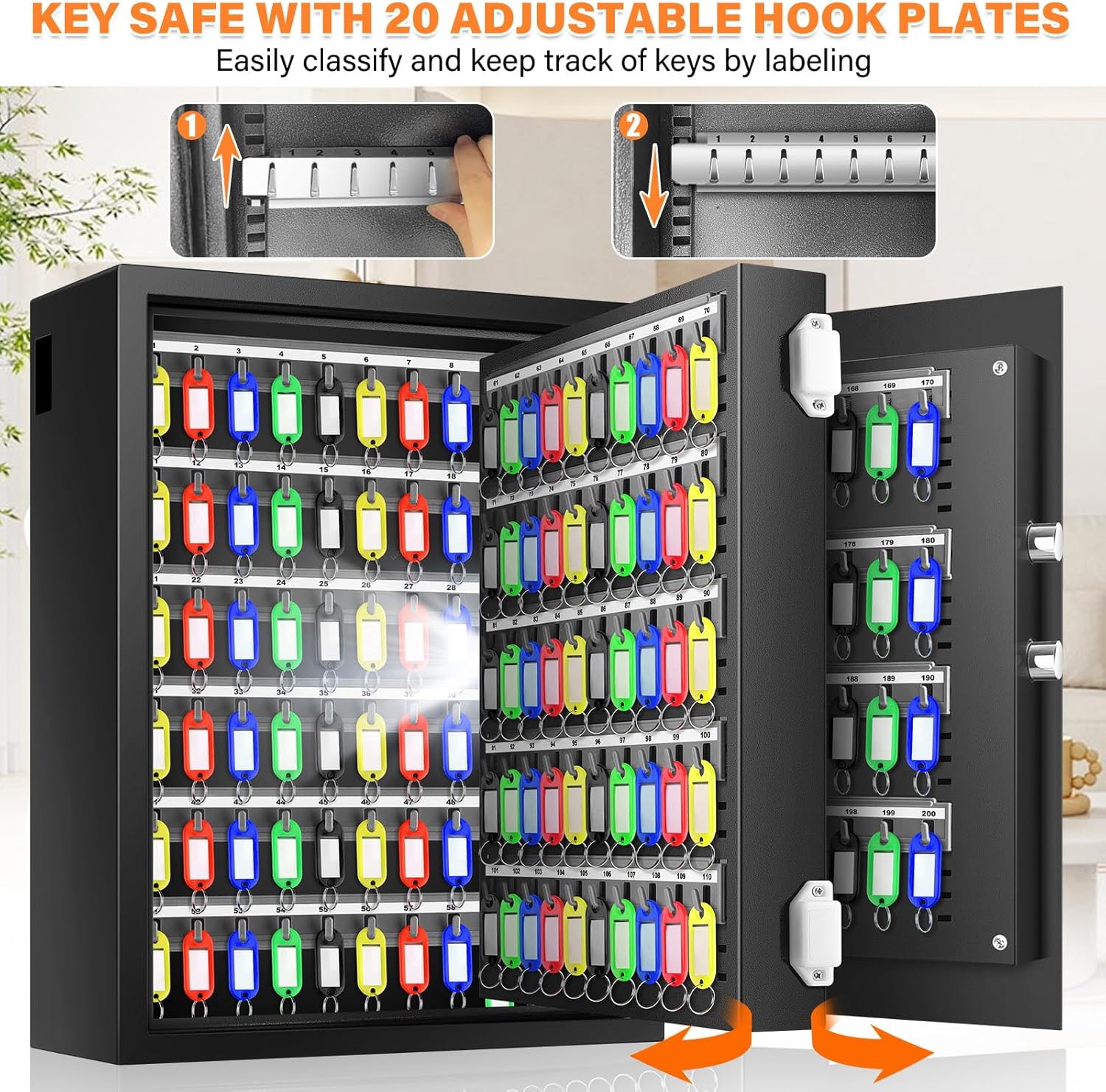
This image displays the interior of the key safe, featuring adjustable hook plates that can be repositioned to accommodate various key sizes, along with color-coded key tags for organization.
4. Maintenance
4.1 General Care
- Cleaning: Wipe the exterior and interior surfaces of the safe with a soft, dry cloth. Avoid using abrasive cleaners or solvents that could damage the finish or electronic components.
- Battery Replacement: Replace the internal batteries annually or when the low battery indicator appears to ensure continuous operation of the electronic lock.
- Emergency Key Storage: Always store the emergency keys in a secure, separate location away from the safe. Do not store them inside the safe.
5. Troubleshooting
5.1 Keypad Not Responding / Code Not Working
- Check Batteries: Ensure the internal batteries are correctly installed and have sufficient power. If the batteries are dead, use the external battery box to power the keypad and open the safe.
- Incorrect Code Entries: If the wrong code is entered multiple times, the keypad will temporarily lock. Wait for the lockout period to expire (e.g., 20 seconds after 3 wrong entries, 5 minutes after 6 wrong entries) before attempting to enter the code again.
- Static Electricity: In environments prone to static electricity, a static discharge might interfere with the keypad's memory. If this occurs, use the emergency key to open the safe and reset your codes. Consider measures to reduce static buildup in the area.
5.2 Alarm Sounds Unexpectedly
- Verify that no incorrect codes have been entered.
- Ensure the safe door is fully closed and securely latched.
5.3 Key Hook Plates Breaking
If any of the adjustable key hook plates become damaged or break, please contact Nebakne customer service for assistance with replacements.
6. Specifications
| Feature | Detail |
|---|---|
| Brand | Nebakne |
| Model Name | Key lock box04 |
| Key Capacity | 200 Keys |
| Product Dimensions (D x W x H) | 7.08"D x 16.9"W x 21.85"H |
| Item Weight | 40.8 Pounds |
| Color | Black |
| Material | Alloy Steel, Steel |
| Lock Type | Combination Lock |
| Mounting Type | Wall Mount |
| Special Features | Durable, Key Lock, Fireproof, Waterproof |
| Included Components | 1×key lock box, 2×emergency keys, 20×hook plates, 1×external battery box, 1×mounting hardware, 1×user manual |
7. Warranty and Support
For any questions, concerns, or technical assistance regarding your Nebakne 200-Key Fireproof Wall Mount Key Safe, please contact Nebakne customer service. Their professional team is committed to providing support and aims to resolve issues within 24 hours.
Specific warranty details are typically provided with the product documentation. Please refer to the included user manual or contact customer support for comprehensive warranty information.