
1. Introduction
The SSK SD301 is a high-speed, portable external Solid State Drive (SSD) designed for efficient data transfer and storage expansion across various devices. Featuring both USB-C and USB-A 3.2 Gen 2 interfaces, it offers broad compatibility and fast performance.
Key Features:
- Dual-Interface Design: Equipped with USB-C and USB-A 3.2 ports for versatile connectivity with smartphones, tablets, computers, and other compatible devices.
- Ultra-Fast Transfer Speeds: Achieves read speeds up to 550MB/s and write speeds up to 500MB/s, significantly faster than traditional USB 3.0 flash drives.
- Plug and Play Functionality: No software installation required for immediate use.
- Durable Construction: Features a high-grade zinc alloy shell for excellent shock resistance and efficient heat dissipation, protecting your data. Includes a double-head protective cover for both interfaces.
- Wide Compatibility: Supports Windows, Linux, Mac OS, and Android operating systems. Compatible with iPhone 15, iPad, laptops, MacBooks, smart TVs, car audio systems, and more. (Note: Incompatible with Lightning port devices).

Image 1.1: The SSK SD301 Dual-Interface External SSD, showcasing its compact design, dual USB-C and USB-A connectors, and an included protective cover/keychain.
2. Package Contents
Please verify that all items are present in your package:
- SSK SD301 External SSD (1TB Capacity)
- Protective Cover/Keychain
3. Setup
The SSK SD301 SSD is designed for plug-and-play operation, requiring no driver installation for most modern operating systems.
Initial Connection:
- Identify the appropriate port on your device (USB-C or USB-A).
- Carefully insert the corresponding connector of the SSK SD301 SSD into your device's port. Ensure a secure connection.
- Your device should automatically detect the SSD. It may appear as a removable drive or external storage.
File System Information:
The drive comes pre-formatted with the exFAT file system. This format is widely compatible with Windows, macOS, Linux, and Android devices.
- If your device (e.g., some older Smart TVs) does not recognize the exFAT format, you may need to reformat the drive to a compatible file system such as NTFS (for Windows-centric use) or HFS+ (for macOS-centric use).
- Caution: Reformatting the drive will erase all data. Back up any important files before proceeding with reformatting.
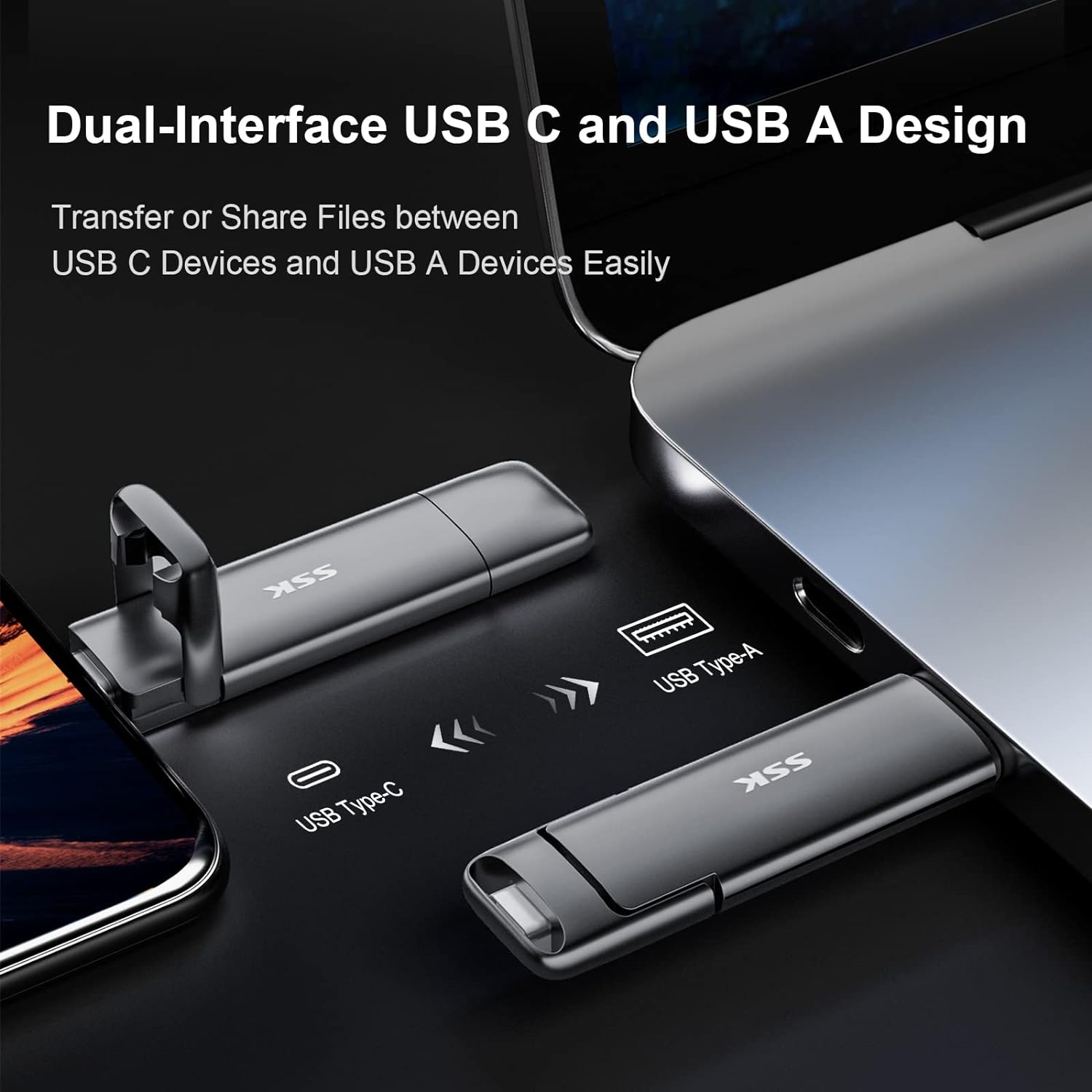
Image 3.1: The SSK SD301 SSD demonstrating its dual USB-C and USB-A interfaces, allowing connection to various devices like smartphones and laptops.
4. Operating Instructions
Data Transfer:
Once connected, the SSK SD301 SSD functions like any other external storage device. You can drag and drop files, copy and paste, or use your device's file management system to transfer data.
- For Computers (Windows/macOS/Linux): Open File Explorer (Windows) or Finder (macOS), locate the SSK drive, and transfer files as usual.
- For Smartphones/Tablets (Android/iPhone 15 with USB-C): Access the drive through your device's file manager application. You can move photos, videos, and documents to or from the SSD.
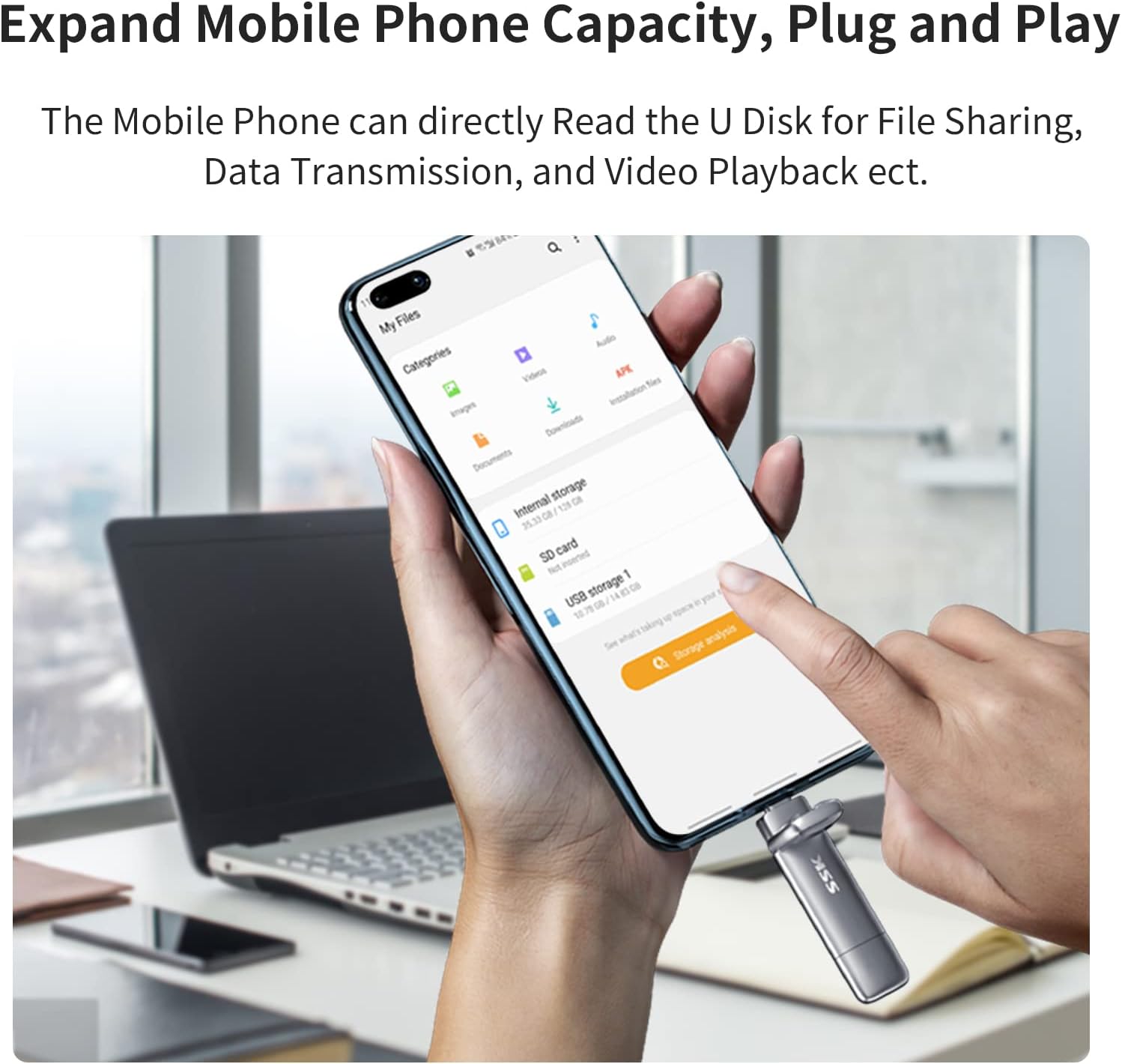
Image 4.1: A smartphone connected to the SSK SD301 SSD, illustrating how the device's storage capacity can be expanded and managed directly from the phone's file system.
Performance:
The drive utilizes USB 3.2 Gen 2 technology for high-speed data transfer. Actual speeds may vary based on the host device, interface, file size, and usage conditions.

Image 4.2: A visual comparison demonstrating the superior read and write speeds of the SSK USB 3.2 SSD compared to a standard USB 3.0 flash drive, highlighting efficiency in data transfer.
5. Maintenance
To ensure the longevity and optimal performance of your SSK SD301 SSD, follow these maintenance guidelines:
- Physical Protection: The zinc alloy casing provides durability. Use the included protective cover to shield the connectors from dust and physical damage when not in use.
- Heat Management: During prolonged high-speed data transfers, the drive may become warm. This is normal due to the metal casing's role in heat dissipation. Ensure adequate airflow around the drive and avoid covering it during heavy use.
- Safe Removal: Always safely eject or unmount the drive from your operating system before physically disconnecting it to prevent data corruption.
- Cleaning: Use a soft, dry cloth to clean the exterior of the drive. Avoid liquid cleaners or abrasive materials.
- Environmental Conditions: Store the drive in a cool, dry place away from direct sunlight, extreme temperatures, and strong magnetic fields.
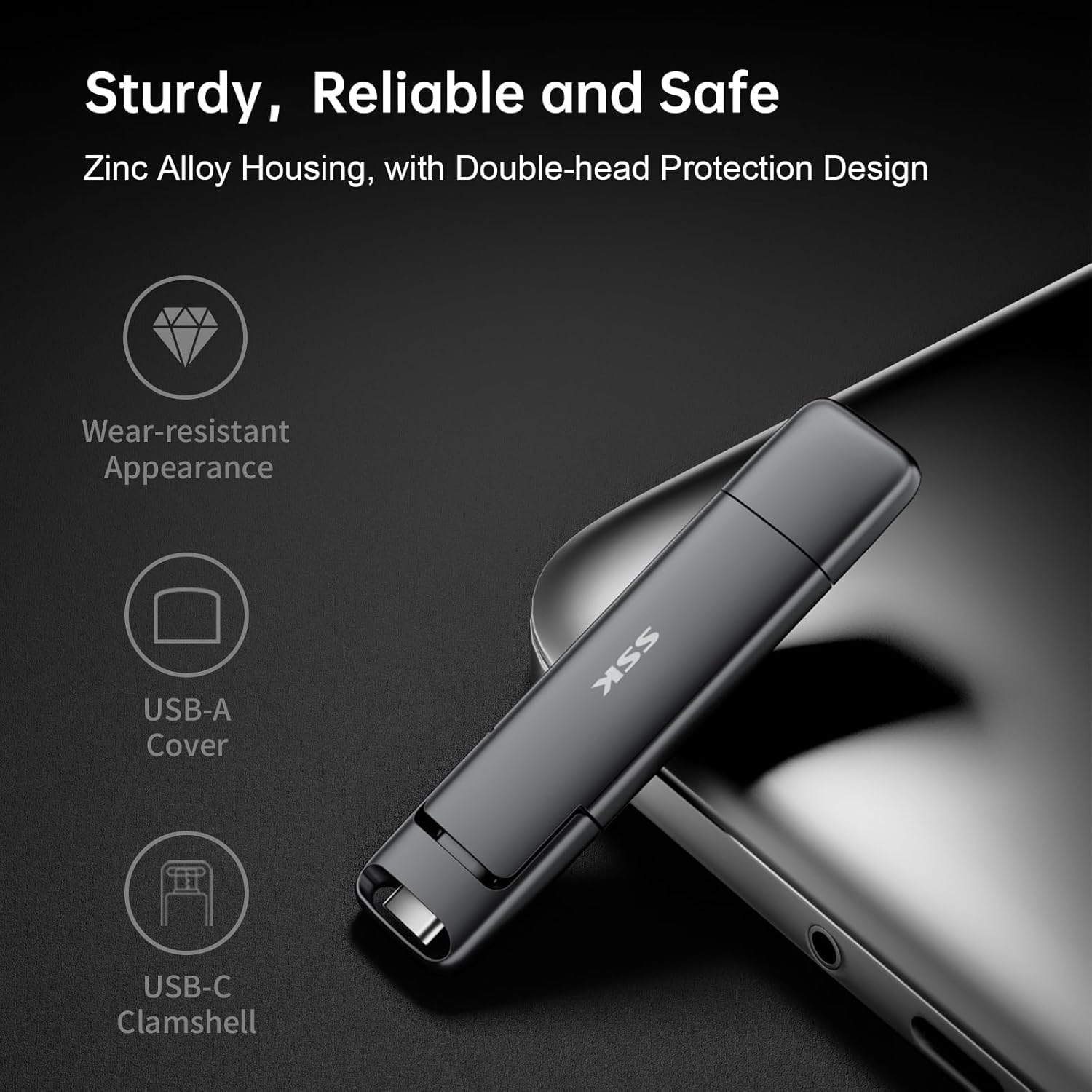
Image 5.1: The SSK SD301 SSD, emphasizing its robust zinc alloy housing and the protective design of its USB-A and USB-C covers, contributing to its reliability and safety.
6. Troubleshooting
If you encounter issues with your SSK SD301 SSD, refer to the following common problems and solutions:
Problem: Drive is not recognized by my device.
- Solution 1: Ensure the drive is fully and securely inserted into the USB port.
- Solution 2: Try connecting the drive to a different USB port on your device or a different device altogether to rule out a port issue.
- Solution 3: Verify that your device's operating system is up to date.
- Solution 4: Check your device's file system compatibility. If connecting to an older Smart TV or specific embedded systems, the default exFAT format might not be supported. Consider reformatting the drive to NTFS (for Windows) or another compatible format if necessary. (Warning: Reformatting erases all data.)
Problem: Drive feels warm during use.
- Solution: It is normal for the drive to become warm during operation, especially during large file transfers, due to its metal casing designed for heat dissipation. If the temperature is excessively hot or causes performance issues, ensure the drive has adequate ventilation and is not covered.
Problem: Data transfer speeds are slower than expected.
- Solution 1: Ensure your device's USB port supports USB 3.2 Gen 2 (or at least USB 3.0/3.1). Connecting to an older USB 2.0 port will result in significantly slower speeds.
- Solution 2: The type and number of files being transferred can affect speed. Transferring many small files is generally slower than transferring a few large files.
- Solution 3: Other processes running on your computer or device can impact transfer speeds. Close unnecessary applications.
7. Specifications
| Brand | SSK |
| Model Number | SD301 |
| Series | SD301/1TB |
| Digital Storage Capacity | 1 TB |
| Hard Drive Interface | Solid State |
| Connectivity Technology | USB (USB 3.2 Gen 2 Type-C, USB 3.2 Gen 2 Type-A) |
| Read Speed | Up to 550 MB/s |
| Write Speed | Up to 500 MB/s |
| Compatible Devices | Desktop, Laptop, Smartphone, Tablet, Smart TV, Car Audio |
| Operating Systems | Windows, Linux, Mac OS, Android |
| File System (Default) | exFAT |
| Material | Zinc Alloy |
| Color | Grey |
| Item Weight | 1.76 ounces (50 grams) |
| Product Dimensions | 3.07 x 0.81 x 0.34 inches (7.8 x 2.06 x 0.86 cm) |
8. Warranty and Support
For warranty information and technical support, please refer to the documentation included with your purchase or visit the official SSK website. Contact details for customer service are typically available on the manufacturer's website.


