Introduction
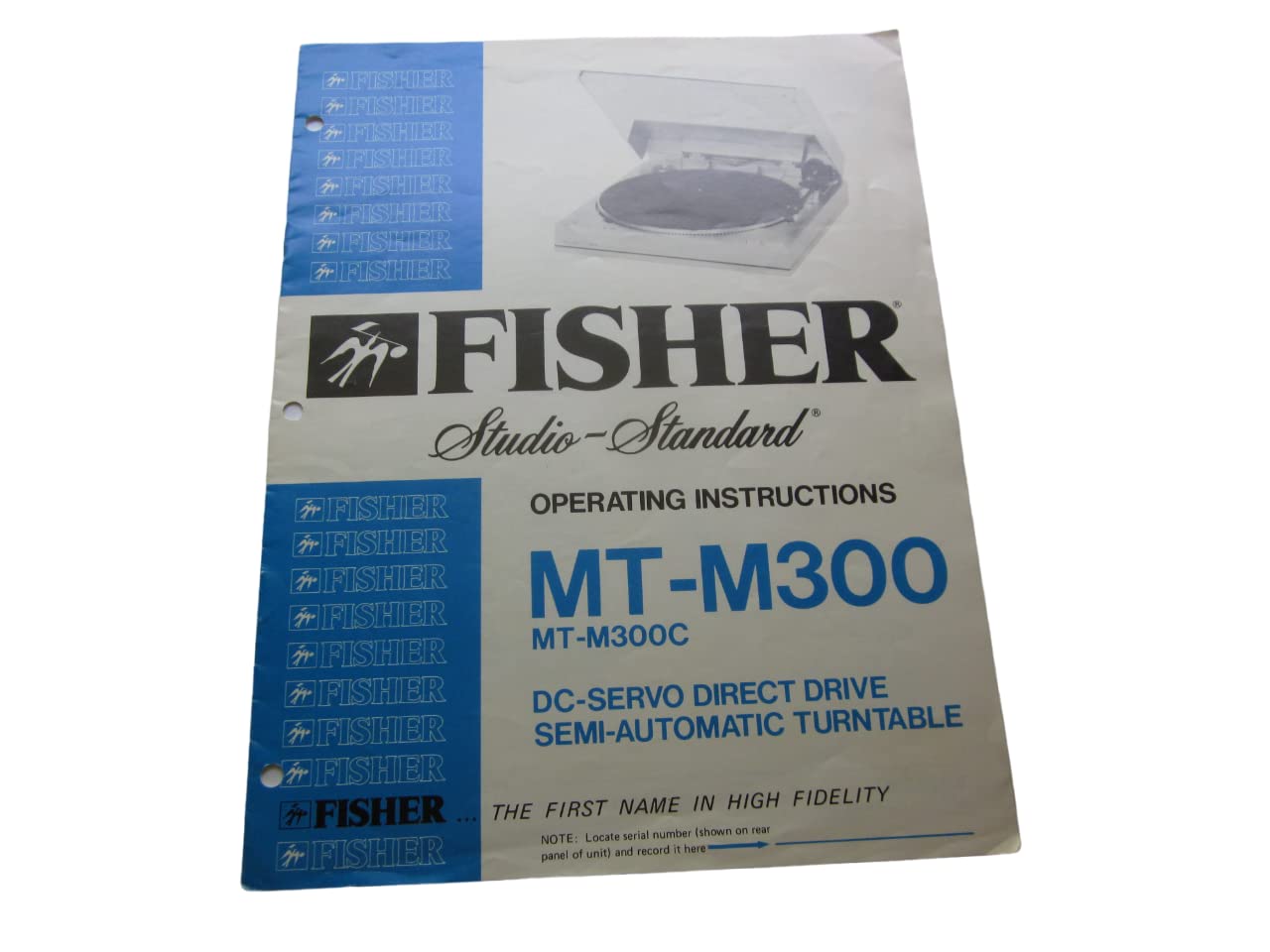
This document provides comprehensive operating instructions for the FISHER Studio-Standard MT-M300 and MT-M300C DC-Servo Direct Drive Semi-Automatic Turntable. Please read this manual thoroughly before operating your turntable to ensure proper setup, optimal performance, and longevity of the unit.
NOTE: Locate the serial number, typically found on the rear panel of the unit, and record it in a safe place for future reference, especially for warranty claims or service inquiries.
Safety Information
Adhere to the following safety guidelines to prevent damage to the unit and ensure user safety:
- Do not expose the unit to rain or moisture.
- Do not open the cabinet. Refer all servicing to qualified personnel.
- Ensure proper ventilation; do not block ventilation openings.
- Place the unit on a stable, level surface away from direct sunlight, heat sources, and excessive dust.
- Use only the specified power supply voltage.
- Keep out of reach of children.
Package Contents
Upon unpacking, verify that all the following items are present:
- FISHER Studio-Standard MT-M300 or MT-M300C Turntable Unit
- Dust Cover
- Platter
- Rubber Mat
- Counterweight
- Headshell with Cartridge and Stylus
- 45 RPM Adapter
- Operating Instructions Manual (this document)
Setup
Follow these steps to set up your turntable:
- Unpacking: Carefully remove all components from the packaging. Retain packaging for future transport.
- Platter Installation: Place the platter onto the center spindle. Ensure it sits securely.
- Rubber Mat Placement: Lay the rubber mat evenly on top of the platter.
- Dust Cover Attachment: Attach the dust cover to the hinges at the rear of the turntable base.
- Tonearm Assembly:
- Attach the counterweight to the rear of the tonearm. Rotate it until the tonearm is balanced horizontally.
- Install the headshell with the cartridge and stylus into the front of the tonearm. Secure it with the locking ring.
- Adjust the tracking force using the counterweight and tracking force dial according to the cartridge manufacturer's specifications (typically 1.5 to 2.5 grams).
- Set the anti-skate control to match the tracking force.
- Connections:
- Connect the RCA audio cables from the turntable to the PHONO input of your amplifier or receiver.
- Connect the ground wire from the turntable to the ground terminal on your amplifier or receiver to minimize hum.
- Plug the AC power cord into a suitable wall outlet.
Operating Instructions
Follow these steps to play a record on your semi-automatic turntable:
- Power On: Press the POWER button to turn on the turntable.
- Place Record: Carefully place a record on the platter, ensuring it is centered. For 45 RPM records with a large center hole, use the provided adapter.
- Select Speed: Select the appropriate speed (33 or 45 RPM) using the SPEED selector button.
- Start Playback:
- Automatic Start: Press the START button. The tonearm will automatically move to the lead-in groove of the record and lower.
- Manual Start: Lift the tonearm using the cueing lever. Manually position the tonearm over the desired track. Lower the tonearm gently using the cueing lever.
- Adjust Volume: Adjust the volume on your amplifier or receiver to the desired listening level.
- End Playback:
- Automatic Stop: At the end of the record, the tonearm will automatically lift, return to its rest, and the platter will stop spinning.
- Manual Stop: Press the STOP button. The tonearm will lift, return to its rest, and the platter will stop. Alternatively, lift the tonearm with the cueing lever, return it to the rest, and then press STOP.
- Power Off: Press the POWER button to turn off the turntable when not in use.
Maintenance
Regular maintenance ensures optimal performance and extends the life of your turntable:
- Dust Cover: Keep the dust cover closed when not in use to protect the platter and tonearm from dust. Clean the dust cover with a soft, dry cloth.
- Stylus Cleaning: Gently clean the stylus with a soft brush designed for stylus cleaning, brushing from back to front. Do not use excessive force.
- Record Cleaning: Clean records before playing to prevent dust and debris from damaging the stylus and affecting sound quality.
- Cabinet Cleaning: Wipe the turntable cabinet with a soft, slightly damp cloth. Avoid harsh chemicals or abrasive cleaners.
- Stylus Replacement: The stylus has a limited lifespan. Replace it when sound quality degrades or after approximately 500-1000 hours of play, depending on the cartridge.
Troubleshooting
Refer to the following table for common issues and their solutions:
| Problem | Possible Cause | Solution |
|---|---|---|
| No power | Power cord not connected; outlet not active | Check power cord connection; test outlet with another device |
| No sound or low volume | Incorrect input selected on amplifier; loose RCA cables; damaged stylus | Select PHONO input; ensure RCA cables are secure; inspect and replace stylus if necessary |
| Humming noise | Ground wire not connected; interference | Connect ground wire to amplifier; move turntable away from other electronic devices |
| Skipping or distorted sound | Incorrect tracking force; dirty stylus; warped record; unstable surface | Adjust tracking force; clean stylus; ensure record is flat; place turntable on a stable, level surface |
| Platter not spinning | Power off; motor issue | Ensure power is on; if problem persists, contact service |
Specifications
| Feature | Detail |
|---|---|
| Model | MT-M300, MT-M300C |
| Type | DC-Servo Direct Drive Semi-Automatic Turntable |
| Publisher | FISHER Corporation |
| Publication Date of Manual | January 1, 1981 |
| Language | English |
| Print Length of Manual | 7 pages |
| Reading Age (Manual) | 18 years and up |
Warranty and Support
For warranty information, please refer to the warranty card included with your product or contact FISHER Corporation customer support. Keep your purchase receipt and serial number handy for any service inquiries.
For technical assistance or service, please contact an authorized FISHER service center. Do not attempt to repair the unit yourself, as this may void your warranty and cause further damage.


