
1. Introduction
This manual provides essential information for the safe operation, maintenance, and troubleshooting of your PowerSmart 1200-Watt Portable Generator, Model PS50A. Please read this manual thoroughly before operating the generator to ensure proper use and to prevent injury or damage.

Image 1.1: The PowerSmart 1200-Watt Portable Generator, a compact and lightweight power source.
2. Safety Information
WARNING: Failure to follow these safety instructions could result in serious injury or death.
- Carbon Monoxide Hazard: Generators produce carbon monoxide, a colorless, odorless, poisonous gas. Operate the generator ONLY outdoors and far away from windows, doors, and vents. Never operate in an enclosed area, even if doors and windows are open.
- Electrical Shock Hazard: Do not operate the generator in wet conditions. Ensure all electrical connections are dry and properly insulated. Never touch the generator or connected devices with wet hands.
- Fire Hazard: Gasoline is highly flammable. Refuel in a well-ventilated area with the engine off and cool. Do not smoke or allow open flames near the generator. Store fuel in an approved container away from ignition sources.
- Hot Surfaces: The generator's engine and muffler become very hot during operation and remain hot for some time after shutdown. Avoid touching hot surfaces to prevent burns.
- Children and Pets: Keep children and pets away from the generator at all times.
3. Product Overview
The PowerSmart PS50A is a portable generator designed for various applications, including camping and providing backup power. It offers a starting wattage of 1200W and a running wattage of 900W.

Image 3.1: Indication of 1200 starting watts and 900 running watts.
3.1. Control Panel and Components

Image 3.2: Diagram illustrating the control panel and key components of the generator.
Refer to Image 3.2 for the location of the following components:
- Fuel Tank: Holds the gasoline and 2-stroke oil mixture.
- Fuel Cap: Secures the fuel tank opening.
- Engine Switch: Controls the engine's power (ON/OFF).
- Ground Terminal: For grounding the generator to prevent electrical shock.
- Recoil Starter: Used to manually start the engine.
- 120 Volt AC Receptacle: Standard household outlet for connecting electrical devices.
- AC Circuit Reset Button: Resets the circuit breaker if an overload occurs.
- Air Cleaner: Filters air entering the engine.
- Choke Lever: Used for starting a cold engine.
4. Setup
4.1. Fuel Preparation
This generator uses a 2-stroke engine and requires a specific gasoline and 2-stroke oil mixture. The recommended ratio is 50:1 (50 parts gasoline to 1 part 2-stroke oil).
- Use fresh, unleaded gasoline with an octane rating of 87 or higher.
- Use high-quality 2-stroke engine oil specifically designed for air-cooled engines.
- Mix the gasoline and oil thoroughly in a separate, approved fuel container before adding to the generator's fuel tank.
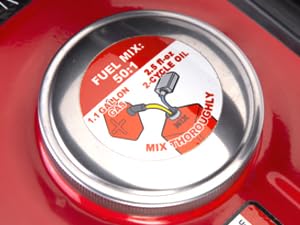
Image 4.1: Fuel cap indicating the required 50:1 gasoline to 2-stroke oil mixture.
4.2. Placement
Place the generator on a firm, level surface outdoors in a well-ventilated area. Ensure there is at least 5 feet (1.5 meters) of clear space around the generator to allow for proper airflow and exhaust dissipation. Never operate the generator indoors or in partially enclosed spaces.
5. Operating Instructions
5.1. Starting the Engine
- Ensure the generator is on a level surface and the fuel tank is filled with the correct 50:1 fuel mixture.
- Move the engine switch to the "ON" position.
- Move the choke lever to the "CHOKE" position (for cold starts).
- Pull the recoil starter handle firmly and steadily until the engine starts. Do not let the rope snap back.
- Once the engine starts, gradually move the choke lever to the "RUN" position. If the engine falters, move the choke lever back slightly until it runs smoothly, then slowly move it to "RUN".
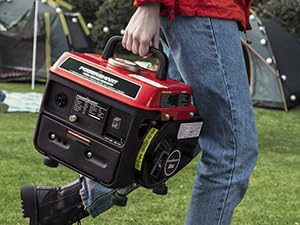
Image 5.1: Demonstrating the use of the recoil starter to initiate engine operation.
5.2. Connecting Electrical Devices
- Once the engine is running smoothly, you can connect your electrical devices to the 120V AC receptacle.
- Ensure the total wattage of connected devices does not exceed the generator's running wattage (900W) to prevent overloading.
- If the generator overloads, the AC circuit reset button may trip. Disconnect some devices and press the reset button to restore power.
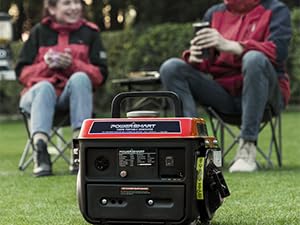
Image 5.2: The generator providing power for various items during outdoor activities.
5.3. Stopping the Engine
- Disconnect all electrical devices from the generator.
- Move the engine switch to the "OFF" position.
6. Maintenance
Regular maintenance ensures the longevity and reliable operation of your generator.
6.1. Air Cleaner Maintenance
The air cleaner prevents dust and debris from entering the engine. Inspect and clean the air cleaner regularly, especially when operating in dusty conditions.
- Remove the air cleaner cover.
- Remove the foam filter element.
- Wash the filter element in warm, soapy water, rinse thoroughly, and allow it to air dry completely.
- Lightly oil the dry filter element with 2-stroke oil and squeeze out any excess.
- Reinstall the filter element and air cleaner cover.

Image 6.1: The air cleaner maintenance panel, indicating the location for filter access.
6.2. Fuel System
For long-term storage (over 30 days), it is recommended to drain the fuel tank and carburetor to prevent fuel degradation and engine issues. Run the engine until it stops from lack of fuel, then drain any remaining fuel.
7. Troubleshooting
This section addresses common issues you might encounter with your generator.
| Problem | Possible Cause | Solution |
|---|---|---|
| Engine does not start | No fuel or incorrect fuel mixture Engine switch OFF Choke not set correctly Spark plug issue | Check fuel level and mixture Turn engine switch to ON Adjust choke lever Inspect and clean/replace spark plug |
| No power output | AC circuit breaker tripped Overload Loose connections | Press AC circuit reset button Reduce connected load Check all electrical connections |
| Engine runs rough | Stale fuel Dirty air filter Incorrect choke setting | Drain and replace with fresh fuel Clean or replace air filter Adjust choke lever to RUN position |
If you encounter issues not listed here or if solutions do not resolve the problem, please contact PowerSmart customer support.
8. Specifications
| Feature | Specification |
|---|---|
| Brand | PowerSmart |
| Model Name | PS50A |
| Starting Wattage | 1200 Watts |
| Running Wattage | 900 Watts |
| Voltage | 120 Volts |
| Fuel Type | Gasoline (2-stroke mixture) |
| Engine Type | 2 Stroke |
| Engine Displacement | 71 Cubic Centimeters |
| Tank Volume | 1.1 Gallons |
| Ignition System Type | Recoil Start |
| Item Weight | 39 Pounds |
| Product Dimensions | 16"L x 14.8"W x 13.8"H |
| Total Power Outlets | 1 (120V household outlet) |

Image 8.1: Visual representation of the generator's dimensions and weight.
9. Warranty and Support
PowerSmart provides support for its products. If you require assistance, have questions about your generator, or need to inquire about warranty coverage, please contact PowerSmart customer service. PowerSmart maintains over 500 certified repair centers in the U.S. and provides full replacement parts through its Illinois headquarters.
For specific warranty terms and conditions, please refer to the documentation included with your purchase or visit the official PowerSmart website.


