1. Introduction
The ASUS Pro WS W680-ACE is an ATX workstation motherboard designed for professional applications requiring high performance and reliability. It supports Intel LGA 1700 socket processors (13th Gen Intel Core, 12th Gen Intel Core, Pentium Gold, and Celeron Processors) and DDR5 ECC memory. This manual provides essential information for the proper installation, configuration, and maintenance of your motherboard.
Key Features:
- Intel LGA 1700 socket for 13th and 12th Gen Intel Core processors.
- Enhanced power solution with DrMOS, ProCool connector, alloy chokes, and durable capacitors.
- Dual PCIe 5.0 SafeSlots and dual PCIe 3.0 slots for expansion.
- Three M.2 PCIe 4.0 slots, SlimSAS, and dual Intel 2.5Gb Ethernet.
- Front panel USB 3.2 Gen2x2 Type-C and Thunderbolt 4 header support.
- Comprehensive cooling with large VRM heatsink, M.2 heatsinks, and Fan Xpert 4.
- Advanced security management via ASUS Control Center Express.
2. Safety Information
Always observe the following safety precautions during installation and operation:
- Disconnect the power cord from the wall outlet before touching any components.
- Wear an anti-static wrist strap to prevent electrostatic discharge (ESD) damage to components.
- Handle components by their edges; avoid touching pins or circuitry.
- Ensure proper ventilation within your PC case to prevent overheating.
- Keep the motherboard away from moisture and extreme temperatures.
3. Setup and Installation
This section guides you through the physical installation of the motherboard and its primary components.
3.1 Motherboard Overview
Familiarize yourself with the layout of the ASUS Pro WS W680-ACE motherboard.

Image: Top-down view of the ASUS Pro WS W680-ACE motherboard, showing the LGA 1700 CPU socket, four DDR5 DIMM slots, multiple PCIe slots, and M.2 slots with heatsinks.
3.2 CPU Installation (LGA 1700)
- Locate the LGA 1700 socket on the motherboard.
- Open the CPU socket lever and lift the load plate.
- Carefully align the notches on your Intel LGA 1700 processor with the keys on the socket. Ensure the golden triangle on the CPU matches the triangle on the socket.
- Gently place the CPU into the socket without forcing it.
- Close the load plate and press down the lever until it locks into place.
3.3 Memory (RAM) Installation
The motherboard supports DDR5 ECC memory. Refer to the motherboard's QVL (Qualified Vendor List) for compatible memory modules.
- Open the clips at both ends of the DIMM slot.
- Align the memory module with the slot, ensuring the notch on the module matches the key in the slot.
- Press down firmly on both ends of the memory module until the clips snap into place.

Image: A close-up view of the four DDR5 memory slots on the motherboard, highlighting their position next to the CPU socket.
3.4 Storage Device Installation
The motherboard features three M.2 PCIe 4.0 slots and a SlimSAS port.
3.4.1 M.2 SSD Installation
- Locate the M.2 slots, typically covered by heatsinks. Remove the heatsink and protective film.
- Insert the M.2 SSD into the slot at a 30-degree angle.
- Gently push down the SSD and secure it with the provided M.2 Q-Latch or screw.
- Reattach the M.2 heatsink.

Image: A diagram illustrating the installation of an M.2 SSD into a motherboard slot, secured by a Q-Latch mechanism.
3.4.2 SlimSAS Port
The SlimSAS port supports SATA devices via an appropriate SlimSAS to SATA cable. Note that SAS disks are not directly supported by this port; a dedicated SAS controller card is required for SAS disk support.
3.5 Expansion Card Installation
The motherboard includes dual PCIe 5.0 SafeSlots and dual PCIe 3.0 slots.
- Select an appropriate PCIe slot for your expansion card (e.g., graphics card, network card).
- Remove the corresponding slot cover from your PC case.
- Align the card with the slot and press down firmly until it is fully seated.
- Secure the card to the case with a screw.

Image: A diagram highlighting the various PCIe 5.0 and PCIe 3.0 expansion slots available on the motherboard.
3.6 Power Connections
Connect the 24-pin ATX power connector and the 8-pin (or 4+4-pin) CPU power connector from your power supply unit (PSU) to the motherboard.
3.7 Front Panel and Rear I/O Connections
Connect your case's front panel headers (power button, reset button, USB ports, audio jacks) to the corresponding headers on the motherboard. Connect peripherals to the rear I/O panel.

Image: A close-up view of the rear I/O panel, showing various ports including USB, dual 2.5Gb Ethernet, and audio jacks.
4. Operating Instructions
4.1 Initial Boot and BIOS/UEFI Setup
Upon the first boot, access the BIOS/UEFI setup utility by pressing the DEL or F2 key during POST (Power-On Self-Test). Here you can configure boot order, system time, and various hardware settings.
4.2 Driver Installation
After installing your operating system, install the latest drivers for the chipset, LAN, audio, and other integrated components from the ASUS support website for your motherboard model. This ensures optimal performance and stability.
4.3 ASUS Control Center Express
The ASUS Control Center Express software provides centralized management capabilities, including USB port management, software blacklisting, and Regedit on/off controls. This tool is designed to enhance security and system administration for workstation environments.
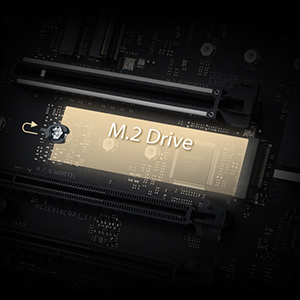
Image: A graphical user interface of the ASUS Control Center Express, displaying system monitoring and management options.
4.4 BMC/IPMI Functionality
The motherboard supports BMC (Baseboard Management Controller) for remote management. This allows for out-of-band management, including remote power control, system monitoring, and BIOS flashing, even when the main system is off or unresponsive. For optimal performance with Linux operating systems, it is recommended to run the server headless when using remote control features, as a connected monitor may cause the remote control to act as a secondary display.
5. Maintenance
5.1 Cleaning
Regularly clean your PC to prevent dust buildup, which can lead to overheating. Use compressed air to clear dust from fans, heatsinks, and vents. Ensure the system is powered off and unplugged before cleaning.
5.2 BIOS Updates
Periodically check the ASUS support website for BIOS updates. Before updating the BIOS, it is recommended to update Intel ME firmware. Note that Intel ME updates may require a Windows operating system environment. Follow the instructions provided by ASUS carefully to avoid system instability.
5.3 Fan Control (Fan Xpert 4)
Utilize ASUS Fan Xpert 4 software to manage and optimize fan speeds for effective cooling and reduced noise levels. This tool allows for custom fan profiles based on system temperatures.
6. Troubleshooting
This section addresses common issues you might encounter.
6.1 System Fails to Boot
- Check Power Connections: Ensure all power cables (24-pin ATX, CPU 8-pin) are securely connected.
- Verify Component Seating: Reseat the CPU, RAM modules, and any expansion cards to ensure they are properly installed.
- Clear CMOS: Refer to your motherboard manual for instructions on how to clear the CMOS, which can resolve boot issues caused by incorrect BIOS settings.
- Inspect CPU Socket: Carefully check the CPU socket for any bent pins. Bent pins can prevent the system from booting and require professional repair.
6.2 Peripherals Not Detected
- Update Drivers: Ensure all necessary drivers are installed and up to date.
- Check Connections: Verify that peripherals are correctly connected to the appropriate ports.
- BIOS Settings: Check BIOS settings to ensure relevant ports (e.g., USB, SATA) are enabled.
6.3 Network Connectivity Issues
- Check Cable: Ensure the Ethernet cable is securely connected to both the motherboard and the network device.
- Driver Installation: Install or update the Intel 2.5Gb Ethernet drivers.
- Static IP Configuration: If using Linux, ensure network settings are correctly configured, including static IP addresses if necessary, as DHCP may sometimes require manual connection.
7. Specifications
| Feature | Specification |
|---|---|
| Brand | ASUS |
| Model Name | PRO WS W680-ACE |
| CPU Socket | LGA 1700 |
| Compatible Processors | 13th Gen Intel Core, 12th Gen Intel Core, Pentium Gold, Celeron |
| RAM Memory Technology | DDR5 DIMM (ECC Support) |
| Memory Speed | Up to 1600 MHz (Base) |
| Chipset Type | Intel W680 |
| PCIe Slots | 2x PCIe 5.0 x16 (x16 or x8/x8), 2x PCIe 3.0 x4 |
| M.2 Slots | 3x M.2 PCIe 4.0 |
| SATA Ports | 4x SATA 6Gb/s |
| LAN | Dual Intel 2.5Gb Ethernet |
| USB Ports | Front Panel USB 3.2 Gen2x2 Type-C, various USB 3.2 Gen2, USB 3.2 Gen1, USB 2.0 |
| Dimensions (LxWxH) | 13.31 x 10.75 x 2.68 inches |
| Item Weight | 3.09 pounds |
| Platform | Windows 10 (and newer) |
8. Warranty and Support
For warranty information, please refer to the warranty card included with your product or visit the official ASUS website. ASUS provides technical support for its products. If you encounter issues that cannot be resolved using this manual or the troubleshooting steps, please contact ASUS customer service.
You can find support resources, driver downloads, and the latest BIOS updates on the official ASUS support website: www.asus.com/support/


