
Askar ACL200
Askar ACL200 Astro Camera Lens User Manual
Model: ACL200 | Brand: Askar
Introduction
Welcome to the user manual for your Askar ACL200 Astro Camera Lens. This document provides comprehensive instructions to help you set up, operate, and maintain your lens for optimal performance in astrophotography. Please read through this manual carefully before using your lens to ensure proper handling and to maximize its capabilities.
Product Overview
The Askar ACL200 is a professional 200mm F4 apochromatic astrophotographic lens designed for full-frame cameras. Its integrated structure makes it compact, light, and easy to use, offering excellent optical performance for capturing celestial objects.
Key Features:
- Full Frame compatibility
- 200mm focal length at F4 aperture
- Apochromatic (APO) design for superior color correction
- Compact 135mm body length
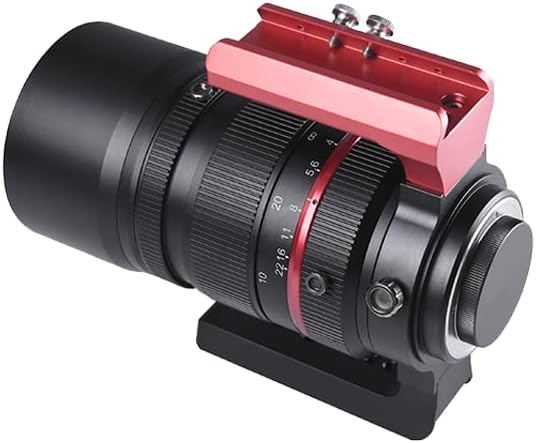
This image displays the Askar ACL200 Astro Camera Lens, highlighting its compact design. The lens features clearly marked focus and aperture rings, along with a robust red mounting bar for attachment to a telescope mount or tripod.

This image showcases three Askar ACL200 Astro Camera Lenses integrated into different astrophotography configurations. It illustrates the lens's adaptability for various setups, including those with additional accessories like guide cameras and mini-PCs mounted on the lens.
Setup Guide
Attaching the Lens to a Camera:
Ensure your camera body is compatible with the lens mount. Align the lens mounting index with the camera body's index and rotate clockwise until it clicks securely into place. Always handle the lens by its barrel, not by the optical elements.
Mounting on a Telescope Mount/Tripod:
The ACL200 features an integrated mounting foot/dovetail bar. Secure this to your equatorial mount or sturdy photographic tripod using appropriate screws and clamps. Ensure the lens is balanced on the mount for stable tracking and to prevent strain on the mount's motors.
Focus Adjustment:
The lens features a manual focus ring. For astrophotography, precise focus is critical. Use focusing aids such as a Bahtinov mask, live view magnification, or a dedicated focusing routine in your imaging software to achieve sharp star images. Rotate the focus ring slowly until stars appear as small, sharp points of light.
Operating Instructions
Aperture Control:
The lens has an adjustable aperture ring. Rotate the ring to select the desired f-stop. For most astrophotography applications, the lens is typically used wide open at F4 to maximize light gathering. Stopping down the aperture may reduce some optical aberrations but will also reduce light transmission.
Exposure Settings:
Adjust ISO and shutter speed on your camera based on sky conditions (light pollution), target brightness, and desired signal-to-noise ratio. Longer exposures are typical for deep-sky astrophotography, often requiring an equatorial mount with accurate tracking and guiding.
Guiding:
For long exposures (typically over 30 seconds, depending on focal length and mount accuracy), guiding is recommended to compensate for tracking errors and field rotation. If your setup includes a guide scope and camera, attach them to the integrated mounting points on the lens or its accessories, and connect to your guiding software (e.g., PHD2).
Maintenance and Care
- Lens Protection: Always keep the front and rear lens caps on when the lens is not in use to protect the optical elements from dust, scratches, and impacts.
- Cleaning Optics: Clean lens surfaces only with specialized lens cleaning solutions and a clean, soft microfiber cloth designed for optics. Gently blow off any loose dust particles with a blower brush before wiping. Avoid touching the glass with bare hands.
- Storage: Store the lens in a dry, dust-free environment, preferably in its original padded case or a dedicated camera bag. Avoid areas with high humidity or extreme temperature fluctuations.
- Condensation: If moving the lens from a cold to a warm environment, allow it to acclimate slowly to room temperature inside its case to prevent condensation from forming on the optical surfaces.
Troubleshooting
Blurry Images:
- Focus: Ensure precise focus using a Bahtinov mask or live view magnification. Even slight misfocus can result in blurry stars.
- Tracking/Guiding: Verify your equatorial mount is accurately polar aligned and tracking. For long exposures, ensure your guiding system is calibrated and functioning correctly.
- Stability: Confirm that your tripod or mount is stable and free from vibrations caused by wind, movement, or an unbalanced setup.
Vignetting/Dark Corners:
- Some degree of vignetting (darkening towards the corners of the image) can be normal with wide-aperture lenses, especially on full-frame sensors. This can often be corrected during post-processing using flat frames.
- Ensure no adapters, filters, or other accessories are causing mechanical vignetting by obstructing the light path.
Chromatic Aberration:
- While the ACL200 features an apochromatic design to minimize chromatic aberration, some residual color fringing might be visible in extreme conditions or around very bright stars. This can often be reduced in post-processing software.
Technical Specifications
| Feature | Value |
|---|---|
| Brand | Askar |
| Model | ACL200 |
| Focal Length | 200mm |
| Aperture | F4 |
| Lens Type | Apochromat (APO) |
| Sensor Coverage | Full Frame |
| Focus Type | Auto Focus |
| Product Dimensions | 11.42 x 7.87 x 9.45 inches |
| Item Weight | 5.5 pounds |
Warranty and Support
For detailed warranty information, technical support, or service inquiries regarding your Askar ACL200 Astro Camera Lens, please refer to the official Askar website or contact your authorized dealer where the product was purchased.
You can also visit the Askar Store on Amazon for additional product information and support resources:
Related documentsACL200


Ask a question about this manual
Ask about setup, troubleshooting, compatibility, parts, safety, or missing instructions. Manuals+ will review the question and use this page’s manual context to help answer it.