1. Introduction
This manual provides detailed instructions for the installation, operation, and maintenance of your Dioche Wired Door Window Contact Sensors. These magnetic reed sensors are designed to integrate with home alarm systems, providing reliable detection of open doors or windows. Please read this manual thoroughly before installation and use.
2. Product Overview
The Dioche Wired Door Window Contact Sensor consists of two main components: a magnetic reed switch and a magnet. When these two parts are in close proximity, the reed switch forms a closed circuit. When separated, the circuit opens, triggering an alarm signal in a connected system. This product is supplied as a pack of 10 pairs of sensors.

Image 2.1: A single Dioche wired door window contact sensor, showing the main cylindrical sensor unit and its two connecting wires.
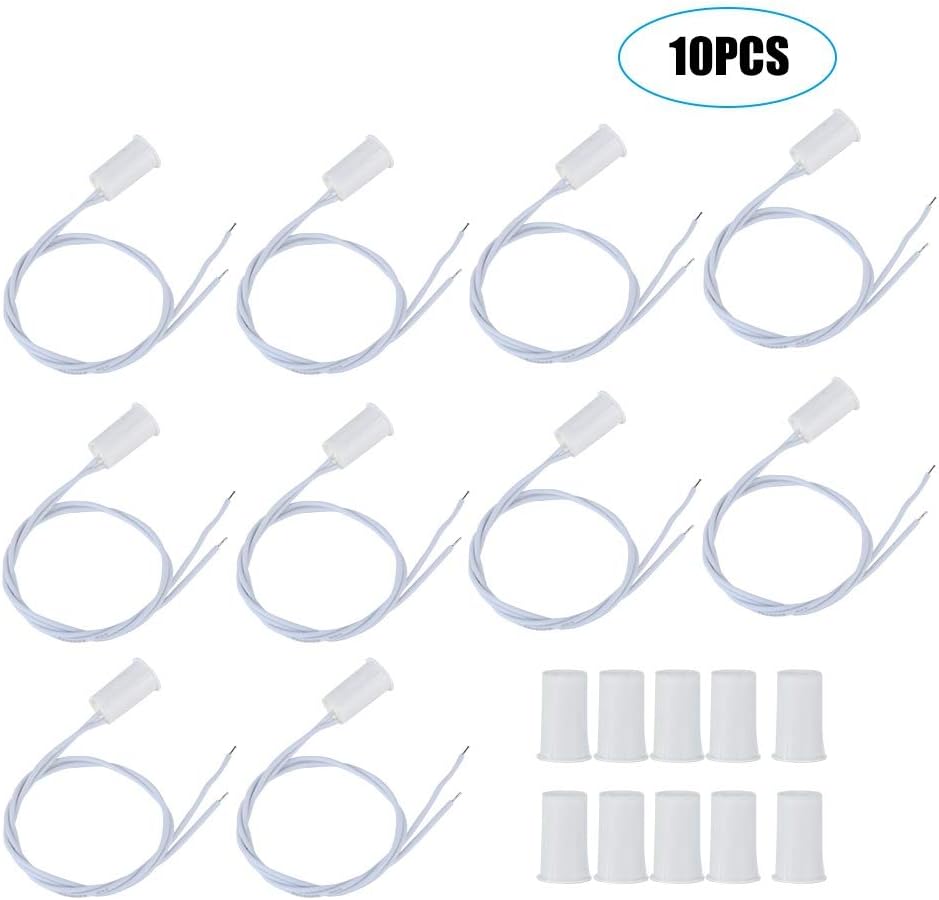
Image 2.2: A complete set of 10 Dioche wired door window contact sensors, including both the sensor units and the separate magnetic components.
3. Package Contents
- 10 pairs of Dioche Wired Door Window Contact Sensors (magnetic reed switch and magnet)
4. Specifications
| Specification | Value |
|---|---|
| Model Number | Dioche3vrhnb4itu |
| Output Type | NC (Normally Closed) |
| Switching Cycles | 1 million times |
| Power Supply | No external power supply needed (passive sensor) |
| Package Weight | 91g / 3.2oz (for 10 pairs) |
| Dimensions (Package) | 9 x 8 x 2 cm |
5. Setup and Installation
Follow these steps to properly install your door/window contact sensors:
- Identify Mounting Location: Choose a location on your door or window frame where the sensor and magnet can be mounted parallel to each other and in close proximity when the door/window is closed.
- Mount the Sensor: Securely attach the main sensor unit (with wires) to the stationary part of the door/window frame.
- Mount the Magnet: Securely attach the magnet to the moving part of the door or window, ensuring it aligns with the sensor when closed. The magnet and sensor should be as close as possible without touching when the door/window is closed.
- Wiring: Connect the two wires from the sensor to the appropriate Normally Closed (NC) input and Ground (GND) ports on your wired alarm control panel. No external power supply is required for the sensor itself.
- Test Functionality: After installation, close the door/window and verify that the alarm system registers a 'closed' state. Open the door/window and confirm that the alarm system registers an 'open' state or triggers an alarm, depending on your system's configuration.

Image 5.1: Illustration demonstrating how to connect the wired door window sensor directly to the GND and N.C. ports of a wired or wireless alarm control panel.
Important Installation Note:

Image 5.2: Visual warning indicating that these sensors are not suitable for iron doors, as iron can reduce the magnetism of the sensor, affecting its performance.
These door contact sensors are not suitable for iron gates or doors. Iron material can significantly reduce the magnetic properties of the sensor, leading to unreliable operation or false readings. Use these sensors on wooden, PVC, or other non-ferrous door/window frames.
6. Operation
The Dioche Wired Door Window Contact Sensor operates on a simple magnetic principle:
- Closed State: When the door or window is closed, the magnet is in close proximity to the reed switch. This causes the reed switch to close, completing the electrical circuit. For a Normally Closed (NC) output, this means the circuit is closed and no alarm signal is sent.
- Open State: When the door or window is opened, the magnet moves away from the reed switch. This causes the reed switch to open, breaking the electrical circuit. For a Normally Closed (NC) output, this interruption in the circuit is detected by the alarm panel as an 'open' event, triggering an alarm or notification.
The sensor is designed for high reliability, with a tested switching output of 1 million cycles.
7. Troubleshooting
- Sensor Not Triggering:
- Ensure the magnet and sensor are aligned correctly and are close enough when the door/window is closed.
- Check wiring connections to the alarm panel for proper contact.
- Verify that the sensor is not installed on an iron door/gate, which can interfere with magnetic operation.
- False Alarms:
- Ensure the magnet and sensor remain in close contact and stable when the door/window is closed. Vibrations or loose mounting can cause intermittent contact.
- Confirm the sensor is not on an iron surface.
- Magnets are always close to each other: This is the normal operating state for a Normally Closed (NC) sensor when the door/window is closed. The circuit is complete. An alarm triggers when they separate.
8. Important Notes and Safety Information
- Always ensure proper wiring to avoid damage to the sensor or the alarm system.
- Do not install on iron or ferrous metal surfaces as this will degrade sensor performance.
- Keep magnets away from sensitive electronic devices that could be affected by magnetic fields.
- This product is designed for indoor use in environments such as shops, garages, schools, shopping malls, office buildings, and factories.
9. Warranty and Support
For warranty information or technical support, please refer to the documentation provided with your alarm system or contact your product vendor. Keep your purchase receipt for any warranty claims.