
1. Introduction and Product Overview
This manual provides essential information for the safe and effective installation, operation, and maintenance of your new ClimaTek 1/5 HP Condenser Fan Motor. This motor is an upgraded replacement part designed to function with various HVAC systems.
The ClimaTek Condenser Fan Motor is specifically engineered to replace Emerson / US Motors Part # K55HXJKL-2918. It is compatible with units from brands such as Rheem, Ruud, Weather King, and Corsaire. This motor is suitable for replacing existing 1/5 HP and 1/6 HP, 208-230 volt motors that utilize side mounting screws.
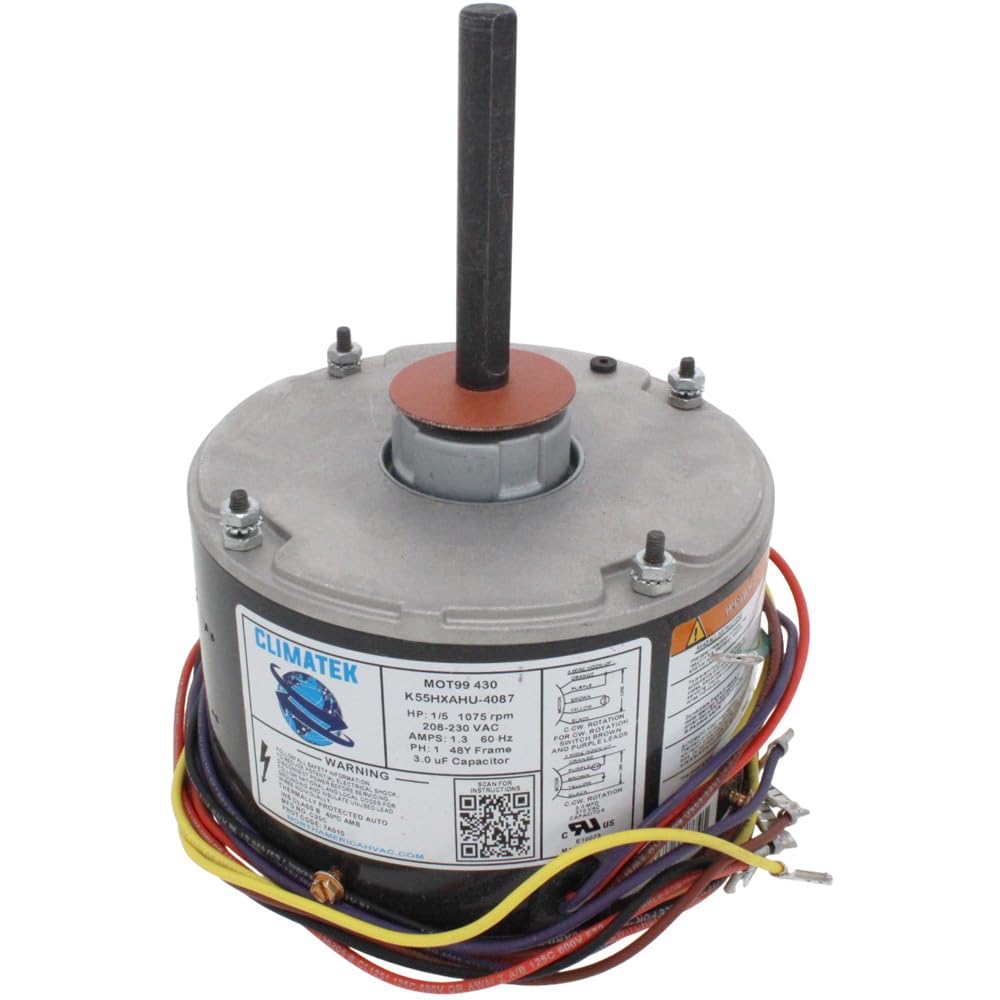
Image 1.1: ClimaTek 1/5 HP Condenser Fan Motor. This image displays the motor unit, typically cylindrical with wiring connections and mounting points.
2. Safety Information
WARNING: Installation and servicing of this motor should only be performed by a qualified HVAC technician. Improper installation, adjustment, alteration, service, or maintenance can cause property damage, injury, or death. Read all instructions thoroughly before proceeding.
- Always disconnect power to the HVAC unit at the circuit breaker before attempting any installation or maintenance.
- Wear appropriate personal protective equipment (PPE), including safety glasses and gloves.
- Ensure all wiring connections are secure and comply with local electrical codes.
- Do not operate the motor if it appears damaged or if any components are missing.
- Keep hands and loose clothing away from moving parts during operation.
3. Product Specifications
| Specification | Detail |
|---|---|
| Brand | ClimaTek |
| Model Number | K55HXJKL-2918 (ClimaTek for US Motors) |
| Horsepower (HP) | 1/5 HP (also replaces 1/6 HP) |
| Voltage | 208-230 volts |
| Material | Copper |
| Mounting Type | Side mounting screws |
| Replaces Part Number | Emerson / US Motors K55HXJKL-2918 |
4. Installation Instructions
IMPORTANT: Installation should only be performed by a certified HVAC technician. Incorrect installation can lead to motor failure, system damage, or personal injury.
- Power Disconnection: Ensure all power to the outdoor condenser unit is completely disconnected at the main electrical panel or circuit breaker. Verify with a voltage tester.
- Access Old Motor: Carefully remove the access panel(s) of the condenser unit to expose the existing fan motor.
- Disconnect Wiring: Photograph or diagram the existing wiring connections before disconnecting them. Note the color codes and their corresponding terminals.
- Remove Old Motor: Unbolt and remove the old condenser fan motor. Note its mounting orientation and shaft position.
- Install New Motor: Position the new ClimaTek motor in the same orientation as the old one. Secure it using the side mounting screws. Ensure the fan blade is properly attached to the motor shaft and has adequate clearance within the shroud.
- Wire Connections: Connect the new motor's wiring according to the diagram taken in step 3, or consult the wiring diagram provided with the HVAC unit or by a qualified technician. Note: A customer review indicated that wiring instructions printed directly on the motor might be inaccurate. Always cross-reference with the HVAC unit's official wiring diagram or seek professional guidance.
- Secure Components: Reinstall any removed access panels and ensure all fasteners are tightened.
- Restore Power: Restore power to the unit at the circuit breaker.
- Test Operation: Observe the motor and fan blade for smooth operation, correct rotation direction, and absence of unusual noises or vibrations.
5. Operating Instructions
The ClimaTek Condenser Fan Motor operates automatically as part of your HVAC system. Once properly installed and wired, it will engage when the air conditioning or heat pump system calls for cooling or heating, respectively, to dissipate heat from the condenser coil.
- Ensure the outdoor unit is free from obstructions that could impede airflow to the fan.
- Listen for smooth operation. Any unusual noises (grinding, squealing, rattling) may indicate an issue requiring professional inspection.
6. Maintenance
Regular maintenance helps ensure the longevity and efficient operation of your condenser fan motor and HVAC system. Always disconnect power before performing any maintenance.
- Annual Inspection: Have a qualified HVAC technician inspect the motor and fan assembly annually, typically as part of routine HVAC system maintenance.
- Cleanliness: Keep the condenser unit's exterior and fan blades free of dirt, leaves, and debris. Accumulated debris can restrict airflow and overwork the motor.
- Vibration Check: Periodically check for excessive vibration during operation. Excessive vibration can indicate an unbalanced fan blade or motor issue.
- Wiring Check: Ensure all electrical connections remain tight and free from corrosion.
7. Troubleshooting
If you experience issues with your condenser fan motor, consider the following common troubleshooting steps. For complex problems, always contact a qualified HVAC technician.
- Motor Not Running:
- Check if the circuit breaker for the outdoor unit has tripped.
- Ensure the thermostat is set to a cooling or heating mode that would activate the outdoor unit.
- Verify that the unit's disconnect switch (if present) is in the "ON" position.
- Inspect for loose or disconnected wiring (only by a qualified technician with power disconnected).
- Unusual Noises:
- A grinding or squealing noise may indicate worn bearings.
- Rattling could be loose components or debris hitting the fan blade.
- Contact a technician for diagnosis and repair.
- Motor Overheating/Shutting Off:
- Ensure adequate airflow around the condenser unit. Clear any obstructions.
- Check if the fan blades are clean and free of debris.
- This could also indicate incorrect wiring or a faulty capacitor. Professional inspection is required.
8. Warranty and Support
For warranty information or technical support regarding your ClimaTek Condenser Fan Motor, please refer to the documentation provided at the point of purchase or contact ClimaTek customer service directly. Ensure you have your purchase details and model number (K55HXJKL-2918) available when contacting support.
For professional installation, maintenance, or repair services, please contact a local certified HVAC technician.