1. Product Overview
This manual provides essential information for the safe and efficient use of your HiXiMi EVE MB31 3.2V 314Ah LiFePO4 battery cells. These Grade A Lithium Iron Phosphate cells are designed for deep cycle applications, offering reliable power for various systems.
The EVE MB31 cells are suitable for a wide range of uses, including off-grid solar power systems, RVs, marine boats, energy storage, camping, fish finders, house alarm security, emergency lighting, UPS systems, lawn mowers, and other backup power supply needs.

2. Important Safety Information
Please read and understand all safety instructions before handling or using the battery cells. Failure to follow these instructions may result in electric shock, fire, serious injury, or property damage.
- Always wear appropriate personal protective equipment (PPE), including safety glasses and insulated gloves, when handling battery cells.
- Do not short-circuit the battery terminals. This can cause severe arcing, fire, and damage to the cells.
- Do not expose cells to fire, direct sunlight, or temperatures outside the specified operating range.
- Do not disassemble, puncture, crush, or modify the battery cells.
- Keep battery cells away from children and pets.
- Ensure adequate ventilation when charging or discharging batteries, especially in enclosed spaces.
- Use only compatible LiFePO4 chargers and battery management systems (BMS) designed for the specified voltage and current.
- Handle cells with care to avoid physical damage. Damaged cells should not be used.
- In case of fire, use a Class D fire extinguisher or sand. Do not use water.
3. Package Contents
Verify that all items are present and undamaged upon receiving your package:
- 4 x EVE MB31 3.2V 314Ah LiFePO4 Battery Cells
- M6 Screws and Busbars (for connecting cells)
- Protective Foam Packaging

4. Key Features
- High Capacity: Each cell provides 314Ah nominal capacity at 3.2V.
- Long Cycle Life: Designed for over 5000 cycles, offering a lifespan of approximately 10 years.
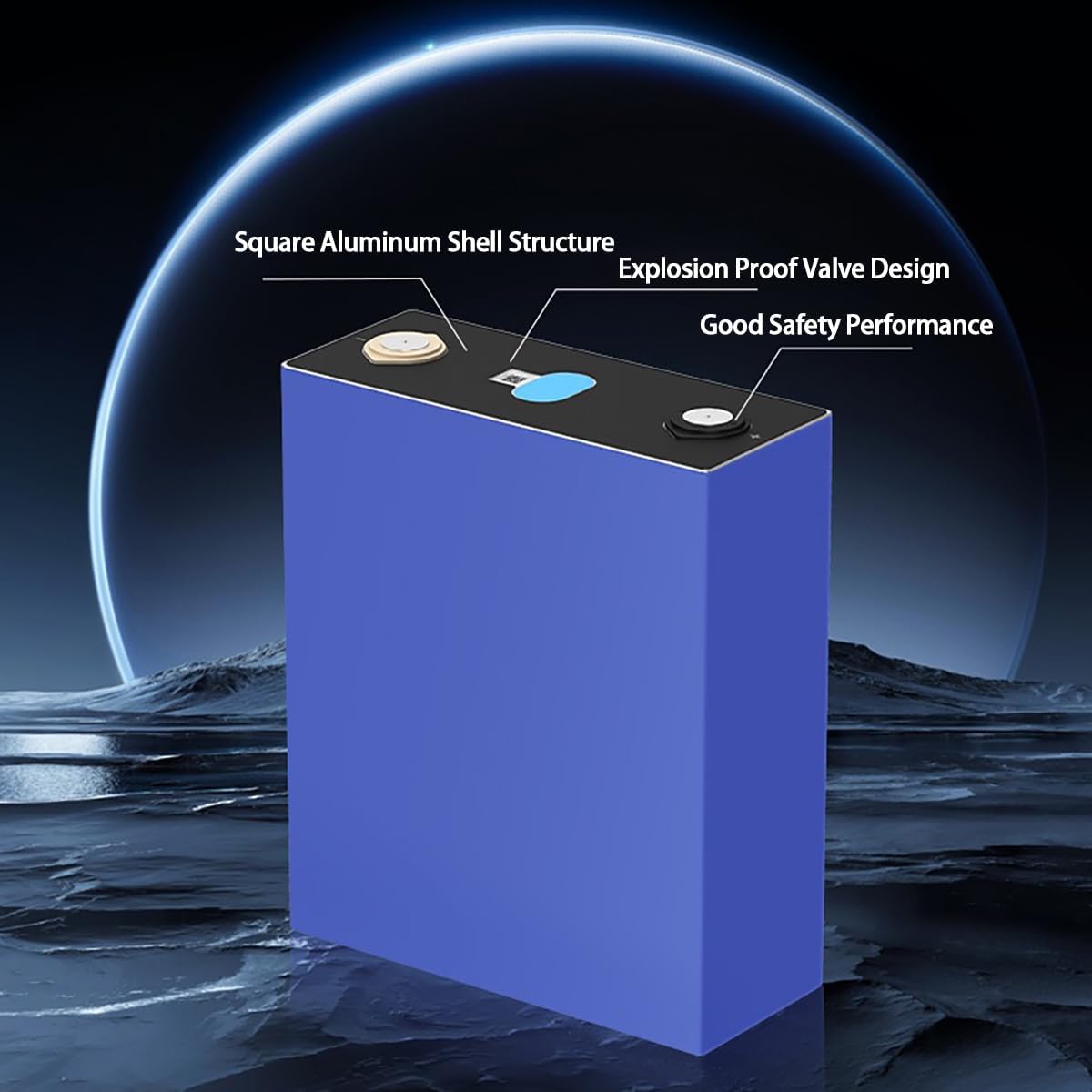
- Safety: Equipped with a multi-protection safety system, featuring a square aluminum shell structure and explosion-proof valve design for good safety performance.
- Low Internal Resistance: Internal resistance of less than 2.5mΩ.
- Wide Operating Temperature: Supports charging from 0°C to 55°C and discharging from -20°C to 60°C.
- Easy Assembly: Cells come with pre-welded M8 bolts for convenient battery pack construction.
5. Setup and Installation
Proper setup is crucial for the performance and longevity of your battery cells. If you are a beginner, free instructions are available to guide you through the process.
5.1 Initial Inspection and Preparation
- Upon arrival, carefully unbox the cells. They are typically packed in robust foam for protection.
- Visually inspect each cell for any signs of damage, bulging, or leaks.
- Use a multimeter to check the voltage of each individual cell. Ensure all cells are reasonably well-balanced and within the nominal voltage range of 3.2V.
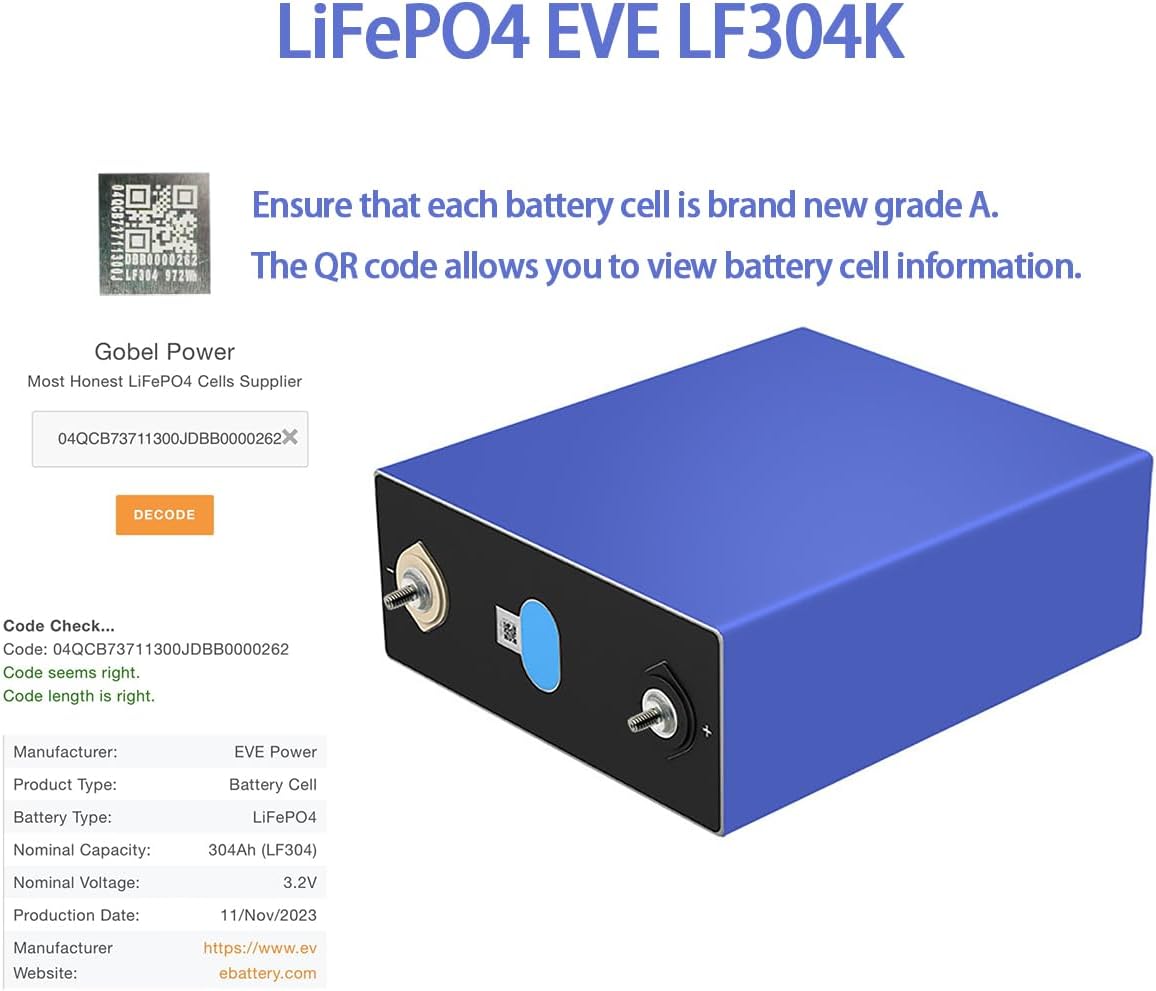
- Scan the QR code on each cell to view detailed battery cell information, including manufacturing date and specifications.
5.2 Cell Arrangement and Compression
For optimal performance and safety, it is recommended to compress the cells together, especially when building a battery pack. This helps manage expansion and maintain cell integrity.
- Arrange the cells in the desired configuration (series or parallel) for your battery pack.
- Use insulating material, such as foam padding, between cells to prevent short circuits and allow for slight expansion.
- Apply external compression using plates and threaded rods to keep the cells tightly packed.
5.3 Connecting Cells and BMS
The EVE MB31 cells are designed for easy assembly with pre-welded M8 bolts. When connecting cells, ensure correct polarity and secure connections.
- Connect the cells using the provided busbars and M6 screws. Ensure all connections are tight and secure to minimize resistance.
- Install a suitable Battery Management System (BMS) to monitor and balance cell voltages, and provide protection against overcharge, over-discharge, over-current, and over-temperature.
- Connect the balance wires from the BMS to the appropriate terminals on each cell, following the BMS manufacturer's instructions.

Video 1: This video demonstrates the unboxing, initial voltage check, and assembly process for LiFePO4 battery cells, including connecting busbars and balance wires for a battery pack.
6. Operating Instructions
To ensure the longevity and safe operation of your LiFePO4 cells, adhere to the following guidelines:
6.1 Charging
- Use a dedicated LiFePO4 battery charger with appropriate voltage and current settings.
- The nominal voltage per cell is 3.2V. The working voltage range is 2.5V to 3.65V.
- Maximum continuous charging current should not exceed 0.5C (e.g., for a 314Ah cell, max 157A).
- Charging temperature range: 0°C to 55°C (32°F to 131°F). Avoid charging outside this range.
6.2 Discharging
- Maximum continuous discharge current rate is 1C (e.g., for a 314Ah cell, max 314A).
- Do not discharge cells below 2.5V per cell to prevent damage. The BMS should provide low-voltage cutoff protection.
- Discharge temperature range: -20°C to 60°C (-4°F to 140°F).
7. Maintenance
Regular maintenance helps ensure the longevity and optimal performance of your LiFePO4 battery cells:
- Regular Inspection: Periodically inspect cells for any physical damage, loose connections, or signs of corrosion on the terminals.
- Terminal Cleaning: Keep battery terminals clean and free from dirt or debris. Use a dry cloth to wipe them down.
- Voltage Monitoring: If not using a BMS, manually check individual cell voltages regularly to ensure they remain balanced.
- Storage: For long-term storage, store cells in a cool, dry place at approximately 50% State of Charge (SOC). Avoid extreme temperatures.
8. Troubleshooting
If you encounter issues with your battery cells, consider the following common problems and solutions:
- Low Voltage: If a cell or pack voltage is low, check individual cell voltages. Ensure the charger is functioning correctly and that the cells are balanced. Avoid over-discharging.
- No Power Output: Verify all connections are secure and correctly wired. Check the BMS for any fault indicators or tripped protections. Ensure the battery pack is adequately charged.
- Overheating: Discontinue use immediately if cells become excessively hot. Check for short circuits, excessive load, or internal cell damage. Ensure proper ventilation.
- Unbalanced Cells: A BMS with balancing functionality should manage this. If cells become significantly unbalanced, a dedicated active balancer may be required.
9. Technical Specifications
| Specification | Value |
|---|---|
| Battery Type | EVE 3.2V 314Ah LiFePO4 Cell (Lithium Iron Phosphate) |
| Nominal Capacity | 314Ah |
| Nominal Voltage | 3.2V |
| Working Voltage Range | 2.5V ~ 3.65V |
| Max. Continuous Discharge Rate | 1C |
| Max. Continuous Charging Current | 0.5C |
| Internal Resistance | <2.5mΩ |
| Charging Temperature | 0°C ~ 55°C (32°F ~ 131°F) |
| Discharge Temperature | -20°C ~ 60°C (-4°F ~ 140°F) |
| Cell Weight (Each) | 11.9lb / 5.4kg |
| Cell Dimensions (Each) | 6.85 x 8.14 x 2.83 inches / 174 x 207 x 72 mm |
| Product Dimensions (Overall) | 7.87 x 6.81 x 2.87 inches (for a single cell, approximate) |
| Battery Cell Composition | Lithium-Phosphate |
| Number of Batteries | 4 (included) |

10. Warranty and Support
The EVE MB31 LiFePO4 battery cells are designed for durability and long-term performance, offering a life expectancy of 10 years and over 5000 charge/discharge cycles.
For any questions, technical assistance, or support regarding your HiXiMi EVE MB31 battery cells, please contact the seller or manufacturer directly. Provide your purchase details for efficient service.


