
1. Introduction
This manual provides detailed instructions for the installation, operation, and maintenance of your Voktta Battery Capacity Voltage Meter. This device is designed to accurately display battery capacity and real-time voltage for various battery types, including lead-acid and lithium-ion batteries, across a wide voltage range (DC 12V to 84V).
The meter features a clear LCD display with an alarm function for low battery capacity, making it suitable for a variety of applications such as electric vehicles, portable power supplies, and UPS systems.
2. Safety Information
- Always disconnect power before installation or maintenance.
- Ensure correct polarity when connecting the meter to the battery. Incorrect wiring can damage the device and the battery.
- Do not expose the device to extreme temperatures, moisture, or corrosive environments.
- Handle with care to avoid physical damage.
- This device is designed for monitoring purposes only and should not be used as a primary safety device.
3. Product Overview
The Voktta Battery Capacity Voltage Meter is a compact and sensitive digital LCD display unit. It features a PVC waterproof screen for durability and a clear green backlight for visibility from various angles. The device includes a function button for switching between battery capacity, real-time voltage display, or turning off the display.

Figure 3.1: Voktta Battery Capacity Voltage Meter with dimensions. The image shows the front view of the meter with a green LCD displaying "Battery capacity / Voltage" and "91%". Dimensions are indicated: 1.4cm height, 5.5cm length, and 2.8cm width.

Figure 3.2: Front and back view of the Voktta Battery Capacity Voltage Meter. The top image shows the front display with battery capacity and voltage. The bottom image shows the internal circuit board labeled "GuYu GY-6 V6.40 U4" with various electronic components and a connector port.

Figure 3.3: Screen display diagram of Voktta Battery Capacity Voltage Meter. This diagram illustrates the various display modes and settings accessible via the function and setting keys. It shows the battery capacity bar, percentage, and voltage readings.
Key Features:
- Display Modes: Switch between battery capacity percentage, real-time voltage, or turn off the display.
- Low Battery Alarm: Audible and visual alarm (sound and flash) activates when battery capacity drops below 20%.
- Wide Compatibility: Supports 12V/24V/36V/48V/60V/72V/84V lead-acid batteries, lithium batteries, ternary lithium batteries, lithium iron phosphate batteries, polymer lithium-ion batteries, and 3-15 series lithium-ion batteries.
- Waterproof Screen: Features a PVC waterproof screen protector.
- Low Power Consumption: Maximum current consumption of 5mA.
4. Setup and Installation
4.1 Wiring Instructions
Connect the meter directly to the positive and negative terminals of the battery. Ensure correct polarity to prevent damage.

Figure 4.1: Wiring diagrams for Voktta Battery Capacity Voltage Meter. The image displays three circuit diagrams: "Connects to positive and negative battery terminals", "Connection with load switch", and "Power independent switch control connection". These diagrams illustrate how to integrate the meter into different electrical systems with a charger, battery, electricity source, and load.
4.2 Battery Type Setting
The meter needs to be configured for the specific battery type and voltage range it will monitor. This is typically done using the Setting Key on the back of the device.

Figure 4.2: Voktta Battery Capacity Voltage Meter with Function Key and Setting Key. This image highlights the "Function Key" on the front and the "Setting Key" on the back, along with the terminal wire port. The setting key is used for initial configuration of battery specifications.
Refer to the following table for common battery type settings:
| Battery Type | Voltage Range | Setting Code/Procedure |
|---|---|---|
| Lead-Acid Battery | 12V, 24V, 36V, 48V, 60V, 72V, 84V | Specific setting procedure required (refer to detailed instructions for your model's setting menu). |
| Lithium-Ion Battery | 3-15 series (e.g., 3S, 4S, ..., 15S) | Specific setting procedure required (refer to detailed instructions for your model's setting menu). |
| Ternary Lithium Battery | (Voltage dependent on series) | Specific setting procedure required (refer to detailed instructions for your model's setting menu). |
| Lithium Iron Phosphate Battery | (Voltage dependent on series) | Specific setting procedure required (refer to detailed instructions for your model's setting menu). |
Note: The exact setting procedure for battery types and voltage ranges may vary. Please consult the specific instructions provided with your product packaging or the manufacturer's website for detailed configuration steps.
5. Operating Instructions
5.1 Display Modes
Once connected and configured, the meter will display battery information on its LCD screen. Use the Function Key (the button on the front) to cycle through different display modes:
- Battery Capacity Percentage: Shows the remaining battery charge as a percentage (e.g., "91%").
- Real-time Voltage: Displays the current voltage of the battery.
- Display Off: Turns off the screen to conserve power. Press the button again to reactivate the display.
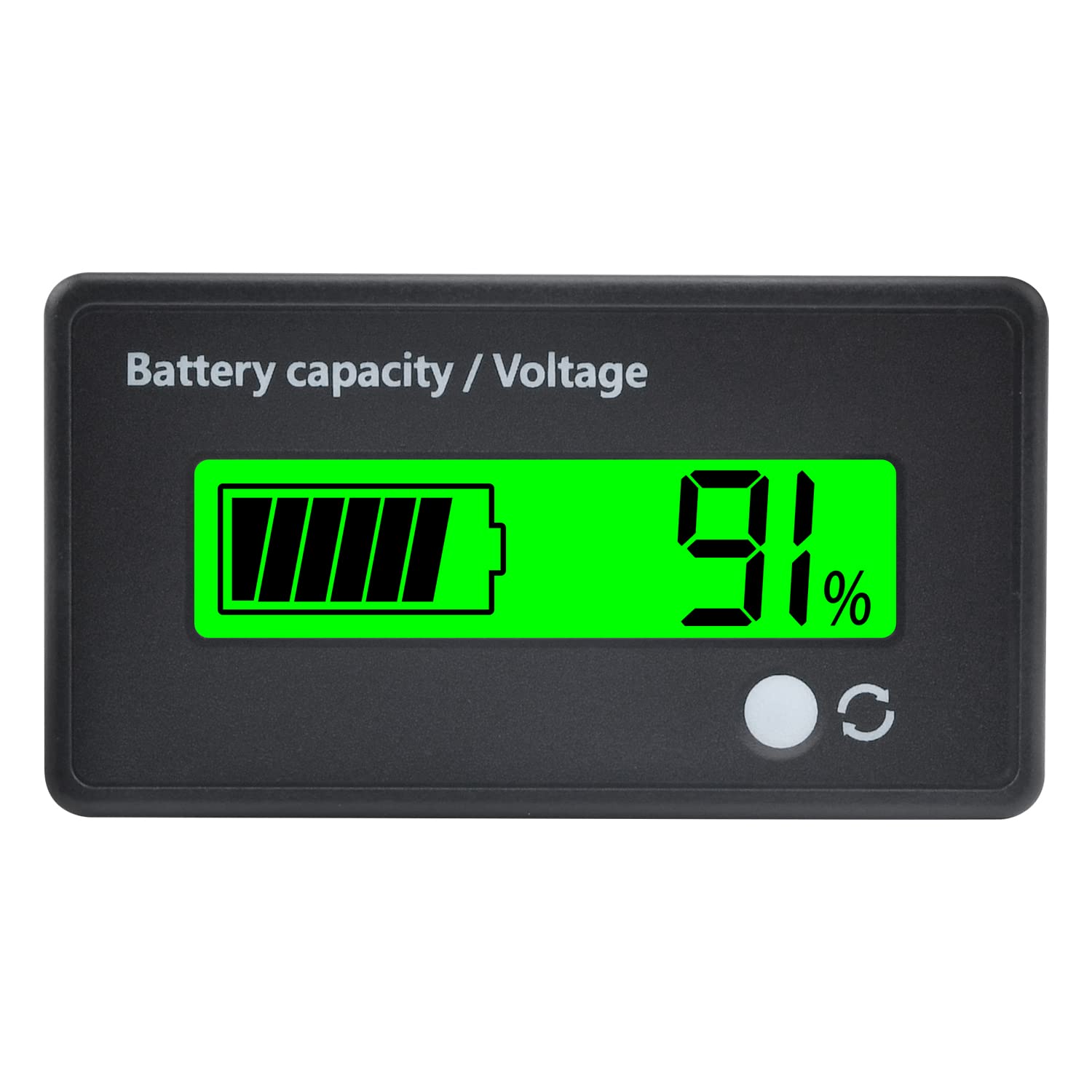
Figure 5.1: Voktta Battery Capacity Voltage Meter displaying 91% capacity. The image shows a close-up of the meter's green LCD screen, clearly indicating a battery icon with full bars and "91%" next to it, along with the function button.
5.2 Low Battery Alarm
The meter is equipped with an alarm function. If the battery capacity drops below 20%, the display will emit an audible sound and flash, alerting the user to recharge the battery.
6. Maintenance
- Cleaning: Wipe the display and casing with a soft, dry cloth. Do not use abrasive cleaners or solvents.
- Storage: If storing the device for an extended period, ensure it is disconnected from the battery and stored in a dry, cool place.
- Inspection: Periodically check the wiring for any signs of wear or damage.
7. Troubleshooting
| Problem | Possible Cause | Solution |
|---|---|---|
| Display is blank | No power, incorrect wiring, or display is off. | Check battery connections and polarity. Ensure the battery has sufficient charge. Press the Function Key to turn on the display. |
| Incorrect capacity/voltage reading | Incorrect battery type setting. | Reconfigure the battery type and voltage range using the Setting Key as per Section 4.2. |
| Alarm sounds frequently | Battery capacity is consistently below 20%. | Recharge the battery. If the issue persists after charging, the battery may be faulty or nearing end-of-life. |
| Buttons unresponsive | Device malfunction or temporary glitch. | Disconnect and reconnect power to reset the device. If the problem persists, contact customer support. |
8. Specifications
| Feature | Detail |
|---|---|
| Model Number | Voktta-BT |
| Brand | Voktta |
| Compatible Battery Types | Lead-Acid (12V-84V), Lithium-Ion (3-15 series), Ternary Lithium, Lithium Iron Phosphate, Polymer Lithium-Ion |
| Minimum Operating Voltage | 12 Volts DC |
| Display Type | LCD with Green Backlight |
| Screen Protection | PVC Waterproof |
| Max Current Consumption | 5mA |
| Item Weight | 20 Grams |
| Package Dimensions | 15.1 x 10.8 x 2.1 cm |
| Origin | China |
| Certifications | CE Mark, RoHS Compliant |
9. Support and Contact
For any questions or assistance regarding your Voktta Battery Capacity Voltage Meter, please refer to the product page where this manual was downloaded or contact Voktta customer support.
We are committed to providing support and resolving any issues you may encounter.
Manufacturer: Voktta