
1. Introduction
Thank you for choosing the Tuttnauer DS1G Water Distiller. This manual provides essential information for the safe and efficient operation, maintenance, and troubleshooting of your new distiller. Please read this manual thoroughly before using the appliance and retain it for future reference.
The Tuttnauer DS1G is designed to produce pure distilled water for various applications, ensuring high quality and reliability.
2. Safety Instructions
Always follow basic safety precautions when using electrical appliances to reduce the risk of fire, electric shock, and personal injury.
- Read all instructions: Familiarize yourself with the operation and safety guidelines before use.
- Electrical Safety: Ensure the power supply matches the voltage specified on the distiller. Do not operate with a damaged cord or plug.
- Hot Surfaces: The distiller's exterior and internal components become very hot during operation. Avoid touching hot surfaces. Allow the unit to cool completely before handling or cleaning.
- Water Level: Never operate the distiller without water or above the maximum fill line.
- Ventilation: Place the distiller in a well-ventilated area. Do not block the air vents.
- Children and Pets: Keep the appliance out of reach of children and pets.
- Cleaning: Always unplug the distiller from the power outlet before cleaning. Do not immerse the main unit in water.
- Intended Use: Use the distiller only for its intended purpose of distilling water.
3. Package Contents
Carefully unpack your Tuttnauer DS1G Water Distiller and check that all items are present and in good condition. If any items are missing or damaged, contact customer support.
- Top Body (Condenser Unit)
- Main Body (Boiling Chamber)
- Power Cable
- Water Container (Collection Bottle)
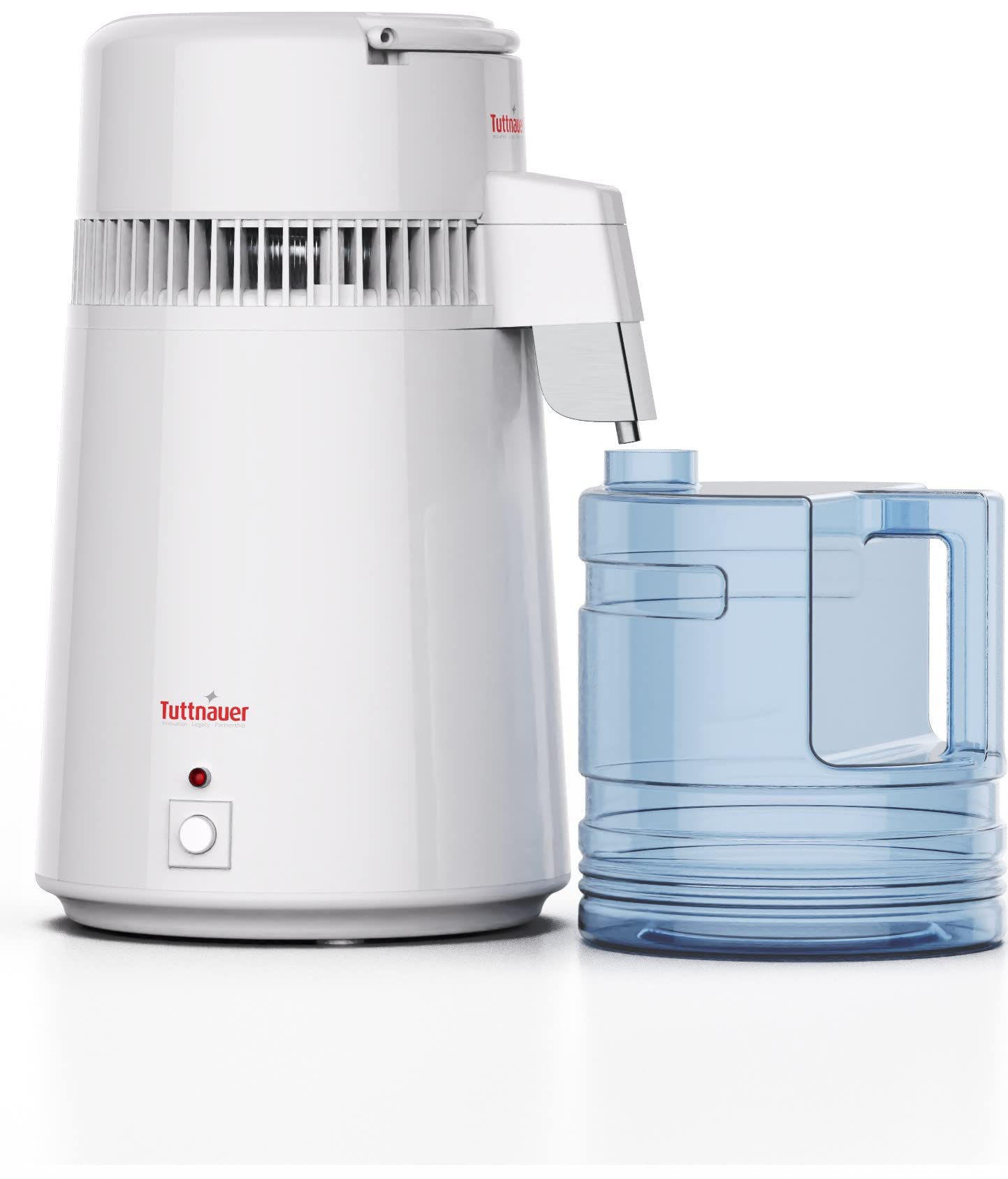
Figure 1: Tuttnauer DS1G Water Distiller. This image displays the Tuttnauer DS1G Water Distiller in white. The main body is cylindrical, with a top section featuring cooling vents. A black power cable is connected to the rear, and a water outlet spout extends from the side. The unit is designed for countertop use.
4. Setup
- Unpack: Remove all packaging materials from the distiller and its components.
- Placement: Place the main body of the distiller on a stable, flat, heat-resistant countertop surface, ensuring adequate ventilation around the unit. Keep it away from walls or other appliances to allow for proper airflow.
- Assemble: Place the top body (condenser unit) securely onto the main body (boiling chamber). Ensure it is seated correctly. Position the water container beneath the distiller's spout to collect the distilled water.
- Initial Cleaning: Before first use, fill the boiling chamber with clean water up to the MAX fill line. Run one distillation cycle without collecting the water to clean any manufacturing residues. Discard this first batch of water.
- Connect Power: Plug the power cable into the distiller's power inlet, then plug the other end into a grounded electrical outlet.
5. Operating Instructions
- Fill the Boiling Chamber: Remove the top body. Fill the main body (boiling chamber) with tap water. Do not exceed the "MAX" fill line indicated inside the chamber.
- Replace Top Body: Securely place the top body back onto the main body.
- Position Collection Container: Ensure the water container is correctly positioned under the distiller's spout.
- Start Distillation: Press the power switch (usually located on the back or side of the unit) to the "ON" position. The distiller will begin the heating and distillation process.
- Distillation Cycle: The distiller will heat the water to boiling, producing steam. The steam rises into the condenser, where it cools and condenses back into liquid water, which then drips into the collection container.
- Automatic Shut-off: The unit is equipped with an automatic shut-off feature. It will turn off automatically when the water in the boiling chamber has evaporated, or when the cycle is complete.
- Cool Down: After the cycle is complete and the unit has shut off, allow the distiller to cool down for at least 30 minutes before handling or attempting to clean.
- Empty Residue: Once cooled, carefully remove the top body and discard the remaining residue water from the boiling chamber.
6. Maintenance
Regular maintenance ensures the longevity and optimal performance of your distiller.
- Daily Cleaning: After each use, empty any remaining water and residue from the boiling chamber. Wipe the interior with a soft cloth.
- Descaling: Over time, mineral deposits (scale) will accumulate in the boiling chamber. Descale the unit regularly (e.g., weekly or bi-weekly, depending on water hardness).
- Unplug the distiller and ensure it is cool.
- Pour a descaling solution (e.g., citric acid solution or white vinegar) into the boiling chamber, covering the scale.
- Allow it to soak for several hours or overnight.
- Scrub the interior with a non-abrasive brush or cloth to remove loosened scale.
- Rinse thoroughly with clean water multiple times to remove all descaling solution and residue.
- Exterior Cleaning: Wipe the exterior of the distiller with a damp cloth. Do not use abrasive cleaners or immerse the unit in water.
- Storage: If storing the distiller for an extended period, ensure it is clean, dry, and stored in a cool, dry place.
7. Troubleshooting
| Problem | Possible Cause | Solution |
|---|---|---|
| Distiller does not turn on. | No power supply; Power switch is OFF; Damaged power cord. | Check if the power cord is securely plugged into both the distiller and the outlet. Ensure the power switch is ON. Inspect the power cord for damage; replace if necessary. |
| No distilled water produced. | Insufficient water in boiling chamber; Top body not properly seated; Unit not turned on. | Ensure water is filled to the MAX line. Check that the top body is securely placed. Verify the power switch is ON. |
| Distillation process is slow. | Heavy mineral buildup (scale) in boiling chamber. | Perform a thorough descaling procedure as outlined in the Maintenance section. |
| Water has an unusual taste/odor. | Initial use residues; Contaminated water container; Need for cleaning. | Ensure initial cleaning cycle was performed. Clean the water container thoroughly. Perform a full cleaning and descaling of the distiller. |
8. Specifications
| Brand | Tuttnauer |
| Model Name | DS1G |
| Capacity | 1 Gallon |
| Purification Method | Distillation |
| Installation Type | Countertop |
| Included Components | Top body, Main Body, Power Cable, Water Container |
| Manufacturer | SUZHOU CREEDA OPTOELECTRONICS TECHNOLOGY CO, LTD |
| ASIN | B0BBN4R7XB |
9. Warranty & Support
Warranty Information
Tuttnauer products are manufactured to high-quality standards. For specific warranty details, including coverage period and terms, please refer to the warranty card included with your product or visit the official Tuttnauer website. Keep your proof of purchase for warranty claims.
Customer Support
If you have any questions, require assistance, or need to report an issue with your Tuttnauer DS1G Water Distiller, please contact Tuttnauer customer support. Contact information can typically be found on the official Tuttnauer website or on the product packaging.
For online resources and further information, you may visit the Tuttnauer Store on Amazon.

