
1. Introduction
Thank you for choosing the Neretva 20-Bar Espresso Machine, Model PE3660U. This manual provides essential information for the safe and efficient operation, maintenance, and troubleshooting of your new espresso machine. Please read all instructions carefully before first use and retain this manual for future reference.
Important Safety Instructions
- Always ensure the machine is unplugged before cleaning or maintenance.
- Do not immerse the appliance, power cord, or plug in water or other liquids.
- Keep out of reach of children.
- Use only with grounded electrical outlets.
- Do not operate if the power cord or plug is damaged.
- Always use fresh, cold water in the water tank.
2. Product Components
Your Neretva Espresso Machine comes with all necessary accessories to start brewing. Familiarize yourself with the parts below:

Figure 2.1: Included Components. This image displays the main espresso machine unit along with its accessories: a 2-in-1 filter holder (portafilter), one-cup filter, two-cup filter, coffee spoon with tamper, removable water tank, and detachable drip tray.
Key Features:
- 20-Bar Professional Pressure: Ensures quality espresso extraction.
- Milk Frother: For creating creamy lattes and cappuccinos.
- Cup Warming Plate: Located on top to keep your cups warm.
- Removable Water Tank (1.8 Liters): Easy to fill and clean.
- Detachable Drip Tray: For easy cleaning and maintenance.
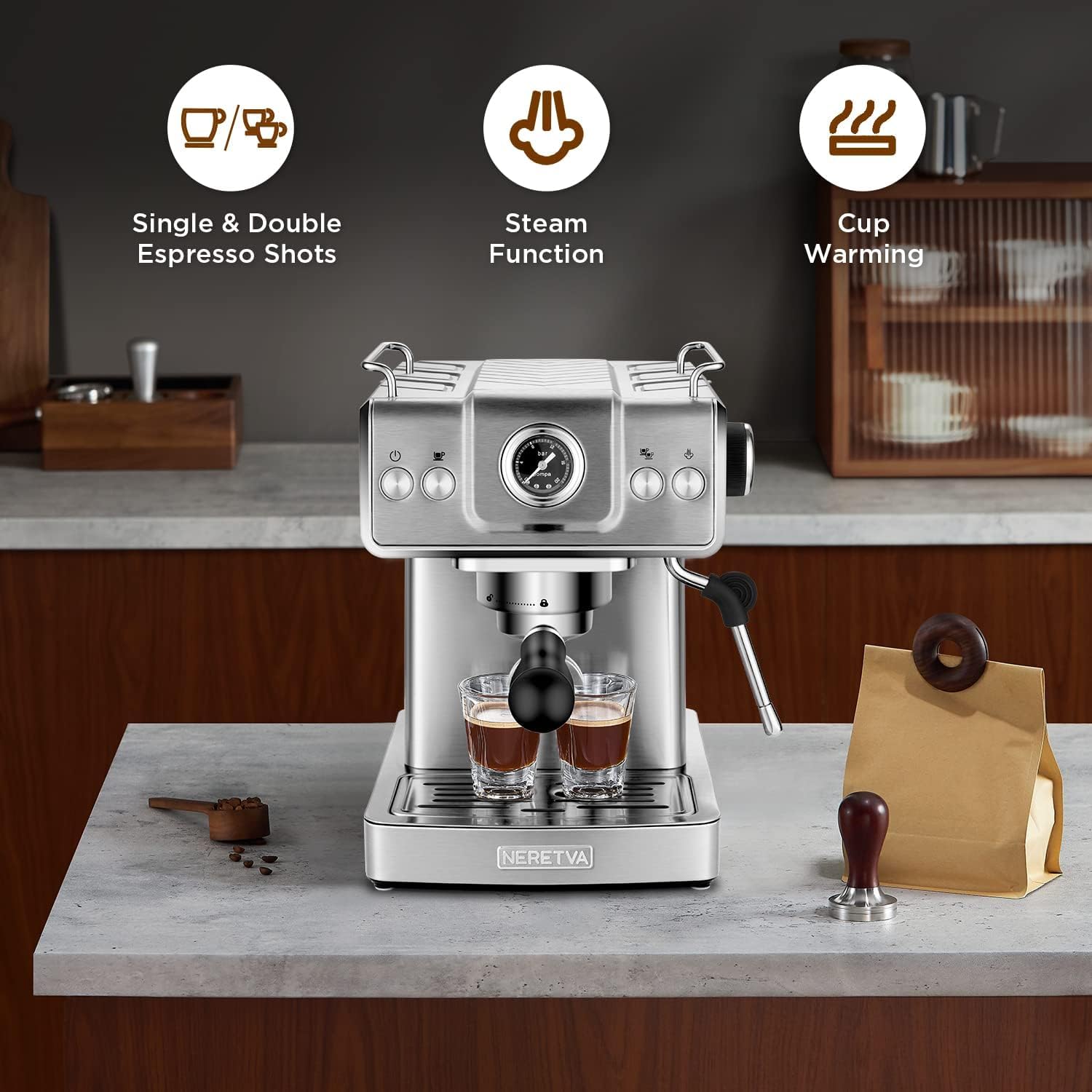
Figure 2.2: Machine Overview. This image highlights the machine's capabilities: brewing single or double espresso shots, utilizing the steam function, and the integrated cup warming feature on top.
3. Initial Setup
Before using your espresso machine for the first time, follow these steps:
- Unpack: Carefully remove all packaging materials and ensure all components are present.
- Clean: Wash the water tank, portafilter, and filters with warm, soapy water. Rinse thoroughly and dry. Wipe the exterior of the machine with a damp cloth.
- Remove Silicone Cap: Locate the red silicone cap at the bottom of the water tank and remove it before filling.
- Fill Water Tank: Fill the removable water tank with fresh, cold water up to the 'MAX' line. Place it securely back into the machine.
- Prime the Machine: Plug in the machine. Turn it on using the power button. Place a cup under the portafilter spout (without coffee). Press the single shot button to run water through the system. Repeat this process 2-3 times to flush out any manufacturing residue.

Figure 3.1: Removable Water Tank. This image shows a hand detaching the water tank from the back of the espresso machine, illustrating its easy removal for filling or cleaning.
4. Operating Instructions
Brewing Espresso:
- Prepare Portafilter: Insert either the one-cup or two-cup filter into the portafilter.
- Add Coffee Grounds: Add the appropriate amount of finely ground espresso coffee to the filter. For a single shot, use approximately 9-9.5g. For a double shot, use 16-16.5g.
- Tamp Coffee: Use the tamper end of the coffee spoon to evenly press the coffee powder to the level indicated in the filter.
- Attach Portafilter: Insert the portafilter into the machine's group head and twist it firmly to the 'lock' position.
- Place Cups: Place your espresso cup(s) on the drip tray directly under the portafilter spouts.
- Brew: Press the single or double shot button. The machine will automatically brew the espresso and stop when complete.

Figure 4.1: Espresso Brewing Steps. This visual guide illustrates the six steps for brewing espresso: installing the filter, adding coffee, tamping, inserting the portafilter, selecting shot size, and enjoying the coffee.
Video 4.1: Neretva 20 Bar Espresso Machine Overview. This video provides a comprehensive demonstration of the espresso machine, including unboxing, setup, brewing process, and milk frothing. It highlights the ease of use and various features.
Frothing Milk:
- Prepare Milk: Fill the milk frothing pitcher with cold milk (dairy or non-dairy) to about one-third full.
- Activate Steam Function: Press the steam button (usually indicated by a steam icon). Wait for the light to stop blinking, indicating the machine has reached the optimal steaming temperature.
- Position Steam Wand: Submerge the steam wand tip just below the surface of the milk.
- Steam Milk: Turn the steam control knob to release steam. Move the pitcher up and down gently to create microfoam. Continue until the milk reaches your desired temperature and texture.
- Clean Steam Wand: Immediately after frothing, wipe the steam wand with a damp cloth to prevent milk residue from drying. Briefly release steam into an empty cup to clear any internal residue.

Figure 4.2: Powerful Steam Wand. This image showcases the machine's steam wand in action, emphasizing its capability for creating microfoam and latte art.
5. Maintenance
Regular cleaning and maintenance will ensure the longevity and optimal performance of your espresso machine.
Daily Cleaning:
- Portafilter and Filters: After each use, remove the portafilter, discard used coffee grounds, and rinse the portafilter and filter under running water.
- Drip Tray: Empty and clean the detachable drip tray daily.
- Water Tank: Rinse the water tank daily and refill with fresh water.
- Exterior: Wipe the exterior of the machine with a soft, damp cloth.

Figure 5.1: Detachable Drip Tray. This image shows the drip tray being removed from the machine, highlighting its easy-to-clean design.
Descaling:
Descaling is crucial to remove mineral buildup and should be performed every 2-3 months, or more frequently in areas with hard water.
- Prepare Descaling Solution: Mix a descaling solution (e.g., white vinegar or commercial descaler) with water according to the product instructions.
- Fill Water Tank: Pour the descaling solution into the water tank.
- Run Solution: Place a large container under the group head and steam wand. Run half of the solution through the group head by pressing the double shot button. Then, run the remaining solution through the steam wand.
- Rinse: After descaling, rinse the water tank thoroughly and fill it with fresh water. Run several cycles of fresh water through both the group head and steam wand to remove any residual descaling solution.
6. Troubleshooting
If you encounter issues with your espresso machine, refer to the following common problems and solutions:
| Problem | Possible Cause | Solution |
|---|---|---|
| No water flowing from group head | Water tank empty; machine not primed; clogged filter. | Refill water tank; prime the machine; clean or descale the machine. |
| Espresso brews too slowly or not at all | Coffee grounds too fine or tamped too hard; clogged filter. | Use coarser grounds or tamp less firmly; clean filter; descale machine. |
| Espresso brews too quickly | Coffee grounds too coarse or tamped too lightly. | Use finer grounds or tamp more firmly. |
| Steam wand not producing steam | Steam button not activated; clogged steam wand. | Ensure steam button is on and light is solid; clean steam wand tip. |
| Machine leaks water | Water tank not seated correctly; drip tray full; portafilter not sealed. | Reseat water tank; empty drip tray; ensure portafilter is locked tightly. |
7. Specifications
- Brand: Neretva
- Model Number: PE3660U
- Coffee Maker Type: Espresso Machine
- Operation Mode: Fully Automatic
- Special Feature: Milk Frother
- Product Dimensions: 9.09"D x 10.9"W x 12"H
- Item Weight: 11.66 pounds
- Capacity: 1.8 Liters
- Included Components: Filter, Milk Frother
- Human Interface Input: Buttons
- UPC: 768490021843

Figure 7.1: Product Dimensions and Pressure Gauge. This image provides a visual representation of the machine's dimensions (12"H x 9.09"D x 10.9"W) and highlights the 20-bar high-pressure gauge, suggesting an optimal brewing range of 8-12 BAR.
8. Warranty and Support
For warranty information, technical support, or service inquiries, please refer to the contact details provided in your product packaging or visit the official Neretva website. Keep your purchase receipt as proof of purchase for warranty claims.

