1. Product Overview
The Netafim TLCV9-12025 Drip Tubing is a high-quality, dual-layered dripline designed for efficient and uniform irrigation. This tubing features pressure-compensating (PC) emitters integrated every 12 inches, delivering a consistent flow rate of 0.9 Gallons Per Hour (GPH) per emitter. Its robust construction ensures durability for both on-surface and subsurface applications, providing precise water delivery directly to the plant root zone.
This manual provides essential information for the proper installation, operation, and maintenance of your Netafim drip tubing system.
2. Setup and Installation
Proper setup is crucial for the optimal performance of your drip irrigation system. Follow these steps for installation:
2.1 System Planning
Before laying out the tubing, plan your irrigation layout. Consider plant spacing, water requirements, and the overall area to be irrigated. Ensure your design accounts for the 12-inch emitter spacing of the TLCV9-12025 tubing.
2.2 Connecting to Water Source
Connect the drip tubing to your main water supply. It is highly recommended to install a filter (e.g., screen or disc filter) to prevent clogging of emitters and a pressure regulator to maintain optimal operating pressure (typically 25-30 PSI for drip systems). Refer to the manufacturer's instructions for these components.
2.3 Laying Out the Tubing
Unroll the Netafim drip tubing along your planned layout. The tubing can be laid on the surface or buried. For surface applications, secure the tubing with stakes to prevent movement. For subsurface applications, bury the tubing at a shallow depth, typically 2-6 inches, ensuring emitters are facing upwards or sideways to prevent soil intrusion.

Image: A coil of Netafim drip tubing, showing a magnified view of the integrated emitters on the tubing surface.
2.4 Connecting Fittings
Use appropriate 17mm drip irrigation fittings (couplings, elbows, tees, end caps) to connect sections of tubing, navigate corners, and terminate lines. Ensure all connections are secure to prevent leaks.

Image: Netafim drip tubing connected with an elbow fitting, installed in a garden bed with plants and mulch.
2.5 Flushing the System
Before permanently capping the ends of the drip lines, temporarily remove the end caps and flush the system with water for several minutes. This removes any debris that may have entered the tubing during installation, preventing emitter clogging. Once flushed, replace the end caps.

Image: Netafim drip tubing laid in a circular pattern around the base of a tree, demonstrating a typical installation for targeted watering.
3. Operating Instructions
Once installed, operating your Netafim drip system is straightforward:
3.1 Initial System Check
Turn on the water supply and visually inspect all drip lines and connections for leaks. Ensure water is dripping uniformly from all emitters. Adjust any loose connections or replace damaged fittings as needed.
3.2 Watering Schedule
The ideal watering schedule depends on plant type, soil conditions, and climate. Drip irrigation typically requires longer, less frequent watering cycles compared to overhead sprinklers. Monitor your plants and soil moisture to determine the appropriate duration and frequency. The 0.9 GPH emitters provide precise water delivery, minimizing waste.
3.3 Monitoring Performance
Periodically observe your system during operation to ensure consistent water delivery. Check for any dry spots or areas receiving excessive water, which may indicate a clog or leak.
4. Maintenance
Regular maintenance extends the life and efficiency of your drip irrigation system:
4.1 Filter Cleaning
Clean your system's filter regularly, especially if you notice reduced flow or uneven watering. The frequency depends on water quality; a good practice is to check it monthly during the irrigation season.
4.2 Flushing Drip Lines
Periodically flush the drip lines by removing the end caps and allowing water to run through for a few minutes. This helps remove any accumulated sediment or debris that may have bypassed the filter.
4.3 Inspecting for Damage
Regularly inspect the tubing for any physical damage, kinks, or leaks. Repair or replace damaged sections using appropriate repair fittings.
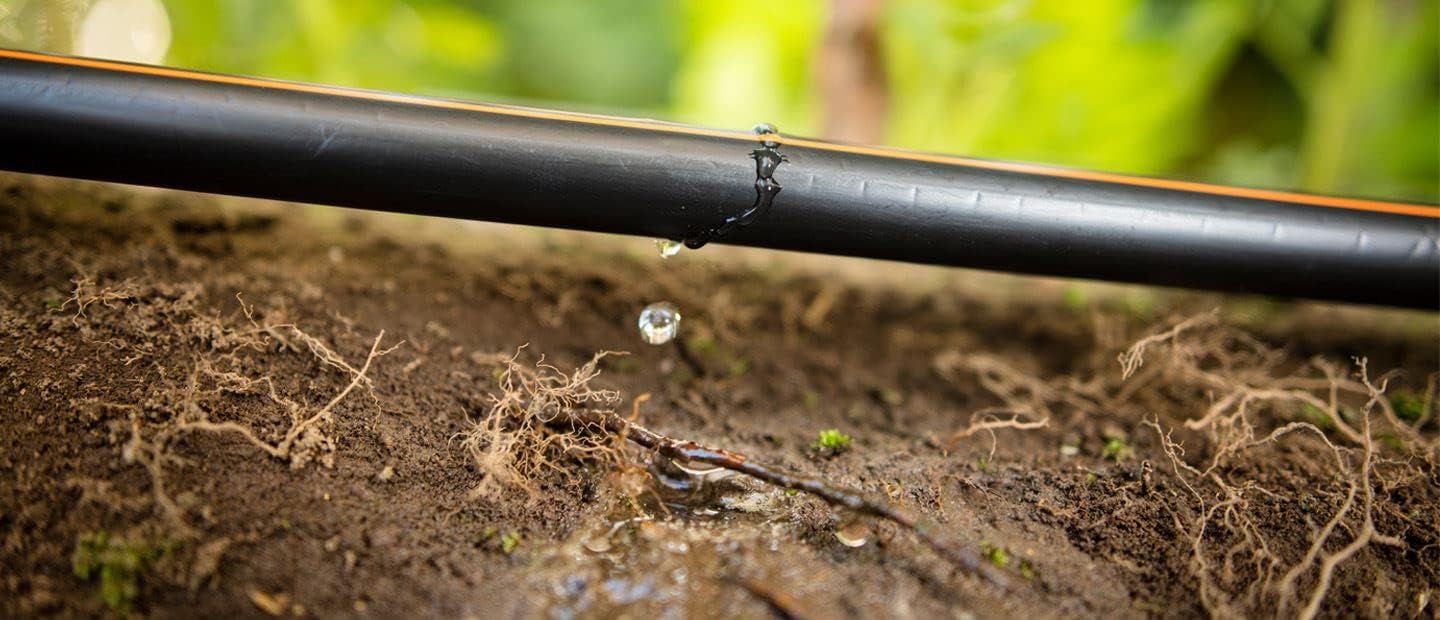
Image: A close-up view of Netafim drip tubing showing water actively dripping from an emitter onto the soil, indicating proper function.
4.4 Winterization (for cold climates)
In regions with freezing temperatures, it is essential to winterize your system. This typically involves shutting off the water supply, draining all water from the lines, and disconnecting components that could be damaged by freezing water. Consult local guidelines for specific winterization procedures.
5. Troubleshooting
Here are common issues and their solutions:
5.1 Uneven Water Distribution / Dry Spots
- Cause: Clogged emitters, insufficient water pressure, or too long a drip line.
- Solution: Clean the filter. Check the pressure regulator for correct setting. Flush the drip lines. If lines are too long, consider splitting them into shorter zones or increasing the main line diameter.
5.2 Leaks at Connections
- Cause: Loose fittings, damaged O-rings, or improper installation.
- Solution: Tighten fittings. Inspect and replace any damaged O-rings or fittings. Ensure tubing is cut cleanly and inserted fully into fittings.
5.3 No Water Flow
- Cause: Main water supply off, clogged filter, or severe line blockage.
- Solution: Check the main water valve. Clean the filter. Inspect the drip lines for severe kinks or blockages.
6. Specifications
| Feature | Specification |
|---|---|
| Brand | Netafim |
| Model Number | TLCV9-12025 |
| Emitter Flow Rate | 0.9 GPH (Gallons Per Hour) |
| Emitter Spacing | 12 inches |
| Tubing Length | 250 feet |
| Nominal Diameter | 17mm |
| Material | Polyethylene (PE) |
| Color | Bronze |
| Application | On-surface or subsurface |
7. Warranty and Support
For information regarding product warranty, please refer to the official Netafim website or contact Netafim customer support directly. Keep your purchase receipt as proof of purchase.
For technical assistance or further inquiries, please contact Netafim customer service through their official channels. Contact information can typically be found on the Netafim website or product packaging.


