1. Introduction
This manual provides essential information for the safe and efficient installation, operation, and maintenance of the FORAS PLUS P5A-150/5 self-priming centrifugal pump. Please read these instructions carefully before installation and use to ensure proper function and longevity of the product. This pump is designed for water supply in small domestic systems, irrigation, and transferring clean liquids without solid particles or chemically aggressive substances.
2. Safety Information
Always observe the following safety precautions to prevent personal injury or damage to the pump:
- Electrical Safety: Ensure the power supply matches the pump's specifications (230 V AC, 50 Hz). All electrical connections must be performed by a qualified electrician and comply with local regulations. Disconnect power before any maintenance or installation.
- Installation Location: Install the pump in an enclosed space or a location protected from atmospheric influences (rain, direct sunlight, frost).
- Liquid Compatibility: This pump is designed for clean water with a temperature range of -5°C to +35°C. Do not pump flammable, corrosive, or abrasive liquids.
- Thermal Protection: The motor includes integrated thermal protection. If the pump stops unexpectedly, allow it to cool down before attempting to restart. Investigate the cause of overheating.
- Children and Unauthorized Personnel: Keep children and unauthorized personnel away from the pump during operation.
3. Product Overview
The FORAS PLUS P5A-150/5 is a robust and reliable self-priming centrifugal pump, manufactured in Italy by Pentax Industries S.p.A. It features a powerful 1100 W Italian electric motor and a multi-stage stainless steel design.

Figure 1: FORAS PLUS P5A-150/5 Self-Priming Centrifugal Pump. This image shows the pump's main body, constructed from stainless steel, connected to the blue electric motor housing.
Key Features:
- Self-Priming Capability: Facilitates easier startup by automatically evacuating air from the suction line.
- High Flow Rate: Up to 140 liters per minute (8.4 m³/h).
- High Head: Maximum delivery head up to 56.8 meters.
- Durable Construction: Pump body made of AISI 304 stainless steel, motor support in aluminum, Noryl impeller, and AISI 303 stainless steel transmission shaft.
- Integrated Thermal Protection: Protects the motor from damage due to overheating.
4. Setup and Installation
Proper installation is crucial for the pump's performance and longevity.
4.1. Choosing a Location
- Install the pump in a dry, well-ventilated area, protected from direct weather exposure.
- Ensure sufficient space around the pump for ventilation, maintenance, and access to connections.
- Mount the pump on a stable, level surface to minimize vibration.
4.2. Plumbing Connections
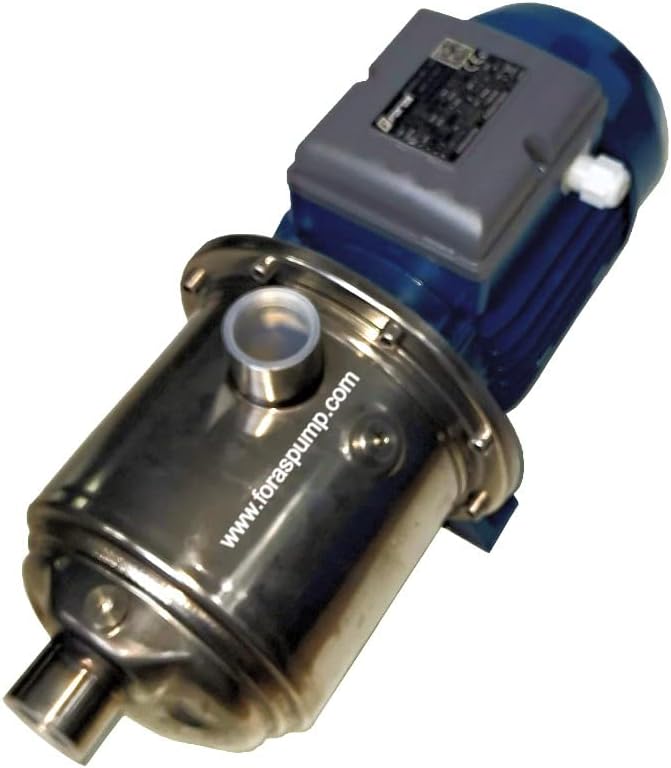
Figure 2: Top view of the FORAS PLUS P5A-150/5 pump, highlighting the inlet and outlet connections. The image shows the stainless steel pump housing with threaded ports for water intake and discharge.
- Suction Line (Inlet): Connect a 1" G (25 mm) pipe to the suction port. Ensure the suction line is airtight to prevent air ingress, which can affect self-priming.
- Discharge Line (Outlet): Connect a 1" G (25 mm) pipe to the discharge port. Install a check valve if the pump is used to draw water from a lower level to prevent backflow.
- Use appropriate thread sealant on all connections to prevent leaks.
4.3. Electrical Connection
- The pump operates on 230 V AC, 50 Hz.
- Connect the pump to a dedicated circuit protected by a residual current device (RCD) and appropriate circuit breaker.
- Ensure proper grounding.
4.4. Priming the Pump
Although self-priming, it is recommended to fill the pump casing with water before the first start-up or after extended periods of disuse to facilitate initial priming. Remove the priming plug (if present) or fill through the discharge port until the casing is full, then replace the plug.
5. Operating Instructions
5.1. Initial Start-up
- After ensuring all connections are secure and the pump casing is filled with water, switch on the power supply.
- The pump should start and begin to draw water. Allow a few minutes for the pump to fully prime and establish a steady flow.
- If the pump does not prime within a few minutes, switch it off, check for air leaks in the suction line, and re-prime the casing.
5.2. Normal Operation
- Monitor the pump for unusual noises or vibrations.
- Ensure the pump is not running dry, as this can cause severe damage.
- The pump is designed for continuous operation within its specified limits.
5.3. Shutting Down
- To stop the pump, simply switch off the power supply.
- For extended periods of non-use, especially in freezing conditions, drain the pump and associated pipework to prevent frost damage.
6. Maintenance
Regular maintenance ensures optimal performance and extends the pump's lifespan.
- Regular Inspection: Periodically check all connections for leaks and ensure electrical cables are in good condition.
- Cleaning: Keep the pump exterior clean and free from debris to ensure proper motor cooling.
- Winterization: In areas subject to freezing temperatures, drain the pump completely by removing the drain plug (if present) or disconnecting the pipes. Store the pump in a frost-free environment.
- Impeller and Seal Check: If performance degrades, inspect the impeller for blockages or wear, and check the mechanical seal for leaks. This typically requires professional service.
7. Troubleshooting
Before contacting service, review the following common issues and solutions:
| Problem | Possible Cause | Solution |
|---|---|---|
| Pump does not start | No power; Thermal overload tripped; Motor fault | Check power supply and circuit breaker; Allow motor to cool; Consult a qualified technician. |
| Pump runs but no water flows | Pump not primed; Air leak in suction line; Suction lift too high; Clogged suction filter/impeller | Re-prime the pump; Check all suction connections for leaks; Reduce suction lift; Clean filter/impeller. |
| Low flow or pressure | Partial blockage; Worn impeller; Air in system; Incorrect pipe sizing | Check for blockages; Inspect impeller for wear; Bleed air from system; Verify pipe diameters. |
| Excessive noise or vibration | Cavitation (air in water); Loose mounting; Bearing wear; Foreign object in pump | Check suction line for air leaks; Secure pump mounting; Consult a technician for bearing/object removal. |
8. Specifications
Technical data for the FORAS PLUS P5A-150/5 pump:
| Parameter | Value |
|---|---|
| Model | P5A-150/5 |
| Manufacturer | PENTAX INDUSTRIES S.p.A. |
| Power (P2) | 1.1 kW (1100 W) |
| Power (P1) | 1470 W |
| Voltage | 230 V AC |
| Frequency | 50 Hz |
| Nominal Current | 6.8 A |
| Max Flow Rate | 140 l/min (8.4 m³/h) |
| Max Delivery Head | 56.8 m |
| Max Operating Pressure | 8.5 bar |
| Liquid Temperature Range | -5°C to +35°C |
| Pump Body Material | AISI 304 Stainless Steel |
| Impeller Material | Noryl |
| Shaft Material | AISI 303 Stainless Steel |
| Mechanical Seal | Ceramic - Graphite (NBR) |
| Suction Connection | 1" G (25 mm) |
| Discharge Connection | 1" G (25 mm) |
| Protection Class | IP44 |
| Insulation Class | F |
| Dimensions (L x W x H) | 43.6 x 16.4 x 19.8 cm |
| Weight | 13.5 kg |
9. Warranty and Support
The FORAS PLUS P5A-150/5 pump is manufactured in Italy by Pentax Industries S.p.A., ensuring original European quality and a factory guarantee. For specific warranty terms, conditions, or technical support, please refer to the documentation provided with your purchase or contact your authorized dealer. Information regarding spare parts availability is not provided in this manual.


