1. Introduction
Thank you for purchasing the IRRADIO VDP-4600HDW LCD/LED Projector. This manual provides essential information for the safe and efficient operation of your device. Please read it thoroughly before use and retain it for future reference.
2. Safety Instructions
- Do not block the ventilation openings. Ensure adequate airflow around the projector to prevent overheating.
- Do not look directly into the projector lens when the lamp is on, as the bright light can cause eye damage.
- Keep the projector away from water or other liquids. Do not operate in damp or wet conditions.
- Use only the power adapter supplied with the projector.
- Do not attempt to repair the projector yourself. Refer all servicing to qualified personnel.
- Place the projector on a stable, level surface to prevent it from falling.
3. Package Contents
Please check that all items are present in your package:
- IRRADIO VDP-4600HDW Projector
- Remote Control
- Power Cable
- HDMI Cable
- AV Cable
- User Manual
4. Product Overview
4.1. Projector Components

Figure 4.1: Overall view of the IRRADIO VDP-4600HDW Projector. This image displays the projector from an angled perspective, highlighting its compact design and the lens on the front left side, with ventilation grilles and control buttons visible on the top and sides.

Figure 4.2: Front view of the projector. This image focuses on the large projection lens on the left, with the IRRADIO logo and ventilation grilles on the right side of the front panel.

Figure 4.3: Rear view of the projector. This image shows the VGA port, focus adjustment knob, and keystone correction knob on the rear panel, along with additional ventilation.
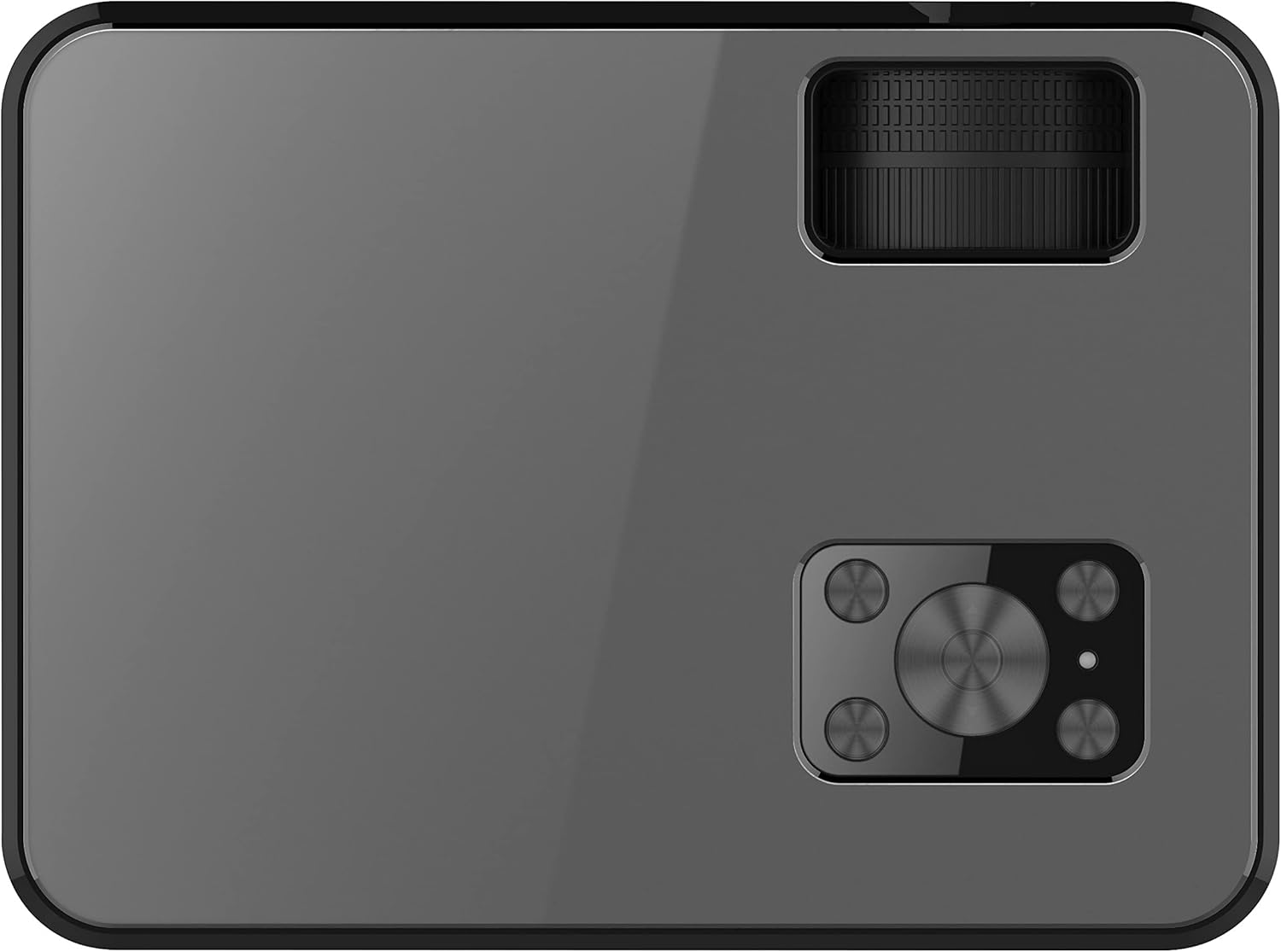
Figure 4.4: Top view of the projector. This image displays the control panel with navigation buttons (up, down, left, right, OK), source, menu, and exit buttons, along with the power button and volume controls.

Figure 4.5: Side view of the projector showing input/output ports. This image highlights two HDMI ports, AV input, two USB ports, and a 3.5mm headphone jack (audio out).

Figure 4.6: Opposite side view of the projector. This image shows the power input port and additional ventilation grilles.

Figure 4.7: Bottom view of the projector. This image displays the mounting points for ceiling installation and rubber feet for stable placement on a flat surface.
4.2. Remote Control
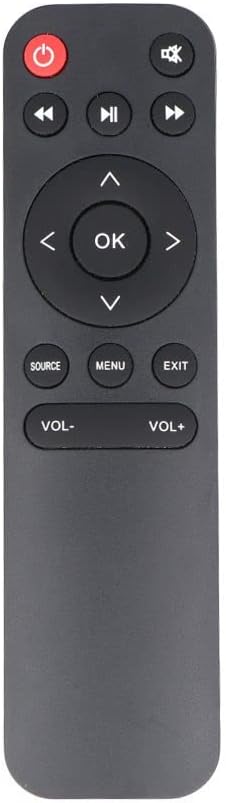
Figure 4.8: The remote control for the IRRADIO VDP-4600HDW Projector. It features buttons for power, mute, navigation (up, down, left, right, OK), source selection, menu, exit, and volume control.
4.3. Ports and Controls Overview
- Power Button: Turns the projector on/off.
- Lens: Projects the image.
- Focus Ring: Adjusts image clarity.
- Keystone Correction: Adjusts image distortion.
- HDMI Ports (x2): Connect to HDMI-enabled devices (laptops, gaming consoles, Blu-ray players).
- USB Ports (x2): Connect USB drives for media playback.
- VGA Port: Connect to computers with VGA output.
- AV Port: Connect to older devices using composite video.
- 3.5mm Audio Out: Connect external speakers or headphones.
- IR Receiver: For remote control signals.
5. Setup
5.1. Placement
Place the projector on a stable, flat surface or mount it to the ceiling. Ensure the projector is positioned directly in front of the projection screen or wall. The optimal projection distance ranges from 1.52 meters to 3.48 meters, yielding a screen size between 50 and 120 inches.
- Front Projection: Place the projector in front of the screen.
- Rear Projection: Place the projector behind a translucent screen.
- Ceiling Mount: The projector can be inverted and mounted to the ceiling. Adjust settings in the OSD menu for inverted projection.
5.2. Power Connection
- Connect the power cable to the projector's power input port.
- Plug the other end of the power cable into a standard electrical outlet (220V AC, 50Hz).
- Press the power button on the projector or remote control to turn it on.
5.3. Focus and Keystone Adjustment
- Turn on the projector and display an image.
- Rotate the Focus Ring (located near the lens) until the image appears sharp and clear.
- Adjust the Keystone Correction knob (located on the rear panel) to correct any trapezoidal distortion, making the image rectangular.
6. Operating
6.1. Power On/Off
Press the power button on the projector or the remote control to turn the unit on or off.
6.2. Input Source Selection
After powering on, press the SOURCE button on the remote control or the projector's control panel to cycle through available input sources (HDMI1, HDMI2, USB1, USB2, VGA, AV).
6.3. Connecting External Devices
- HDMI: Connect an HDMI cable from your device (e.g., laptop, game console) to one of the projector's HDMI ports. Select the corresponding HDMI input.
- VGA: Connect a VGA cable from your computer to the projector's VGA port. Select the VGA input.
- AV: Use the provided AV cable to connect to devices with composite video output. Select the AV input.
- USB: Insert a USB flash drive into a USB port. The projector's media player interface will appear automatically or can be accessed via the source menu.
6.4. Media Playback (USB)
The integrated media player supports various formats:
- Image Formats: JPEG, BMP, PNG, MPO
- Video Formats: MPEG1, MPEG2, H.263, H.264, AVS, MJPEG, RV30, RV40, HEVC
- Audio Formats: MPEG1, MPEG2, LPCM, MP3
Navigate through files using the remote control's arrow keys and press OK to select.
6.5. Wireless Audio Connection
The projector features an integrated wireless audio function for connecting to external audio devices. Refer to the on-screen display (OSD) menu for specific pairing instructions. Typically, you will need to enable the wireless audio feature in the projector's settings and then pair it with your desired external speaker or headphone.
7. Maintenance
7.1. Lens Cleaning
Use a soft, lint-free cloth and a specialized lens cleaning solution to gently wipe the lens. Avoid abrasive materials or excessive pressure.
7.2. Dust Filter Cleaning
Regularly check and clean the dust filters to ensure optimal airflow and prevent overheating. Use a soft brush or a vacuum cleaner with a brush attachment to remove dust from the ventilation grilles.
7.3. Storage
When not in use for extended periods, store the projector in a cool, dry place, protected from dust and direct sunlight. Use the original packaging or a protective case.
8. Troubleshooting
- No Power: Ensure the power cable is securely connected and the power outlet is functional.
- No Image: Check the input source selection. Ensure the connected device is powered on and sending a signal. Verify cable connections.
- Blurry Image: Adjust the focus ring. Ensure the projection distance is within the optimal range.
- Image Distorted: Adjust the keystone correction.
- No Sound: Check the volume settings on both the projector and the connected device. If using external speakers, ensure they are properly connected or paired via wireless audio.
- Remote Control Not Working: Replace the batteries. Ensure there are no obstructions between the remote and the projector's IR receiver.
9. Specifications
| Feature | Specification |
|---|---|
| Projection System | LCD panel with LED light source |
| Native Resolution | 1920x1080 (Full HD 1080p) |
| Dynamic Contrast Ratio | 2000:1 |
| Light Source Brightness | 3000 Lumens |
| LED Lamp Life | 50,000 hours |
| Lens | Manual focus |
| Wireless Audio Function | Integrated |
| Connectivity | 2x HDMI, 2x USB, VGA, AV Composite, 3.5mm Headphone Jack (output) |
| Aspect Ratio | 16:9 Native / 4:3 Compatible |
| Optimal Projection Size | 50" - 120" |
| Optimal Projection Distance | 1.52 m to 3.48 m |
| Projection Modes | Front, Rear, Ceiling (Front/Rear) |
| Audio | 1x 3W Hi-Fi Speaker |
| Cooling System | Dual cooling system |
| OSD Language | 23 languages |
| Power Supply | 220V AC 50Hz (single phase) |
| Weight | 1.4 kg |
| Dimensions (W x H x D) | 222 x 91 x 173 mm |
10. Warranty and Support
Information regarding specific warranty terms and support contacts is not available in the provided product data. Please refer to the product packaging or the retailer's website for warranty details and customer support information.


