Introduction
This manual provides detailed instructions for the installation, operation, and maintenance of your TMS Soft Close Pocket Door Frame. Please read all instructions carefully before beginning installation to ensure proper function and safety. This system is designed to convert standard doorways into space-saving sliding pocket doors with a soft-close mechanism.
Safety Information
- Always wear appropriate personal protective equipment (PPE) such as safety glasses and gloves during installation.
- Ensure all tools are in good working condition.
- Verify wall structure and electrical/plumbing lines before cutting or drilling.
- Do not exceed the maximum door weight capacity of 88 lbs.
- Keep children and pets away from the work area during installation.
- If you are unsure about any step, consult a qualified professional.
Parts List
Before beginning installation, ensure all components are present and undamaged. Refer to the diagrams below for identification.

Figure 1: Labeled parts list for the TMS Soft Close Pocket Door Frame, showing all included components.
- 4 x Uprights (Galvanized Steel Tube Studs)
- 1 x Aluminum Track with Wood Slot
- 1 x Double-Sided Soft Close Mechanism
- 2 x Hangers with Mounting Plates
- 2 x Mounting Brackets
- 1 x Door Guide
- 2 x Floor Adjustable Anchors
- Assorted Fasteners (Steel Stud Screws, Self-Tapping Drywall Screws, Finish Trim Screws)
- Tools (Wrench, Allen Key)

Figure 2: Exploded view of the TMS Soft Close Pocket Door Frame components, illustrating how they fit together.
Installation Instructions
This section guides you through the step-by-step installation of the TMS Soft Close Pocket Door Frame. For visual assistance, please refer to the embedded installation video.
Video 1: Official installation guide for the TMS Pocket Door Hardware Frame. This video demonstrates the complete installation process from framing to finishing.
Step 1: Prepare the Rough Opening
Ensure your wall framing is plumb and level. The minimum height for the rough opening is 84 1/2 inches (2.14 meters). The width of the rough opening should be twice the door width plus 1 inch. For example, for a 36-inch door, the rough opening width should be 73 inches.

Figure 3: Illustration of a framed wall opening, showing the space required for a pocket door installation.
Step 2: Install Header End Brackets
Measure and mark the positions for the header end brackets. Attach the brackets to the top corners of your rough opening, ensuring they are level. Maintain a 1/8-inch gap between the bracket and the header for proper alignment.
Step 3: Snap a Chalk Line
Snap a chalk line on the floor to mark the center of the pocket door track. This line will guide the placement of the floor anchors and ensure the door slides correctly.
Step 4: Assemble and Install Header
Assemble the aluminum track with the wood slot. Insert the header into the installed end brackets. Use a level to ensure the header is perfectly horizontal before securing it. If using a non-standard door size, refer to the "Cutting Instructions" below.
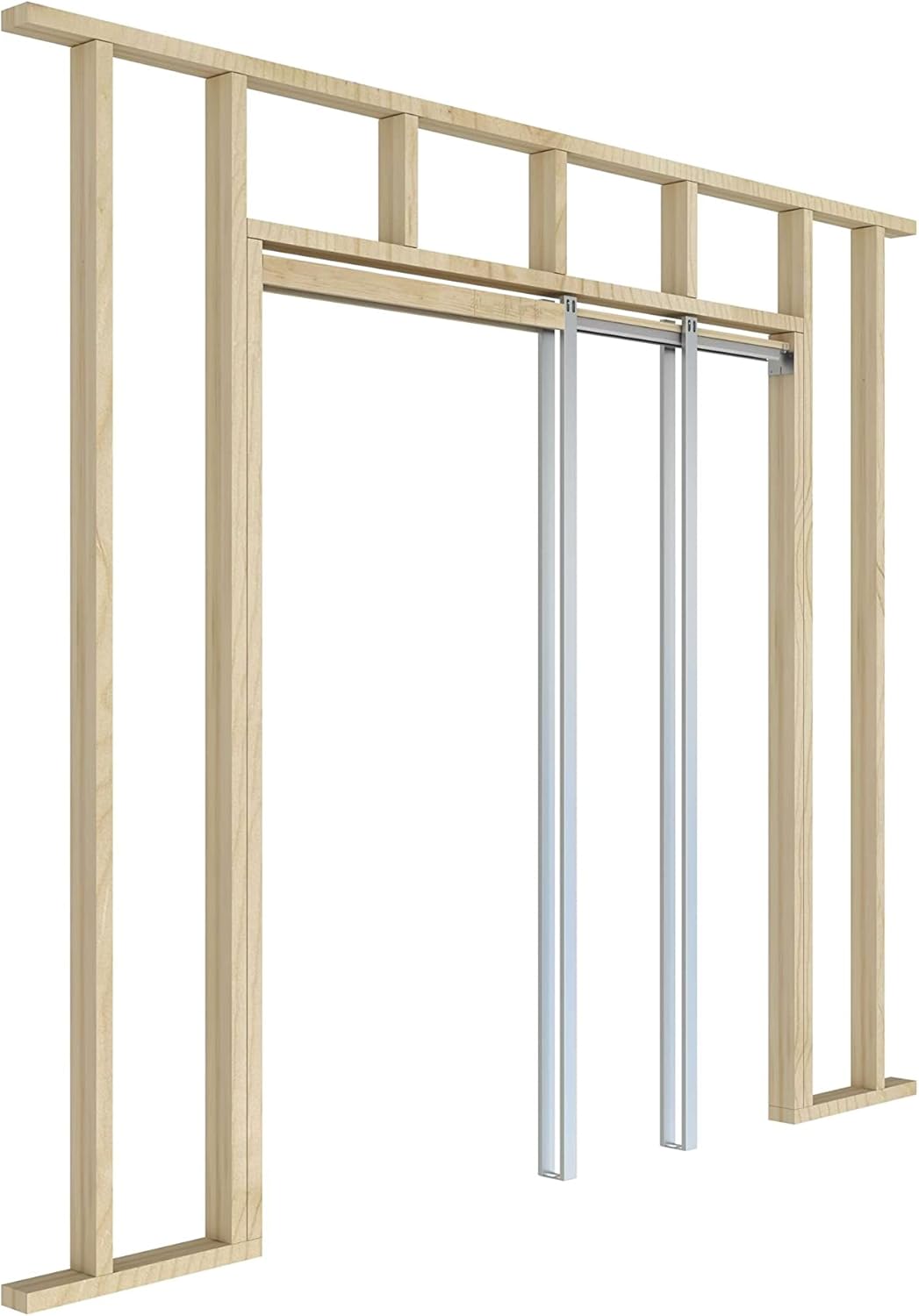
Figure 4: The header assembly, including the aluminum track and wood slot, installed within the rough opening.
Step 5: Attach Split Steel Studs
Attach the galvanized steel tube uprights to the header using the provided steel stud screws. Ensure the uprights are evenly spaced and plumb. These studs provide rigidity and prevent nails from penetrating the pocket area.
Step 6: Insert Hanger Wheel Assembly and Soft Close Mechanism
Insert the ball bearing hanger wheel assemblies, soft close actuators, and triggers into the track. Ensure the flat side of the hanger faces inward. Alternate the wheel positions for even weight distribution. The soft close mechanism should be positioned correctly for smooth operation.

Figure 5: Detail of the soft close mechanism and hanger wheels inserted into the aluminum track, ready for door attachment.
Step 7: Install Drywall
Install drywall over the pocket door frame. Use self-tapping drywall screws. Ensure the drywall is flush with the frame components.
Step 8: Seal All Edges
Seal all edges of the drywall and frame components as per standard construction practices.
Step 9: Attach Door Hangers
Attach the door hangers to the top edge of your door. Ensure they are securely fastened and positioned correctly to align with the track mechanism.
Step 10: Install Finished Jambs, Split Headers, and Casing
Install the finished jambs, split headers, and casing around the pocket door opening. Use self-tapping finish trim screws. Ensure a plumb line is maintained for the door's travel. Avoid nailing into the pocket area where the door slides.
Step 11: Fasten Door Guides
Fasten the door guides to the floor along the chalk line. These guides prevent the bottom of the door from swinging out of the pocket.
Cutting Instructions for Non-Standard Door Sizes
If your door is not a standard size (24", 28", 30", 32", 36"), you will need to cut the header and track. The header trim board has markings for common door widths. For other sizes, calculate the rough opening width as (Door Width x 2) + 1 inch.
- Remove the adjustable end bracket from the header.
- Measure from the fixed bracket end of the header board. Mark the header board at a length equal to (Door Width x 2) + 1 inch. Cut the wood header ONLY at this mark.
- Turn the header assembly over. Cut the metal track 1 3/8 inches shorter than the wood header.
- Replace the adjustable end bracket on the newly cut end of the header.
- Measure the header trim board from the fixed bracket end. Mark the trim board at a length equal to Door Width + 7/8 inch. Cut the header trim board ONLY at this mark. Discard the cut-off end.
- Repeat the trim board cutting process for the other side if necessary.
Operating Instructions
The TMS Soft Close Pocket Door Frame is designed for smooth and quiet operation. The integrated soft-close mechanism prevents the door from slamming when closing or opening fully. Simply push or pull the door gently, and the mechanism will engage to slow its movement as it approaches the fully open or closed position.
Maintenance
- Cleaning: Periodically clean the track and door guides to remove dust and debris that could impede smooth operation. Use a soft cloth and mild cleaner.
- Lubrication: If the door's movement becomes stiff, apply a silicone-based lubricant to the hanger wheels and track. Avoid oil-based lubricants as they can attract dust.
- Inspection: Regularly inspect the hangers, brackets, and soft-close mechanism for any signs of wear or damage. Tighten any loose screws.
- Door Adjustment: If the door is not level or is dragging, the hanger mechanisms may allow for minor height adjustments. Refer to the installation video for details on hanger adjustment.
Troubleshooting
- Door is difficult to slide:
- Check the track for obstructions (dust, debris). Clean thoroughly.
- Lubricate the hanger wheels and track with silicone spray.
- Ensure the door guides on the floor are not too tight against the door.
- Door is not level:
- Adjust the hanger mechanisms on the top of the door.
- Verify the header is level.
- Soft close mechanism not engaging:
- Check if the actuators and triggers are correctly positioned within the track.
- Ensure the door is making proper contact with the soft close triggers.
- Door rubs against the frame:
- Verify the door is plumb and the frame is square.
- Adjust the door guides on the floor.
- Check for any protruding screws or debris within the pocket.
Specifications
| Brand | TMS |
| Model Number | POCKET-SC |
| Maximum Door Weight | 88 lbs |
| Compatible Door Thickness | 1 in. to 1-3/4 in. |
| Compatible Door Width | 23 in. to 36 in. |
| Compatible Door Height | Up to 80 in. |
| Wall Stud Compatibility | 2 in. x 4 in. stud wall |
| Material | Aluminum Track, Galvanized Steel Uprights |
| Item Weight | 20 pounds |
Warranty and Support
For warranty information or technical support, please contact TMS customer service. Keep your purchase receipt and model number handy for faster assistance.
Contact Information: Refer to the product packaging or the TMS official website for the most current contact details.