
AMZCNC YYB-700-MINI
AMZCNC Electric Hydraulic Pump YYB-700-MINI User Manual
Model: YYB-700-MINI
1. Introduction
Welcome to the user manual for your AMZCNC Electric Hydraulic Pump, model YYB-700-MINI. This manual provides essential information for the safe and efficient operation, maintenance, and troubleshooting of your hydraulic pump. Please read this manual thoroughly before operating the equipment to ensure proper use and to prevent injury or damage.
2. Safety Information
General Safety Precautions
- Always wear appropriate personal protective equipment (PPE), including eye protection and gloves, when operating hydraulic equipment.
- Ensure the power supply matches the pump's voltage requirements (110V/120V, 60Hz). Do not use with incompatible power sources.
- Do not operate the pump if any components are damaged, leaking, or show signs of wear. Inspect the unit before each use.
- Keep hands, clothing, and other body parts clear of moving parts and high-pressure hydraulic lines.
- Never exceed the maximum hydraulic pressure of 10,000 Psi (69 MPa). Over-pressurization can lead to equipment failure and injury.
- Use only recommended hydraulic fluid (15-46 anti-wear hydraulic oil). Mixing fluids or using incorrect types can damage the pump.
- Ensure all hydraulic connections are tight and secure before operation to prevent fluid leaks and sudden pressure loss.
- Operate the pump in a well-ventilated area.
3. Product Overview
Components and Features
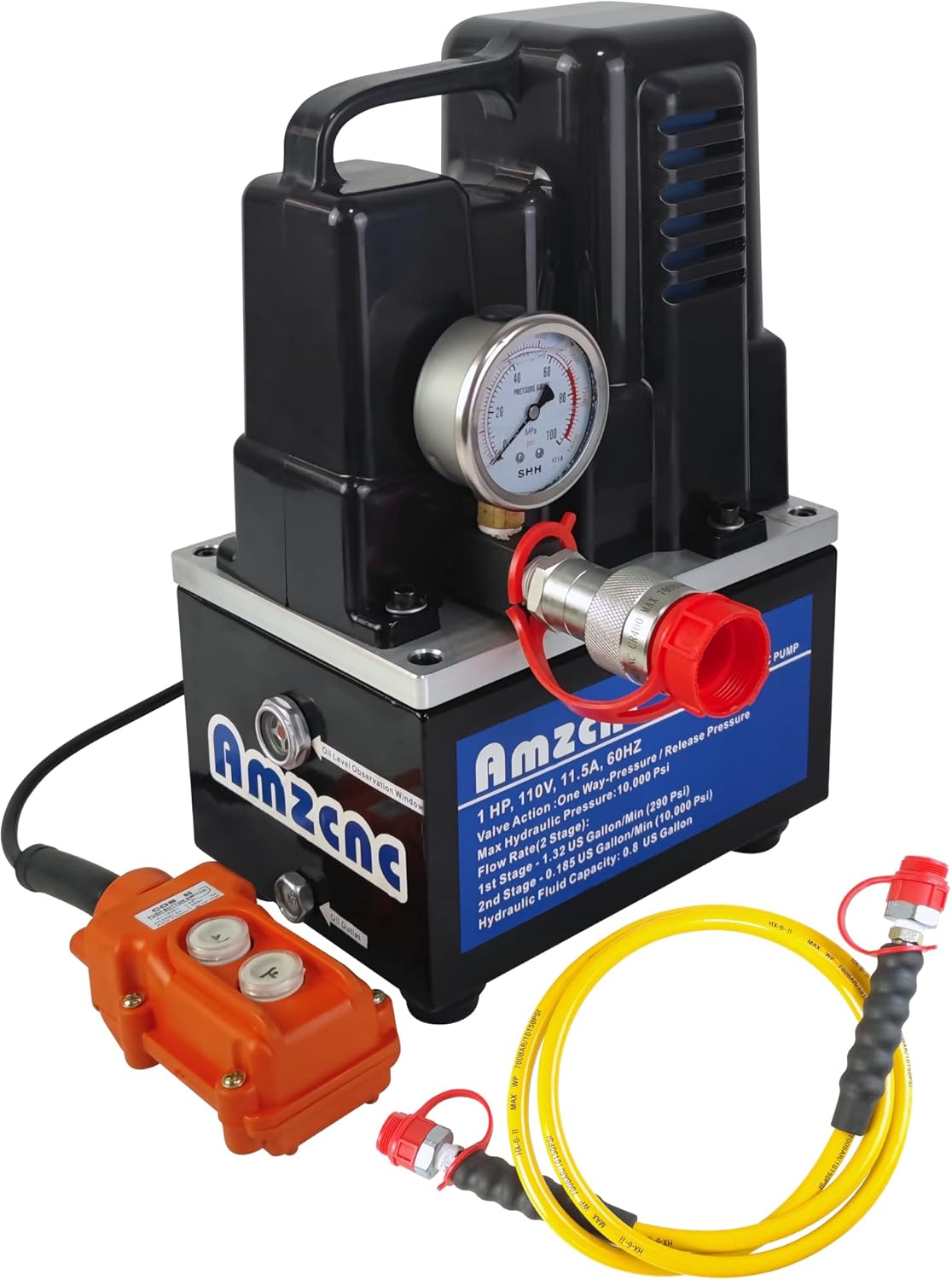
The AMZCNC Electric Hydraulic Pump YYB-700-MINI is designed for various hydraulic applications, offering reliable performance with its two-stage operation and robust construction.


Technical Specifications
| Specification | Value |
|---|---|
| Model Number | YYB-700-MINI |
| Power | 1 HP, 110V/120V, 11.5A, 60Hz |
| Wattage | 750 watts |
| Valve Action | One Way - Pressure / Release Pressure |
| Maximum Hydraulic Pressure | 10,000 Psi |
| Flow Rate (1st Stage) | 1.32 US Gallon/Min (290 Psi) |
| Flow Rate (2nd Stage) | 0.185 US Gallon/Min (10,000 Psi) |
| Hydraulic Fluid Capacity | 0.8 US Gallon |
| Recommended Hydraulic Fluid | 15-46 Anti-Wear Hydraulic Oil |
| Hose Length | 6 feet |
| Cord Length | 6 feet |
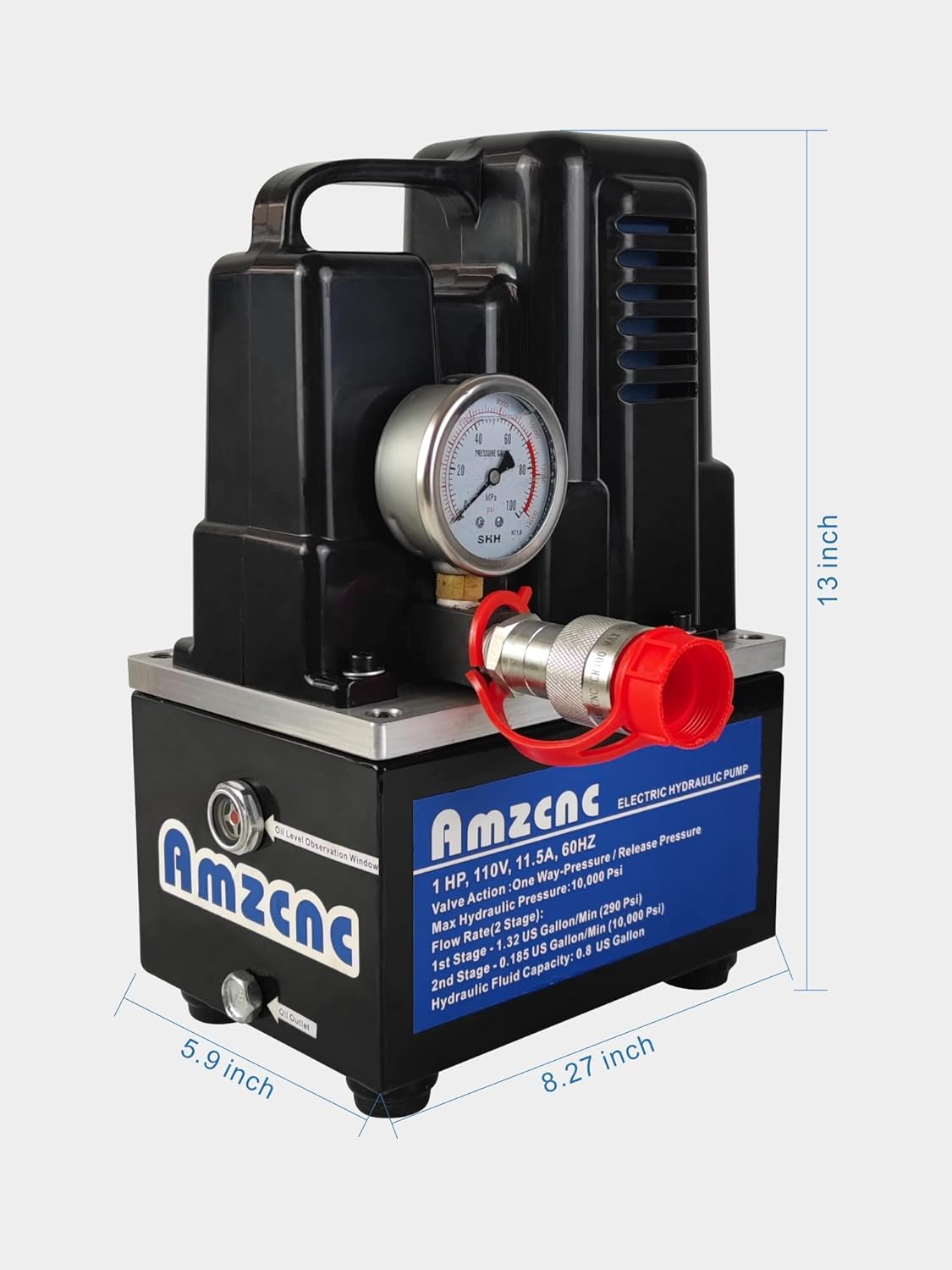
| Product Dimensions | 9 x 8.25 x 13 inches |
| Item Weight | 36.9 pounds |
| Plug Format | B - US style with ground plug |
| Switch Style | Push button |
4. Setup
Unpacking and Inspection
- Carefully remove all components from the packaging.
- Inspect the pump unit, hydraulic hose, and remote control for any signs of damage that may have occurred during transit. Do not use the equipment if any damage is observed.
- Ensure all listed components are present according to the packing list.
Hydraulic Fluid Filling and Air Bleeding
The pump is pre-filled with hydraulic fluid. The pump uses 15-46 anti-wear hydraulic oil. The hydraulic fluid capacity is 0.8 US Gallon. Monitor the fluid level through the visible observation window on the side of the pump.
Important: Before initial operation, it is crucial to bleed any trapped air from the hydraulic system to ensure proper function, prevent cavitation, and avoid potential damage to the pump or connected tools. This process may take some time.
- Ensure the pump is placed on a stable, level surface.
- Connect the hydraulic hose securely to the pump's quick connector and to the hydraulic tool or cylinder you intend to use.
- With the system connected, activate the pump and cycle the attached hydraulic tool several times without applying a load. This action helps to circulate the fluid and expel trapped air.
- Continuously monitor the fluid level in the reservoir through the observation window and top up with recommended hydraulic oil if necessary.
- Repeat the cycling process until smooth and consistent operation is achieved, and no air bubbles are visible in the fluid return (if applicable).
Electrical Connection
- Connect the pump's power cord to a properly grounded 110V/120V, 60Hz electrical outlet.
- Ensure the electrical circuit can safely handle the pump's 11.5A current draw to prevent overloading.
5. Operation
Connecting the Hydraulic Hose
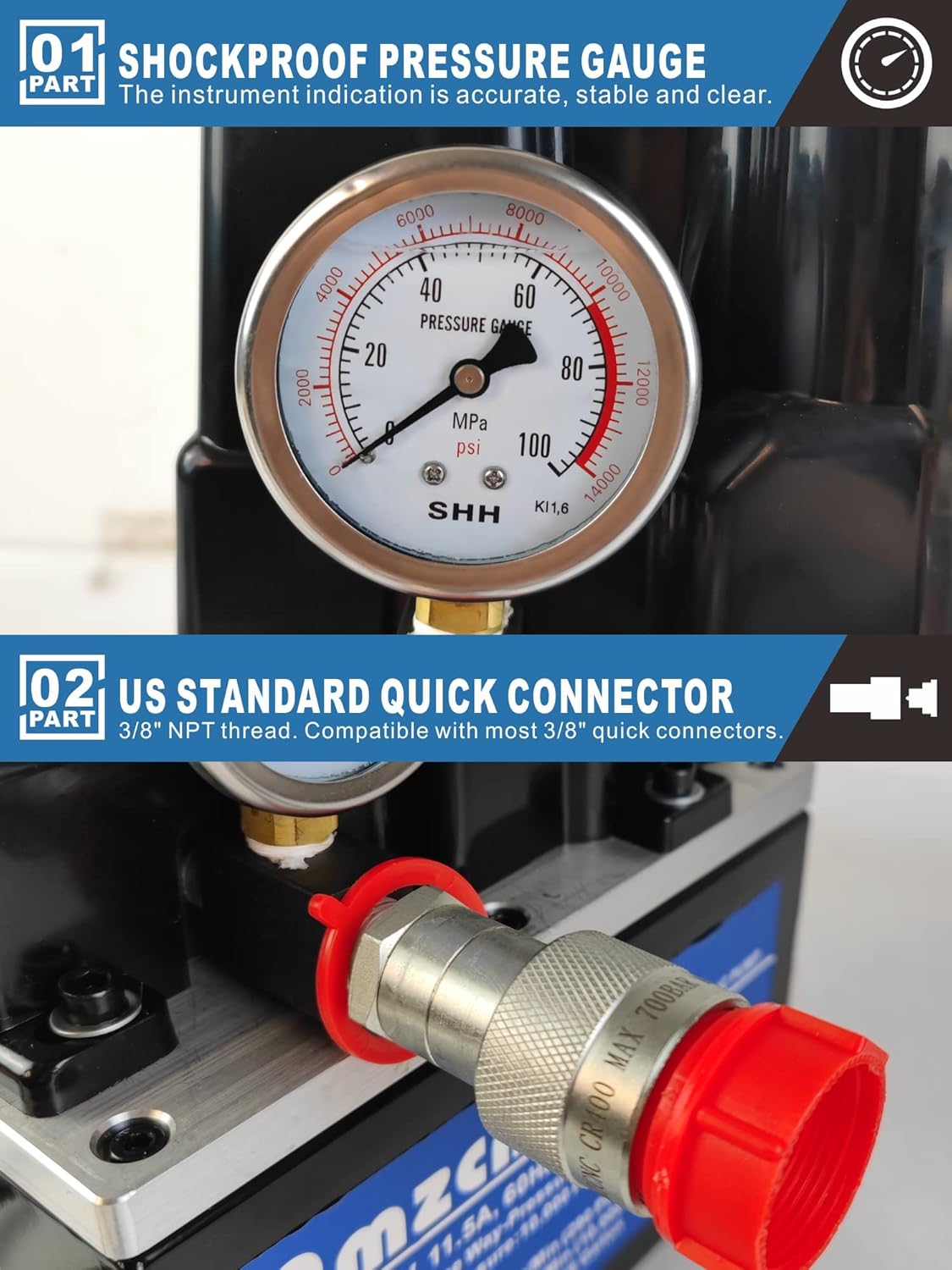
- Attach the provided 6-foot hydraulic hose to the pump's US standard quick connector (3/8" NPT thread).
- Connect the other end of the hose to your hydraulic tool or cylinder. Verify that all connections are tight and secure to prevent leaks and ensure efficient operation.
Using the Remote Control
The pump is operated via a 6-foot remote control with push buttons, allowing for safe distance operation.
- Pressure Button: Press and hold the designated button on the remote control to activate the pump and build hydraulic pressure. The pump operates in two stages: a first stage with a higher flow rate (1.32 US Gallon/Min at 290 Psi) for rapid advancement, and a second stage with a lower flow rate (0.185 US Gallon/Min at 10,000 Psi) for fine control and high-pressure applications. This two-speed operation reduces pump time significantly.
- Release Button: Press the designated button to release hydraulic pressure and retract the hydraulic tool or cylinder.
Monitoring Pressure
The integrated shockproof pressure gauge provides accurate and stable readings of the hydraulic pressure. Always monitor this gauge to ensure you do not exceed the maximum operating pressure of 10,000 Psi, which could damage the equipment or cause safety hazards.
6. Maintenance
Hydraulic Fluid Check and Replacement
- Regularly check the hydraulic fluid level through the observation window. The fluid should be between the minimum and maximum marks.
- Top up with 15-46 anti-wear hydraulic oil as needed. Do not overfill.
- Replace hydraulic fluid periodically according to usage intensity or if the fluid appears discolored or contaminated. Consult a hydraulic specialist for specific replacement intervals if unsure.
General Cleaning and Inspection
- Keep the pump unit clean and free from dirt, dust, and debris. Use a clean cloth to wipe down exterior surfaces.
- Before each use, inspect all hoses and connections for signs of wear, cuts, abrasions, or leaks. Replace damaged components immediately.
- Ensure the electrical cord and plug are in good condition, free from cuts or fraying.
7. Troubleshooting
This section addresses common issues you might encounter with your AMZCNC Electric Hydraulic Pump and provides potential solutions.
Pump Not Building Pressure or Operating Weakly
- Air in System: Air trapped in the hydraulic lines or reservoir can prevent proper pressure buildup. Ensure all air has been thoroughly bled from the hydraulic system. Refer to the "Hydraulic Fluid Filling and Air Bleeding" section.
- Low Fluid Level: Insufficient hydraulic fluid will lead to poor performance. Check the hydraulic fluid level and refill if necessary.
- Incorrect Voltage: Verify that the pump is connected to a 110V/120V, 60Hz power supply. Incorrect voltage can lead to reduced motor performance or damage.
- Loose Connections: Check all hydraulic hose connections for tightness. Leaks, even small ones, can cause significant pressure loss.
Pump is Loud or Making Unusual Noises
- Air in System: Air trapped in the hydraulic fluid can cause cavitation, leading to increased noise. Bleed the system thoroughly.
- Low Fluid Level: Insufficient fluid can also cause the pump to draw air, resulting in increased noise. Check and top up the fluid.
- Internal Issue: If unusual noises persist after checking fluid and bleeding air, discontinue use immediately and consult a qualified technician for inspection.
Hose Connections Do Not Match
- The pump is equipped with a US standard quick connector with 3/8" NPT thread. Ensure your hydraulic tools or cylinders have compatible connectors. If not, appropriate adapters may be required.
8. Warranty and Support
For detailed warranty information, technical support, or service inquiries, please refer to the documentation included with your original purchase. It is recommended to keep your purchase receipt or proof of purchase for any warranty claims. You may also contact AMZCNC customer service directly through their official channels for assistance.
Ask a question about this manual
Ask about setup, troubleshooting, compatibility, parts, safety, or missing instructions. Manuals+ will review the question and use this page’s manual context to help answer it.