
Heschen HS-1564B
Contents
Heschen HS-1564B DC 12V Solenoid Electromagnet Instruction Manual
Model: HS-1564B
1. Introduction
This manual provides essential information for the safe and effective use of your Heschen HS-1564B DC 12V Solenoid Electromagnet. Please read these instructions carefully before installation and operation to ensure proper function and longevity of the device.
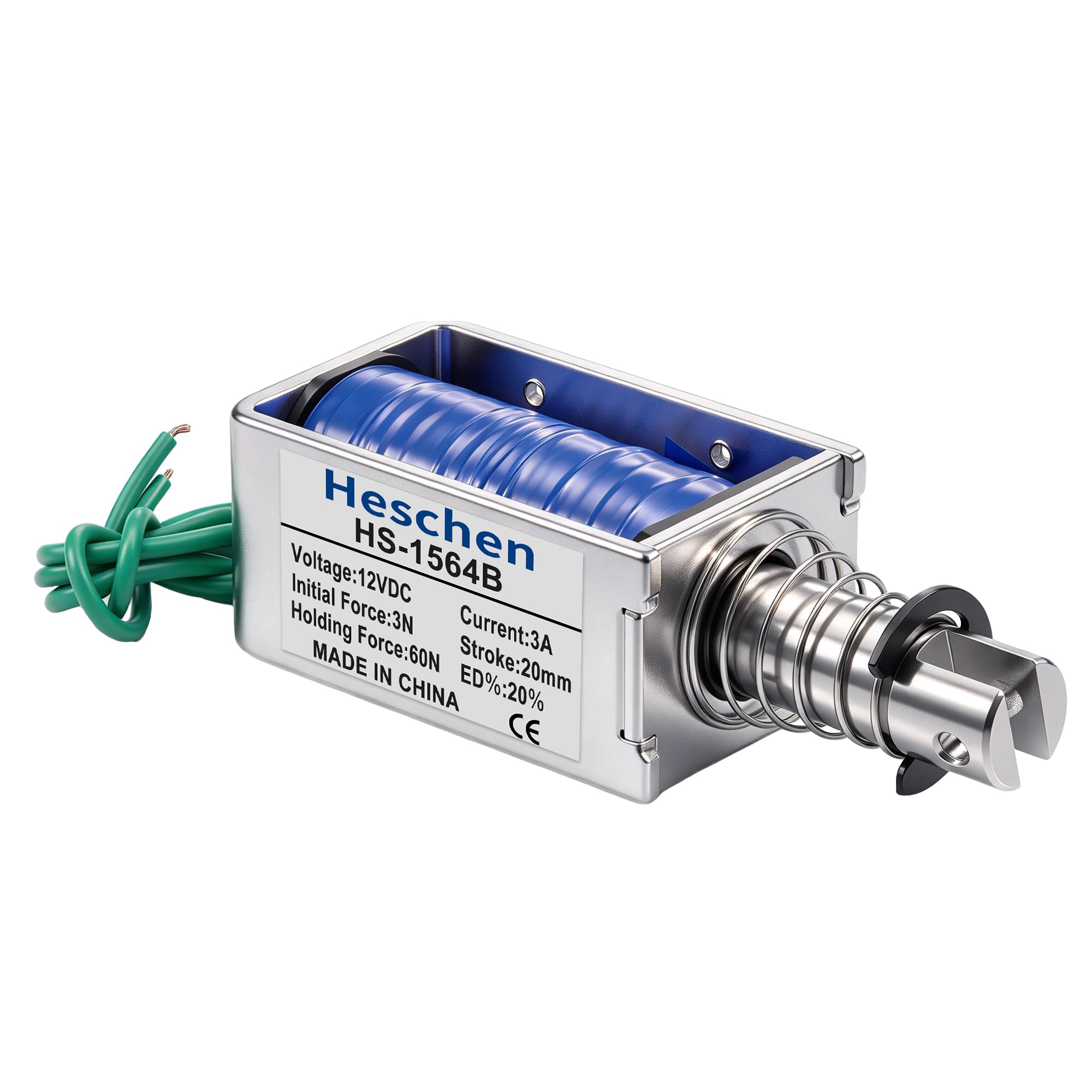
Figure 1: Heschen HS-1564B DC 12V Solenoid Electromagnet. This image shows the overall appearance of the solenoid with its silver housing, blue coil, and green wire leads.
2. Product Overview
The Heschen HS-1564B is a push-pull type, open-frame linear motion solenoid electromagnet designed for various industrial and scientific applications. It features a robust construction with a copper coil and stainless steel springs, ensuring stable operation and durability.
Key Features:
- Rated Voltage: DC 12V
- Rated Current: 3A
- Stroke: 20mm
- Initial Force: 3N
- Max Keep Force: 60N (achieved by removing the internal shim)
- Duty Cycle (ED%): 20% (Intermittent Operation)
- Type: Push-Pull, Open Frame, Linear Motion

Figure 2: Detailed view of product components. This image highlights the copper wire coil for thermal stability and electrical conductivity, stainless steel springs for low power consumption and minimal heat, an iron core to reduce friction, and a steel housing for durability and extended service life.
Applications:
This solenoid is suitable for a range of applications including:
- Automation Equipment
- Office Equipment
- Security Equipment
- Toys and Models
- Automotive & Vehicles (12V systems)
- 12V Battery Packs
- 12V DIY Control Units

Figure 3: Examples of applications for the Heschen solenoid, including automation equipment, office equipment, security systems, and toys/models.
3. Specifications
| Parameter | Value |
|---|---|
| Model Number | HS-1564B |
| Rated Voltage | DC 12V |
| Rated Current | 3A |
| Stroke | 20mm |
| Initial Force | 3N |
| Max Keep Force | 60N (without shim) |
| Holding Force (with shim) | 40N |
| Duty Cycle (ED%) | 20% |
| Material | Copper (coil), Stainless Steel (springs), Steel (housing) |
| Color | Silver with Blue Coil and Green Wire Leads |
Dimensions:

Figure 4: Detailed dimensional drawing of the Heschen HS-1564B solenoid, showing measurements in both inches and millimeters for various parts of the device.
4. Safety Information
Failure to follow these safety instructions may result in electric shock, fire, or damage to the product.
- This product is designed for DC power supply only. Never connect to AC 110V/230V household power.
- Keep away from water, moisture, flammable materials, and high-temperature environments to prevent short circuits or fire hazards.
- Do not disassemble, modify, or forcibly bend the plunger; this will damage the internal structure.
- Keep out of reach of children to avoid entrapment injuries or electric shock risks.
- If the product overheats, smokes, or makes abnormal noise during use, cut off power immediately and stop using it.
- Electromagnets heat up when energized, making them unsuitable for prolonged continuous operation. They require periodic switching on and off of power.
- Push-pull electromagnets have high power consumption during operation. Power supplies with insufficient capacity may cause them to malfunction.

Figure 5: Safety and compliance notes emphasizing DC power use, avoiding moisture, and the intermittent operation requirement.
5. Setup
Before setting up the Heschen HS-1564B solenoid, ensure you have a stable DC 12V power supply capable of providing at least 3A of current. The solenoid is designed for intermittent operation, so consider this in your circuit design.
Electrical Connection:
- Identify the two wire leads from the solenoid. These are typically green for the HS-1564B model.
- Connect one wire lead to the positive (+) terminal of your DC 12V power supply.
- Connect the other wire lead to the negative (-) terminal of your DC 12V power supply.
- It is recommended to include a switch in the circuit to control the solenoid's activation.
- Ensure all connections are secure and insulated to prevent short circuits.
Mounting:
The solenoid features mounting holes on its body for secure installation. Use appropriate screws (e.g., M3) to fix the solenoid to your desired application surface. Ensure the mounting allows for the full 20mm stroke of the plunger without obstruction.
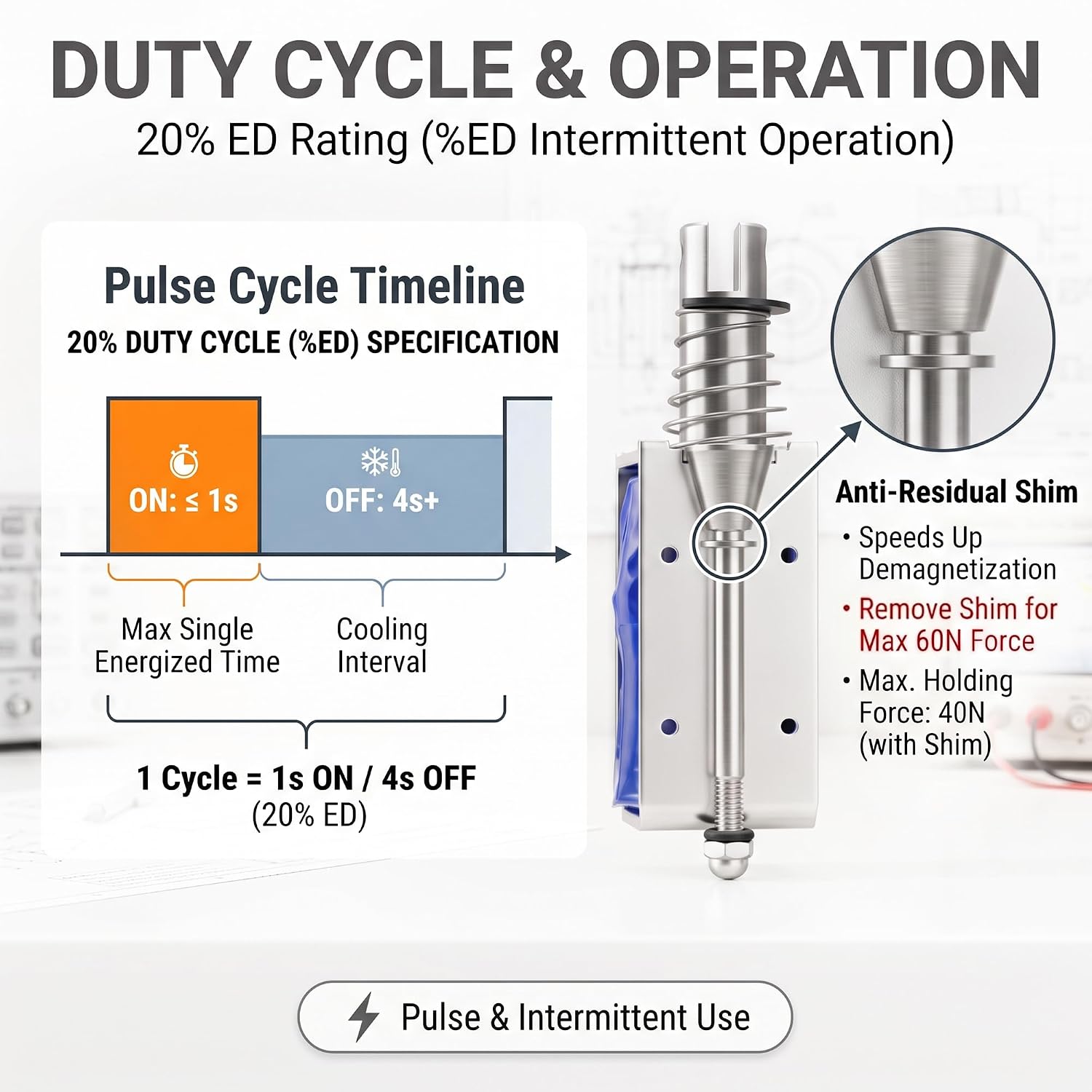
Figure 6: The solenoid showing its mounting holes, which are 4-M3, indicating four M3 screw holes for secure installation.
6. Operation
The Heschen HS-1564B solenoid operates by converting electrical energy into linear mechanical motion. When energized, the plunger retracts, and when de-energized, it extends due to the return spring.
Intermittent Operation (20% ED Rating):
This solenoid is designed for intermittent use, meaning it should not be continuously energized for extended periods. The 20% ED rating indicates that for every cycle, the solenoid can be ON for a maximum of 20% of the total cycle time. For example, if the total cycle is 5 seconds, the solenoid can be ON for 1 second and must be OFF for 4 seconds to allow for cooling.

Figure 7: Illustration of the 20% duty cycle, showing a maximum single energized time of 1 second followed by a cooling interval of 4 seconds for a 5-second cycle.
Force and Stroke Characteristics:
The solenoid provides an initial pull force of 3N at the start of its 20mm stroke. As the plunger retracts, the force increases, reaching a maximum holding force of 60N at the end of the stroke (0mm). This maximum force is achieved by removing the anti-residual shim. With the shim in place, the maximum holding force is 40N.

Figure 8: Graph illustrating the force (N) versus stroke (mm) for the HS-1564B, showing the initial pull force at 20mm and the maximum holding force at 0mm.
Demonstration Video:
Video 1: Official Heschen demonstration of the HS-1564B solenoid electromagnet in operation, showcasing its push-pull action when energized and de-energized.
7. Maintenance
The Heschen HS-1564B solenoid is designed for durability and requires minimal maintenance. However, regular checks can help ensure optimal performance and extend its lifespan.
- Cleaning: Keep the solenoid free from dust and debris. Use a dry, soft cloth to wipe the exterior. Avoid using liquids or solvents.
- Connections: Periodically inspect electrical connections to ensure they are secure and free from corrosion.
- Plunger Movement: Ensure the plunger moves freely without obstruction. Any binding or excessive friction can reduce efficiency and cause premature wear.
- Heat Management: Always adhere to the specified duty cycle to prevent overheating. Excessive heat can damage the coil insulation and reduce performance.
8. Troubleshooting
If you encounter issues with your Heschen HS-1564B solenoid, refer to the following common problems and solutions:
| Problem | Possible Cause | Solution |
|---|---|---|
| Solenoid does not activate | No power, incorrect voltage, insufficient current, loose connections, damaged coil. | Check power supply (DC 12V), verify current capacity (min 3A), inspect wiring, test coil continuity. |
| Weak or inconsistent force | Low voltage/current, mechanical obstruction, worn components. | Ensure stable 12V/3A power, clear any obstructions, check for proper plunger movement. |
| Solenoid overheats quickly | Exceeding duty cycle, continuous operation, high ambient temperature. | Adhere strictly to the 20% ED duty cycle (e.g., 1s ON / 4s OFF). Ensure adequate cooling time between activations. |
| Plunger sticks or moves slowly | Friction, debris, bent plunger, damaged spring. | Clean plunger and housing, check for physical damage, ensure proper alignment. |
9. Warranty and Support
Heschen products are manufactured to high-quality standards. For specific warranty information or technical support, please refer to the Heschen official website or contact their customer service directly. Keep your purchase receipt as proof of purchase.
For further assistance, you may visit the Heschen Store on Amazon.
Documents and downloads
Ask a question about this manual
Ask about setup, troubleshooting, compatibility, parts, safety, or missing instructions. Manuals+ will review the question and use this page’s manual context to help answer it.