
Introduction
This manual provides comprehensive instructions for the safe and efficient operation, maintenance, and troubleshooting of your SINGER 4423 Heavy Duty Sewing Machine and its compatible Extension Table. Please read this manual thoroughly before using the machine to ensure optimal performance and longevity.
Safety Instructions
- Always unplug the machine from the electrical outlet when removing covers, lubricating, or when making any other user servicing adjustments mentioned in this instruction manual.
- Keep fingers away from all moving parts. Special care is required around the sewing machine needle.
- Use the proper needle plate. The wrong plate can cause the needle to break.
- Do not pull or push fabric while stitching. This may deflect the needle, causing it to break.
- Always use the foot controller to operate the machine.
- Never operate the machine with any air openings blocked. Keep ventilation openings of the sewing machine and foot controller free from lint, dust, and loose cloth.
- This appliance is not intended for use by persons (including children) with reduced physical, sensory or mental capabilities, or lack of experience and knowledge, unless they have been given supervision or instruction concerning use of the appliance by a person responsible for their safety.
Package Contents
Your SINGER 4423 Heavy Duty Sewing Machine package typically includes the following items:
- SINGER 4423 Heavy Duty Sewing Machine
- Foot Controller
- Standard Presser Foot (All-Purpose Foot)
- Zipper Foot
- Buttonhole Foot
- Button Sewing Foot
- Seam Ripper/Lint Brush
- Needle Pack
- Bobbins
- Spool Holders
- Auxiliary Spool Pin
- Spool Pin Felt
- Screwdriver
- Soft-Sided Dust Cover
- SINGER Heavy Duty Sewing Machine Extension Table
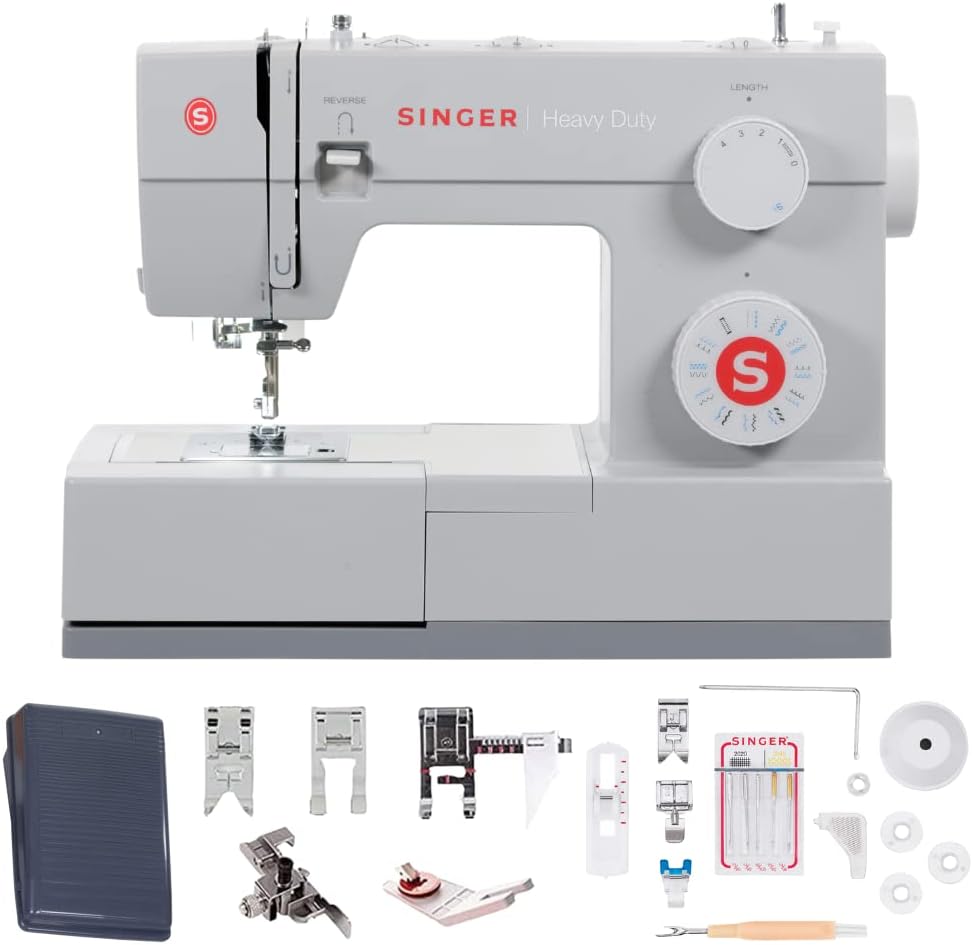
Image: SINGER 4423 Heavy Duty Sewing Machine with various presser feet, needles, bobbins, and a foot pedal.

Image: Close-up of SINGER sewing machine accessories, including different presser feet and a pack of universal needles. For more information on needles, visit https://uqr.to/hjvc.
Setup
1. Unpacking and Placement
Carefully remove the machine from its packaging. Place the machine on a stable, flat surface. Ensure there is adequate space around the machine for comfortable operation.
2. Power Connection
Connect the foot controller plug into the machine's power socket. Then, plug the power cord into a suitable electrical outlet.

Image: Rear view of the SINGER 4423 sewing machine showing the power input and foot pedal connection point.
3. Attaching the Extension Table
To attach the extension table, slide it onto the free arm of the sewing machine until it clicks securely into place. The table provides an expanded work surface, useful for larger projects.

Image: The SINGER extension table, designed to provide a larger work area for sewing projects.

Image: Top view of the SINGER extension table, featuring integrated measurement markings in inches and centimeters.
4. Threading the Machine
Proper threading is crucial for good stitch quality. Follow these steps carefully:
- Bobbin Winding: Place a spool of thread on the spool pin. Guide the thread through the bobbin winding tension disc and then around the bobbin several times. Place the bobbin onto the bobbin winder spindle and push it to the right. Press the foot controller to wind the bobbin. Stop when the bobbin is full and push the spindle to the left to disengage.
- Inserting the Bobbin: Open the bobbin cover plate. Insert the wound bobbin into the bobbin case, ensuring the thread unwinds in the correct direction (usually counter-clockwise). Guide the thread through the tension spring and out the bobbin case opening. Close the bobbin cover.
- Upper Threading: Raise the needle to its highest position using the handwheel. Place a spool of thread on the spool pin. Guide the thread through the upper thread guide, down into the tension discs, up and through the take-up lever, and then down to the needle. Thread the needle from front to back.
- Bringing Up the Bobbin Thread: Hold the upper thread lightly. Turn the handwheel towards you to lower and then raise the needle. The upper thread will catch the bobbin thread, bringing a loop up through the needle plate hole. Pull both threads under the presser foot and towards the back of the machine.
Operating the Machine
1. Stitch Selection
The SINGER 4423 offers 97 stitch applications. Use the stitch selector dial on the front of the machine to choose your desired stitch pattern. Refer to the stitch chart on the machine for available options.

Image: Close-up view of the SINGER 4423 sewing machine's stitch selector dial, showing various stitch patterns.
2. Stitch Length and Width Adjustment
Adjust the stitch length using the upper dial and stitch width using the lower dial, as indicated on the machine. Experiment with different settings on a scrap piece of fabric to achieve the desired result for your project.
3. Using the Foot Pedal
The foot pedal controls the sewing speed. Press gently for slower speeds and apply more pressure for faster sewing. Release the pedal to stop.
4. Reverse Sewing
To reinforce stitches at the beginning and end of a seam, press and hold the reverse lever (usually located on the front of the machine) while sewing. Release the lever to resume forward stitching.
5. Needle and Presser Foot Replacement
Always use the correct needle type and size for your fabric. To replace the needle, loosen the needle clamp screw, remove the old needle, insert the new needle with the flat side facing the back, and tighten the screw. To change presser feet, raise the needle and presser foot lifter, then press the release button on the back of the presser foot holder. Attach the new foot by aligning it and lowering the presser foot lifter until it snaps into place.
Maintenance
1. Cleaning
Regular cleaning helps maintain your machine's performance.
- Lint Removal: Unplug the machine. Remove the needle, presser foot, and needle plate. Use the provided lint brush to remove lint and dust from the bobbin area and feed dogs.
- Surface Cleaning: Wipe the exterior of the machine with a soft, dry cloth. Do not use harsh chemicals or abrasive cleaners.
2. Oiling
Your SINGER 4423 Heavy Duty Sewing Machine is designed to require minimal oiling. Refer to the full instruction manual for specific oiling points if necessary, or consult a qualified service technician. Over-oiling can attract lint and cause issues.
3. Storage
When not in use, cover the machine with the provided dust cover to protect it from dust and debris. Store in a dry, stable environment.
Troubleshooting
This section addresses common issues you might encounter. For more complex problems, consult a qualified service technician.
| Problem | Possible Cause | Solution |
|---|---|---|
| Skipped Stitches | Incorrect needle, bent needle, improper threading, wrong needle size for fabric. | Replace needle, re-thread machine, use correct needle for fabric type. |
| Thread Breaking | Improper threading, tension too tight, damaged needle, poor quality thread. | Re-thread machine, adjust tension, replace needle, use good quality thread. |
| Fabric Puckering | Tension too tight, incorrect stitch length, wrong presser foot. | Adjust tension, increase stitch length, use appropriate presser foot. |
| Machine Not Starting | Not plugged in, power switch off, foot controller not connected. | Check power connections, ensure switch is on. |
Specifications
- Model Number: 4423
- Brand: SINGER
- Item Weight: 14.5 Pounds
- Material: Metal, Stainless Steel
- Power Source: Corded Electric
- Stitch Applications: 97
- Color: Grey
Warranty and Support
For warranty information and customer support, please refer to the warranty card included with your product or visit the official SINGER website. Keep your purchase receipt as proof of purchase.


