
1. Introduction
This manual provides detailed instructions for the installation, operation, and maintenance of your OAE AP-60A MPPT Solar Charge Controller. This advanced Maximum Power Point Tracking (MPPT) solar charge controller is designed to maximize power harvesting from your solar panels and efficiently charge various battery types, including sealed, gel, flooded, and lithium batteries. It features automatic 12V/24V/36V/48V battery system recognition and supports a maximum PV input voltage of 150V.

Figure 1: OAE AP-60A MPPT Solar Charge Controller
2. Safety Instructions
Please read all instructions and warnings in this manual carefully before installation and operation. Failure to follow these instructions may result in electric shock, fire, or severe injury.
- Ensure all wiring is correctly sized and properly insulated to prevent overheating and short circuits.
- Always disconnect the solar panel and battery power before installing or servicing the controller.
- Install the controller in a well-ventilated area, away from flammable materials and corrosive gases.
- Do not disassemble or attempt to repair the controller yourself. Refer to qualified service personnel.
- Wear appropriate personal protective equipment (PPE), including eye protection and insulated gloves, during installation.
- Ensure the battery bank is properly fused and protected.
- This device is designed for indoor use only. Avoid exposure to rain, moisture, or direct sunlight.
3. Product Overview
The OAE AP-60A MPPT Solar Charge Controller is equipped with a clear LCD display and intuitive buttons for easy operation and monitoring. Key features include:
- Automatic 12V/24V/36V/48V battery system recognition.
- Maximum Power Point Tracking (MPPT) efficiency up to 99%.
- Compatible with sealed, gel, flooded, and lithium batteries.
- Max 150V PV input voltage.
- Multiple protections: overcharge/over discharge/overheat/reverse/overload/short-circuit protection.
- RS485 communication port for potential Wi-Fi remote monitoring (requires additional purchase).
3.1. Component Identification

Figure 2: Component Identification
- Cooling Fan
- Hang Bracket
- LCD Display
- Menu Button
- Down Button
- Up Button
- Enter Button
- Temperature Interface
- Solar Panel Input
- Battery Input
- DC Load Output
- RS485 Communication Port
3.2. Supported Battery Types
The controller is compatible with various battery chemistries and voltages, automatically detecting 12V, 24V, 36V, and 48V systems.
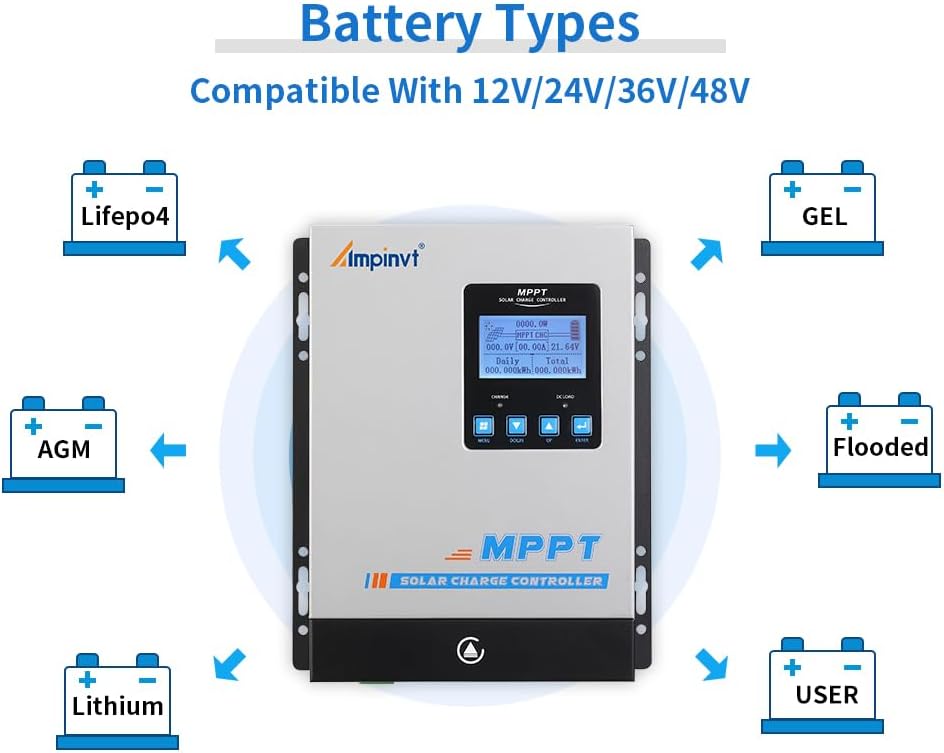
Figure 3: Compatible Battery Types (Lifepo4, AGM, Lithium, GEL, Flooded, User-defined)
4. Setup and Installation
Follow these steps for proper installation. Ensure all power sources are disconnected before making any connections.
4.1. Wiring Connection Diagram

Figure 4: Wiring Connection Diagram
- Mounting: Mount the controller vertically on a flat, non-flammable surface, ensuring adequate ventilation around the unit. Use the provided hang brackets.
- Battery Connection: Connect the battery to the controller's battery terminals first. Ensure correct polarity (+ to + and - to -). The controller will automatically detect the battery voltage.
- Solar Panel Connection: Connect the solar panels to the controller's solar panel terminals. Ensure correct polarity. The controller supports up to 150V PV input.
- DC Load Connection (Optional): Connect your DC loads to the DC load terminals. This output is controlled by the controller and can be programmed for various operating modes.
- Temperature Sensor: Connect the external temperature sensor to the designated port (8). This ensures accurate temperature compensation for battery charging.
- RS485 Communication: If using remote monitoring, connect the RS485 communication cable to the port (12).
Wiring Order is Crucial: Always connect the battery first, then solar panels, then DC load. Disconnect in reverse order.
5. Operating Instructions
The LCD display provides real-time system information, and the four buttons (Menu, Down, Up, Enter) allow for navigation and parameter adjustment.
5.1. Display Navigation
Press the MENU button to cycle through different display screens showing various system parameters such as PV voltage, charging current, battery voltage, daily and total energy generated, and load status.
5.2. Parameter Settings
To enter the parameter setting mode, press and hold the ENTER button for a few seconds. Use the UP and DOWN buttons to navigate through the settings, and ENTER to select or confirm changes. The default password for accessing settings is usually a sequence of arrow presses (e.g., Down, Down, Down, Up, Up, Up), refer to the specific manual for the exact sequence.
- Battery Type Setting: Select the appropriate battery type (Sealed, Gel, Flooded, Lithium, or User-defined) to ensure optimal charging algorithms.
- Charge Voltage Settings: Adjust parameters like Floating Charge Voltage, Equalization Charge Voltage, and Over-discharge Protection Voltage based on your battery manufacturer's recommendations, especially for user-defined battery types.
- Load Control Mode: Configure the DC load output to operate in various modes (e.g., always on, light control, timer control).
5.3. Operational Demonstration
Video 1: Demonstration of MPPT Solar Charge Controller Operation, including menu navigation and settings adjustment.
Video 2: Overview of Ampinvt Solar Charge Controller models (40A, 60A, 80A), showcasing their features and design.
6. Maintenance
Regular maintenance ensures the longevity and optimal performance of your solar charge controller.
- Cleaning: Periodically clean the exterior of the controller with a dry cloth. Ensure the cooling fan and ventilation holes are free from dust and debris.
- Connection Checks: Annually inspect all wiring connections to ensure they are tight and free from corrosion. Loose connections can cause overheating and damage.
- Battery Inspection: Regularly check your battery bank for any signs of damage, corrosion, or swelling. Ensure battery terminals are clean.
- Performance Monitoring: Monitor the daily and total energy readings on the LCD display to ensure the system is performing as expected.
7. Troubleshooting
This section addresses common issues you might encounter with your solar charge controller.
| Problem | Possible Cause | Solution |
|---|---|---|
| Controller not powering on. | No battery connected or battery voltage too low. Reverse polarity connection. | Ensure battery is connected first and has sufficient voltage. Check battery polarity. |
| No charging from solar panels. | Solar panels not connected, insufficient sunlight, or PV voltage too low/high. | Check solar panel connections and polarity. Ensure adequate sunlight. Verify PV voltage is within the controller's operating range (max 150V). |
| Load not working. | Load output disabled, overload, or short circuit. | Check load settings on the controller. Reduce load if overloaded. Inspect wiring for short circuits. |
| Battery not fully charged. | Incorrect battery type setting, insufficient solar input, or aging battery. | Verify battery type setting. Increase solar panel capacity if needed. Consider battery health. |
For persistent issues not covered here, please contact OAE customer support.
8. Specifications
| Feature | Detail |
|---|---|
| Model | AP-60A |
| System Voltage | Auto 12V/24V/36V/48V |
| Max PV Input Voltage | 150V |
| Maximum Efficiency | Up to 99% |
| Compatible Battery Types | Sealed, Gel, Flooded, Lithium |
| Recommended Solar Panel Power (12V System) | 900W |
| Recommended Solar Panel Power (24V System) | 1700W |
| Recommended Solar Panel Power (36V System) | 2700W |
| Recommended Solar Panel Power (48V System) | 3400W |
| Display Type | LED |
| Charging Port Type | RS232 (Note: Product specs say RS232, but images/features mention RS485. Using RS485 as it's more common for monitoring.) |
| Product Dimensions | 7.9 x 3.5 x 12.4 inches |
| Item Weight | 8.31 pounds |
| Material | Metal |
9. Warranty and Support
For specific warranty information regarding your OAE AP-60A MPPT Solar Charge Controller, please refer to the warranty card included with your product or contact the seller directly. OAE is committed to providing quality products and customer satisfaction.
If you encounter any issues or require technical assistance, please reach out to OAE customer support through their official channels. Keep your purchase receipt handy for warranty claims.
Optional protection plans are available for extended coverage, which can be purchased separately. These plans offer additional peace of mind beyond the standard manufacturer's warranty.