
1. Introduction and Overview
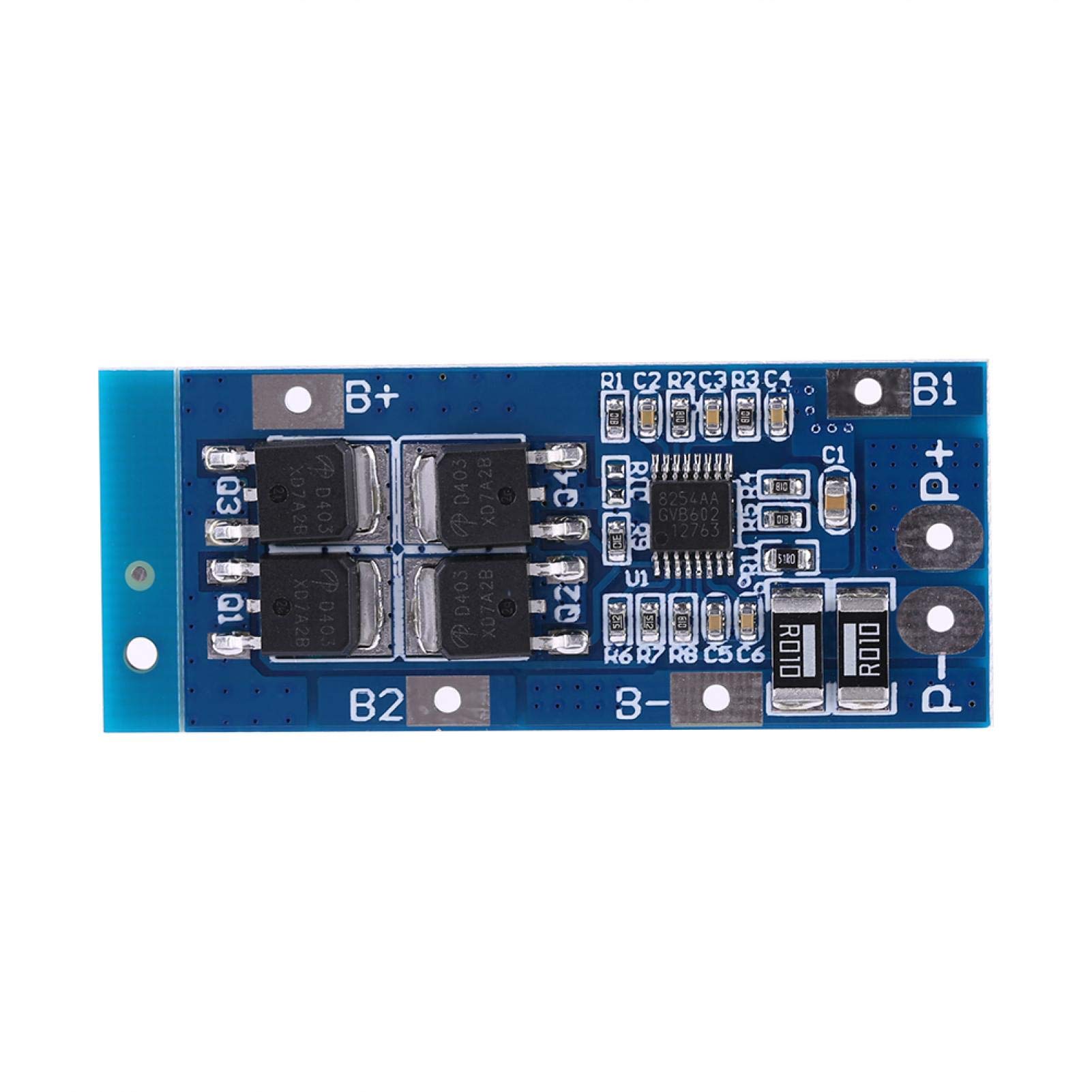
The TenNuoDa HX-3S-D01 is a Li-ion battery protection board designed for 3-series lithium battery packs, typically 11.1V. This board provides essential protection functions to ensure the safe and efficient operation of your battery pack. It is suitable for various applications, including electric cars, electric power assistant cars, skateboard cars, and inverters.
Key features include:
- Overcharge Protection: Prevents batteries from being charged beyond their safe voltage limit.
- Over-discharge Protection: Safeguards batteries from being discharged below their minimum safe voltage.
- Short Circuit Protection: Automatically cuts off power in case of a short circuit.
- Over-current Protection: Protects against excessive current draw.
- Balance Function: Helps stabilize individual cell voltages within the battery pack, improving overall performance and lifespan.
- Low Quiescent Current: Consumes less than 50uA, minimizing power drain when idle.
- Temperature Control Protection: Enhances safety and reliability.
- Aluminum Heat Sink: Aids in efficient heat dissipation.
- Protective Coating: Surface is coated with protection glue against water, moisture, and static.
2. Setup and Wiring
Proper wiring is critical for the correct function and safety of the HX-3S-D01 protection board. Refer to the diagram below for connection details.
Wiring Instructions:
- Connect the B- terminal of the protection board to the negative terminal of the first battery cell (Battery 1 -).
- Connect the B1 terminal of the protection board to the positive terminal of the first battery cell (Battery 1 +) and the negative terminal of the second battery cell (Battery 2 -).
- Connect the B2 terminal of the protection board to the positive terminal of the second battery cell (Battery 2 +) and the negative terminal of the third battery cell (Battery 3 -).
- Connect the B+ terminal of the protection board to the positive terminal of the third battery cell (Battery 3 +).
- The P+ terminal serves as the positive output/charge input.
- The P- terminal serves as the negative output/charge input.
For charging, ensure the charging voltage is 12.6V to 13V for proper activation and operation of the protection board.

3. Operating Principles
Once correctly wired and connected to a 3-series Li-ion battery pack, the HX-3S-D01 protection board continuously monitors the battery's state. It operates by:
- Monitoring Cell Voltages: Ensures no individual cell exceeds the overcharge voltage range (4.25-4.35V) or drops below the over-discharge voltage range (2.3-3.0V).
- Current Management: Limits the operating current to 15A and transient current to 15-20A to prevent damage from excessive loads.
- Automatic Protection: In the event of an overcharge, over-discharge, over-current, or short circuit condition, the board will automatically activate its protection mechanism, disconnecting the battery from the load or charger.
- Self-Recovery: Protection conditions, such as short circuits, are designed for delayed self-recovery once the fault is removed. Other protections will automatically cancel once the conditions return to safe operating parameters.
4. Maintenance
To ensure the longevity and reliable performance of your HX-3S-D01 protection board, follow these maintenance guidelines:
- Keep Dry: Avoid exposure to water, moisture, and high humidity, despite its protective coating.
- Temperature Control: Operate and store the board within the specified temperature ranges (-40~+50℃ working, -40~+80℃ storage).
- Inspect Connections: Periodically check all wiring connections to ensure they are secure and free from corrosion. Loose connections can lead to poor performance or damage.
- Cleanliness: Keep the board free from dust and debris. Use a soft, dry brush or compressed air for cleaning if necessary.
- Avoid Physical Damage: Handle the board carefully to prevent bending, impacts, or other physical stresses that could damage components.
5. Troubleshooting
If you encounter issues with your HX-3S-D01 protection board, consider the following troubleshooting steps:
- No Output/Charging Issue:
- Verify all wiring connections (B+, B-, B1, B2, P+, P-) are correct and secure according to the wiring diagram.
- Check the voltage of each individual battery cell. If any cell is outside the safe voltage range (e.g., severely over-discharged), the board may remain in a protected state.
- Ensure the charging voltage applied to P+ and P- is within the specified range (12.6V - 13V). The board requires this voltage to activate charging.
- Protection Triggering Frequently:
- Over-current: Reduce the load connected to the board. The maximum operating current is 15A. If your application requires more, this board may not be suitable.
- Over-discharge: Your battery pack may be reaching its low voltage limit too quickly. Consider a higher capacity battery or reduce discharge rates.
- Overcharge: Ensure your charger's output voltage is not exceeding 13V.
- Short Circuit: Immediately disconnect all loads and inspect for any short circuits in your wiring or connected devices. The short circuit protection has a delayed self-recovery once the short is removed.
- Board Overheating:
- Ensure adequate ventilation around the board.
- Verify that the operating current does not consistently exceed 15A.
The protection board is designed to automatically cancel protection once the abnormal conditions are resolved. If issues persist after checking these points, consult the support information.
6. Specifications
Detailed technical specifications for the TenNuoDa HX-3S-D01 Li-ion Battery Protection Board:
| Specification | Value |
|---|---|
| Model | HX-3S-D01 |
| Dimensions (L x W x H) | 51 x 23 x 4 mm (2.01 x 0.91 x 0.16 inches) |
| Over Voltage Range | 4.25-4.35V ±0.05V |
| Over Discharge Voltage Range | 2.3-3.0V ±0.05V |
| Maximum Operating Current | 15A |
| Maximum Transient Current | 15-20A |
| Quiescent Current | < 50uA |
| Internal Resistance | < 150mΩ |
| Charging Voltage | 12.6V - 13V |
| Working Temperature | -40~+50℃ |
| Storage Condition | -40~+80℃ |
| Effective Life | >30000h |
| Short Circuit Protection | Yes, delayed self-recovery |
| Included Components | 1 pcs S-8254AA protection chip, 4 pcs D403*4 |
| Item Weight | 0.352 ounces |

7. Warranty and Support
TenNuoDa is committed to providing quality products and customer satisfaction. For any questions, concerns, or custom requirements regarding your HX-3S-D01 Li-ion Battery Protection Board, please contact our customer service team.
We offer round-the-clock customer service to assist you. Please refer to your purchase documentation or the seller's contact information for specific support channels.