
KATSU KATSU KS01
KATSU Japanese Folding Pocket Knife User Manual
Model: KATSU KS01
1. Product Overview
The KATSU Japanese Folding Pocket Knife, Model KS01, is a meticulously designed tool for various indoor and outdoor activities such as camping, fishing, and hiking. Developed in partnership with Nemoto Knives, a renowned Japanese designer, this knife features a durable AUS-8 steel blade and an anodized aluminum handle with carbon fiber accents, ensuring both performance and comfort.
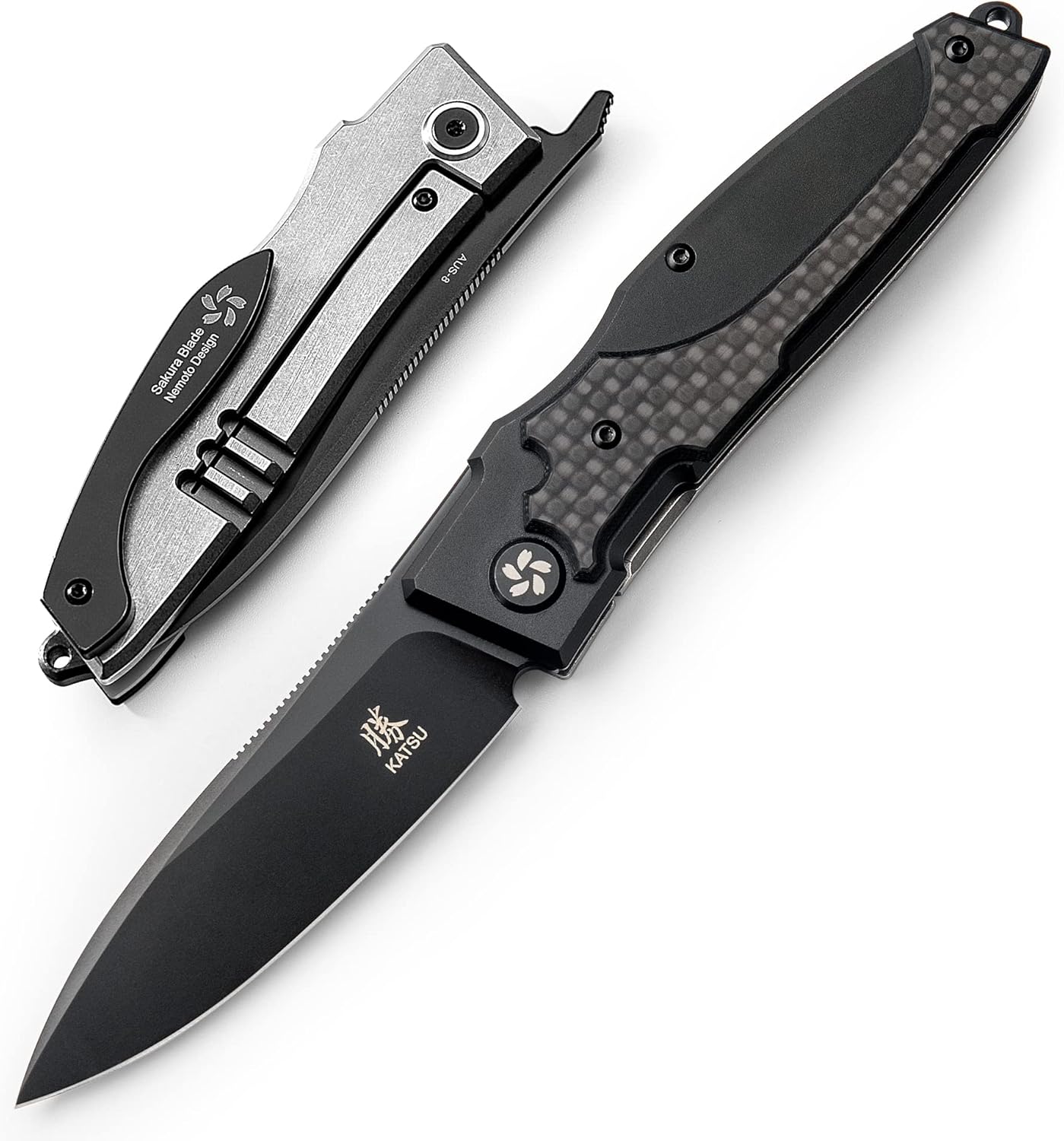
Figure 1.1: The KATSU Japanese Folding Pocket Knife in both open and folded configurations, showcasing its sleek design and Nemoto branding.

Figure 1.2: Visual representation of the knife's dimensions, indicating a 3.5-inch (9cm) blade and an overall length of 7.8 inches (20cm) when open, and 4.3 inches (11cm) when folded.

Figure 1.3: Detailed view of the AUS-8 Stainless Steel Blade, highlighting its properties of corrosion resistance, wear resistance, and good resilience.

Figure 1.4: Demonstrations of the knife's versatility, including sharpening on a strop, cutting through material, and peeling fruit, illustrating its utility for various tasks.

Figure 1.5: Close-up of key features: (1) Non-Slip Stripe on the blade for improved traction, (2) Aluminum & Carbon Fiber Handle offering excellent grip, and (3) Black Titanium Coated Pocket Clip for lightweight and high-strength carrying.
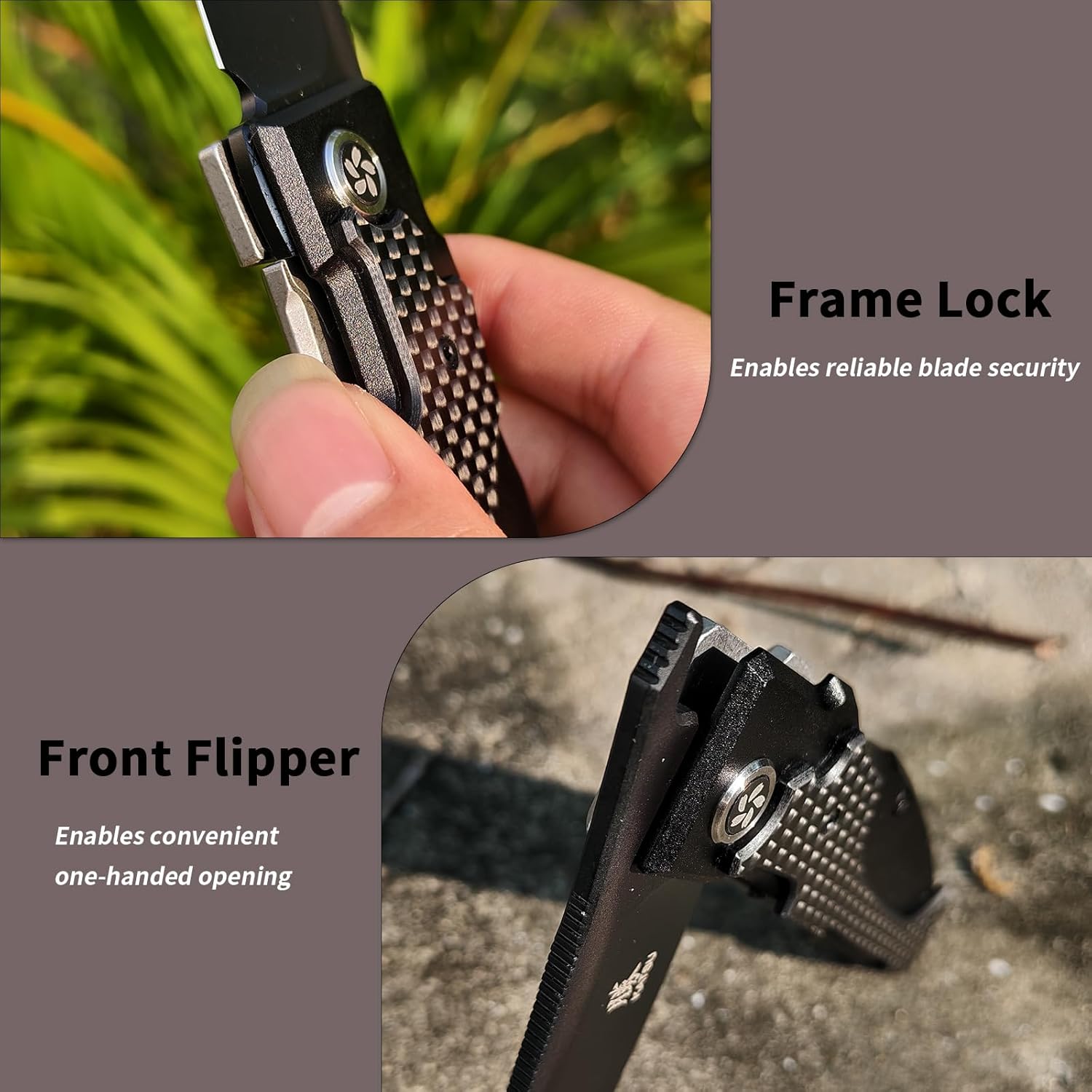
Figure 1.6: Illustration of the Frame Lock mechanism, ensuring reliable blade security, and the Front Flipper, enabling convenient one-handed opening.

Figure 1.7: The deep carry pocket clip allows for easy access when needed. The image also shows the heavy-duty waterproof case with pre-cut foam, designed to hold the knife securely for transport or display.
2. Setup and First Use
2.1 Unboxing and Initial Inspection
Upon receiving your KATSU Japanese Folding Pocket Knife, carefully open the packaging. The knife comes secured in a heavy-duty waterproof case with pre-cut foam. Remove the knife from its case and inspect it for any visible damage or manufacturing defects. Ensure all components, including the blade, handle, pocket clip, and locking mechanism, are intact and functioning correctly.
2.2 Understanding the Opening Mechanism
The KATSU KS01 features a Japanese Style Thumb Opening Lever and a Ball Bearing System, along with a Front Flipper, designed for smooth, one-handed operation. Familiarize yourself with these mechanisms before attempting to open the blade.
- Thumb Opening Lever: Apply gentle pressure to the thumb stud located on the blade and push outwards to deploy the blade.
- Front Flipper: Position your index finger on the flipper tab protruding from the spine of the handle when the knife is closed. Apply a quick, downward pressure to "flip" the blade open.
- The Ball Bearing System ensures a fluid and rapid blade deployment.
2.3 Safety Precautions
Always handle the knife with extreme care. The blade is sharp and can cause serious injury if mishandled. Keep fingers clear of the blade path during opening and closing. Store the knife in its protective case when not in use and out of reach of children.
3. Operating Instructions
3.1 Opening the Blade
To open the blade, use either the thumb opening lever or the front flipper. Ensure a firm grip on the handle. For the thumb lever, apply steady pressure with your thumb until the blade fully extends and the frame lock engages with an audible click. For the front flipper, a swift, deliberate push will deploy the blade. Always ensure the blade is fully locked open before use.
3.2 Closing the Blade
The KATSU KS01 utilizes a Frame Lock mechanism for secure blade retention. To close the blade, locate the frame lock bar on the handle. Press the lock bar inwards to disengage it from the blade tang. Once disengaged, carefully fold the blade back into the handle channel. Always keep fingers clear of the blade's path during closing. This mechanism typically requires two hands for safe closure.
3.3 Proper Grip and Handling
Maintain a secure and comfortable grip on the anodized aluminum and carbon fiber handle. The ergonomic design provides excellent feel and grip. When cutting or performing tasks, apply appropriate pressure and always cut away from your body. The non-slip stripes on the blade spine offer additional traction for precise control.
3.4 Recommended Uses
This folding pocket knife is designed for a variety of general-purpose tasks and outdoor activities. Its robust construction makes it suitable for:
- Camping and outdoor survival tasks.
- Fishing and preparing lines or bait.
- Hiking and trail maintenance.
- Everyday Carry (EDC) for utility tasks.
4. Maintenance and Care
Proper maintenance ensures the longevity and optimal performance of your KATSU folding knife.
4.1 Cleaning
After each use, especially after exposure to dirt, moisture, or corrosive materials, clean your knife. The manufacturer recommends Hand Wash Only. Use mild soap and water to clean the blade and handle. Rinse thoroughly and dry immediately with a clean cloth to prevent rust and water spots. Pay special attention to the pivot area and locking mechanism to remove any debris.
4.2 Lubrication
The ball bearing system benefits from occasional lubrication to maintain its smooth action. Apply a small drop of high-quality knife oil or light machine oil to the pivot area. Open and close the blade several times to distribute the lubricant evenly. Wipe off any excess oil.
4.3 Sharpening
The AUS-8 steel blade is designed for excellent edge retention. When sharpening becomes necessary, use a whetstone or a high-quality sharpening system. Maintain the original blade angle for best results. Avoid using manual drag-through countertop sharpeners, as these can damage the blade's edge and geometry over time.
4.4 Storage
Store your knife in a dry environment. The included heavy-duty waterproof case with pre-cut foam is ideal for safe and secure storage, protecting the knife from environmental elements and accidental damage.
5. Troubleshooting
- Blade Action is Stiff or Not Smooth:
Over time, the knife's action may feel stiff or less smooth, especially during initial use. This can be due to manufacturing tolerances or accumulated debris. Apply a small amount of lubricant to the pivot area (refer to Section 4.2) and work the blade open and closed repeatedly to break it in and distribute the oil. If debris is suspected, clean the pivot thoroughly.
- Blade Does Not Seem Sharp Enough:
While the knife arrives sharp, individual preferences for sharpness vary. If the blade does not meet your sharpness expectations, it can be sharpened using a whetstone (refer to Section 4.3). Ensure you use proper sharpening techniques to achieve and maintain a keen edge.
- Frame Lock Not Engaging Fully:
Ensure no debris is obstructing the frame lock mechanism. Clean the area thoroughly. If the issue persists, contact customer support.
6. Specifications
| Feature | Detail |
|---|---|
| Brand | KATSU |
| Model Name | KATSU KS01, AUS-8 Steel Blade & Anodized Aluminum Handle, Sakura Blade Nemoto Design |
| Blade Material | AUS-8 Steel (Black Titanium Coated) |
| Blade Length | 3.5 Inches |
| Handle Material | Anodized Aluminium with Carbon Fiber Protector |
| Special Features | Pocket Clip, Waterproof Case, Folding, Japanese Style Thumb Opening Lever, Ball Bearing System, Front Flipper |
| Item Weight | 8.8 Ounces |
| Recommended Uses | Camping, Fishing, Hiking, EDC |
| Product Care Instructions | Hand Wash Only |
| Hand Orientation | Ambidextrous |
7. Warranty Information
Specific warranty details for the KATSU Japanese Folding Pocket Knife are not provided in the product information. For any warranty-related inquiries, please refer to the seller's policy or contact KATSU directly through their official channels.
8. Customer Support
For further assistance, questions, or concerns regarding your KATSU Japanese Folding Pocket Knife, please visit the official KATSU Store on Amazon or contact the seller directly through the Amazon platform. You can find the KATSU Store at: KATSU Store.
Ask a question about this manual
Ask about setup, troubleshooting, compatibility, parts, safety, or missing instructions. Manuals+ will review the question and use this page’s manual context to help answer it.