
1. Introduction
The Renogy Suntree DC Miniature Circuit Breaker is engineered to safeguard DC electrical installations from overloads and short circuits. It incorporates both thermal and magnetic tripping mechanisms for reliable protection. Upon detecting a fault, the circuit breaker automatically interrupts the electrical circuit, preventing potential damage to wiring and reducing fire hazards. This device can also be manually operated to disconnect the circuit for maintenance purposes without sustaining damage, even under its full rated load. Its design allows for reversible connection and bidirectional current flow.

Image 1: Renogy Suntree 10 Amp Single-Pole DC Circuit Breaker, showing its compact design.
2. Safety Information
- Always disconnect power before installing or servicing the circuit breaker.
- Installation should be performed by qualified personnel familiar with DC electrical systems and local electrical codes.
- Ensure proper wire sizing and connections to prevent overheating and ensure effective protection.
- Do not use the circuit breaker in environments exceeding its specified operating conditions (temperature, humidity).
- Verify the circuit breaker's current rating matches the requirements of your application.
3. Product Overview
3.1 Key Features
- Overload and Short Circuit Protection: Equipped with both thermal and magnetic tripping mechanisms.
- Manual Disconnection: Can be manually opened for system maintenance without damage.
- Bidirectional Current Flow: Designed for reversible connection, allowing wiring in either direction.
- Clear Indication: Built-in indicator window shows the contact position (ON/OFF).
- Easy Installation: Buckle design for quick mounting on standard DIN rails.
- Durability: Designed for long-term use with high mechanical and electrical life cycles.
3.2 Dimensions and Weight

Image 2: Product dimensions (3.2 x 3 x 0.7 inches) and weight (4.2 oz) of the Renogy Suntree DC Circuit Breaker.
3.3 Certifications
The Renogy Suntree DC Circuit Breaker holds the following certifications, ensuring compliance with international safety and quality standards:

Image 3: Certifications displayed for the circuit breaker, including CE, RoHS, CB, TUV, and SAA.
4. Specifications
| Specification | Value |
|---|---|
| Brand | Renogy |
| Model Number | SUNDCCB10MN1P |
| Current Rating | 10 Amps |
| Circuit Breaker Type | Standard |
| Mounting Type | DIN Rail Mount |
| Number Of Poles | 1 |
| Material | Copper |
| Item Weight | 3.94 ounces |
| Product Dimensions | 3.2 x 3 x 0.7 inches |
| Included Components | 10A 1P DC Miniature Circuit Breaker |
4.1 Sizing Tips
Proper sizing of your circuit breaker is crucial for safety and optimal performance. Use the following guidelines:
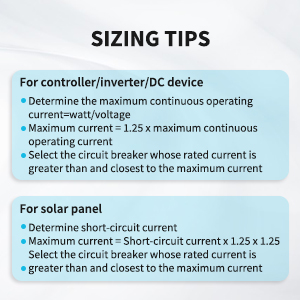
Image 4: Visual guide for calculating the appropriate circuit breaker size for DC devices and solar panels.
- For Controller/Inverter/DC Device:
- Determine the maximum continuous operating current (current = watt/voltage).
- Calculate maximum current = 1.25 x maximum continuous operating current.
- Select a circuit breaker whose rated current is greater than and closest to the calculated maximum current.
- For Solar Panel:
- Determine the short-circuit current.
- Calculate maximum current = Short-circuit current x 1.25 x 1.25.
- Select a circuit breaker whose rated current is greater than and closest to the calculated maximum current.
5. Setup and Installation
The Renogy Suntree DC Circuit Breaker is designed for quick and secure installation on standard DIN rails, commonly found in circuit breaker boxes and PV combiner boxes.
5.1 Mounting on DIN Rail
- Ensure all power to the electrical system is disconnected before installation.
- Locate the DIN rail within your circuit breaker or PV combiner box.
- Align the circuit breaker's buckle with the DIN rail.
- Press the circuit breaker firmly onto the DIN rail until the buckle clicks into place, securing the unit.

Image 5: Step-by-step illustration of attaching the circuit breaker to a DIN rail using its buckle mechanism.
5.2 Wiring Connections
The circuit breaker supports reversible connections and bidirectional current. Connect your DC positive and negative wires to the designated terminals.

Image 6: Illustration of connecting the positive and negative wires to the circuit breaker terminals.
- Ensure all connections are tight and secure to prevent loose contacts and potential arcing.
- Observe correct polarity for your DC system, even though the breaker supports bidirectional current, consistent wiring practices are recommended.
6. Operating Instructions
The circuit breaker operates automatically to protect your system and can also be manually controlled.
6.1 Automatic Protection
In the event of an overload or short circuit, the internal thermal or magnetic mechanism will trip, automatically moving the switch to the OFF position and disconnecting the circuit. This action protects connected devices and wiring from damage.
6.2 Manual Operation
- To turn the circuit ON, push the switch lever upwards.
- To turn the circuit OFF, pull the switch lever downwards.
- The circuit breaker can be manually switched OFF for maintenance or system isolation.
6.3 Contact Position Indicator
A built-in indicator window provides a visual confirmation of the circuit breaker's status:
- Green Indicator: Circuit is ON.
- Red Indicator: Circuit is OFF.

Image 7: Visual representation of the ON (green) and OFF (red) indicator window on the circuit breaker.
7. Maintenance
The Renogy Suntree DC Circuit Breaker requires minimal maintenance. Regular visual inspections are recommended.
- Resetting After Trip: If the circuit breaker trips due to an overload or short circuit, identify and resolve the fault in the electrical system first. Once the fault is cleared, simply push the switch lever back to the ON position to reset the breaker. The breaker is designed to be reset without damage.
- Cleaning: Keep the exterior of the circuit breaker clean and free from dust and debris. Use a dry, soft cloth for cleaning. Do not use liquid cleaners or solvents.
- Inspection: Periodically inspect the terminals for any signs of corrosion or loose connections. Ensure the housing is intact and free from cracks or damage.
7.1 Durability
The circuit breaker is built for durability, offering a long operational life:
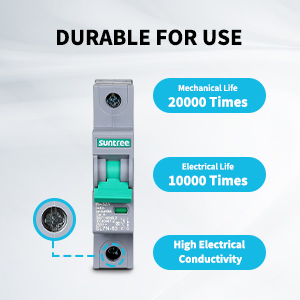
Image 8: Details on the mechanical life (20,000 operations) and electrical life (10,000 operations) of the circuit breaker, highlighting its high electrical conductivity.
8. Troubleshooting
If the circuit breaker trips frequently or fails to operate as expected, consider the following:
- Frequent Tripping: This often indicates an overload or a short circuit in the connected system.
- Check the load connected to the circuit breaker to ensure it does not exceed the 10 Amp rating.
- Inspect wiring for any signs of damage, short circuits, or loose connections.
- Ensure the circuit breaker is correctly sized for the application (refer to Section 4.1 Sizing Tips).
- Breaker Does Not Reset: If the breaker does not stay in the ON position after being reset, a persistent fault (overload or short circuit) is likely still present. Do not force the breaker ON. Investigate and resolve the underlying issue.
- No Power to Circuit: If the breaker is ON but there is no power, check all connections for continuity and ensure the power source is active.
If issues persist, consult a qualified electrician or contact Renogy customer support for assistance.
9. Warranty and Support
For warranty information, technical support, or service inquiries, please refer to the official Renogy website or contact their customer service department. Keep your purchase receipt and model number (SUNDCCB10MN1P) handy when contacting support.
Renogy Official Website: www.renogy.com


