
1. Introduction
This manual provides essential information for the proper installation, operation, and maintenance of your Hobbywing EZRUN 4274SL Sensorless Brushless Motor (2200kV). Please read this manual thoroughly before using the product to ensure optimal performance and safety.
The EZRUN 4274SL is a high-performance sensorless brushless motor designed for 1/8th scale RC vehicles, offering robust power and efficiency.
2. Safety Instructions
Always observe the following safety precautions to prevent injury or damage to the product and surrounding environment:
- Ensure all connections are secure and correctly polarized before applying power. Incorrect wiring can cause damage.
- Avoid contact with rotating parts during operation. Keep fingers, hair, and loose clothing away from the motor.
- Do not operate the motor in wet conditions unless specifically designed for it. Water can cause short circuits and damage.
- Always use appropriate battery packs and Electronic Speed Controllers (ESCs) that are compatible with the motor's specifications.
- Monitor motor temperature during use. Excessive heat can lead to permanent damage. Allow the motor to cool down if it becomes too hot.
- Store the motor in a dry, cool place away from direct sunlight and corrosive materials.
- Keep out of reach of children.
3. Product Overview
The Hobbywing EZRUN 4274SL motor is engineered for demanding RC applications, featuring a durable construction and efficient design. Below are visual representations and key features of the motor.

Figure 3.1: The Hobbywing EZRUN 4274SL Sensorless Brushless Motor, showcasing its black ribbed casing and three output wires terminated with gold bullet connectors. This view highlights the motor's robust design and connection points.
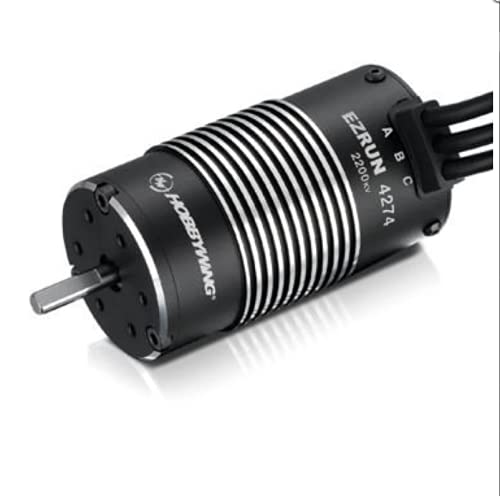
Figure 3.2: A side view of the Hobbywing EZRUN 4274SL motor, emphasizing the output shaft and the "Hobbywing" logo. The ribbed design for heat dissipation is also visible, along with the EZRUN 4274 2200kV branding.
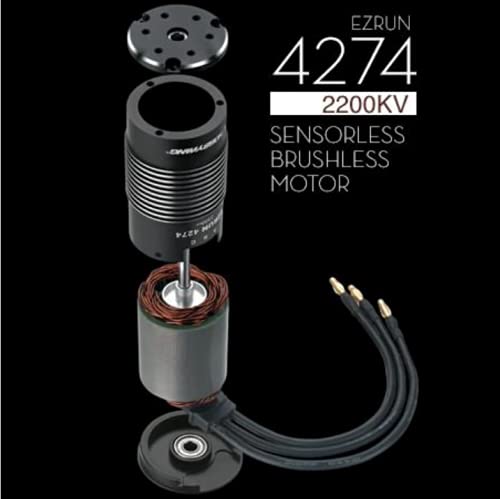
Figure 3.3: An exploded diagram of the EZRUN 4274 2200kV Sensorless Brushless Motor, illustrating its internal components including the rotor, stator, end caps, and wiring. This provides insight into the motor's construction.
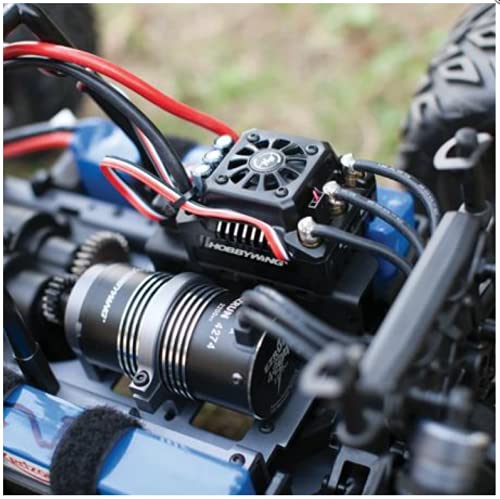
Figure 3.4: The EZRUN 4274SL motor shown installed within an RC vehicle chassis, connected to an Electronic Speed Controller (ESC). This image demonstrates a typical installation scenario for the motor in a remote-controlled car.
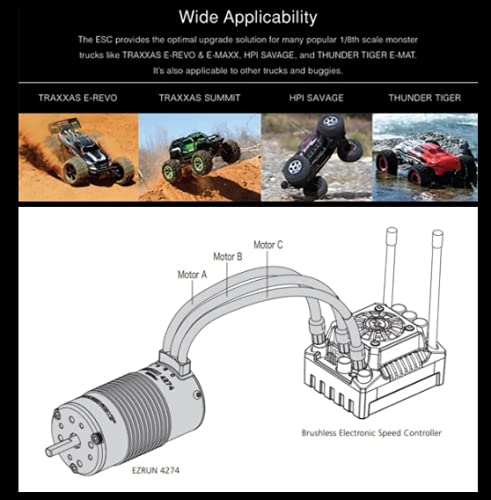
Figure 3.5: An illustration highlighting the wide applicability of the EZRUN series motors, suitable for various 1/8th scale monster trucks and buggies. It shows compatibility with models like TRAXXAS E-REVO, TRAXXAS SUMMIT, HPI SAVAGE, and THUNDER TIGER E-MAT, along with a diagram of motor-to-ESC connections.
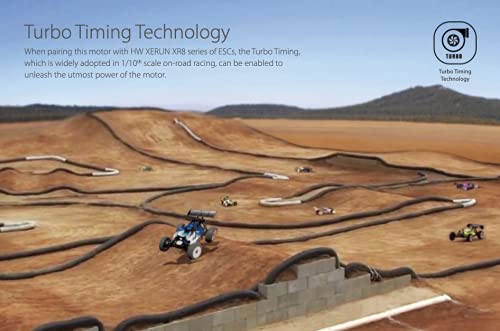
Figure 3.6: This image describes the "Turbo Timing Technology" feature. When paired with HW XERUN XR8 series ESCs, this technology, commonly used in 1/10th scale on-road racing, can be enabled to optimize motor power output.

Figure 3.7: An explanation of the "Full-sensored Mode." This motor, when paired with XERUN XR8/XR8 Plus ESCs, can operate in a full-sensored mode for improved performance and smoother control. It notes that while compatible with other ESCs, full-sensored mode may not always be available.
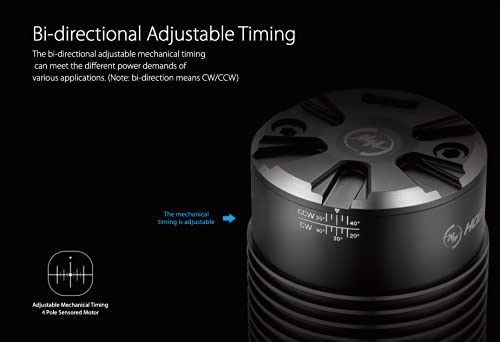
Figure 3.8: This image illustrates the "Bi-directional Adjustable Timing" feature. The mechanical timing of the motor can be adjusted in both clockwise (CW) and counter-clockwise (CCW) directions to meet various power demands for different applications.
4. Specifications
The following table details the technical specifications for the Hobbywing EZRUN 4274SL Sensorless Brushless Motor (2200kV).
| Specification | Value |
|---|---|
| Brand | Hobbywing |
| Model | EZRUN 4274SL |
| KV (No-load) | 2200 RPM/V |
| Pole | 4 |
| Resistance (R) | 0.0058 Ω |
| Current No-load (A) | 5 A |
| Max. Output Power (W) | 3000 W |
| C.at the point of M.O.P. (A) | 120 A |
| Motor D&L (mm) | Φ=42, L=74 |
| Shaft D&L of the projecting part (mm) | Φ=5, L=18.5 |
| LiPo (S) | 2-6S |
| Weight (g) | 418g (14.74oz) |
| Applicable | 1/8th Monster Truck/Truck |
| Material | Aluminum, Copper |
| Package Dimensions | 5.31 x 3.5 x 2.2 inches |
5. Setup
Proper installation is crucial for the performance and longevity of your motor. Follow these general steps:
- Mounting the Motor: Securely mount the motor to your vehicle's motor mount using appropriate screws. Ensure the motor is aligned correctly with the pinion gear and spur gear.
- Gear Mesh Adjustment: Adjust the gear mesh between the pinion and spur gear. There should be a small amount of play (about the thickness of a piece of paper) to prevent binding and excessive wear.
- Connecting to ESC: Connect the three motor wires to the corresponding output wires of your Electronic Speed Controller (ESC). While sensorless motors do not require a specific order for the three wires, reversing any two wires will reverse the motor's rotation direction. Ensure bullet connectors are fully seated.
- Sensor Wire (Optional): If using a sensored ESC that supports full-sensored mode (e.g., Hobbywing XERUN XR8 series), connect the sensor wire from the motor to the ESC. Ensure the orientation is correct.
- Initial Power-Up: Before full operation, perform a low-power test to confirm correct motor rotation and functionality.
6. Operating Instructions
Once installed, follow these guidelines for operating your Hobbywing EZRUN 4274SL motor:
- ESC Programming: Refer to your ESC's manual for proper programming. Key settings include throttle calibration, battery type, cut-off voltage, and motor timing.
- Temperature Monitoring: Regularly check the motor's temperature during and after operation. The motor should be warm to the touch but not excessively hot. If the motor consistently overheats, consider adjusting gearing, ESC settings, or improving airflow.
- Battery Compatibility: Use LiPo batteries within the recommended voltage range (2-6S for this motor) to prevent damage and ensure optimal performance.
- Run-in Period: While brushless motors generally do not require a run-in period like brushed motors, it is advisable to perform a few gentle runs to ensure all components are functioning correctly before aggressive use.
7. Maintenance
Regular maintenance helps extend the lifespan and maintain the performance of your motor:
- Cleaning: Keep the motor clean and free from dirt, dust, and debris. Use compressed air or a soft brush to remove foreign particles from the motor's cooling fins and internal areas.
- Bearing Inspection: Periodically check the motor bearings for smooth operation. If bearings feel rough or noisy, they may need cleaning or replacement.
- Wire and Connector Check: Inspect all wires and connectors for signs of wear, fraying, or corrosion. Ensure all connections remain secure.
- Shaft Inspection: Check the motor shaft for any bends or damage.
- Storage: When not in use, store the motor in a dry, cool environment.
8. Troubleshooting
If you encounter issues with your motor, consider the following common problems and solutions:
| Problem | Possible Cause | Solution |
|---|---|---|
| Motor not spinning or stuttering | Incorrect ESC calibration; Loose motor/ESC connections; Damaged motor wires; ESC issue. | Recalibrate ESC; Check all connections; Inspect wires for damage; Test with a different ESC if possible. |
| Motor overheating | Gearing too high; Excessive load; Insufficient airflow; Incorrect motor timing. | Reduce pinion gear size; Check for drivetrain binding; Ensure proper ventilation; Adjust motor timing if applicable. |
| Loss of power or inconsistent performance | Low battery voltage; Damaged battery; Loose connections; ESC settings. | Charge battery; Inspect battery for damage; Check all connections; Review ESC settings. |
| Unusual noise from motor | Damaged bearings; Debris inside motor; Incorrect gear mesh. | Inspect/replace bearings; Clean motor; Adjust gear mesh. |
9. Warranty and Support
For warranty information and technical support, please refer to the official Hobbywing website or contact your local Hobbywing distributor. Keep your proof of purchase for warranty claims.
Official Hobbywing Website: www.hobbywing.com