
Agatige STC-3008
Agatige STC-3008 Digital Temperature Controller User Manual
Model: STC-3008
1. Introduction
The Agatige STC-3008 is a versatile digital temperature controller designed for precise temperature management in various applications. Featuring dual NTC probes and a dual digital display, it allows for independent control of heating and cooling outputs. This manual provides essential information for the safe and effective installation, operation, and maintenance of your STC-3008 controller.

Image 1.1: The Agatige STC-3008 Digital Temperature Controller, showing the main unit and one NTC temperature probe.
2. Safety Information
Please read and understand all safety instructions before installing or operating this device. Failure to follow these instructions may result in electric shock, fire, or damage to the product.
- Ensure the power supply voltage matches the controller's specified voltage (110V-220V AC).
- All wiring should be performed by a qualified electrician and conform to local electrical codes.
- Disconnect power before making any wiring connections or performing maintenance.
- Do not operate the device in environments with excessive moisture, dust, or corrosive gases.
- Keep sensor wires and power wires separated to prevent interference.
- Ensure proper ventilation around the controller to prevent overheating.
3. Product Features
- Dual NTC Probes: Equipped with two sensitive NTC probes for accurate temperature measurement, with an accuracy of ±1 °C within the range of -50 °C to 70 °C.
- Dual Digital Display: Features two clear digital displays for simultaneous viewing of current and set temperatures.
- Dual Temperature Control: Supports independent control for both heating and cooling outputs.
- Durable Construction: Housed in an ABS flame-retardant plastic shell for enhanced safety and longevity.
- Wide Application: Suitable for various temperature regulation needs, including farms, refrigerators, greenhouses, aquariums, and incubation systems.

Image 3.1: Visual representation of key features including dual NTC probes, ABS housing, and digital display.
4. Package Contents
Upon opening the package, please verify that all components are present and undamaged:
- 1 x Agatige STC-3008 Digital Temperature Controller
- 2 x NTC Temperature Probes
- 1 x User Manual (this document)
Note: The manufacturer may ship new and old models randomly. While core functionality remains, minor aesthetic differences or probe types may be observed. Refer to the wiring diagram on your specific unit.

Image 4.1: Depiction of potential variations between new and old models of the STC-3008 controller.
5. Specifications
| Parameter | Value |
|---|---|
| Model | STC-3008 |
| Power Supply | 110V-220V AC |
| Temperature Measurement Range | -50 °C to 70 °C |
| Temperature Measurement Accuracy | ±1 °C |
| Sensor Type | NTC Probe (2 included) |
| Display Type | Dual Digital LED |
| Output | Heating Relay, Cooling Relay |
| Material | ABS Flame Retardant Plastic |
| Product Dimensions | 85 x 75 x 34.5 mm (3.35 x 2.95 x 1.36 inches) |
| Item Weight | 0.13 kg (4.6 ounces) |

Image 5.1: Dimensions of the STC-3008 controller and a close-up of the waterproof NTC probe.
6. Installation and Setup
6.1 Physical Installation
The STC-3008 is designed for panel mounting. Ensure the installation opening is approximately 71mm x 29mm (2.8 x 1.1 inches). Secure the controller using the side clips provided.
6.2 Wiring Diagram
Refer to the wiring diagram on the back of the controller and the image below for correct connections. Ensure all connections are secure and insulated.

Image 6.1: Rear view of the STC-3008 controller, displaying the wiring terminal block and diagram.
- Terminals 1 & 2: Power Supply (110V-220V AC)
Connect your main power input here. Observe polarity if applicable, though for AC, either wire can go to either terminal. - Terminals 3 & 4: Sensor 1
Connect the first NTC temperature probe. - Terminals 5 & 6: Sensor 2
Connect the second NTC temperature probe. - Terminals 7 & 8: Cooling Output
Connect your cooling device (e.g., fan, compressor) to these terminals. This is a relay output. - Terminals 9 & 10: Heating Output
Connect your heating device (e.g., heating element) to these terminals. This is a relay output.
Important Safety Notes:
- Strictly differentiate between relay, sensor, and power interfaces. Incorrect wiring can damage the unit or connected devices.
- Maintain a proper distance between sensor wires and power wires to minimize electrical interference.
7. Operation
The STC-3008 features two digital displays and four control buttons for setting parameters.

Image 7.1: Front panel of the STC-3008, showing the dual digital displays and control buttons.
7.1 Display and Buttons
- Left Display: Shows the current temperature measured by Sensor 1 (or the set temperature for output 1).
- Right Display: Shows the current temperature measured by Sensor 2 (or the set temperature for output 2).
- Buttons: Typically include 'Set', 'Up', and 'Down' buttons for each display/output, allowing adjustment of parameters.

Image 7.2: A close-up view of the STC-3008's dual digital displays, showing example temperature readings.
7.2 Setting Temperature Parameters
The STC-3008 operates primarily in Celsius (°C). While some descriptions may mention Fahrenheit, the unit's default and most common operation is in Celsius. Please verify your specific model's capabilities.
- Accessing Settings: Press and hold the 'Set' button (or the 'Set' button associated with the desired output) for approximately 3-5 seconds until the display starts flashing or a parameter code appears.
- Navigating Parameters: Use the 'Up' and 'Down' buttons to cycle through different parameters (e.g., set temperature, hysteresis/differential, calibration).
- Adjusting Values: Once the desired parameter is selected, press 'Set' again to enter adjustment mode. Use 'Up' and 'Down' to change the value.
- Saving Settings: Press 'Set' again to confirm the value, then wait a few seconds for the display to return to normal operation, or press and hold 'Set' to exit the menu.
Specific parameter codes and their functions (e.g., P0, P1, P2, etc.) are typically detailed in the included paper manual. Common parameters include:
- Set Point (SP): The target temperature.
- Hysteresis/Differential (D): The temperature difference between the set point and when the output switches off/on again to prevent rapid cycling.
- Calibration (C): Allows fine-tuning of the temperature reading if there's a known offset.
- Heating/Cooling Mode: Select whether the output acts as a heater or cooler.
8. Maintenance
- Cleaning: Wipe the controller's surface with a soft, dry cloth. Do not use abrasive cleaners or solvents.
- Probe Inspection: Regularly check the NTC probes for any signs of damage or corrosion. Ensure they are securely placed in the desired measurement area.
- Wiring Check: Periodically inspect wiring connections for looseness or damage.
- Environmental Conditions: Ensure the operating environment remains within the specified temperature and humidity ranges.
9. Troubleshooting
| Problem | Possible Cause | Solution |
|---|---|---|
| Display shows 'LLL' or 'HHH' | Sensor error (open circuit or short circuit), or temperature is outside measurement range. | Check sensor connection. Replace sensor if damaged. Ensure temperature is within -50°C to 70°C. |
| Controller not powering on | No power supply, incorrect wiring, or internal fault. | Verify power connections (Terminals 1 & 2). Check power source. Consult a qualified technician if problem persists. |
| Heating/Cooling output not activating | Incorrect set point, hysteresis setting, or wiring. | Review set temperature and hysteresis. Check wiring to heating/cooling device (Terminals 7-10). Ensure the controller is in the correct mode (heating/cooling). |
| Inaccurate temperature reading | Sensor placement, interference, or calibration offset. | Relocate sensor to a more representative area. Keep sensor wires away from power lines. Use the calibration function if a known offset exists. |
10. Applications
The Agatige STC-3008 Digital Temperature Controller is suitable for a wide range of applications requiring precise temperature regulation:
- Aquariums and Aquaculture systems
- Greenhouses and plant cultivation environments
- Refrigeration and freezer units
- Incubators for eggs or cultures
- Home brewing and fermentation
- Industrial temperature control processes

Image 10.1: Examples of environments where the STC-3008 can be utilized, including aquariums, greenhouses, refrigerators, and farms.
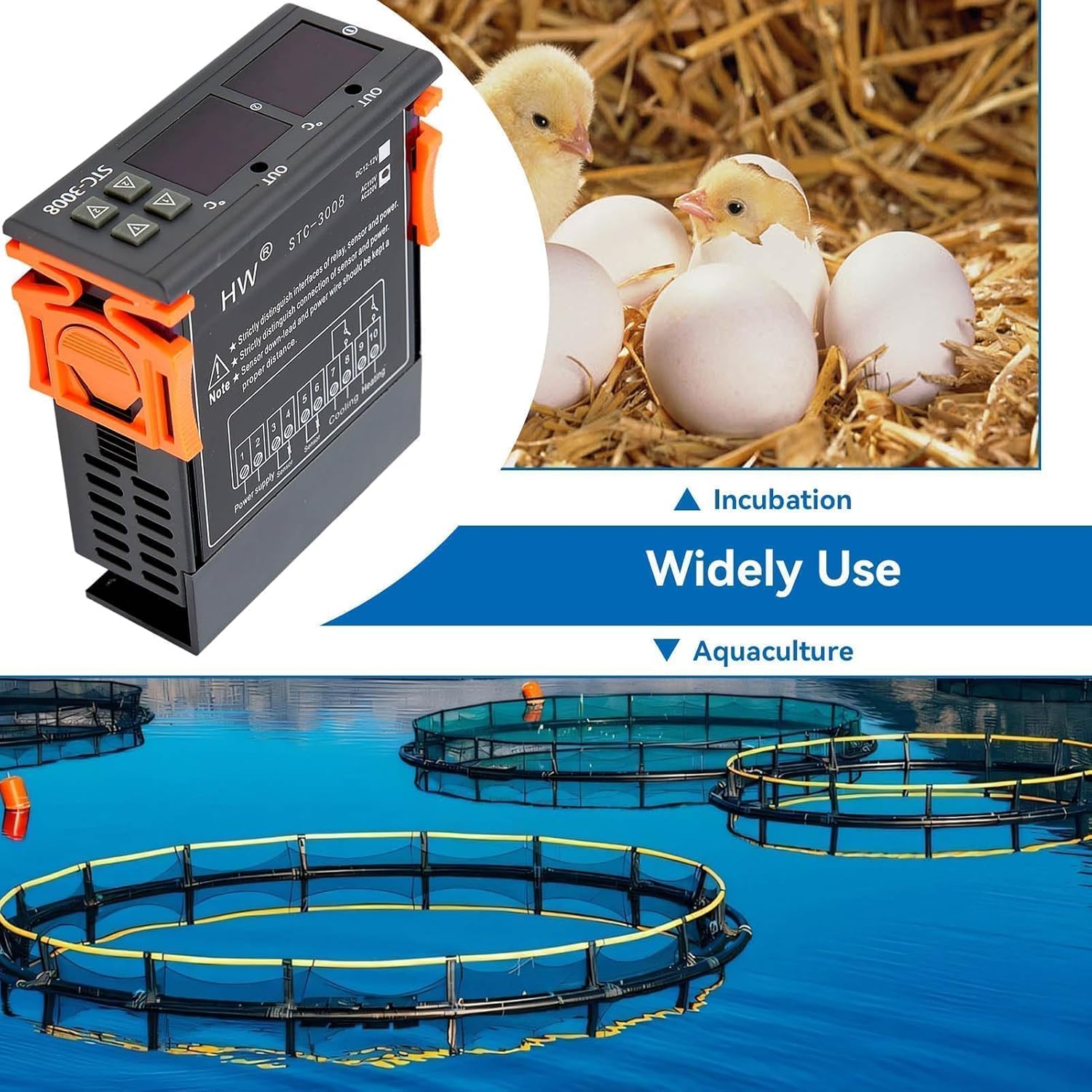
Image 10.2: Further applications demonstrating the controller's use in incubation and aquaculture settings.
11. Warranty and Support
For warranty information and technical support, please refer to the documentation provided with your purchase or contact your retailer. Keep your proof of purchase for any warranty claims.
Ask a question about this manual
Ask about setup, troubleshooting, compatibility, parts, safety, or missing instructions. Manuals+ will review the question and use this page’s manual context to help answer it.