
1. Introduction
This manual provides essential information for the safe and efficient operation, setup, and maintenance of your DCA AF50 Air Nail Stapler. Please read these instructions carefully before using the tool to ensure proper function and to prevent injury.
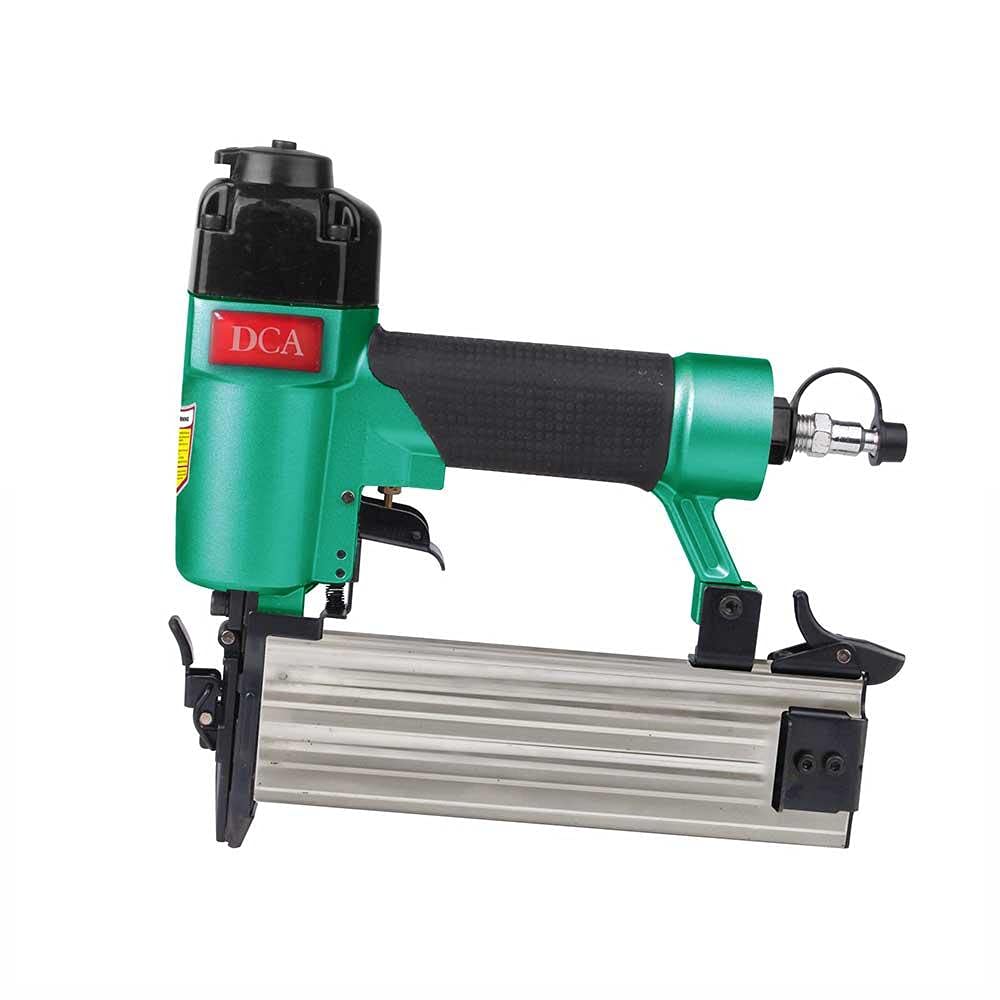
Image showing the DCA AF50 Air Nail Stapler, a pneumatic tool designed for fastening nails.
2. Safety Instructions
Always follow basic safety precautions when using power tools to reduce the risk of fire, electric shock, and personal injury. Keep this manual for future reference.
- Wear Eye Protection: Always wear safety glasses or goggles that comply with ANSI Z87.1.
- Wear Hearing Protection: Prolonged exposure to noise from pneumatic tools can cause hearing damage.
- Wear Hand Protection: Use gloves to protect hands from splinters and accidental contact.
- Disconnect Air Supply: Always disconnect the air supply before making adjustments, clearing jams, or servicing the tool.
- Maintain a Clean Work Area: Cluttered areas invite accidents.
- Do Not Overreach: Maintain proper footing and balance at all times.
- Use Correct Air Pressure: Do not exceed the maximum recommended air pressure for the tool.
- Inspect Tool Before Use: Check for damaged parts, air leaks, or loose fasteners. Do not use a damaged tool.
- Keep Children Away: Do not allow children or untrained persons to operate this tool.
3. Product Overview
The DCA AF50 is an air-powered nail stapler designed for various fastening tasks, including light-duty woodworking, upholstery attachment, and craft projects. Its pneumatic operation ensures consistent and powerful fastening.
Key Features:
- Model: AF50
- Type: Nail Fixing Machine
- Power Source: Air (Pneumatic)
- Recommended Uses: Light-duty woodworking, upholstery attachment, craft projects
4. Setup
Proper setup is crucial for safe and effective operation of your air nail stapler.
- Air Compressor Connection: Connect the air hose from a suitable air compressor to the tool's air inlet. Ensure the compressor can provide sufficient air pressure and volume for continuous operation.
- Air Pressure Adjustment: Set the air compressor's regulator to the recommended operating pressure (refer to specifications). Do not exceed the maximum pressure.
- Lubrication: Add a few drops of pneumatic tool oil into the air inlet before each use. This lubricates internal components and extends tool life.
- Loading Fasteners:
- Ensure the air supply is disconnected.
- Open the magazine latch.
- Insert the appropriate nails or staples into the magazine, ensuring they are correctly oriented.
- Close the magazine latch securely.
5. Operating Instructions
Follow these steps for safe and effective operation of the DCA AF50 Air Nail Stapler.
- Connect Air Supply: Reconnect the air hose to the tool.
- Test Firing: Before working on your project, test fire the tool on a scrap piece of material to ensure proper depth and function.
- Positioning: Place the nose of the tool firmly against the workpiece where the fastener is to be driven.
- Actuation: Depress the trigger to drive the fastener. Some models may require pressing the nose against the workpiece before the trigger can be pulled (contact-trip mechanism).
- Depth Adjustment (if applicable): If your model has a depth adjustment feature, rotate the adjustment knob or lever to achieve the desired fastener depth.
- Clearing Jams: If a fastener jams, immediately disconnect the air supply. Open the magazine and carefully remove the jammed fastener. Never attempt to clear a jam with the air supply connected.
6. Maintenance
Regular maintenance will prolong the life of your DCA AF50 Air Nail Stapler and ensure optimal performance.
- Daily Lubrication: Add 2-3 drops of pneumatic tool oil into the air inlet before each use.
- Clean Air Filter: Regularly check and clean the air filter on your compressor to ensure a clean air supply to the tool.
- Clean Tool: Keep the tool clean and free of debris. Use a dry cloth to wipe down the exterior. Do not use solvents that may damage plastic parts.
- Check for Leaks: Periodically check all air connections and hoses for leaks. Repair or replace any leaking components.
- Inspect Fasteners: Ensure fasteners are free of rust or damage before loading into the magazine.
- Storage: Store the tool in a dry, clean environment when not in use. Disconnect it from the air supply.
7. Troubleshooting
Refer to the following table for common issues and their solutions.
| Problem | Possible Cause | Solution |
|---|---|---|
| Tool does not fire or fires weakly. | Low air pressure; insufficient air supply; jammed fastener; lack of lubrication. | Check air compressor pressure; ensure air hose is not kinked; clear any jams; add pneumatic tool oil. |
| Fasteners are not driven flush. | Low air pressure; incorrect depth adjustment; wrong fastener length. | Increase air pressure; adjust depth setting; ensure correct fastener length for material. |
| Air leaks from tool. | Loose fittings; damaged O-rings or seals. | Tighten fittings; replace worn or damaged O-rings/seals (consult a qualified technician). |
| Tool double fires. | High air pressure; faulty trigger mechanism. | Reduce air pressure; contact service for trigger mechanism inspection. |
8. Specifications
| Model Number | DCA AF50 |
| Brand | DCA |
| Power Source | Air (Pneumatic) |
| Type | Nail Fixing Machine |
| Recommended Uses | Light-duty woodworking, upholstery attachment, craft projects |
| Item Weight | 11 grams |
| Manufacturer | DCA |
| First Available Date | July 7, 2021 |
9. Warranty and Support
For warranty information or technical support regarding your DCA AF50 Air Nail Stapler, please contact the manufacturer or your authorized dealer. Keep your purchase receipt as proof of purchase.
For further assistance, you may visit the official DCA website or contact their customer service department.