
1. Introduction
The EBYTE E220-900T30D is a high-performance LoRa wireless serial port module designed for long-range, low-power communication. Based on the LLCC68 chip, it operates in the 850.125~930.125MHz frequency band (default 868.125MHz) and offers a maximum transmit power of 30dBm, enabling communication distances up to 10km under ideal conditions. This module provides TTL level output and is compatible with both 3.3V and 5V IO port voltages, making it versatile for various embedded applications.
This manual provides detailed information on the module's features, specifications, setup, operation, and troubleshooting to ensure optimal performance and reliable communication.
2. Key Features
- Utilizes the new LoRa spread spectrum modulation technology based on LLCC68, offering extended communication range and enhanced anti-interference capabilities.
- Supports user-defined communication keys for improved data confidentiality.
- Incorporates LBT (Listen Before Talk) function to monitor channel noise before transmission, significantly increasing communication success rates in challenging environments.
- Features RSSI (Received Signal Strength Indicator) for signal quality evaluation, network optimization, and ranging applications.
- Supports air wakeup (ultra-low power consumption function), ideal for battery-powered devices.
- Enables fixed-point transmission, broadcast transmission, and channel monitoring.
- Deep sleep mode with power consumption as low as 5uA.
- Integrated PA+LNA (Power Amplifier + Low Noise Amplifier) for a communication distance of up to 10km in ideal conditions.
- Parameters are saved automatically after power-off and restored upon power-on.
- Efficient watchdog design ensures automatic restart and continued operation in case of exceptions.
- Supports data transmission rates from 2.4kbps to 62.5kbps.
- Wide operating voltage range of 3.0V to 5.5V (5V recommended for best performance).
- Industrial standard design, suitable for long-term use at -40°C to +85°C.
- Standard SMA antenna interface for easy antenna connection.
3. Specifications

Figure 3.1: E220-900T30D Technical Parameters
| Parameter | Value |
|---|---|
| IC | LLCC68 |
| Frequency | 850.125~930.125MHz (Default 868.125MHz) |
| Transmit Power | 30dBm |
| Communication Distance | Up to 10km (ideal conditions) |
| Module Dimensions | 24mm x 43mm |
| Operating Voltage | 3.0V ~ 5.5V |
| Communication Level | 3.3V / 5V TTL |
| Operating Temperature | -40°C ~ +85°C |
| Data Rate | 2.4kbps ~ 62.5kbps |
| Sleep Current | ~5uA |
| Antenna Interface | SMA-K |
| Interface | UART Serial Port |
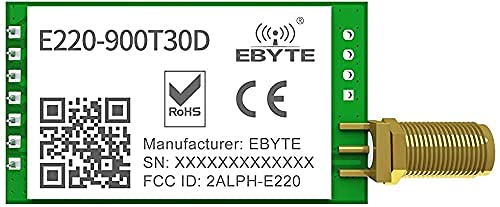

Figure 3.2: E220-900T30D Module Overview and Dimensions
4. Setup and Installation
4.1 Pinout and Connections
The E220-900T30D module features a standard DIP package with clearly defined pins for power, ground, UART communication, and control signals. Proper connection to your microcontroller or host system is crucial for stable operation.

Figure 4.1: Module Component Details and Pinout Example
Connect the module's VCC pin to a stable 3.0V-5.5V power supply. Ensure the ground (GND) pin is connected to the system ground. For serial communication, connect the module's TXD to the host's RXD and the module's RXD to the host's TXD. Additional control pins (e.g., AUX, M0, M1) should be connected as per your application's requirements for mode selection and status indication.
4.2 Antenna Connection
The module uses an SMA-K antenna interface. Connect a suitable 868MHz or 915MHz LoRa antenna to this port. Ensure the antenna is securely fastened to achieve optimal communication range and performance.
5. Operating Instructions
5.1 Communication Modes
The E220-900T30D supports various communication modes, including transparent transmission, fixed-point transmission, and broadcast transmission. These modes are typically configured via AT commands or by setting the M0 and M1 pins, allowing flexibility for different network topologies and application needs.
5.2 Data Transmission
Data is transmitted via the UART serial interface. The module handles the LoRa modulation and demodulation internally. Users can send and receive data packets through the TXD and RXD pins at configurable baud rates. The module supports a data transmission rate range of 2.4kbps to 62.5kbps.
5.3 Power Management
The module supports an air wakeup function and a deep sleep mode. In deep sleep, the power consumption is significantly reduced to approximately 5uA, making it suitable for battery-powered applications where energy efficiency is critical. The module can be woken up by external signals or predefined timers.
6. Applications
The E220-900T30D LoRa module is suitable for a wide range of applications requiring long-range, low-power wireless communication:
- Home security alarm systems and remote keyless entry.
- Smart home and industrial sensor networks.
- Wireless alarm security systems.
- Building automation solutions.
- Wireless industrial-grade remote control systems.
- Advanced Metering Infrastructure (AMI).
- Automotive industry applications.


Figure 6.1: Smart Building Applications and RSSI Functionality
7. Troubleshooting
- No Communication: Verify power supply (3.0V-5.5V), UART connections (TX/RX swapped?), and baud rate settings. Ensure M0/M1 pins are correctly configured for the desired operating mode.
- Short Communication Range: Check antenna connection and type. Ensure the antenna is suitable for the operating frequency (868MHz/915MHz). Verify line-of-sight and minimize obstacles. Check transmit power settings.
- Interference Issues: Utilize the LBT function if available in your firmware. Consider changing the operating frequency within the allowed band or adjusting spreading factor/bandwidth settings.
- Module Not Responding: Check power supply stability. If the module has a reset pin, try toggling it. Ensure the module is not in deep sleep mode unexpectedly.
- Data Corruption: Verify UART baud rate and parity settings match between the module and host. Check for noise on power lines.
8. Maintenance
The E220-900T30D module is designed for robust industrial use and requires minimal maintenance. However, adhering to the following guidelines can prolong its lifespan and ensure reliable operation:
- Environmental Conditions: Operate the module within the specified temperature range (-40°C to +85°C) and avoid excessive humidity or corrosive environments.
- Power Supply: Provide a stable and clean power supply within the recommended voltage range (3.0V-5.5V). Voltage fluctuations can affect performance and longevity.
- Physical Handling: Handle the module with care to prevent physical damage to components or solder joints. Avoid static discharge when handling.
- Antenna: Ensure the antenna is always connected before powering on the module to prevent damage to the RF front end.
9. Warranty and Support
EBYTE provides technical support and warranty services for its products. For detailed warranty information, technical assistance, or custom development services, please refer to the official EBYTE website or contact their customer support.
Manufacturer: EBYTE
Official Website: http://www.cdebyte.com/

Figure 9.1: Product Packaging with Manufacturer Information


