
1. Safety Information
Operating remote-controlled aircraft requires caution and adherence to safety guidelines to prevent injury or damage. Please read and understand all safety instructions before operating your Edge540 RC airplane.
- Adult Supervision: This product is recommended for users aged 16 years and up. Younger users should always be supervised by an adult.
- Flight Area: Always fly in open, clear areas away from people, buildings, power lines, and other obstacles. Avoid flying near airports or restricted airspace.
- Weather Conditions: Do not fly in strong winds, rain, or other adverse weather conditions.
- Pre-Flight Check: Before each flight, ensure all components are securely attached, batteries are charged, and control surfaces move freely and correctly.
- Propeller Safety: Keep hands and loose clothing away from the propeller when the battery is connected. The propeller can cause serious injury.
- Battery Handling: Use only recommended batteries. Handle LiPo batteries with care, charge them in a safe environment, and never overcharge or discharge them. Disconnect the battery when not in use.
- Respect Others: Be mindful of others in your flying area. Do not fly in a manner that could disturb or endanger people or animals.
- Local Regulations: Be aware of and comply with all local laws and regulations regarding RC aircraft operation.
2. Product Overview
The Dancing Wings Hobby 710mm 3D RC Foamy Airplane Edge540 (E2705-444) is a 4-channel remote-controlled aircraft designed for adult enthusiasts. Constructed from durable PP foam, this model offers ease of assembly and flight characteristics suitable for 3D aerobatics.

Figure 2.1: Assembled Dancing Wings Hobby Edge540 RC Airplane.
2.1 Key Features
- 710mm (28") Wingspan
- Durable PP foam construction
- 4-channel control for precise maneuvers
- Designed for 3D aerobatic flight
- Easy to assemble and fly
2.2 Package Contents (E2705-444 Combo)
The E2705-444 combo includes the following components:
- E27 710mm EDGE540 KIT (Airframe)
- Brushless Motor: MF1905 2400KV
- Propeller: 7-inch
- Servos: 3x 9g Servos
- Mini Receiver: RX444 (15A/2S ESC & DSMX/2 compatible)
- Product Manual
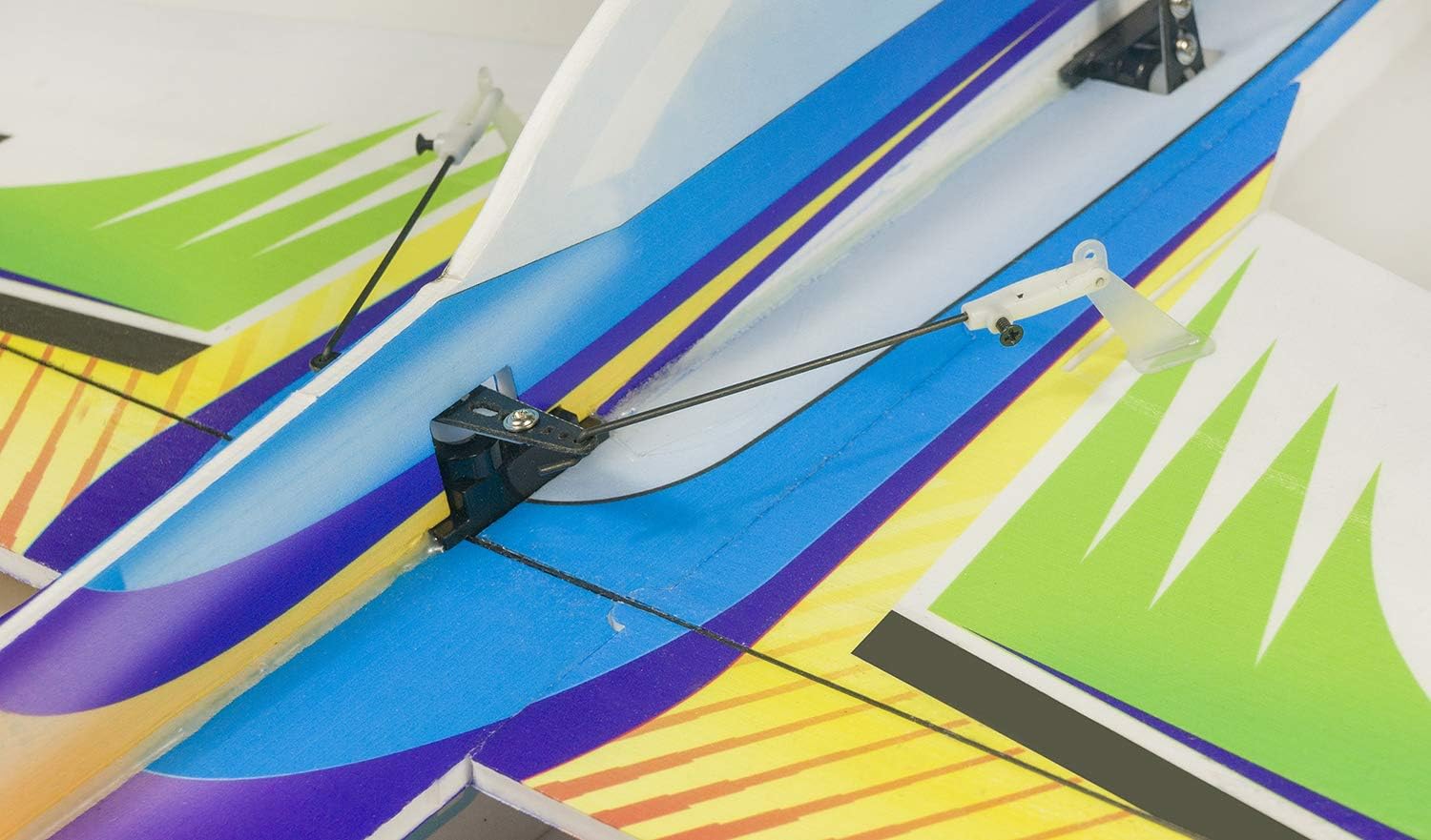
Figure 2.2: Detailed view of the E2705-444 combo components, including the airframe kit, motor, servos, and receiver with integrated ESC.

Figure 2.3: The RX444 Micro 6CH Receiver, which includes an integrated 15A 2-3S Brushless ESC and is compatible with DSMX/2 protocols.
3. Setup and Assembly
The Edge540 is designed for easy assembly. Follow these steps to prepare your aircraft for flight. You will need basic modeling tools such as a hobby knife, CA glue (foam-safe), and small screwdrivers.
3.1 Airframe Assembly
- Wing Installation: Carefully attach the main wings to the fuselage. Ensure they are properly aligned and secured according to the kit instructions. Use foam-safe adhesive if required.
- Tail Section: Assemble and attach the horizontal and vertical stabilizers. Verify that they are perpendicular and parallel to the main wing as appropriate.
- Landing Gear (if applicable): If your kit includes landing gear, install it securely.
3.2 Electronics Installation
- Motor Installation: Mount the MF1905 2400KV brushless motor to the motor mount at the front of the fuselage. Ensure it is securely fastened.
- Propeller Attachment: Attach the 7-inch propeller to the motor shaft. Ensure it is balanced and oriented correctly for thrust.
- Servo Installation: Install the three 9g servos into their designated positions for the ailerons, elevator, and rudder. Connect the control rods from the servos to the respective control surfaces.
- Receiver/ESC Connection: The RX444 receiver includes an integrated 15A/2S ESC. Connect the motor wires to the ESC, ensuring correct phasing. Connect the servos to the appropriate channels on the RX444 receiver (e.g., Aileron, Elevator, Rudder).
- Battery Placement: Secure the recommended 2S 400-800mAh LiPo battery in the designated battery compartment. Ensure it is positioned for proper center of gravity (CG).

Figure 3.1: Example of servo and control linkage setup for precise control surface movement.
3.3 Transmitter Binding (DSMX/2)
To operate your aircraft, you must bind the RX444 receiver to your DSMX/2 compatible transmitter. Refer to your transmitter's manual for specific binding procedures. Generally, this involves:
- Power on your transmitter in binding mode.
- Connect the battery to the aircraft while the receiver is in binding mode (often indicated by a flashing LED).
- Once bound, the receiver's LED will typically turn solid.
- Always perform a range check and control surface test after binding.
4. Operating Instructions
Before your first flight, ensure you have thoroughly read the safety information and completed all setup steps.
4.1 Pre-Flight Checks
- Battery: Ensure the flight battery is fully charged and securely installed.
- Control Surfaces: Verify that the ailerons, elevator, and rudder move freely and in the correct direction in response to transmitter inputs.
- Propeller: Check for any damage to the propeller and ensure it is securely fastened.
- Center of Gravity (CG): Confirm the aircraft's CG is within the recommended range (refer to kit instructions for exact location).
- Radio Link: Perform a range check to ensure a stable connection between your transmitter and receiver.
4.2 Takeoff
With the motor at low throttle, gently hand-launch the aircraft into the wind. Gradually increase throttle as it gains altitude. For ground takeoffs (if landing gear is installed), slowly increase throttle and apply slight elevator input as the plane gains speed.
4.3 Flight Controls
- Throttle: Controls motor speed and thrust.
- Ailerons: Control roll (banking) of the aircraft.
- Elevator: Controls pitch (nose up/down) for climbing and descending.
- Rudder: Controls yaw (nose left/right) for turns and coordinated flight.
4.4 Landing
Approach the landing area into the wind. Reduce throttle and gradually decrease altitude using the elevator. Aim for a gentle touchdown. Cut throttle completely just before landing.
Video 4.1: Demonstration of the 710mm RC Foamy Airplane 3D Edge 540 in flight, showcasing its maneuverability.
5. Maintenance
Regular maintenance ensures the longevity and safe operation of your Edge540 RC airplane.
- Inspection: After each flight, inspect the airframe for any damage, cracks, or loose components. Check control surfaces and linkages for free movement and security.
- Propeller: Replace any bent, chipped, or cracked propellers immediately. An unbalanced or damaged propeller can cause vibrations and reduce performance.
- Motor: Ensure the motor mount is secure and the motor spins freely without obstruction.
- Electronics: Check all wire connections for security. Keep the receiver and ESC free from dirt and moisture.
- Cleaning: Clean the aircraft with a soft, damp cloth. Avoid using harsh chemicals that could damage the foam.
- Storage: Store the aircraft in a cool, dry place away from direct sunlight and extreme temperatures. Remove the battery during storage.
6. Troubleshooting
This section addresses common issues you might encounter.
| Problem | Possible Cause | Solution |
|---|---|---|
| Aircraft does not respond to controls. |
|
|
| Motor not spinning. |
|
|
| Aircraft flies erratically or is difficult to control. |
|
|
7. Specifications
Detailed technical specifications for the Dancing Wings Hobby Edge540 (E2705-444).
| Feature | Detail |
|---|---|
| Brand | Dancing Wings Hobby |
| Model Name | E27 (Edge 540 Series) |
| Model Number | E2705-444 |
| Wingspan | 710mm (28 inches) |
| Length | 628mm (24.7 inches) |
| Flying Weight | Approximately 160g |
| Material Type | PP foam |
| Motor | MF1905 2400KV Brushless Motor |
| ESC | Integrated 15A (2S) in RX444 Receiver |
| Servos | 3x 9g Servos |
| Receiver | RX444 Micro 6CH (DSMX/2 compatible) |
| Propeller | 7-inch |
| Suggested Battery | 2S 400-800mAh Lithium (not included) |
| Channels | 4-channel |
| Recommended Age | 16 years and up |
| Item Weight | 0.2 kg (without battery) |
8. Warranty and Support
Dancing Wings Hobby is committed to providing quality products. For any issues or questions regarding your Edge540 RC airplane, please refer to the following:
- Warranty: Specific warranty details are typically provided with your purchase documentation. Please retain your proof of purchase for any warranty claims.
- Technical Support: For technical assistance, troubleshooting, or replacement parts, please contact Dancing Wings Hobby customer support through their official website or the retailer where the product was purchased.
- Online Resources: Visit the Dancing Wings Hobby Store on Amazon for additional product information and support.
