1. Introduction
This manual provides detailed instructions for the safe and efficient operation, installation, and maintenance of your VEVOR 12V 8kW Diesel Air Heater. Please read this manual thoroughly before using the product and retain it for future reference. This heater is designed to provide warmth in various applications such as vehicles, RVs, boats, and cabins.
2. Safety Instructions
Adherence to these safety guidelines is crucial for preventing injury and damage to the unit.
- Ventilation: Ensure adequate ventilation in the operating area to prevent carbon monoxide buildup. Never operate the heater in an unventilated or enclosed space.
- Fuel: Use only diesel fuel. Do not use gasoline or other volatile fuels. Ensure the fuel tank cap is securely fastened.
- Flammable Materials: Keep the heater away from flammable materials, liquids, and gases. Maintain a safe distance from walls, furniture, and other objects.
- Installation: Install the heater on a stable, non-flammable surface. Ensure all connections (fuel, exhaust, electrical) are secure and leak-free.
- Exhaust System: The exhaust pipe must be routed outside the vehicle/enclosure and away from any combustible materials or air intakes. Inspect for leaks regularly.
- Electrical Connections: Connect the heater to a 12V DC power source. Ensure correct polarity and use appropriate wiring and fuses.
- Carbon Monoxide Detector: It is highly recommended to install a carbon monoxide detector in the area where the heater is operated.
- Children and Pets: Keep children and pets away from the heater during operation.
- Maintenance: Perform regular maintenance as described in this manual. Disconnect power before any maintenance or cleaning.
3. Package Contents
Verify that all items listed below are included in your package. If any items are missing or damaged, contact VEVOR customer support.

Figure 3.1: VEVOR 12V 8kW Diesel Air Heater and Included Accessories. This image displays the main heater unit, an outlet pipe, an exhaust silencer, inlet and exhaust pipes with heat insulating covers, a user manual, an air filter, a remote control, and a complete installation kit. Dimensions of the heater and fuel tank are also indicated.
- 1 x Diesel Air Heater Unit (with integrated 5L/1.3 Gal Fuel Tank)
- 1 x LCD Switch/Controller
- 1 x Remote Control
- 1 x Exhaust Silencer
- 1 x Outlet Pipe
- 1 x Inlet Pipe
- 1 x Exhaust Pipe
- 1 x Heat Insulating Pipe Cover
- 1 x Air Filter
- 1 x User Manual
- 1 x Installation Kit (including mounting screws, clamps, and other necessary hardware)
4. Product Features
The VEVOR 12V 8kW Diesel Air Heater incorporates several design elements for efficient and reliable heating.
- Aluminum Body: The heater features a robust, one-piece aluminum body designed for uniform heat dissipation, rapid heating, and enhanced durability against aging.
- Efficient Air Outlet: Equipped with a large airflow outlet to maximize thermal efficiency, increase air volume, and ensure consistent heat distribution.
- Low Noise Operation: Engineered for quiet performance, featuring fan speed control, a quiet fan, a silent oil pump, and an integrated muffler to minimize operational noise.
- Energy-Efficient Fuel Pump: Utilizes an optimized ECU frequency conversion system that precisely regulates the oil pump's injection frequency and intake air volume for accurate and efficient fuel delivery.
- Multiple Control Methods: Offers flexible control options including a remote control, an LCD panel, and Bluetooth app connectivity for convenient operation.
- Altitude Adaptability: Designed to operate smoothly in low temperature or high altitude areas, ensuring reliable performance in diverse environments.
- Enhanced Security Features: Includes compliance certification, overheat protection (up to 518°F / 270°C), cautionary operation signage, and a leak-resistant oil cap for safe use.
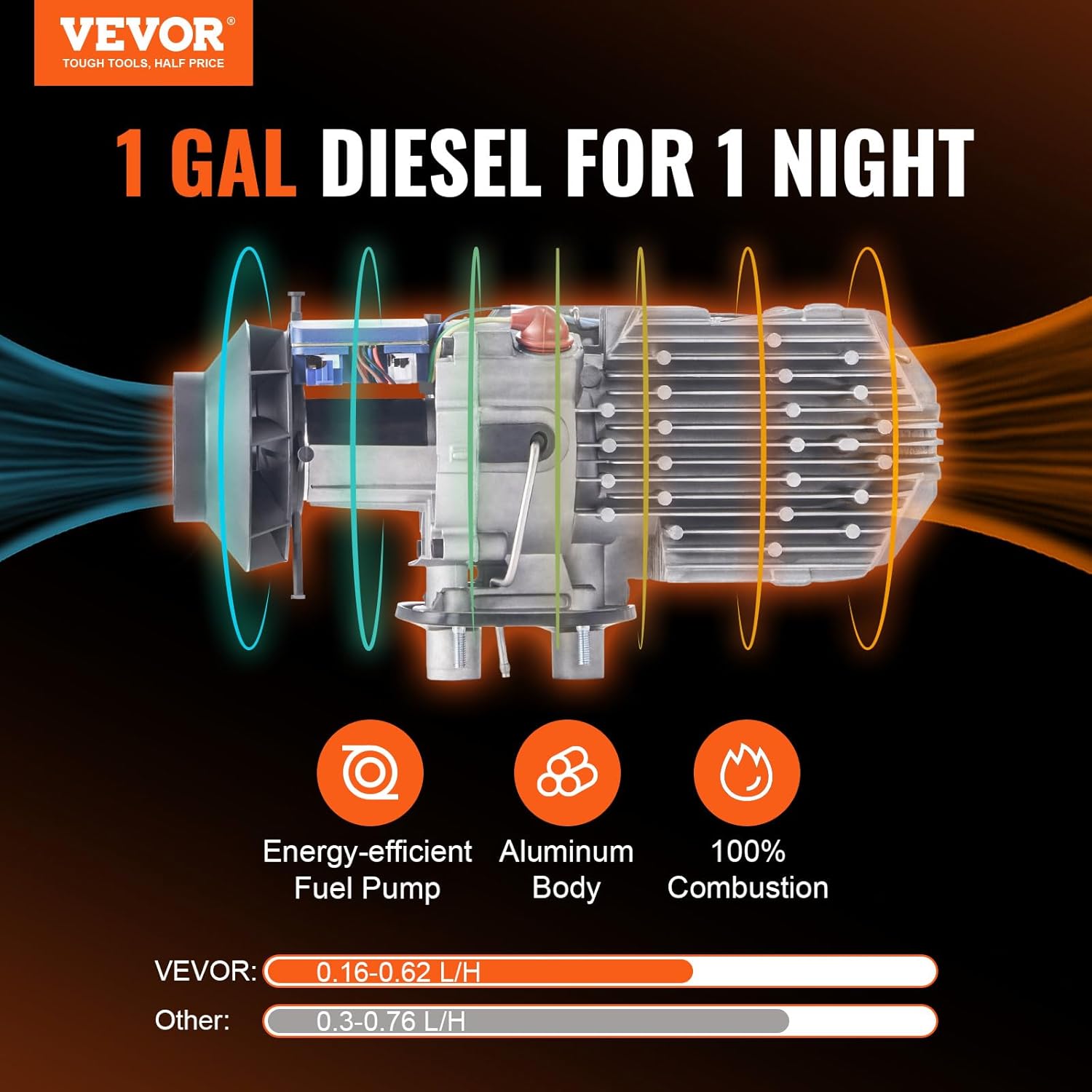
Figure 4.1: Internal Components and Efficiency. This diagram illustrates the heater's internal structure, emphasizing the energy-efficient fuel pump, durable aluminum body, and complete combustion process. It also compares the fuel consumption of VEVOR heaters (0.16-0.62 L/H) with other models (0.3-0.76 L/H).

Figure 4.2: Intelligent Control Methods. This image displays the three primary ways to control the heater: a remote control (32 ft range), an LCD panel, and a smartphone app via Bluetooth connectivity (98 ft range). A car in a snowy setting is shown, indicating the heater's application.
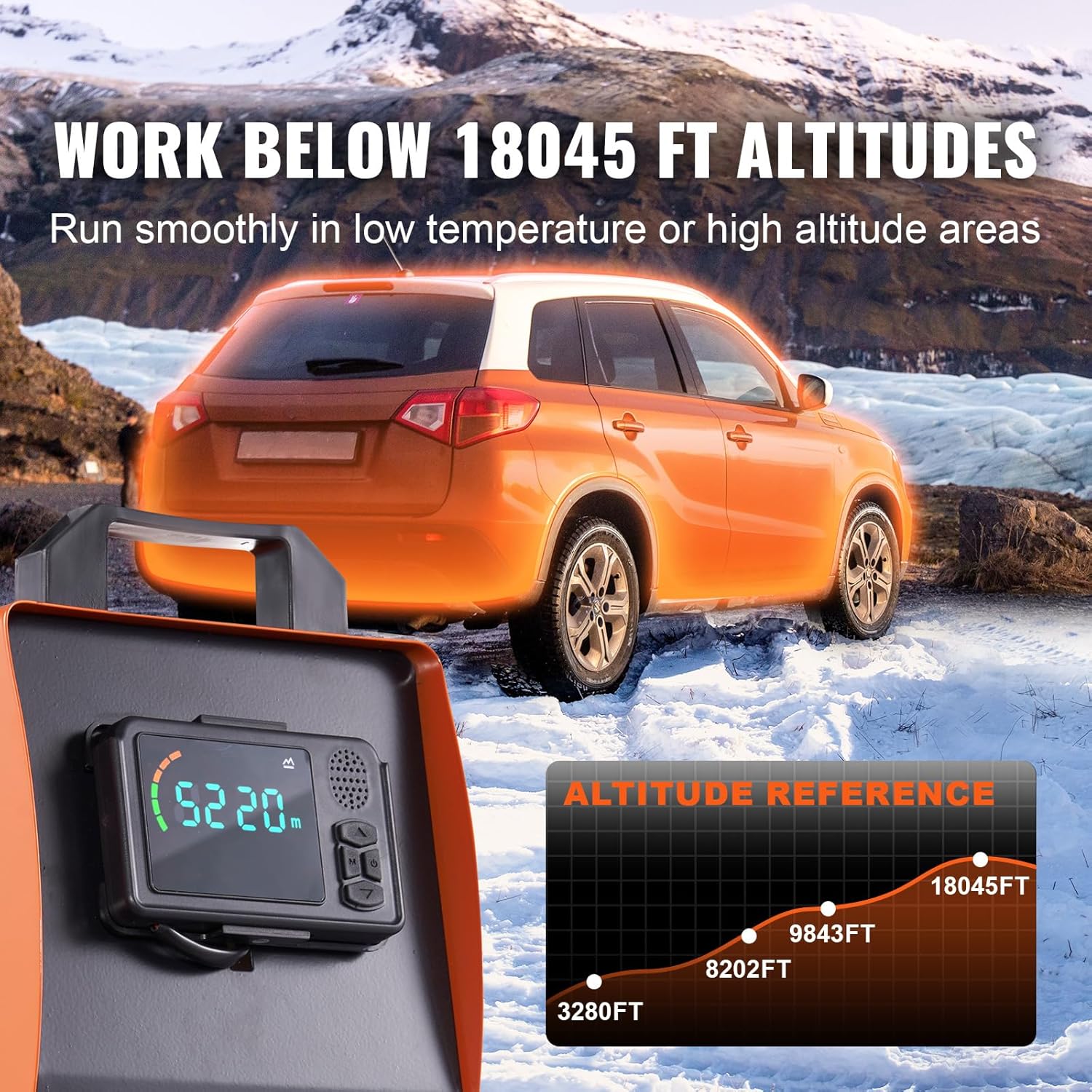
Figure 4.3: High Altitude Operation. This image highlights the heater's capability to function effectively at altitudes below 18045 ft (approximately 5500 meters), with a reference chart showing various altitude levels.

Figure 4.4: Enhanced Security Features. This graphic illustrates key safety aspects, including compliance certification, overheat protection exceeding 518°F (270°C), cautionary operation signage, and a leak-resistant oil cap design.
5. Specifications
Technical specifications for the VEVOR 12V 8kW Diesel Air Heater.
| Specification | Value |
|---|---|
| Heating Power | 8 KW |
| Fuel Type | Diesel |
| Rated Voltage | 12 V |
| Vehicle Air Conditioning Type | Heating |
| Fuel Consumption (L/h) | 0.18–0.48 |
| Operating Temperature (Heater) | -40°C ~ +50°C |
| Operating Temperature (Oil Pump) | -40°C ~ +40°C |
| Product Dimensions | 49 x 48.5 x 21 cm |
| Item Weight | 9.34 kg |
| Color | Red |
| Model Number | Diesel Heater |
6. Setup and Installation
Proper installation is critical for the safe and efficient operation of your diesel air heater. Refer to the included installation kit and user manual for detailed diagrams and instructions.
6.1. Choosing a Location
- Select a dry, stable, and non-flammable surface for mounting.
- Ensure sufficient clearance around the heater for proper airflow and heat dissipation.
- The location should allow for easy routing of fuel lines, exhaust pipes, and electrical wiring.
6.2. Mounting the Heater
- Secure the heater unit using the provided mounting screws and brackets.
- Ensure the unit is firmly attached to prevent movement during operation.
6.3. Fuel System Connection
- Connect the fuel line from the heater to the fuel pump, and then from the fuel pump to the fuel tank.
- Ensure all fuel line connections are tight and free of leaks. Use the provided clamps.
- Fill the integrated 5L fuel tank with clean diesel fuel. Do not overfill.
6.4. Exhaust and Intake System
- Connect the intake pipe to the heater's air intake port and the exhaust pipe to the exhaust port.
- Route the exhaust pipe outside the vehicle/enclosure, ensuring it is clear of any obstructions, flammable materials, or windows.
- Install the exhaust silencer to reduce noise.
- Use the heat insulating pipe cover on the exhaust pipe to prevent heat transfer to surrounding components.
- Attach the air filter to the intake pipe.
6.5. Electrical Connections
- Connect the heater's power cables to a stable 12V DC power source.
- Ensure correct positive (+) and negative (-) polarity.
- Install the LCD switch/controller in a convenient location.

Figure 6.1: Front View of the Heater. This image shows the front of the VEVOR diesel air heater, highlighting the main air outlet and the integrated control panel.

Figure 6.2: Back View of the Heater. This image displays the rear of the VEVOR diesel air heater, illustrating the power input connections and the internal fan housing.
7. Operating Instructions
The VEVOR diesel air heater can be controlled via the LCD panel, remote control, or a smartphone app.
7.1. Initial Start-up (Priming the Fuel System)
- After installation and filling the fuel tank, the fuel system needs to be primed.
- Turn on the heater. The fuel pump will start to draw fuel. This may take several minutes on the first start-up until fuel reaches the combustion chamber.
- If the heater fails to start after a few attempts, check for air in the fuel line or ensure the fuel pump is operating correctly.
7.2. Using the LCD Control Panel
- Power On/Off: Press and hold the power button to turn the heater on or off.
- Temperature/Power Adjustment: Use the '+' and '-' buttons to adjust the desired temperature or heating power level.
- Mode Selection: The 'Mode' button allows switching between different operating modes (e.g., constant temperature, fan only).
- Settings: Access advanced settings such as timer, voltage display, and altitude compensation through the menu button.
7.3. Using the Remote Control
- The remote control allows for convenient operation from a distance.
- Buttons typically include Power On/Off, Temperature Up/Down, and Mode selection.
- Ensure the remote control has working batteries.
7.4. Using the Smartphone App (Bluetooth)
- Download the VEVOR heater app from your device's app store.
- Enable Bluetooth on your smartphone and pair it with the heater.
- The app provides a comprehensive interface for controlling all heater functions, including scheduling and monitoring.
7.5. Shutting Down the Heater
- To turn off the heater, press and hold the power button on the LCD panel or remote control.
- The heater will enter a cool-down cycle to prevent overheating of components. Do not disconnect power during this cycle.
- Once the cool-down cycle is complete, the heater will fully shut down.

Figure 7.1: Heater in Operation. This image depicts the VEVOR diesel air heater providing warmth inside a vehicle, with a child sleeping comfortably, illustrating its practical application.
8. Maintenance
Regular maintenance ensures the longevity and optimal performance of your VEVOR diesel air heater.
- Air Filter Cleaning: Periodically inspect and clean the air filter. A clogged filter can reduce efficiency and lead to poor combustion. Replace if heavily soiled or damaged.
- Fuel System Inspection: Regularly check fuel lines for any signs of leaks, cracks, or damage. Ensure all connections are secure. Use only clean, high-quality diesel fuel.
- Exhaust System Check: Inspect the exhaust pipe and muffler for blockages, corrosion, or damage. Ensure the exhaust is clear and properly vented outside.
- Combustion Chamber: Depending on usage, the combustion chamber may require periodic cleaning to remove carbon deposits. This typically involves disassembling parts of the heater and should be done by a qualified technician if you are unsure.
- Electrical Connections: Verify that all electrical connections are tight and free from corrosion.
- General Cleaning: Keep the exterior of the heater clean and free of dust and debris.
9. Troubleshooting
This section addresses common issues you might encounter with your diesel air heater.
9.1. Heater Does Not Start
- No Power: Check electrical connections, battery voltage (must be 12V), and fuses.
- No Fuel: Ensure the fuel tank has sufficient diesel and the fuel line is not blocked or kinked. Prime the fuel system if necessary.
- Air in Fuel Line: Repeated start attempts may be needed to purge air from the fuel system.
- Error Code: Check the LCD display for any error codes and consult the full user manual for their meaning.
9.2. Heater Produces Little or No Heat
- Low Power Setting: Increase the power or temperature setting on the control panel.
- Clogged Air Filter: Clean or replace the air filter.
- Restricted Airflow: Ensure the air intake and outlet are not blocked.
- Poor Combustion: May indicate issues with fuel quality, fuel pump, or glow plug.
9.3. Excessive Smoke or Unusual Odor
- Incomplete Combustion: This can be caused by incorrect fuel-air mixture, low voltage, or a faulty glow plug.
- Clogged Exhaust: Check the exhaust pipe for blockages.
- Fuel Quality: Ensure clean, appropriate diesel fuel is used.
- First Use: A small amount of smoke or odor may occur during the initial few minutes of the first operation as manufacturing residues burn off.
9.4. Unusual Noise During Operation
- Loose Components: Check for any loose mounting screws or parts.
- Fan Obstruction: Ensure nothing is obstructing the fan blades.
- Fuel Pump Noise: The fuel pump makes a rhythmic ticking sound during operation, which is normal. Excessive or irregular noise may indicate an issue.
If troubleshooting steps do not resolve the issue, please contact VEVOR customer support for assistance.
10. Warranty and Support
For warranty information, product registration, or technical support, please refer to the official VEVOR website or contact VEVOR customer service directly. Keep your purchase receipt and product serial number handy when contacting support.
VEVOR Official Website: www.vevor.com