
Introduction
The Ortovox Traverse 30L Dry Backpack is engineered for demanding outdoor activities, offering robust protection and comfort. Its waterproof construction ensures your gear remains dry in challenging weather conditions, making it ideal for ski touring, hiking, and mountaineering. This manual provides essential information for the proper setup, operation, and maintenance of your backpack.
Key features include a 50k waterproof rating, welded seams, and a comfortable contact back system designed for optimal load distribution and ventilation.
Setup
Adjusting the Back System
For optimal comfort and load distribution, correctly adjust the backpack's back system to your body. The Traverse 30L Dry features a Comfort Contact Back System designed to sit close to your back while allowing air circulation.
- Shoulder Straps: Loosen all straps. Put on the backpack. Tighten the shoulder straps until the pack sits snugly against your back, ensuring the top of the shoulder straps are level with your shoulders.
- Waist Belt: Position the waist belt over your hip bones. Fasten and tighten the buckle securely. The majority of the pack's weight should rest on your hips.
- Load Lifter Straps: Located above the shoulder straps, these straps pull the top of the pack closer to your body. Adjust them to prevent the pack from leaning backward.
- Sternum Strap: Fasten the sternum strap across your chest and adjust its height and tension to prevent the shoulder straps from slipping outwards.

Image: The back panel of the Ortovox Traverse 30L Dry Backpack, showing the Comfort Contact Back System and adjustment points for shoulder straps, sternum strap, and waist belt.

Image: A detailed view of the Comfort Contact Back System, highlighting the padded areas designed for comfort and ventilation.
Hydration System Integration
The backpack is hydration compatible. Locate the hydration sleeve inside the main compartment and the exit port for the drinking tube. Insert your hydration bladder into the sleeve and route the tube through the designated port and along a shoulder strap for easy access.
Loading the Backpack
Distribute weight evenly. Place heavier items close to your back and centered. Lighter, bulkier items can fill the remaining space. Ensure frequently accessed items are placed in easily reachable pockets.

Image: A person wearing the Ortovox Traverse Dry backpack, demonstrating its fit and profile during use.
Operating Instructions
Main Compartment Access
The main compartment features a roll-top closure for maximum waterproofing. To open, unclip the side buckles and unroll the top. To close, roll the top down tightly at least three times and secure the side buckles.

Image: Hands demonstrating how to open the roll-top main compartment of the backpack.
External Gear Attachment
The backpack is equipped with various loops and straps for attaching external gear such as trekking poles, skis, or a helmet.
- Trekking Poles: Utilize the dedicated loops and compression straps on the side or front of the pack to secure trekking poles. Ensure they are tightly fastened to prevent movement.
- Skis: The side compression straps can be used for A-frame ski carry. Place one ski on each side, securing them with the upper and lower compression straps.
- Helmet: Some models may include a helmet net or specific attachment points. If available, use these to secure your helmet externally.

Image: A person wearing the backpack with trekking poles and a helmet securely attached to the exterior.

Image: A close-up view of hands demonstrating the proper method for securing trekking poles to the backpack's attachment points.
Using Pockets and Compartments
The backpack includes various pockets for organizing smaller items:
- Top Lid Pocket: A zippered pocket on the top of the pack, suitable for quick-access items like maps, snacks, or a first-aid kit.
- Side Pockets: Stretchable side pockets can hold water bottles or other items you need to grab without removing the pack.
- Hip Belt Pockets: Small zippered pockets on the hip belt are ideal for small essentials like a phone, GPS, or energy bars.
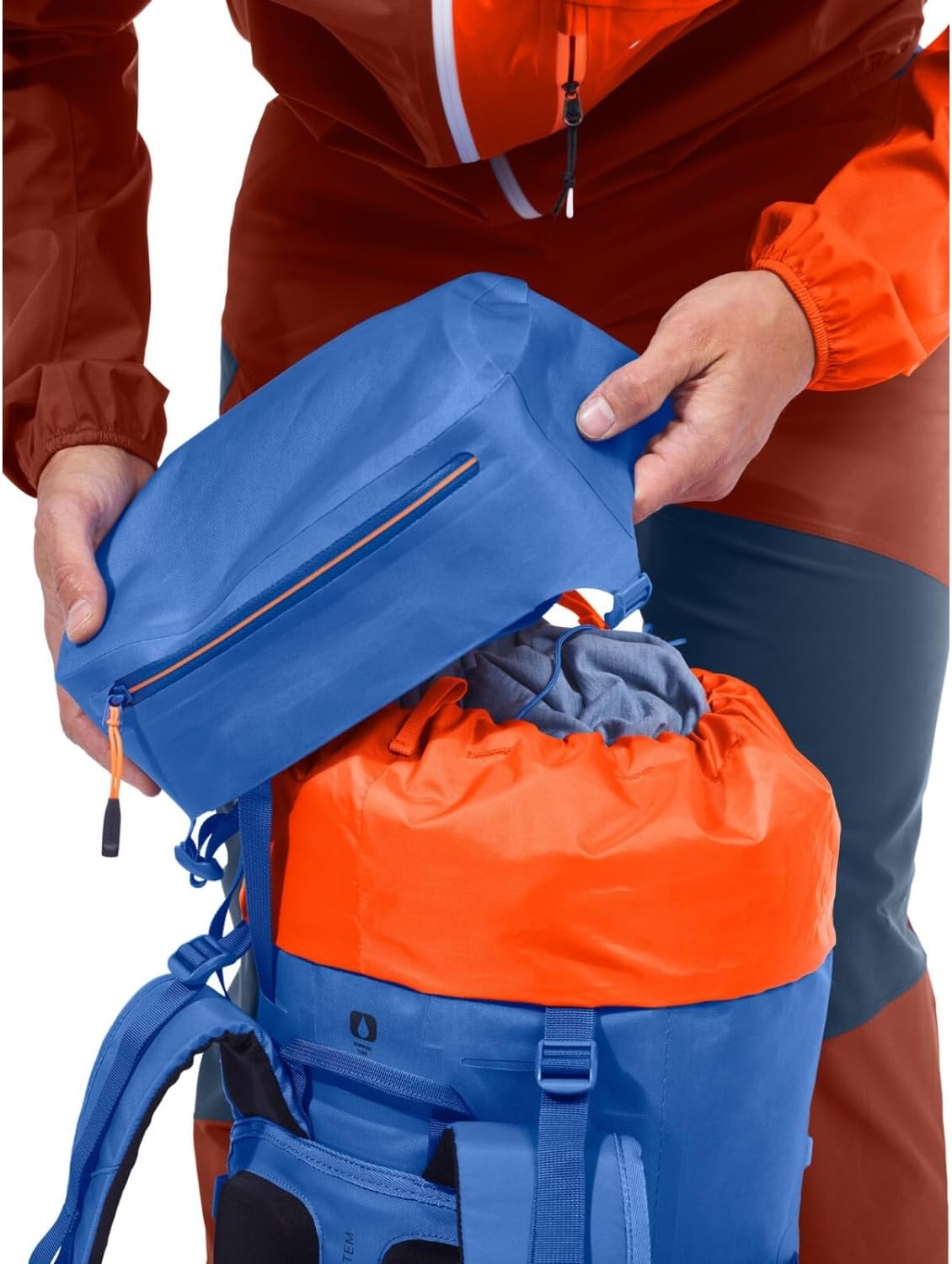
Image: Hands opening the zippered top lid pocket, revealing its storage capacity.
Care and Maintenance
Cleaning
To clean your backpack, use a soft brush or sponge with lukewarm water and a mild, non-detergent soap. Avoid harsh chemicals or machine washing, as this can damage the waterproof coating and materials. Rinse thoroughly with clean water.
Drying and Storage
After cleaning or use in wet conditions, hang the backpack upside down in a well-ventilated area away from direct sunlight or heat sources. Ensure it is completely dry before storing to prevent mildew. Store in a cool, dry place.
Troubleshooting
Fit Issues
If the backpack feels uncomfortable or unstable, re-evaluate your adjustments. Ensure the waist belt is on your hips, shoulder straps are snug, and load lifters are engaged. Adjusting the load distribution within the pack can also improve comfort.
Water Penetration
While the Traverse 30L Dry is highly waterproof, ensure the roll-top closure is properly sealed (rolled at least three times) and all zippers are fully closed. Inspect for any visible damage to the fabric or seams that might compromise its waterproof integrity.
Technical Specifications
| Feature | Specification |
|---|---|
| Model Name | Traverse 30 Dry |
| Material | 420D nylon, TPU coating |
| Volume | 30 Liters (1831 cu in) |
| Item Weight | 2.55 Pounds (approx. 1.16 kg) |
| Dimensions (LxWxH) | 26.38 x 8.66 x 10.24 inches |
| Shoulder Straps | Stabilizer straps |
| Waist Belt | Adjustable |
| Hydration Compatible | Yes |
| Color | Black Steel (variant shown in main image) |
Warranty and Customer Support
The Ortovox Traverse 30L Dry Backpack comes with a Limited Warranty. For specific details regarding warranty coverage, terms, and conditions, please refer to the official Ortovox website or contact their customer service directly.
For any questions, technical assistance, or support regarding your product, please visit the official Ortovox website or contact their customer support team through the provided channels.


