1. Introduction
Thank you for choosing the Telefunken CF-33-101-W Refrigerator. This manual provides essential information for the safe and efficient operation, installation, and maintenance of your appliance. Please read these instructions carefully before use and keep them for future reference.
2. Safety Information
To ensure safe operation, please observe the following safety precautions:
- Read all instructions before using the appliance.
- Ensure the refrigerator is properly grounded to prevent electrical shock.
- Do not damage the refrigerant circuit. If damaged, avoid open flames and ventilate the room.
- Unplug the appliance from the power outlet before cleaning or performing any maintenance.
- Do not store explosive substances such as aerosol cans with a flammable propellant in this appliance.
- This appliance is intended for household use only.
- Keep ventilation openings clear of obstruction.
- Do not use mechanical devices or other means to accelerate the defrosting process, other than those recommended by the manufacturer.
3. Product Overview
The Telefunken CF-33-101-W is a compact, freestanding refrigerator designed for efficient food storage. It features an 89-liter total net capacity, including a 77-liter refrigerator compartment and a 12-liter ice cube compartment.

Internal view of the refrigerator, highlighting the 77-liter cooling section and 12-liter ice cube compartment. It also shows two adjustable glass shelves and three door shelves.
Key Features:
- Capacity: 89 Liters total (77L refrigerator, 12L ice compartment).
- Shelving: 2 glass shelves, 3 door shelves, 1 vegetable drawer.
- Defrosting: Automatic defrost system.
- Temperature Control: Adjustable temperature regulation.
- Lighting: Interior LED lighting.
- Flexibility: Adjustable height feet and reversible door hinge.
4. Setup and Installation
4.1 Unpacking
Carefully remove all packaging materials. Inspect the refrigerator for any damage. Keep packaging materials out of reach of children.
4.2 Placement
- Place the refrigerator on a firm, level surface.
- Ensure adequate ventilation around the appliance. Maintain a minimum distance of 10 cm from walls and other furniture.
- Avoid placing the refrigerator in direct sunlight or near heat sources such as stoves, radiators, or heaters, as this will increase energy consumption.
4.3 Leveling the Appliance
The refrigerator is equipped with adjustable feet. Turn the feet clockwise or counter-clockwise to level the appliance. Proper leveling ensures stable operation and reduces vibration.
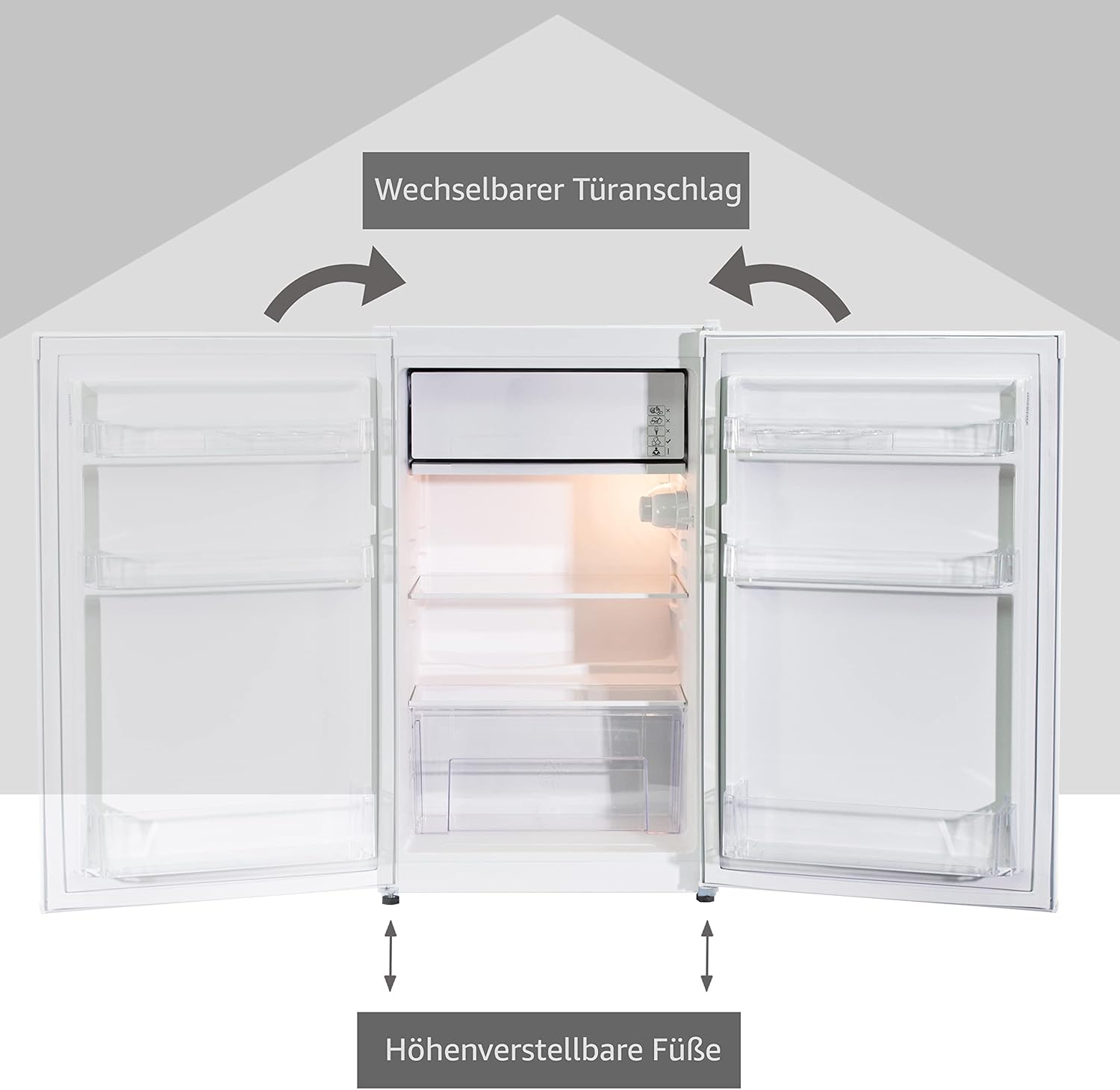
Illustration showing the reversible door hinge and adjustable feet for optimal placement.
4.4 Reversible Door
The door hinge is reversible, allowing you to change the opening direction to suit your kitchen layout. Refer to the detailed instructions in the full user manual for the procedure to reverse the door.
4.5 Initial Cleaning and Power Connection
Before first use, clean the interior and exterior of the refrigerator with a damp cloth and mild detergent. After cleaning, allow the appliance to dry completely. Plug the refrigerator into a dedicated, properly grounded power outlet. Allow the refrigerator to run for at least 2-3 hours empty before loading food to ensure it reaches the correct temperature.
5. Operating Instructions
5.1 Temperature Control
The refrigerator's temperature is controlled by a thermostat dial located inside the appliance, typically near the ice compartment. Turn the dial to adjust the cooling intensity. A higher number usually indicates a colder setting. Start with a medium setting and adjust as needed based on ambient temperature and food load.

Close-up view of the ice compartment and the temperature control dial.
5.2 Food Storage Guidelines
Organize food efficiently to maintain optimal cooling and prevent odors.
- Upper Shelves: Ideal for dairy products, cooked foods, and leftovers.
- Lower Shelves: Suitable for raw meat and fish (store in sealed containers to prevent cross-contamination).
- Vegetable Drawer: Designed for fruits and vegetables to maintain freshness.
- Door Shelves: Best for drinks, condiments, and eggs.
- Ice Compartment: For making ice cubes or storing small frozen items for short periods. Note that this is an ice compartment, not a freezer, and is not suitable for long-term storage of frozen foods.

Interior view of the refrigerator showing organized food storage.
5.3 Automatic Defrost
This refrigerator features an automatic defrost system in the main cooling compartment. Frost that forms on the back wall will melt automatically and drain through a channel to an evaporation tray located above the compressor. The ice compartment, however, may require manual defrosting if excessive ice builds up.
6. Maintenance and Cleaning
6.1 Cleaning the Interior
Before cleaning, always unplug the refrigerator. Clean the interior regularly with a solution of mild detergent and warm water. Wipe dry with a soft cloth. Do not use abrasive cleaners, harsh chemicals, or sharp objects, as these can damage the surfaces.
6.2 Cleaning the Exterior
Wipe the exterior surfaces with a soft, damp cloth. For stubborn stains, use a mild detergent. Ensure the back of the appliance and the condenser coils are kept clean and free of dust to maintain efficiency. Use a soft brush or vacuum cleaner for this task.
6.3 Manual Defrosting of Ice Compartment
If ice builds up excessively in the ice compartment, it may need manual defrosting. Unplug the appliance, remove all items from the ice compartment, and allow the ice to melt naturally. Do not use sharp objects to remove ice. Once defrosted, clean and dry the compartment before plugging the refrigerator back in.
7. Troubleshooting
Before contacting customer service, please check the following common issues:
| Problem | Possible Cause | Solution |
|---|---|---|
| Refrigerator not cooling | Power outage; plug not inserted; thermostat set too high. | Check power supply; ensure plug is secure; adjust thermostat to a colder setting. |
| Excessive noise | Appliance not level; contact with wall/furniture; loose parts. | Adjust leveling feet; ensure clearance; check for loose components. |
| Water on floor/inside | Defrost drain blocked; door not closed properly. | Clear defrost drain; ensure door seals tightly. |
| Ice compartment frosting excessively | Door not sealed; frequent opening; high humidity. | Ensure door closes completely; reduce frequency of door opening; manually defrost as needed. |
| Refrigerator cools too much (food freezing) | Thermostat set too low. | Adjust thermostat to a warmer setting. |
8. Specifications
| Feature | Specification |
|---|---|
| Model Number | CF-33-101-W |
| Brand | Telefunken |
| Total Net Capacity | 89 Liters |
| Refrigerator Net Capacity | 77 Liters |
| Ice Compartment Net Capacity | 12 Liters |
| Dimensions (H x W x D) | 82.1 x 48 x 50 cm |
| Weight | 23.9 kg |
| Energy Efficiency Class (New) | F |
| Annual Energy Consumption (New) | 136 kWh/annum |
| Noise Emission Class | C |
| Noise Level | 41 dB(A) |
| Climate Class | T/SN (10 °C - 43 °C) |
| Defrost System | Automatic (refrigerator compartment) |
| Voltage | 230 Volts (AC) |
| Number of Doors | 1 |
| Shelf Type | Glass |

Product dimensions: 821 mm height, 480 mm width, 500 mm depth.
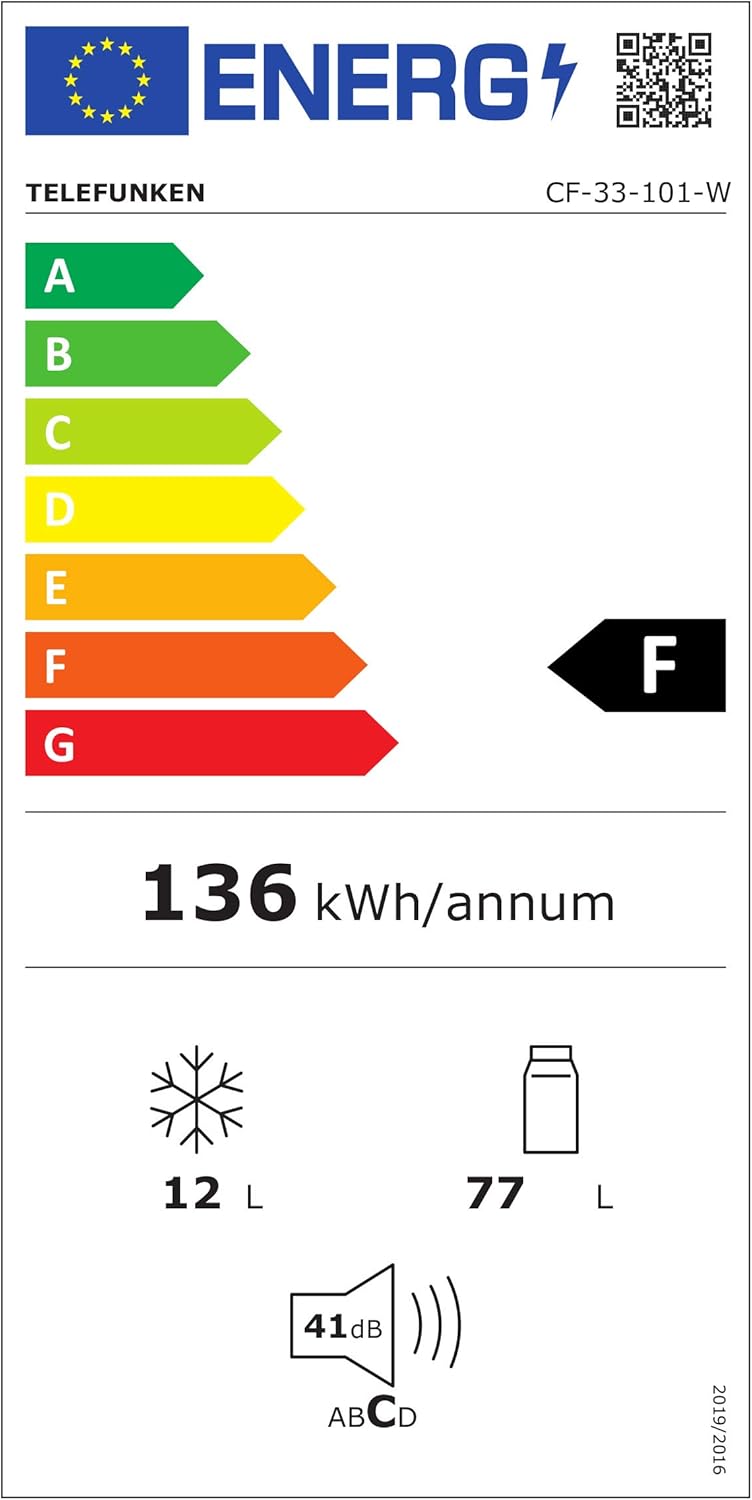
EU Energy Label for the Telefunken CF-33-101-W. For more details, visit the EPREL database.
9. Warranty and Support
This Telefunken refrigerator comes with a 24-month manufacturer's warranty from the date of purchase. Please retain your proof of purchase for warranty claims.
For technical assistance, spare parts, or warranty service, please contact your retailer or the authorized Telefunken service center in your region. Do not attempt to repair the appliance yourself, as this may void the warranty and pose safety risks.


